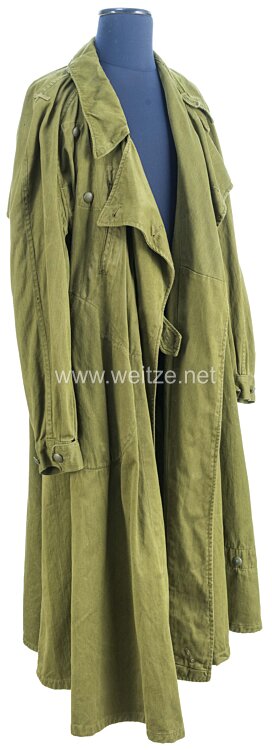
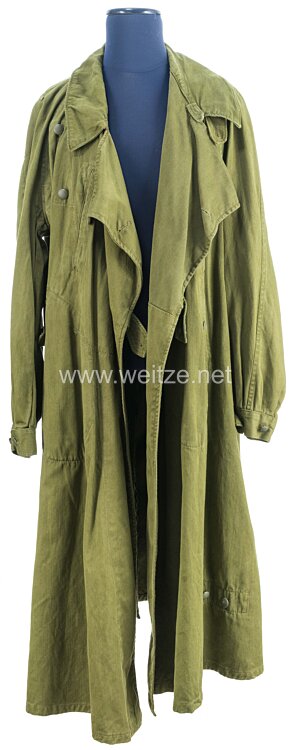
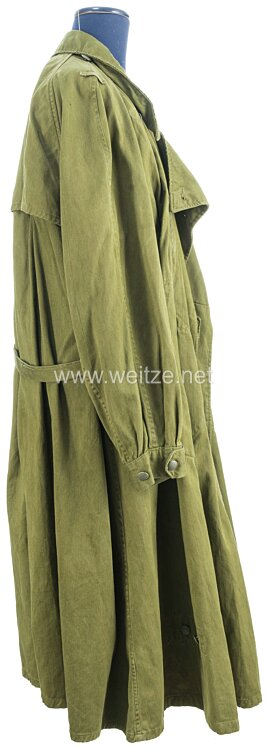
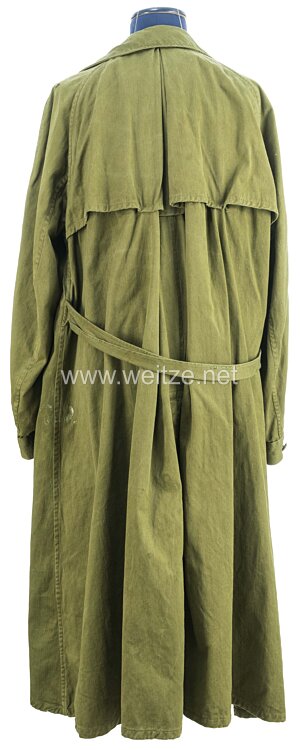
Wehrmacht Afrikakorps Motorcycle Coat M 41
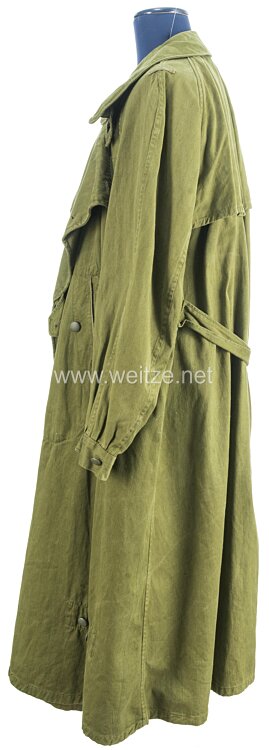
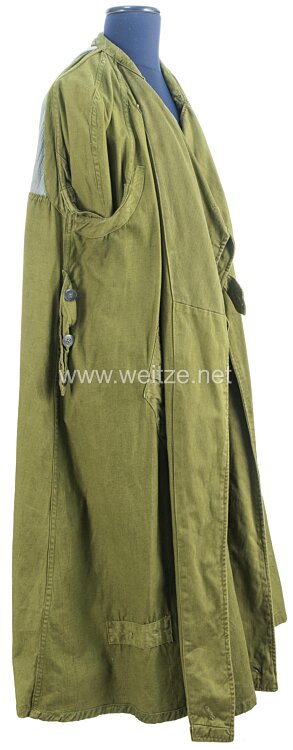
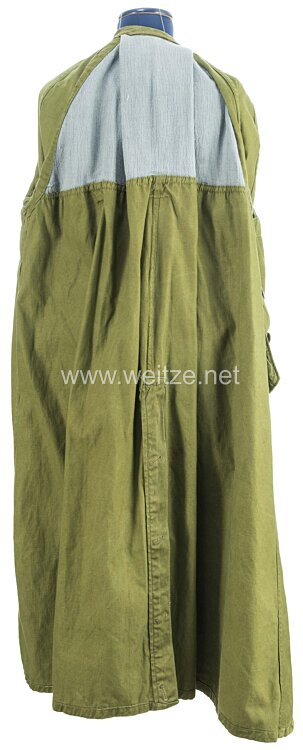
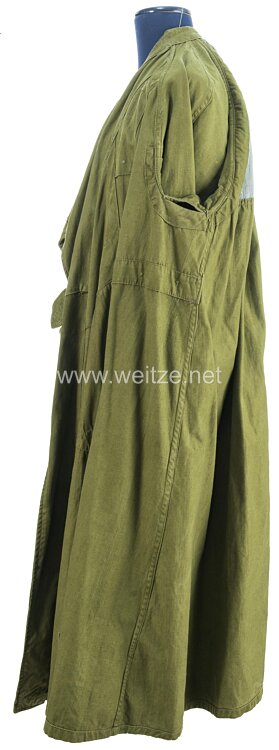
The Kradmantel M 41 (Motorcycle Coat Model 1941) represents a characteristic piece of Wehrmacht equipment specifically developed for the needs of motorized units. This particular specimen in olive-colored linen fabric is especially noteworthy as it was manufactured for use in the German Afrika Korps (DAK), thus documenting the adaptation of German military equipment to extreme climatic conditions.
The development of the Kradmantel occurred within the framework of comprehensive modernization of Wehrmacht clothing at the beginning of World War II. While the Army Regulations Manual (HV) originally prescribed the dark green or field gray motorcycle coat for European deployment, the North African theater of war required special adaptations from 1941 onwards. The Afrika Korps, dispatched to Libya under the command of Lieutenant General Erwin Rommel in February 1941, needed equipment capable of withstanding extreme temperatures, sandstorms, and intense solar radiation.
The typical cut for Kradmelder (motorcycle dispatch riders) is characterized by its particular length of approximately 125 cm, which protected the rider down to the calves even while on the motorcycle. This protective function was of particular importance in the North African desert, as the whirled-up sand and heat development from the vehicles placed severe demands on the rider. The construction from heavy linen fabric offered a compromise between protection and breathability that was far more suitable for the tropical climate than the wool fabrics intended for Europe.
The olive-beige coloring corresponded to the special regulations for Wehrmacht tropical equipment. Unlike the field gray standard uniform, tropical clothing was rendered in various shades from sand to olive tones, with the exact coloring varying depending on manufacturer and production batch. This color choice served both camouflage purposes in the desert environment and practical considerations regarding heat absorption.
The chamber stamp (Kammerstempel) inside the coat is an authentic feature of military procurement. Such stamps were applied by the responsible army clothing offices and documented the official acceptance and issue of the garment. They typically contained information about the issuing office, the year, and sometimes batch numbers. The fact that the stamp is barely legible corresponds to the expected aging process of textiles over 80 years old.
The absence of shoulder straps (Schulterklappen) is not unusual in surviving examples. These were removable and were often kept separately or lost over the decades. The shoulder straps indicated the wearer's rank and branch of service and were an essential element of military identification.
The completely preserved button line is remarkable, as metal buttons were frequently lost or damaged by corrosion. For tropical uniforms, special buttons were sometimes used that better resisted corrosion from sweat and moisture.
Motorcycle dispatch riders played a central role in Wehrmacht warfare. At a time when radio communication was still susceptible to interference and not available everywhere, motorcycle couriers formed the backbone of military message transmission. In the expansive North African theater with its rapidly changing front lines, their importance was particularly high. The Kradmelder were exposed to extreme dangers and required correspondingly robust and functional equipment.
The Afrika Korps operated in North Africa from February 1941 to May 1943 and became one of the Wehrmacht's most famous formations. The special environmental conditions led to the development of a separate equipment line that today ranks among the most sought-after collectibles of military-historical provenance. Tropical equipment was produced in significantly smaller quantities than standard field equipment, which explains its present rarity.
From a conservation perspective, such a linen textile presents special requirements. The natural fiber is fundamentally durable but susceptible to light damage, mold infestation, and mechanical wear. The indicated Condition 2 suggests a well-preserved specimen that shows the usual signs of use but is structurally intact.
Such chamber pieces are today important testimonies to the military history and material culture of World War II. They document not only the technical development of military equipment but also the adaptability to different theaters of war and the lived reality of common soldiers under extreme operational conditions.