Kriegsmarine Large Breast Eagle for Sports Shirt

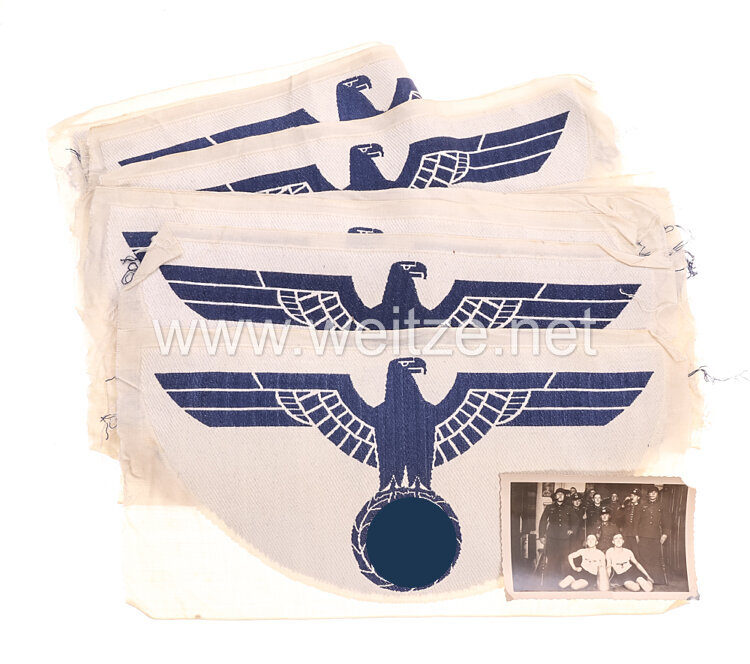
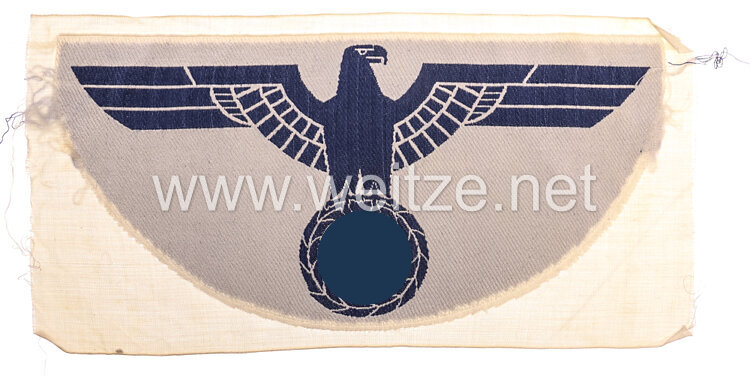
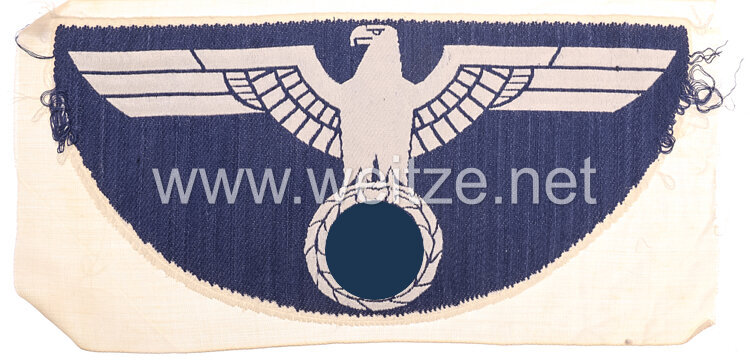
Eagle blue woven on white background. Unissued condition, Grade 2.
461123
100,00

Kriegsmarine Large Breast Eagle for Sports Shirt

The large breast eagle of the Kriegsmarine for sports shirts represents a fascinating example of textile insignia used during the Third Reich era from 1935 to 1945 in the German Navy. This specific badge was worn on the white sports shirt that belonged to the athletic equipment of Kriegsmarine personnel.

The Kriegsmarine, which officially emerged from the Reichsmarine on June 1, 1935, developed a comprehensive system of uniforms and insignia that integrated both traditional maritime elements and National Socialist symbolism. The Reich Eagle, also known as the national emblem, was the central symbol of the German armed forces and had to be displayed on all military uniform items.

The specimen described here shows the eagle in blue weaving on white background. This color combination was characteristic of the Kriegsmarine's athletic clothing and differed significantly from the gold or silver embroidery used on parade uniforms and service dress. The use of woven badges instead of embroidered ones was generally more cost-effective to produce and was frequently employed for equipment items subject to greater wear.

The Kriegsmarine's dress regulations were detailed in various uniform regulations, including the Dress Order for the Kriegsmarine (A.O.K.). These regulations precisely governed when and how certain uniform items were to be worn. The sports shirt was part of athletic equipment and was worn during physical exercises, sporting events, and military training.

The size of the eagle – here designated as a “large breast eagle” – corresponded to the prescribed dimensions for breast emblems. The eagle was typically attached to the right breast side and faced left (to the right from the wearer's perspective). The exact positioning was specified in regulations to ensure uniformity throughout the entire Kriegsmarine.

The production of such insignia was carried out by specialized textile manufacturers that held contracts with the Wehrmacht. The weaving technique enabled a precise representation of the eagle motif with its characteristic features: outstretched wings, the oak wreath, and the swastika held in the eagle's talons. The quality of weaving varied depending on the manufacturer and production period, with earlier war years generally showing higher quality than later productions.

The unworn condition of this specimen is remarkable, as most athletic clothing items were intensively used. This indicates that the badge was either never issued or never attached to a shirt. Such unworn pieces are rare today and of particular collector-historical interest.

In the context of naval history, this insignia represents the comprehensive penetration of military symbolism into all areas of service life. Even during athletic activities, which were traditionally of a more informal nature, the national emblem had to be visibly worn. This underscores the ideological significance attributed to such symbols in National Socialist Germany.

Physical fitness played an important role in the Kriegsmarine. Regular physical exercises were part of military daily routine and served to maintain the physical fitness of crews. Organized sporting events were particularly common at shore establishments and training facilities.

Today, such insignia are important objects of study for military historians and textile experts. They provide insights into the production methods, material usage, and symbolic practices of the Kriegsmarine. At the same time, they require responsible handling due to their connection with the NS regime and its crimes.

The weaving technique used for this type of badge demonstrates the sophisticated textile industry capabilities of the period. Multiple threads in different colors were interwoven to create the design, requiring specialized looms and skilled craftsmen. The durability of woven insignia made them particularly suitable for items intended for frequent washing and heavy use, such as sports clothing.