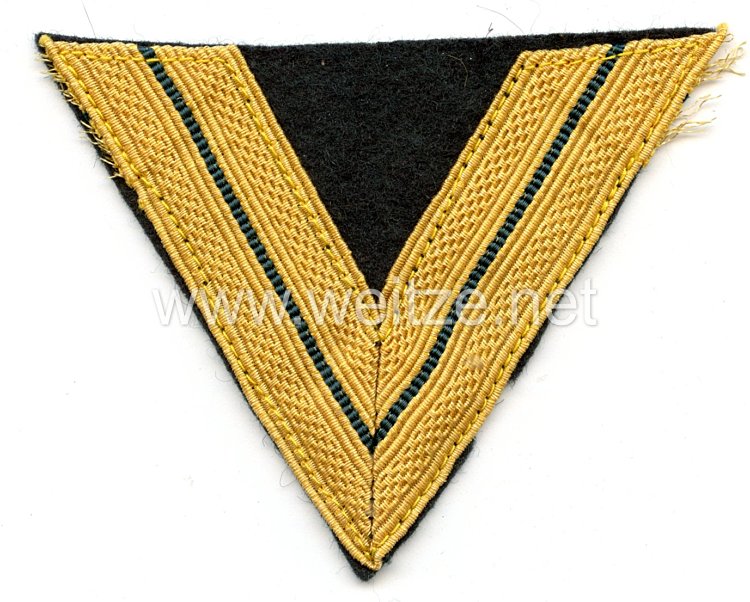
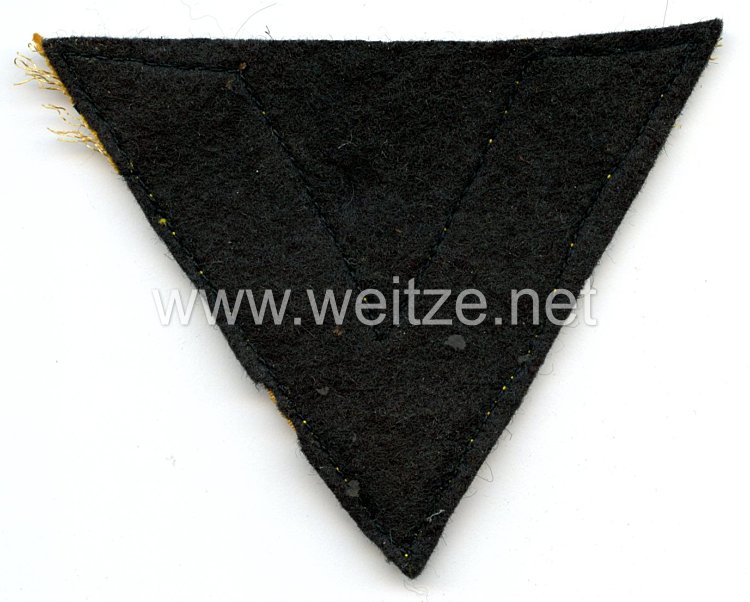
Kriegsmarine Sleeve Insignia for Obergefreiter for the Field-Gray Uniform

on dark green wool, unissued condition, Condition 2.
440223
25,00

Kriegsmarine Sleeve Insignia for Obergefreiter for the Field-Gray Uniform

The Kriegsmarine sleeve insignia for Obergefreiter on the field-gray uniform represents a fascinating testament to German naval uniform history during World War II. This particular insignia on dark green cloth embodies the complex rank structures and uniform regulations of the Kriegsmarine between 1935 and 1945.

The Kriegsmarine, officially established on June 1, 1935, developed a comprehensive system of rank insignia and uniform regulations that differed significantly from the Reichsmarine of the Weimar Republic. The rank of Obergefreiter (literally “Senior Lance Corporal”) constituted the second enlisted rank after the simple Gefreiter and before the Stabsgefreiter. This rank structure largely corresponded to that of other Wehrmacht branches but was distinguished by navy-specific insignia and uniform elements.

The field-gray uniform of the Kriegsmarine differed substantially from the more familiar dark blue shipboard dress. These field-gray uniforms were introduced for various purposes, particularly for naval ground units, coastal artillery, naval infantry, and specialized units such as naval artillery and anti-aircraft units. The dark green cloth of the sleeve insignia formed a characteristic contrast to the field-gray uniform fabric and served for rapid identification of service branch and rank.

The Kriegsmarine uniform regulations, published in several editions between 1935 and 1945, detailed the wearing and execution of all rank insignia. The sleeve insignia for Obergefreiter typically consisted of embroidered or woven chevrons on a cloth backing, which was executed in various colors depending on the service branch. The dark green cloth was characteristic of certain naval services and differed from the black or dark blue cloth of shipboard crews.

The manufacture of such insignia was carried out by various manufacturers and suppliers to the Wehrmacht. Both state-owned enterprises and private firms were involved in production. Quality varied according to manufacturing period and production facility, with earlier war years generally showing better workmanship than later war years, when material and labor shortages led to quality deterioration.

The unissued condition of this specimen is of particular historical interest. Unworn insignia can have various backgrounds: they could have been kept as replacement insignia for uniforms, found in depots at war's end, or never issued. The fact that this insignia was never used enables detailed examination today of the original manufacturing quality and materials without the wear traces of daily service.

The enlisted ranks of the Kriegsmarine formed the basis of the military hierarchy. An Obergefreiter had typically completed several months of service and distinguished himself through reliability and military proficiency. Promotion to Obergefreiter was often associated with additional responsibilities, such as supervising junior enlisted personnel or assuming specialized duties.

In the context of naval history, such uniform components document the organizational complexity of German naval forces. The Kriegsmarine comprised not only the surface fleet and submarine arm but also extensive ground organizations, coastal fortifications, anti-aircraft units, and training facilities. Each of these components had specific uniform regulations reflecting their respective operational areas.

The field-gray uniform with dark green sleeve insignia exemplifies the differentiation within the Kriegsmarine. While sailors aboard ships wore the traditional dark blue uniform, ground units required more practical uniforms better suited for land operations. This uniform differentiation followed functional considerations and corresponded to the different operational profiles of various naval units.

The naval ground forces of the Kriegsmarine expanded significantly during the war, particularly as coastal defenses were strengthened and specialized units were formed. These forces required uniforms that provided better camouflage and practicality for ground combat than traditional naval dress. The field-gray color scheme aligned with Wehrmacht standards while maintaining distinctive naval identification elements.

Documentation from the period indicates that uniform regulations were regularly updated to reflect operational requirements and material availability. The use of different cloth colors for insignia backgrounds helped distinguish between various branches and specializations within the Kriegsmarine's diverse organizational structure.

Today, such military-historical objects serve as important sources for uniform studies and military history. They enable researchers and collectors to study the material aspects of military organization and trace the development of rank structures, uniform regulations, and production methods. The condition and authenticity of such pieces are crucial for their historical and scholarly value.

r