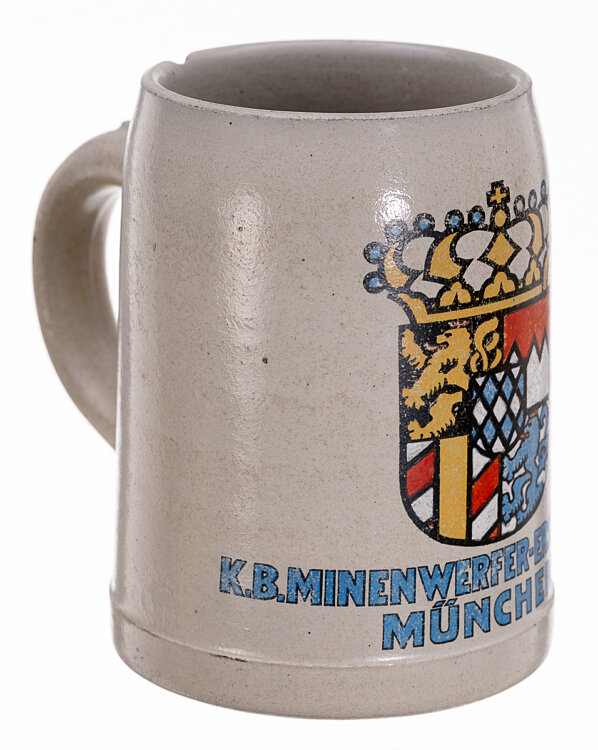
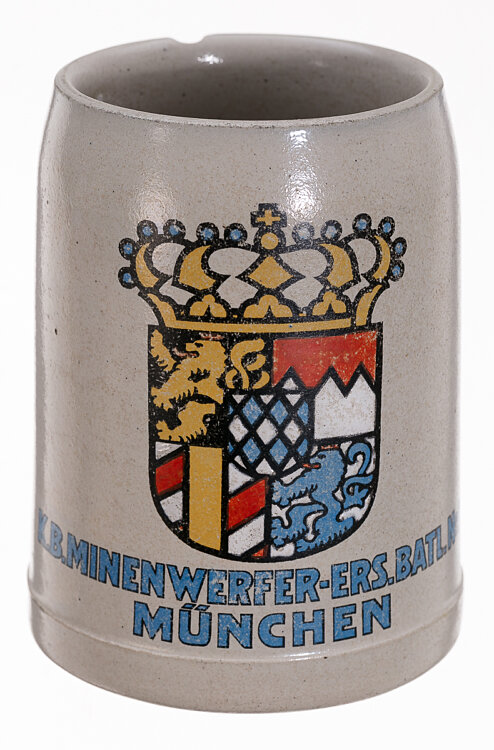
Kingdom of Bavaria - Beer Stein for Members of the “K.B. Minenwerfer-Ersatz.Batl.No. 1”

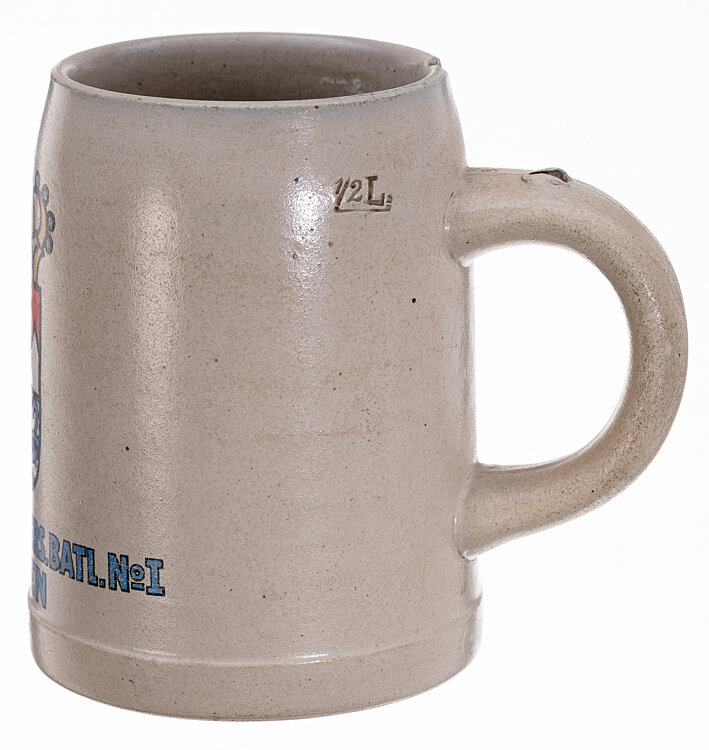
circa 1910. 0.5 liter glazed stoneware stein, slightly damaged, condition 2-3
64523
75,00

Kingdom of Bavaria - Beer Stein for Members of the “K.B. Minenwerfer-Ersatz.Batl.No. 1”

This beer stein dates from around 1910 and was made for members of the Royal Bavarian Minenwerfer-Ersatz-Battalion No. 1 (K.B. Minenwerfer-Ersatz.Batl.No. 1). This glazed stoneware piece with a capacity of 0.5 liters represents a significant tradition of German, and particularly Bavarian, military culture in the early 20th century.

The Minenwerfer troops (trench mortar units) represented a relatively new branch within the German armed forces. While mortars and similar weapons had existed for centuries, the modern Minenwerfer as a specialized weapon only developed in the late 19th century. The Kingdom of Bavaria, which maintained a certain military autonomy within the German Empire, operated its own Minenwerfer units. The Ersatz-Battalion (replacement battalion) had the important task of training replacement personnel and making them available for field units.

The tradition of reservist steins and commemorative steins had a long history in German military culture of the 19th and early 20th centuries. Soldiers who completed their service often had beer steins made as souvenirs, decorated with emblems of their unit, comrades' names, duty stations, and often personal motifs. These steins served not only as drinking vessels but primarily as mementos of military service and status symbols.

The Kingdom of Bavaria maintained a particularly pronounced beer culture, which was also reflected in the military. Bavarian regiments and battalions often had their own canteens and mess facilities where beer played a central role. The connection between Bavarian identity, beer culture, and military tradition was impressively manifested in such commemorative pieces.

Manufacturing typically took place in specialized stoneware manufactories that focused on military souvenirs. Well-known production sites included Mettlach, Kreussen, and various Bavarian potteries. The steins were usually individually ordered and designed according to soldiers' wishes. The glaze protected the applied decorations and gave the stein its characteristic surface.

The K.B. Minenwerfer-Ersatz-Battalion No. 1 was established as part of military reorganization and rearmament before World War I. The growing importance of trench mortar troops led to the creation of dedicated training and replacement units. These units were typically stationed in garrison towns where they conducted basic and specialized training for this technically demanding branch of service.

The period around 1910 was characterized by intense military preparation in the German Empire. The European great powers were arming themselves, and new weapons technologies were being developed and introduced. The Minenwerfer would play an important role in trench warfare during the coming world war, although this was not yet fully apparent in 1910.

Such beer steins document not only military history but also the social history of their time. They show how soldiers experienced their service and what importance comradeship and belonging to a military unit held. The creation of such a stein often involved considerable expense and shows that soldiers or their families were willing to invest in these mementos.

The damaged condition of this stein tells its own story spanning more than a century. Many of these steins survived both world wars and the turbulent years afterward. They were passed down from generation to generation and bear witness to the history of their owners and their families.

Today, such military beer steins are sought-after collectibles that represent important sources for military and cultural history. They provide insights into the organizational structure of historical military units, craft traditions, and the everyday culture of the military. For historians and collectors, they are valuable documents of a bygone era.