World War I Bread Bag

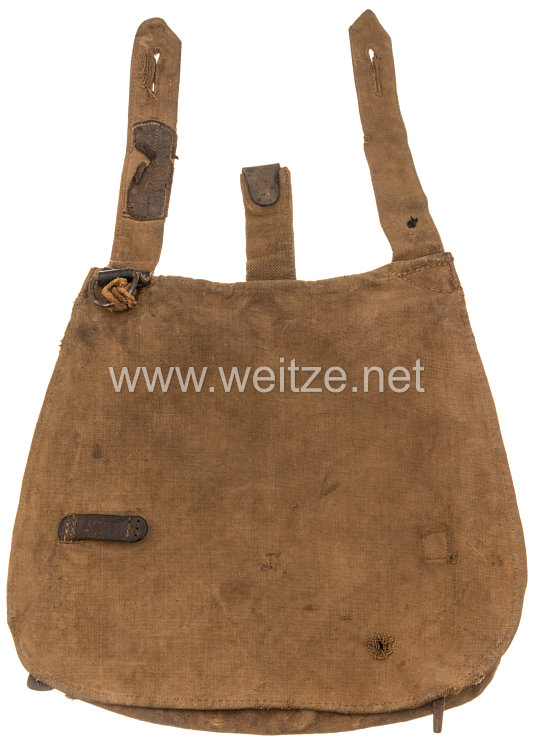
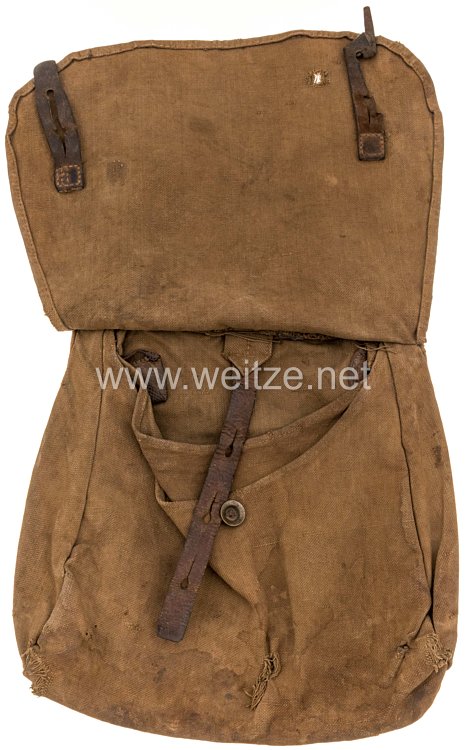
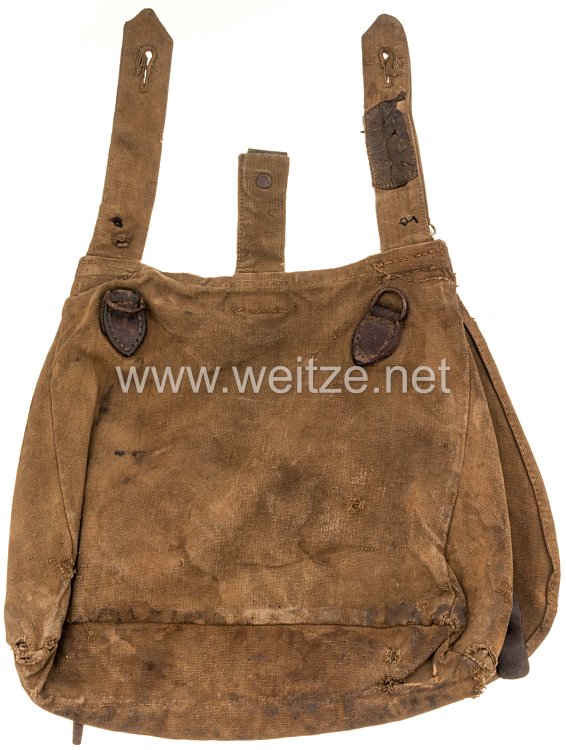
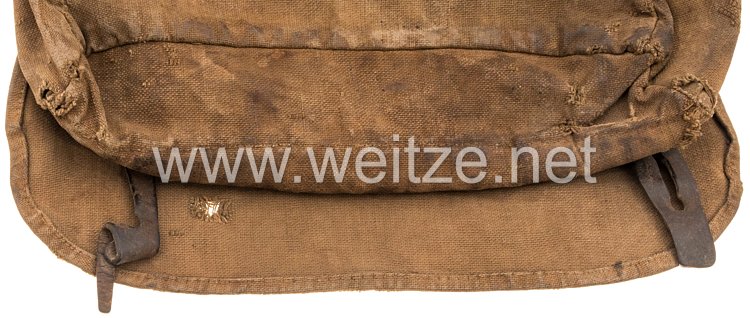
Circa 1915. Made of orange linen. 4 of 5 buttons missing. With signs of wear. Condition 2-3.
351523
120,00

World War I Bread Bag

The bread bag (Brotbeutel) of World War I was an indispensable component of the German soldier's equipment between 1914 and 1918. This simple yet functional bag primarily served to store food, particularly the daily bread ration, but quickly evolved into a versatile container for various personal items of the frontline soldier.

The present specimen made of orange-colored linen dates to around 1915 and represents a typical variant of wartime production. The original coloration varied considerably depending on the time of manufacture and materials used. While field-gray or khaki-colored fabrics were mostly used at the war's beginning, increasing material shortages forced the military administration to resort to alternative textiles. Orange or reddish-brown linen fabrics were quite common, especially when standardized military fabrics became scarce.

The material scarcity of World War I manifested itself in nearly all areas of military equipment. Following the British naval blockade of 1914 and the depletion of raw material reserves, the German Reich increasingly had to resort to substitute materials. This affected not only weapons and ammunition but also seemingly insignificant equipment items like bread bags. The textile industry drew upon civilian stocks, recycled old uniforms, and used inferior fabrics.

The classic German bread bag of World War I typically had a rectangular or slightly trapezoidal shape with a flap closure secured by five buttons, as was originally the case with this specimen. The absence of four of the five buttons testifies to intensive front-line use and the harsh conditions to which this equipment was exposed. Buttons were frequently lost or broke off, and replacements were often difficult to obtain at the front.

The manner of wearing the bread bag was precisely regulated by the dress regulations of the Prussian Army and later the entire German armed forces. The bread bag was worn via a carrying strap over the right shoulder and hung on the left hip, where it was attached to the belt with a short strap. This position allowed quick access to the contents without restricting the soldier's freedom of movement or interfering with his weapon.

The contents of a bread bag were diverse and reflected the daily life of the frontline soldier. Besides the eponymous bread ration, which often consisted of hard military bread or the notorious war bread with high potato or turnip content, it contained personal items such as cutlery (usually only a spoon, as knife and fork were absent from the side arm), a drinking bottle or canteen, tobacco, personal letters, writing materials, and sometimes small mementos from home.

The signs of wear on the present piece are eloquent witnesses to its history. Fabric wear, faded areas, and possibly patched spots tell of months or even years of use under the most adverse conditions. Trench warfare with its mud, wetness, and constant contact with earth and dirt took a considerable toll on equipment. Soldiers maintained their equipment as best they could, but replacements were often scarce.

The production of bread bags was carried out by numerous suppliers throughout the German Reich. Unlike weapons or ammunition, which were subject to stricter quality controls, equipment items like bread bags were often manufactured by smaller workshops, saddleries, or even in home production. This explains the great variance in material, color, and workmanship observable in surviving specimens.

In the context of military history, objects like the bread bag may seem inconspicuous, yet they are of immense importance for understanding soldiers' daily life. While uniforms and weapons represented official military identity, it was the personal equipment items that enabled daily survival and provide insight into the material realities of war.

After the war, many bread bags were kept by returning soldiers as mementos or found new uses in civilian life. Their robust construction made them practical everyday objects. Today, well-preserved specimens from World War I are sought-after collectibles that represent important historical documents and help us better understand the material culture of this devastating conflict.

The condition rating of 2-3 indicates moderate to heavy use, which is entirely consistent with a piece that survived the rigors of the Western or Eastern Front. Such authentic pieces, despite their worn condition, are valuable historical artifacts that connect us directly to the experiences of soldiers who served over a century ago. Each mark, each missing button, each area of wear tells a story of endurance, survival, and the human experience of industrialized warfare.