Luftwaffe - Ashtray with Mounted Aircraft Model

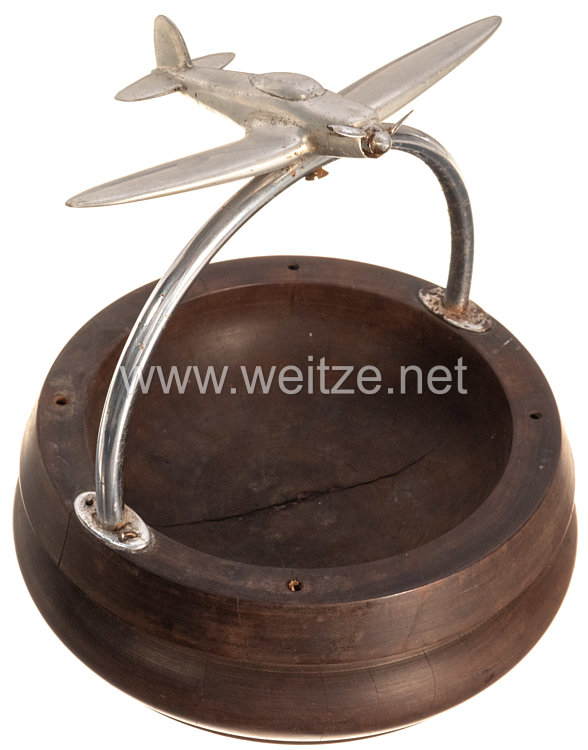
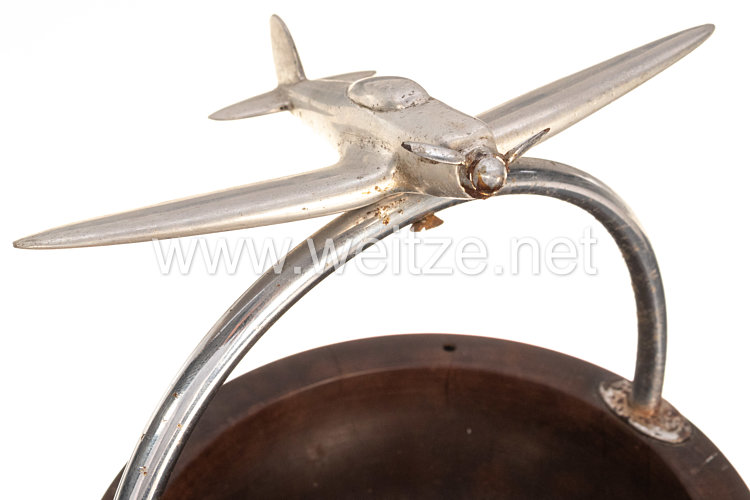
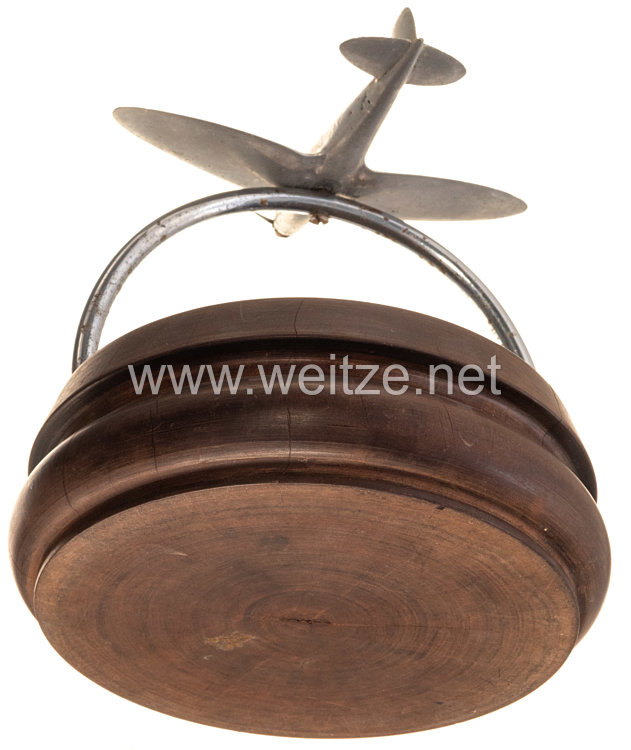
This is a typical handcrafted piece, probably made at an airfield as a gift for an aircraft crew. Cast aluminum on iron arch, unprofessionally screwed together, one propeller blade is missing, hardwood base, the cigarette rests and heat-resistant insert are missing, height approximately 20 cm. A quite decorative one-of-a-kind piece in good condition.
387122
160,00

Luftwaffe - Ashtray with Mounted Aircraft Model

This Luftwaffe ashtray with mounted aircraft model represents a fascinating category of military memorabilia from the Second World War era. Such objects were frequently produced as handcrafted individual pieces at German air bases and served as personal gifts to flight crews or comrades.

The Luftwaffe, established as an independent branch of the Wehrmacht in 1935, quickly developed its own material culture. Alongside official decorations and uniforms, numerous unofficial commemorative items were created by soldiers and craftsmen at military bases. These so-called trench art objects or homemade items reflected the camaraderie and pride of the units.

The present example displays characteristic features of such handcrafted work: The aluminum casting of the aircraft model on an iron arch indicates the use of available materials. Aluminum was ubiquitous in the aviation industry, as it was preferred for aircraft construction due to its light weight. Discarded aircraft parts, metal scraps from workshops, or damaged components were frequently repurposed by technical personnel and mechanics.

The unprofessional bolting and wooden base demonstrate the improvised nature of this manufacture. While air bases employed highly qualified aircraft mechanics and technicians, such gifts were often made during leisure time without professional workshop equipment. The hardwood base provided the object with stability and a presentable foundation.

Ashtrays were extremely common in the military culture of that time. Smoking was part of soldiers' daily routine, and cigarettes were an important component of supplies. They served as stress relief, pastime, and social bonding agent. Accordingly, ashtrays were practical everyday items that became meaningful mementos through the addition of military symbols.

The aircraft models on such ashtrays often represented types flown by the recipients. Common models included the Messerschmitt Bf 109, the Focke-Wulf Fw 190, twin-engine bombers like the Heinkel He 111 or Junkers Ju 88, and transport aircraft. The missing propeller blade on the present piece is a typical characteristic of the wartime and post-war period, as these delicate parts were easily damaged.

The production of such objects served multiple functions: they strengthened unit camaraderie, served as expressions of recognition for special achievements, and were personal reminders of shared service time. Such gifts were particularly presented during transfers, promotions, or after successful missions.

After the war's end, many of these objects were taken by Allied soldiers as war souvenirs or preserved by the German civilian population. Today they form an important part of military-historical collections and document the material culture of the Luftwaffe beyond official production.

The historical evaluation of such objects requires differentiation: they are testimonies of the everyday culture and craftsmanship of their time, without glorifying the ideological aspects of the regime. As historical artifacts, they provide insights into life at air bases and the significance of personal relationships within the military hierarchy.

The condition of the described piece is remarkable. Despite missing components such as a propeller blade and cigarette rests, the basic structure remains intact. The patina of the aluminum and age marks on the wooden base confirm the authenticity and age of the object. Such features are of great interest to collectors and historians as they document originality.

In summary, this is a characteristic example of the material culture of the German Luftwaffe during the Second World War, impressively demonstrating the connection between practical utility, craftsmanship, and military symbolism.

r