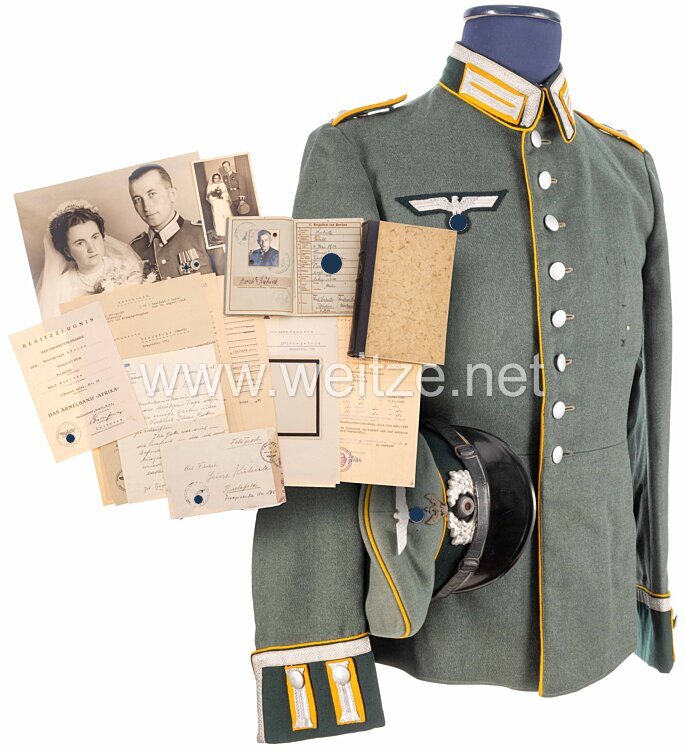
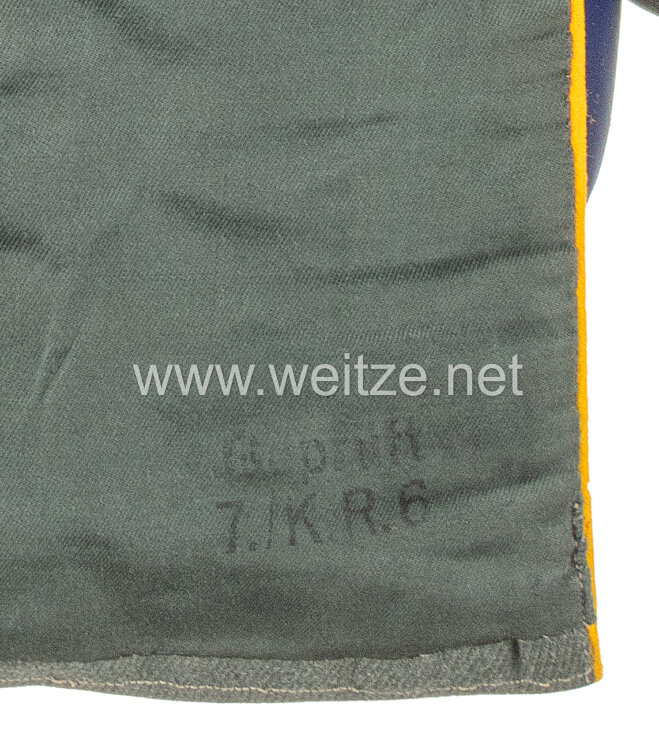
Nachlass des späteren gefallenen Oberfeldwebel "Kuhirte" im Kav.Rgt 6 und zuletzt bei der 4./Pz.Auf.Abt.115, mitgemachte Gefechte: Tobruk, Al Alamein und Monte Cassino
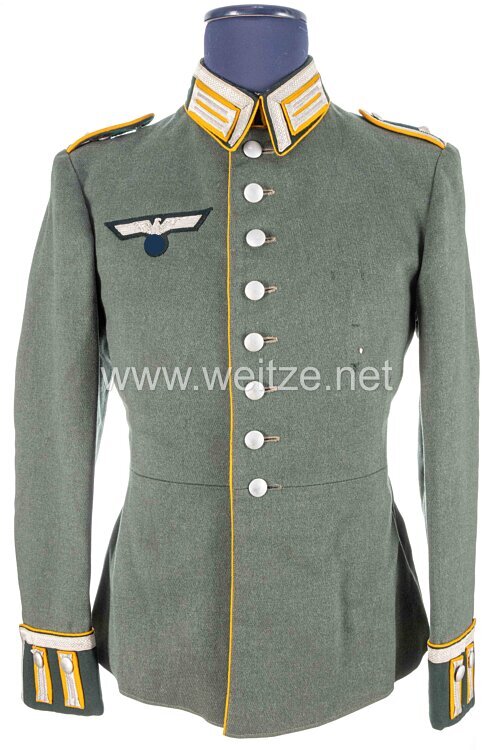
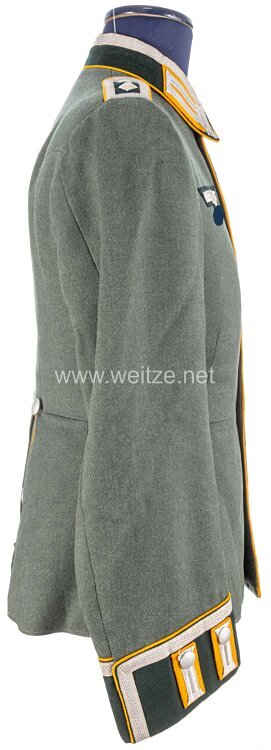
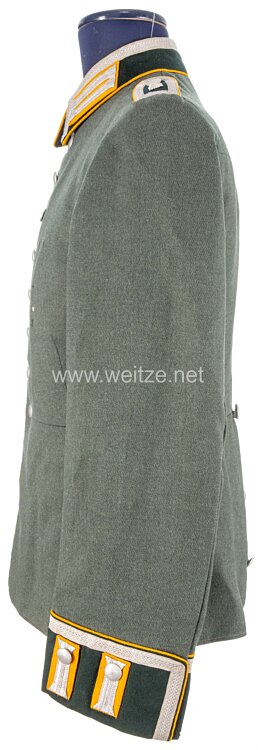
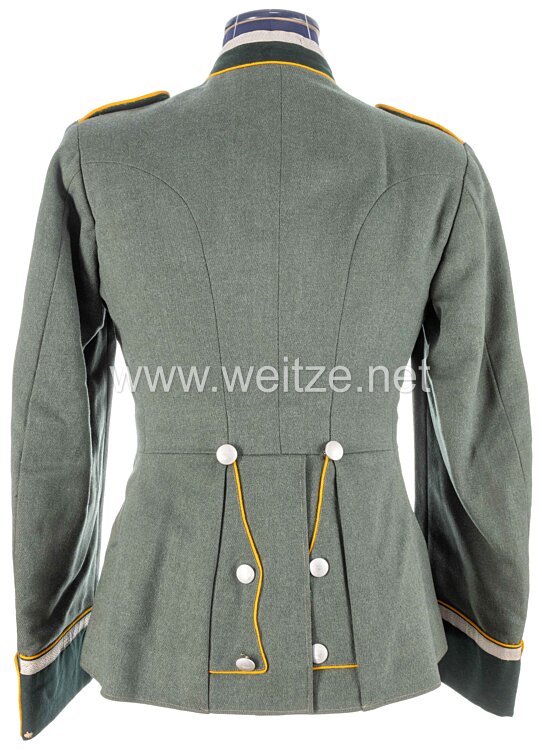
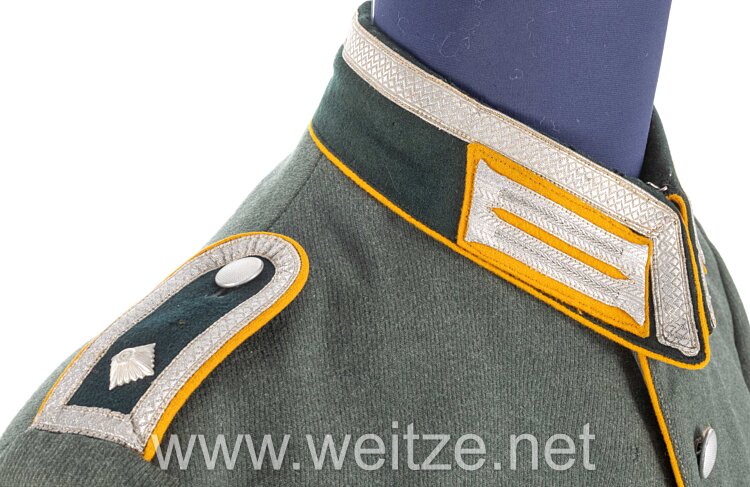
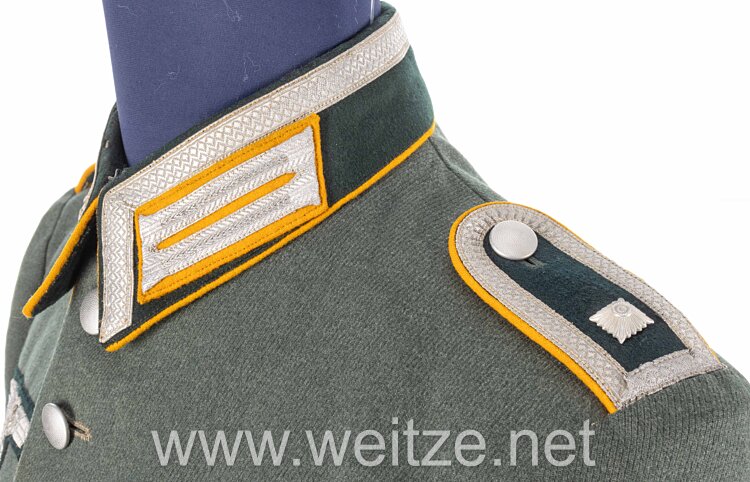
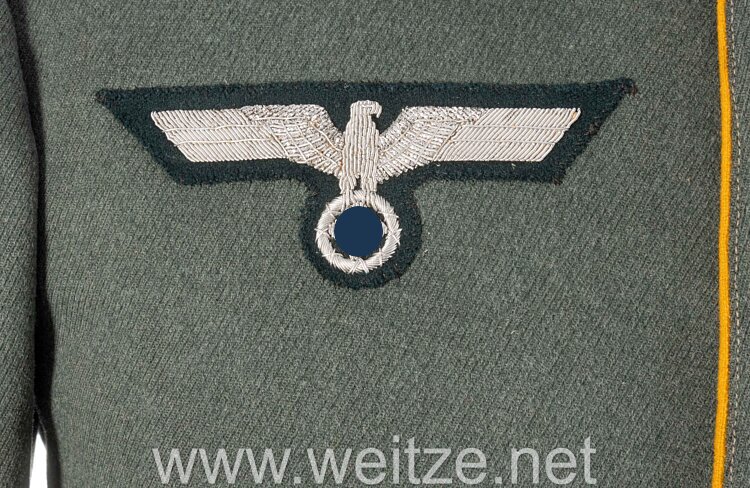
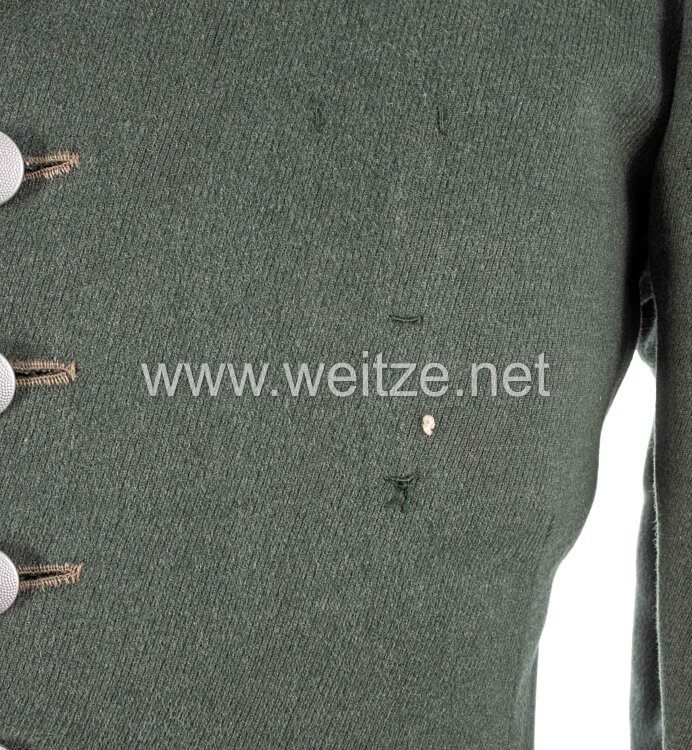
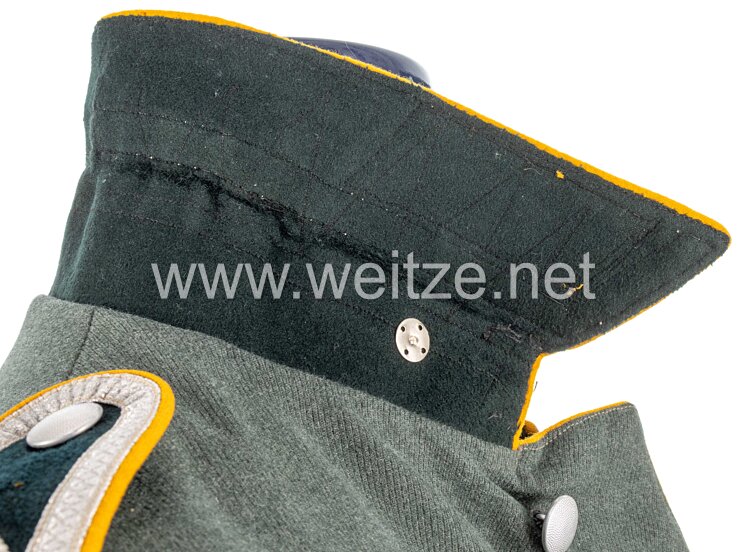
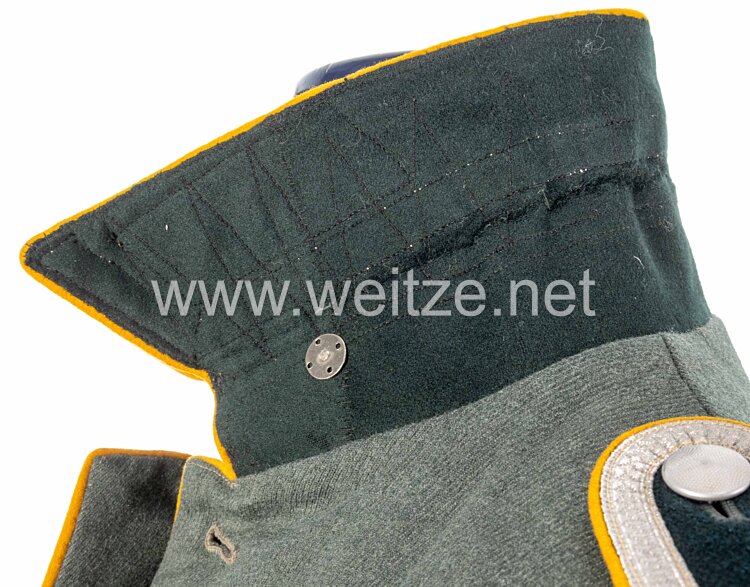
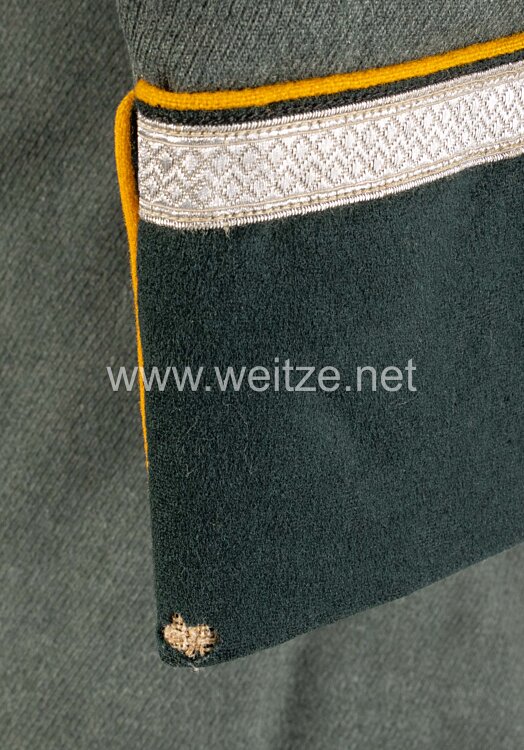
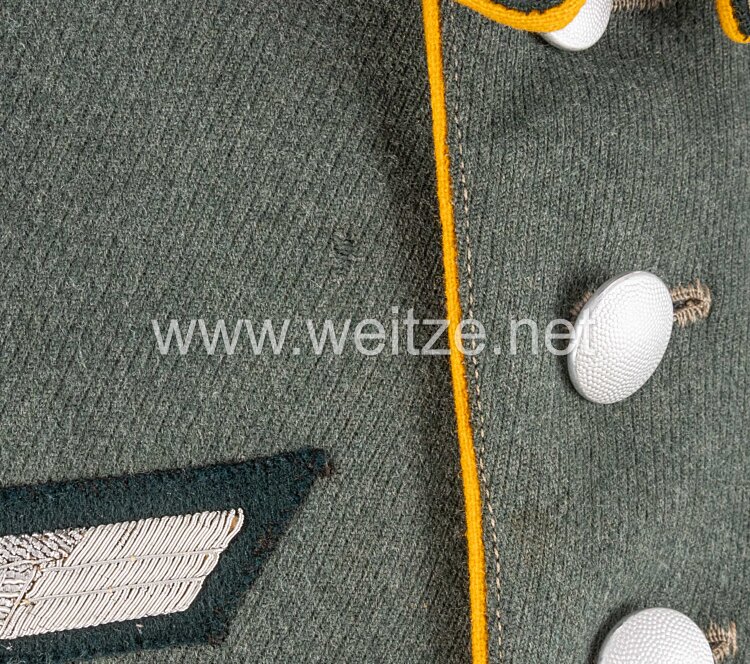
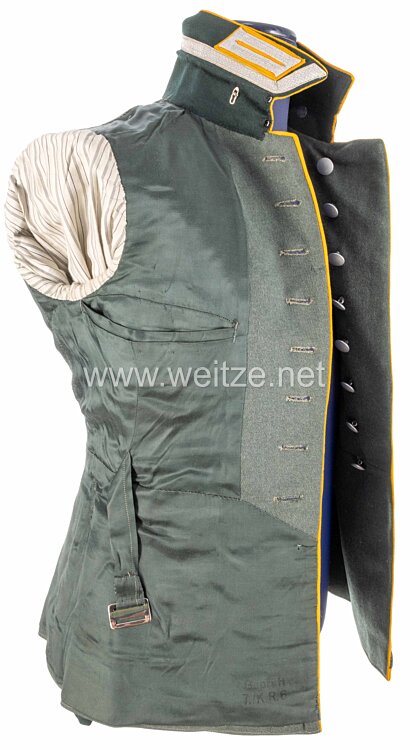
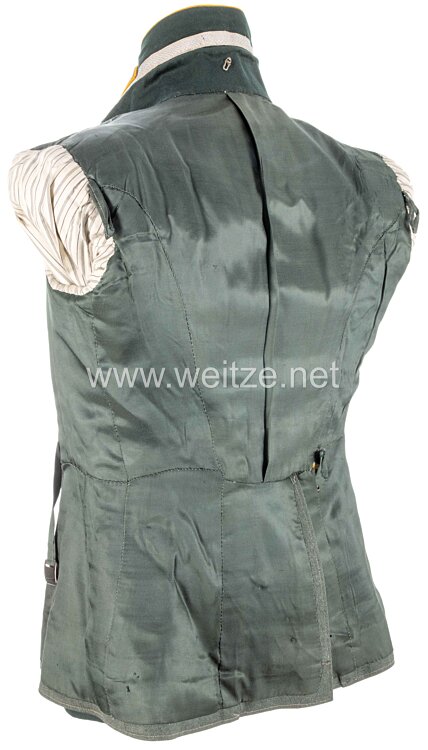
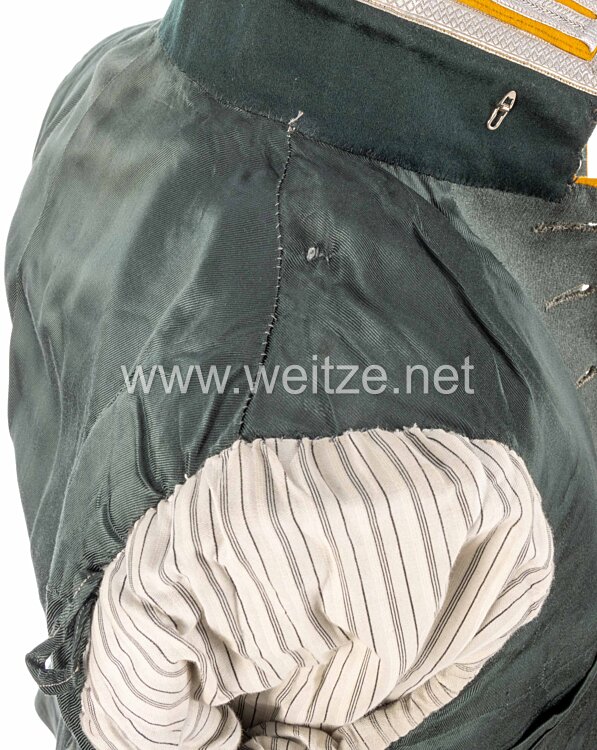
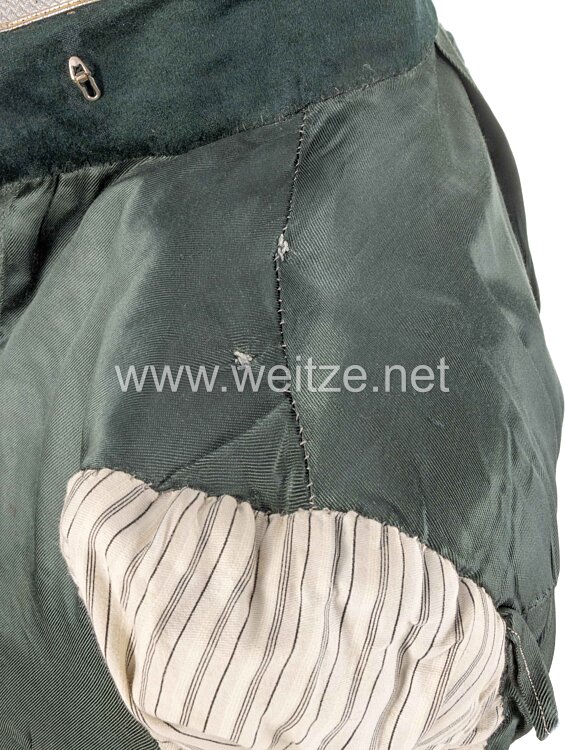
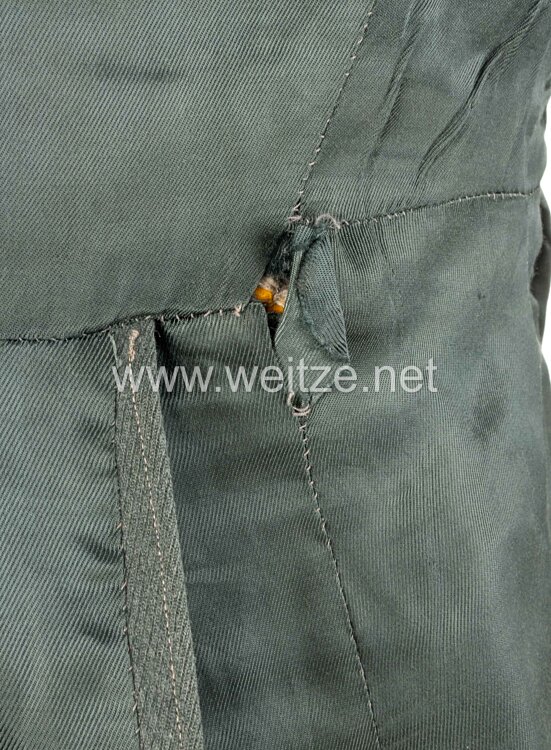
Waffenrock als Eigentumstück. Tuch aus feldgrauer Gabardine, komplett mit allen Effekten. Metallfaden handgestickter Brustadler auf dunkelgrüner Tuchunterlage, Kragenspiegel und Ärmelpatten in Metallfaden-gewebter Ausführung, die Schulterstücke zum einnähen, Waffenfarbe goldgelb. Auf der Brust Schlaufen für 1 Steckabzeichen und für eine Bandspange. Innen mit grünem Seidenfutter, seitlich mit Schlitz zum Tragen des Säbels. Armlänge 62 cm, Brustumfang 80 cm, Länge 65 cm. Mottenschäden am Kragen sowie am linken Ärmelaufschlag, Zustand 3.
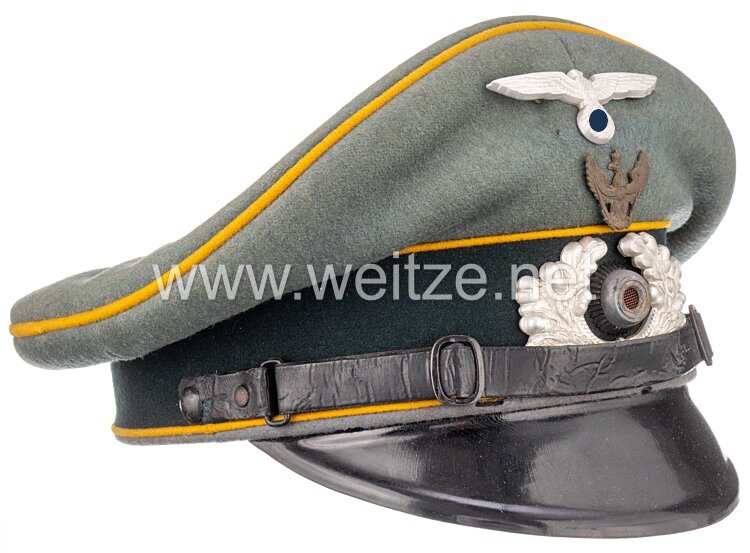
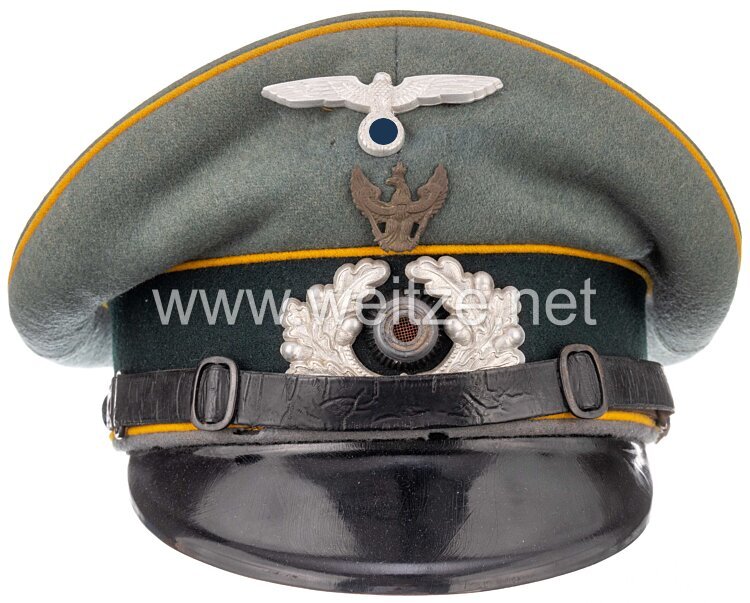
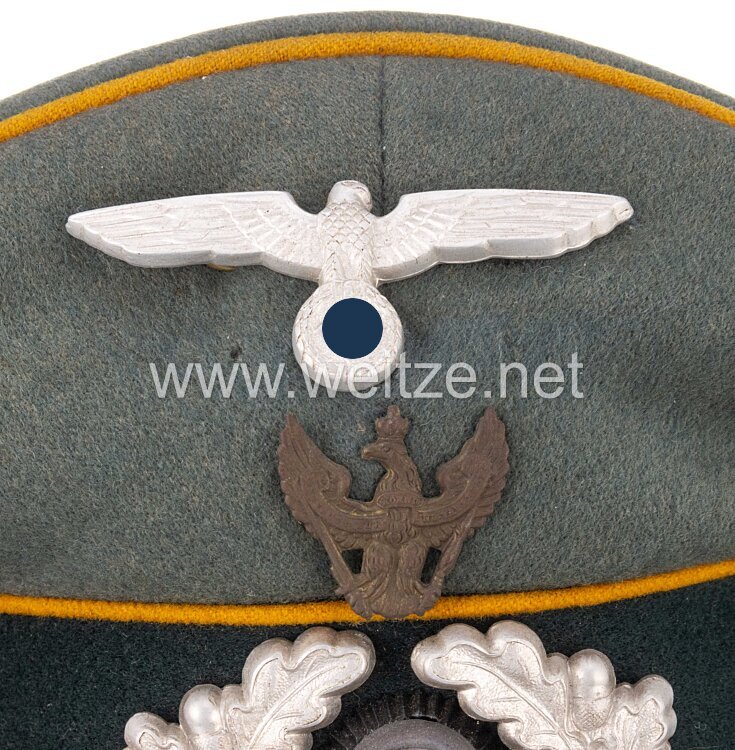
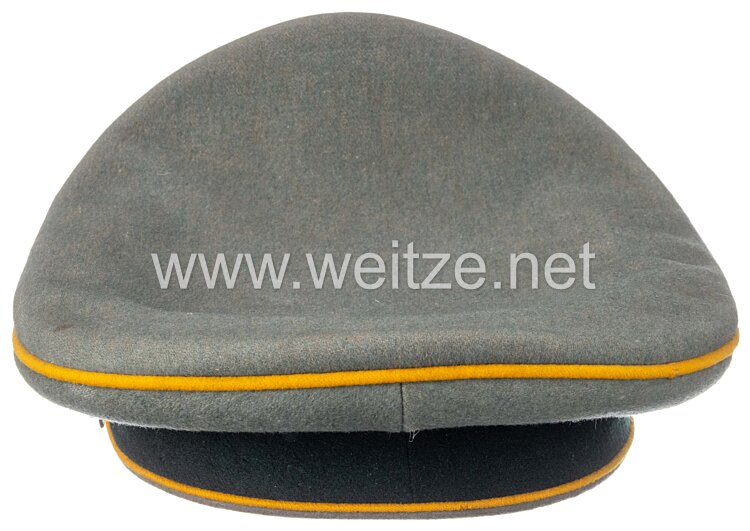
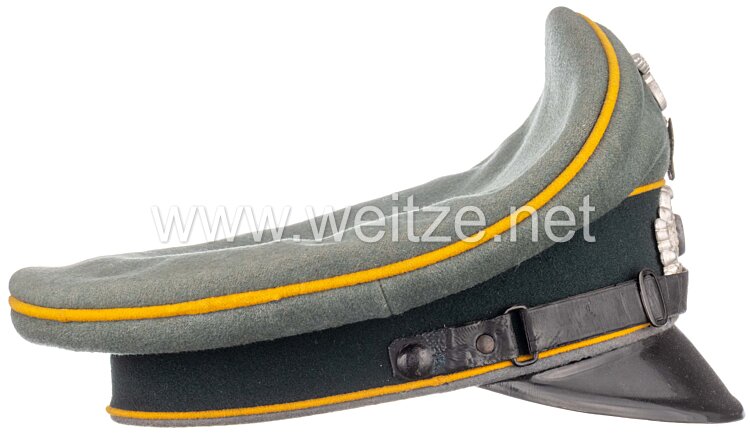
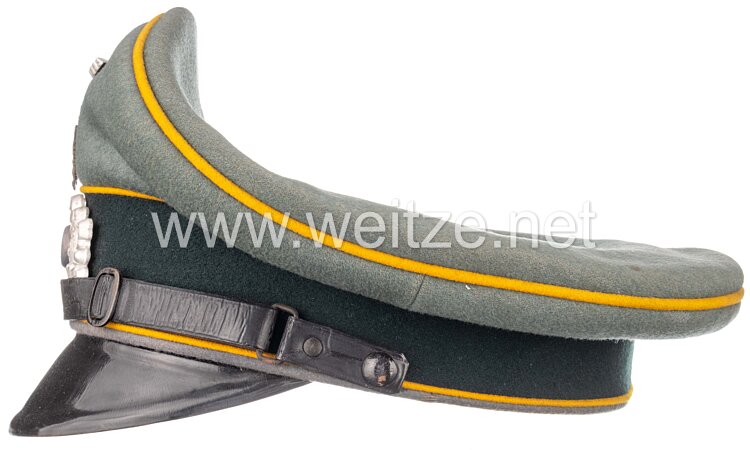
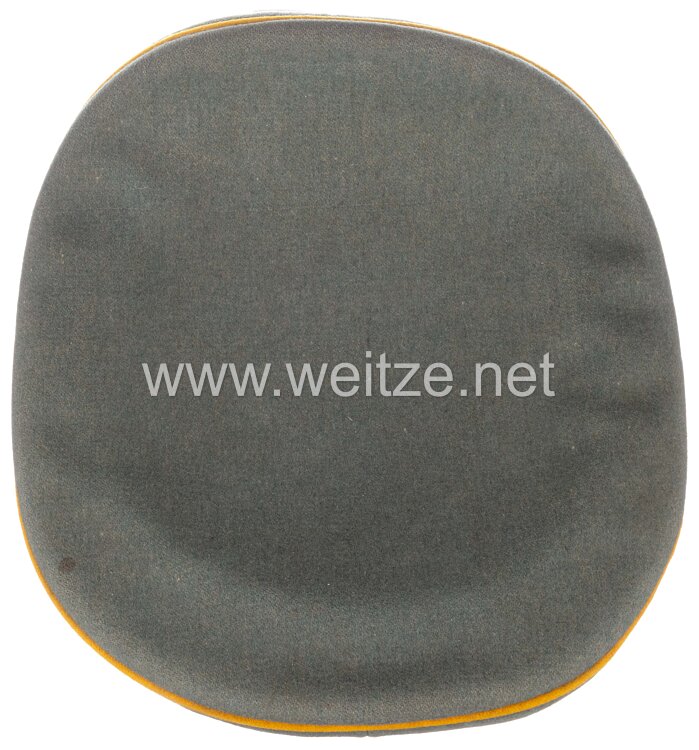
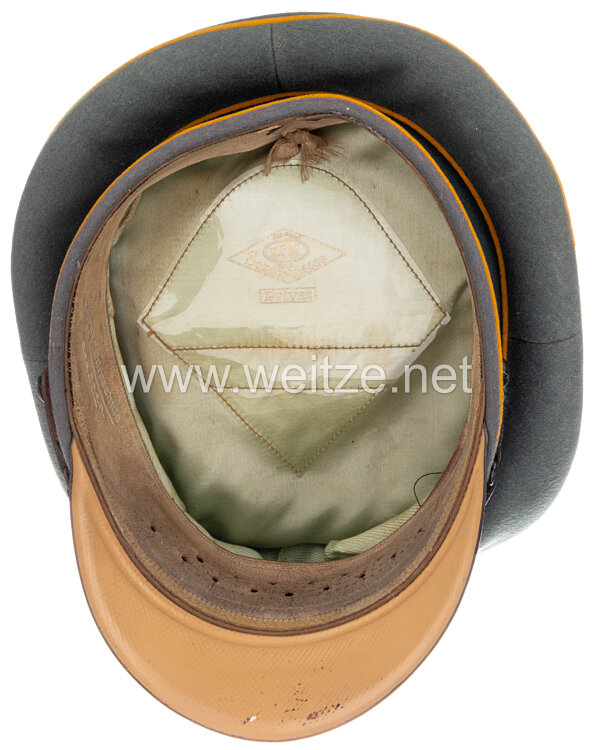
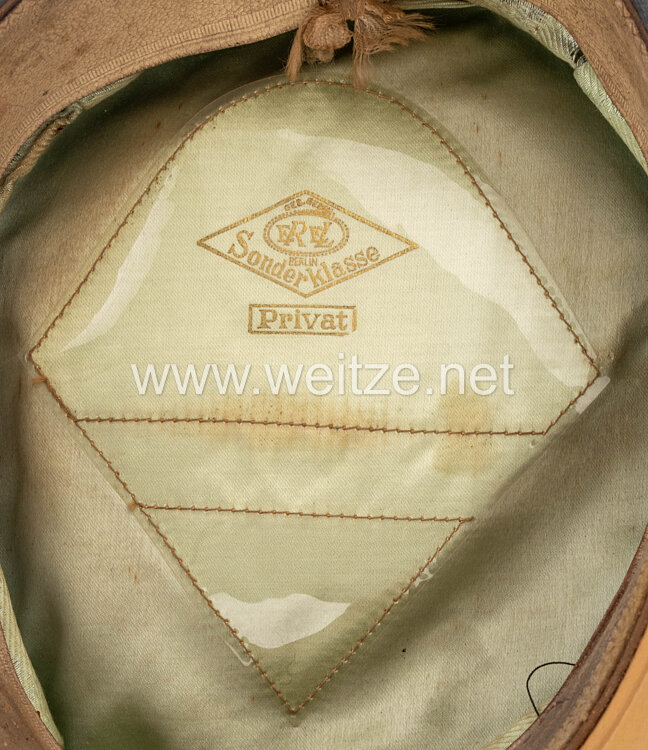
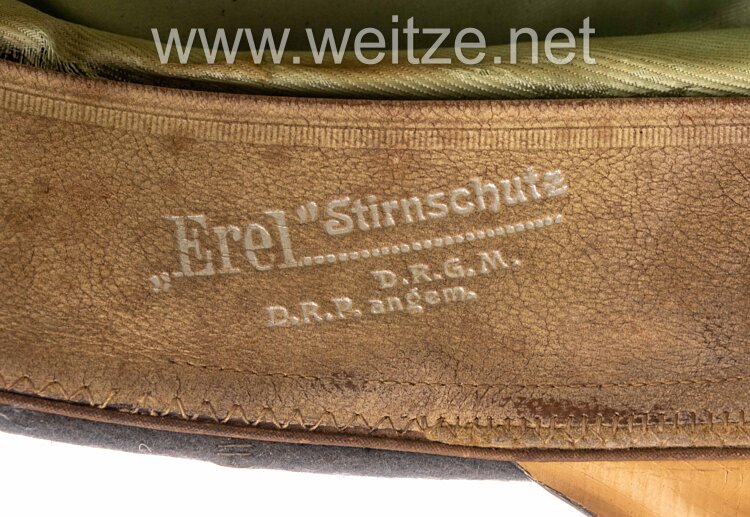
Dazu die passende Schirmmütze. Hohe Sattelform, komplett mit Mützenadler, Eichenlaubkranz in Aluminium, Metallkokarde mit Lüftungssieb. Zwischen Adler und Eichenlaubkranz der aufgesteckte Schwedter Traditionsadler ( Vergoldung ist verblasst ), Waffenfarbe goldgelb. Innen Schweißleder mit Blinddruck "Erel Stirnschutz DRGM ", pistaziengrünes Seidenfutter, Zelluloidtrapez mit Hersteller " Erel Sonderklasse Privat ", ein paar minimale Mottenschäden unterhalb des Mützenriemen, Kopfgröße ca. 55. Zustand 2-.
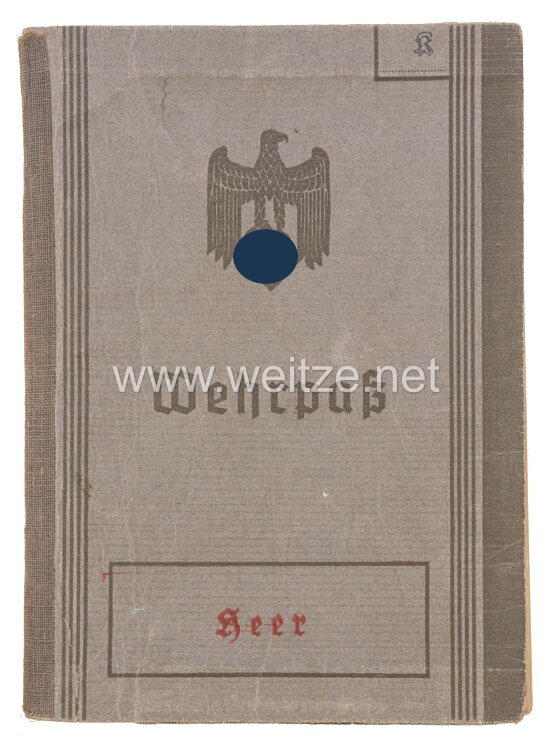
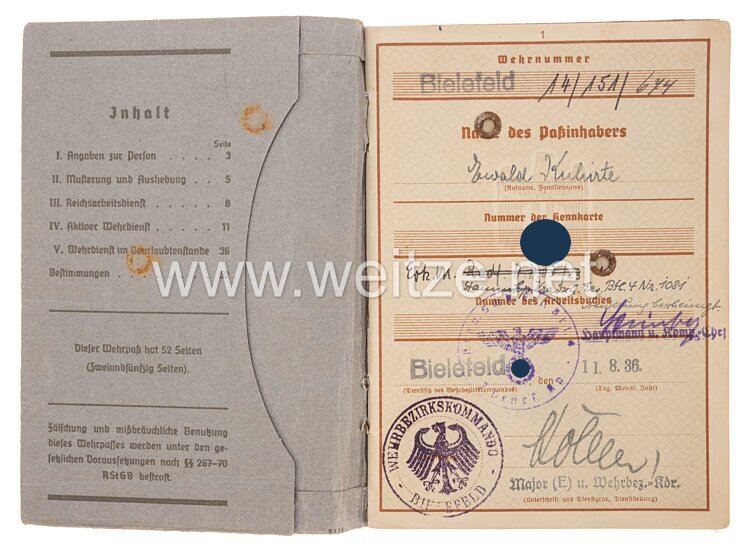
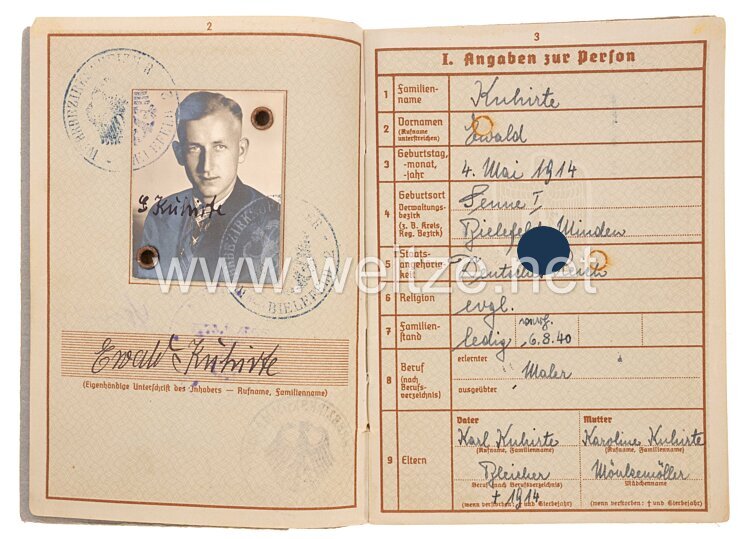
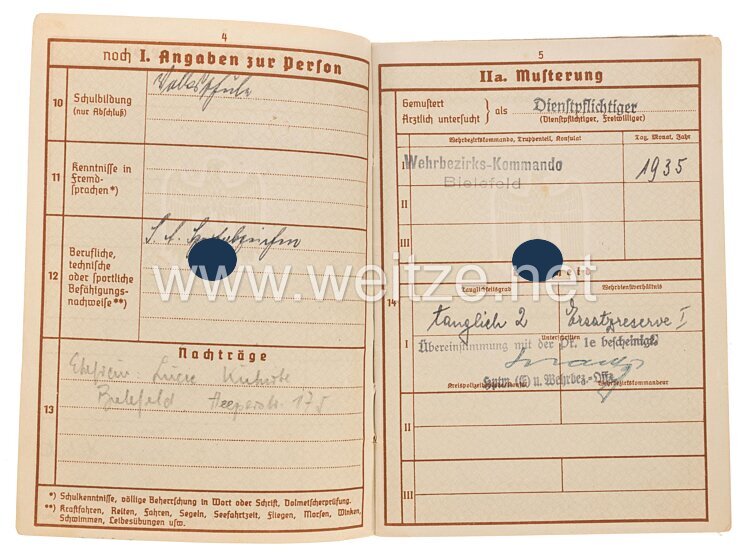
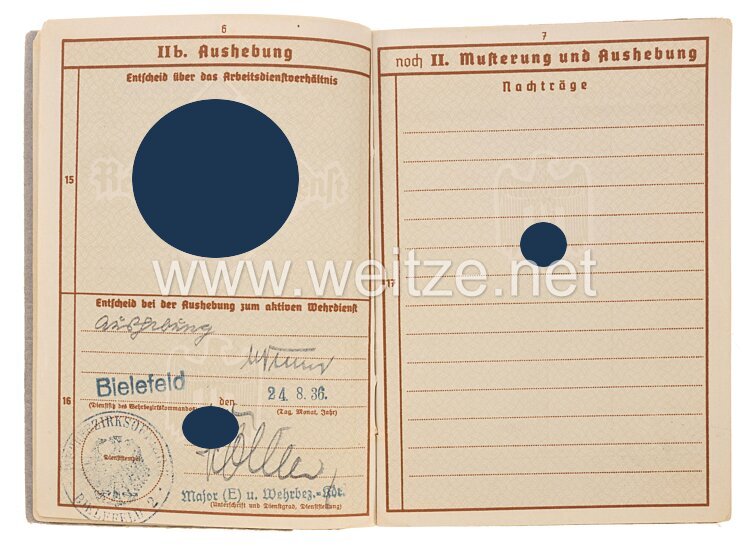
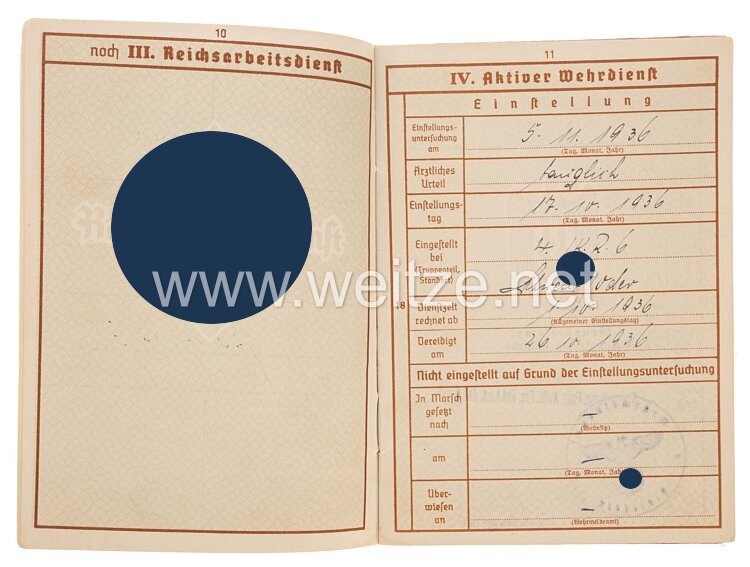
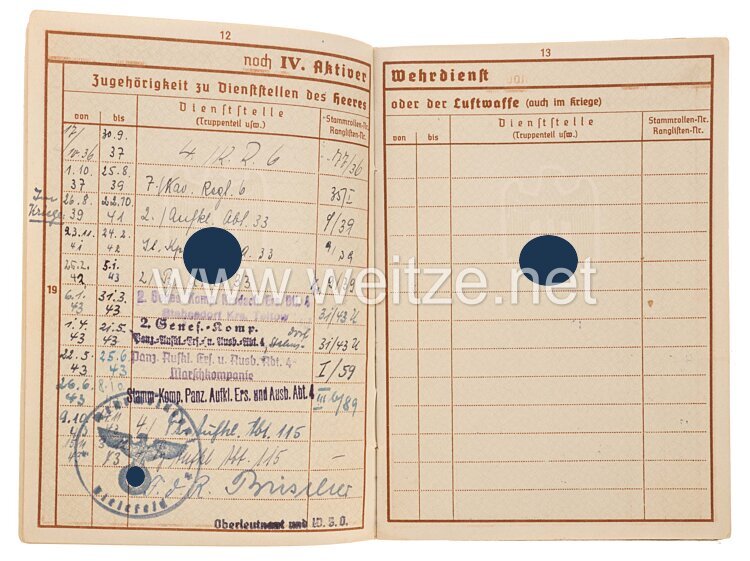
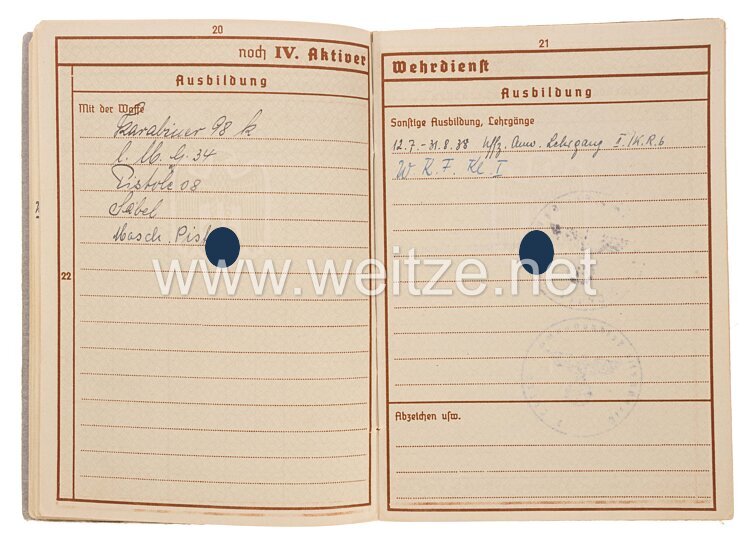
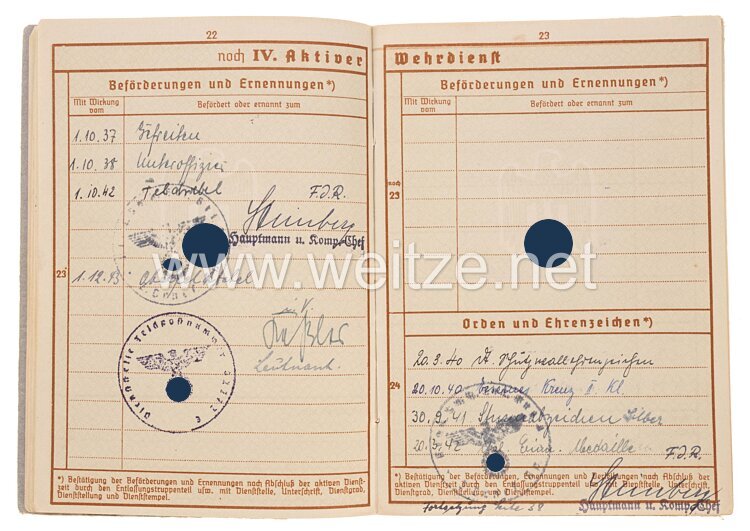
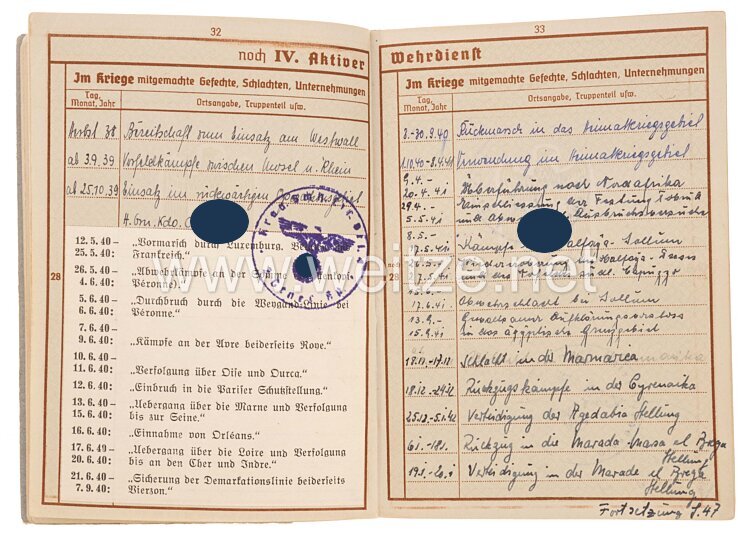
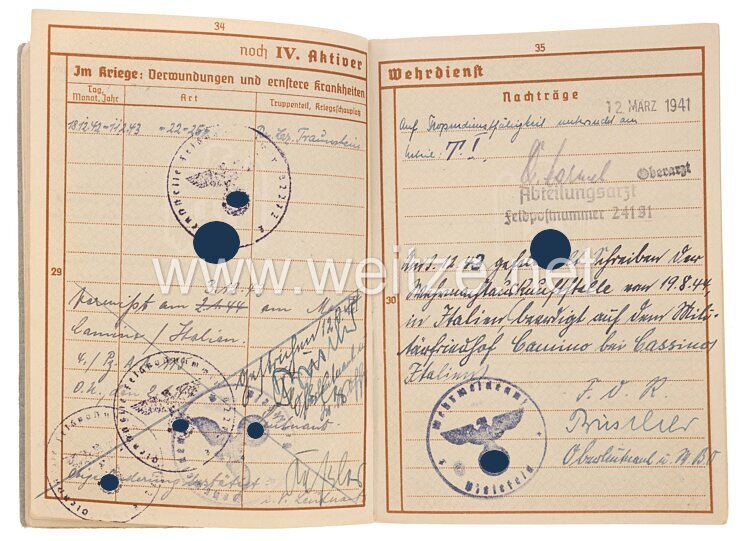
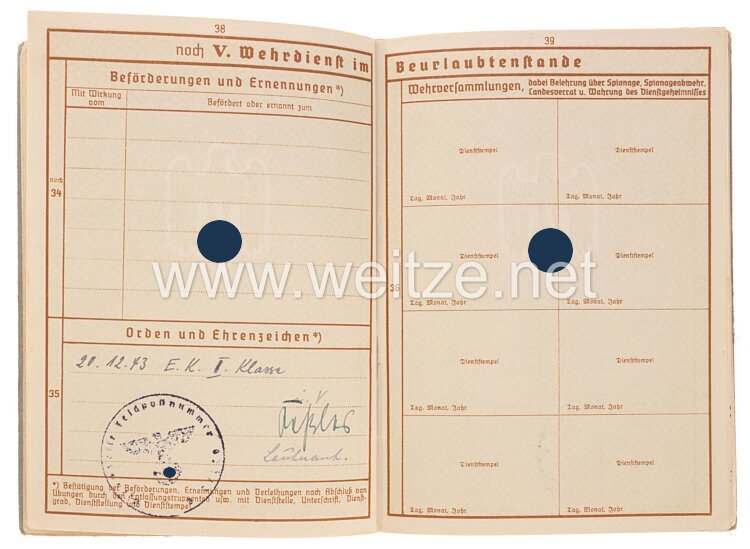
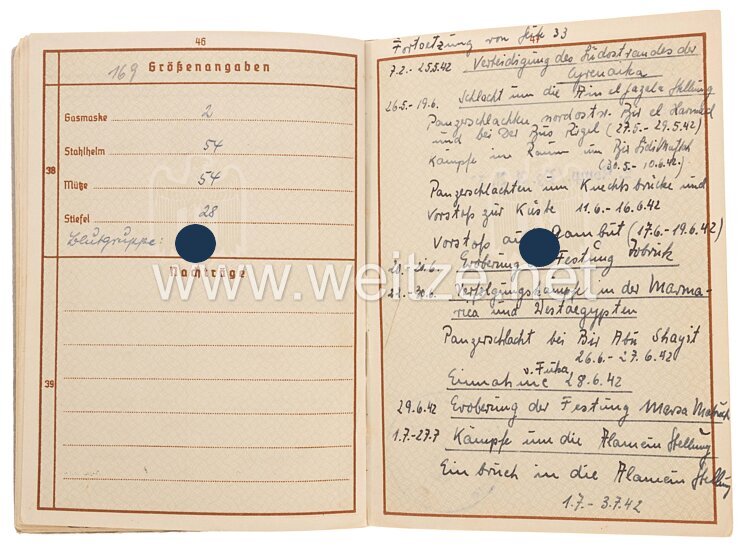
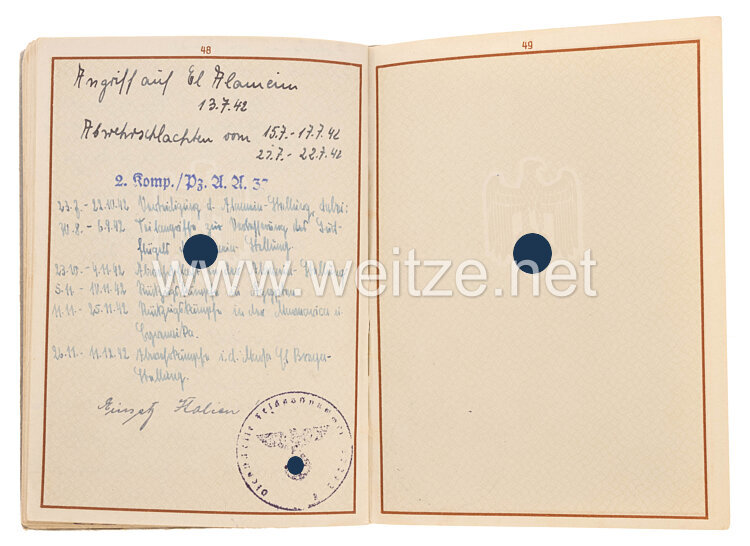
Wehrpaß ausgestellt am 11.8.1936, mit Foto, als Dienstpflichtiger zur Ers.-Res. I gemustert, eingestellt am 17.10.1936 bei der 4./Kav.Rgt.6, weitere Einheiten : Aufkl.Abt.33, Pz.Aufkl-Erst.u.Ausb.Abt.4., Pz. Aufkl.Abt. 115, Ausbildung als Funker, Auszeichnungen : Verwundeten Abzeichen in Schwarz, Eisernes Kreuz II. Klasse, Sturmabzeichen in Silber, Medaille für den italienisch-deutschen Feldzug in Afrika, hat an zahlreichen Kampfhandlungen teilgenommen, siehe Seiten, 32, 33, 47, 48, Frankreichfeldzug, ab 9.4.1941 in Afrika, Festung Tobruk, Marsa Matruh, Al Alamein. Gefallen 3.12.1943 im Raum Cassino, Italie, gebrauchter Zustand.
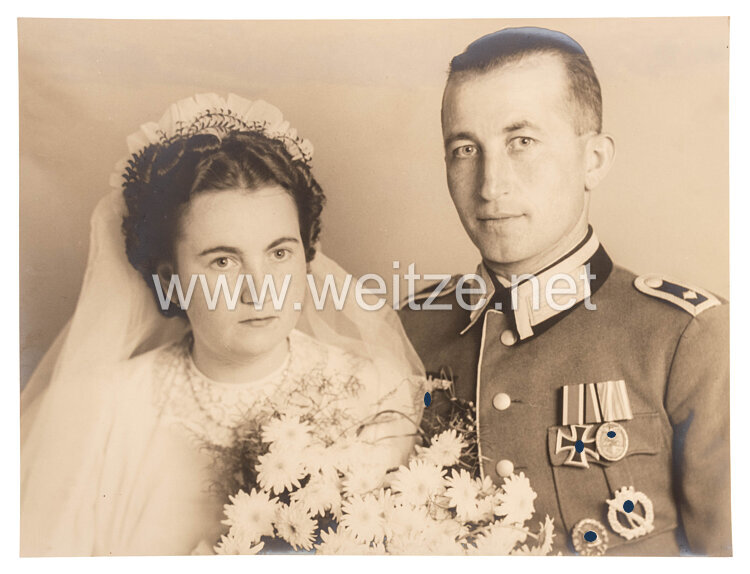
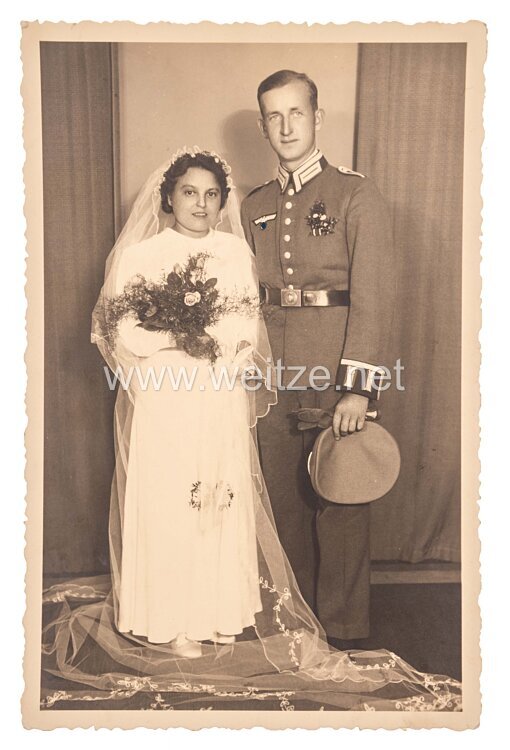
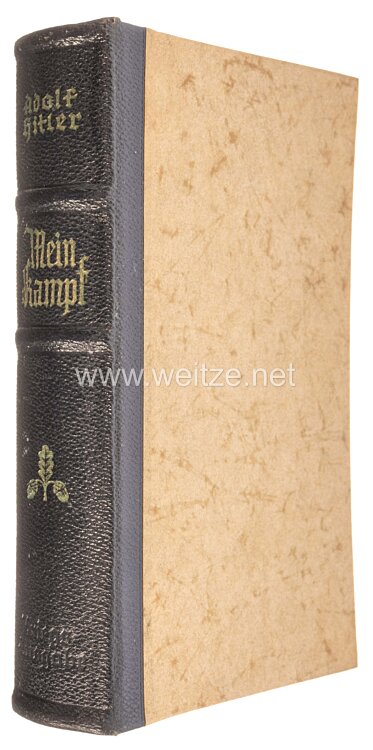
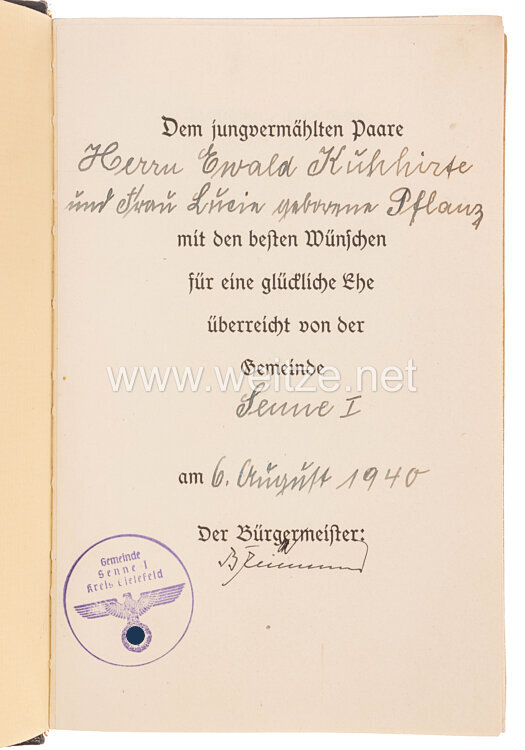
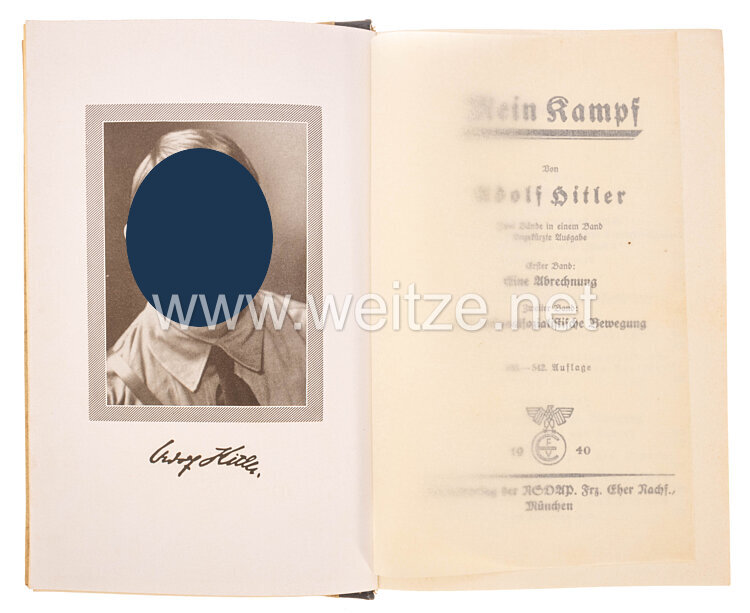
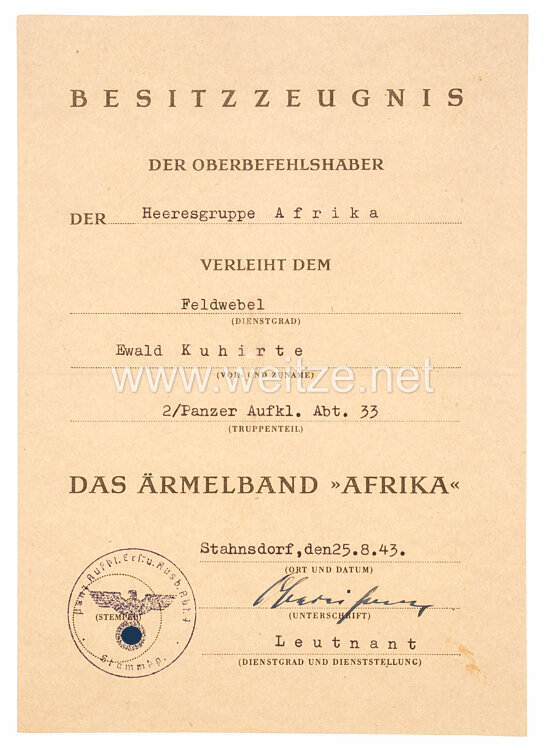
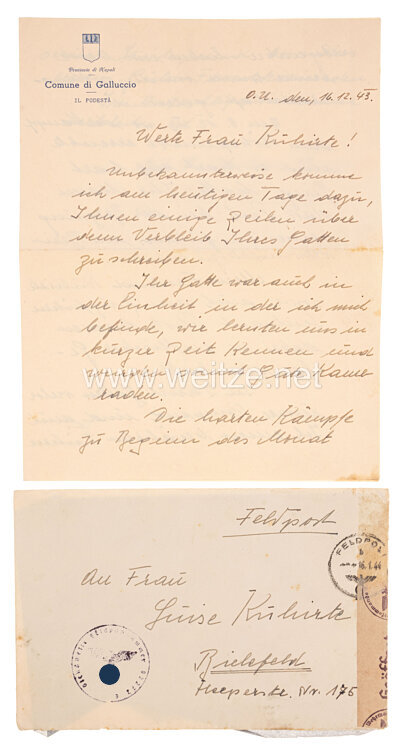
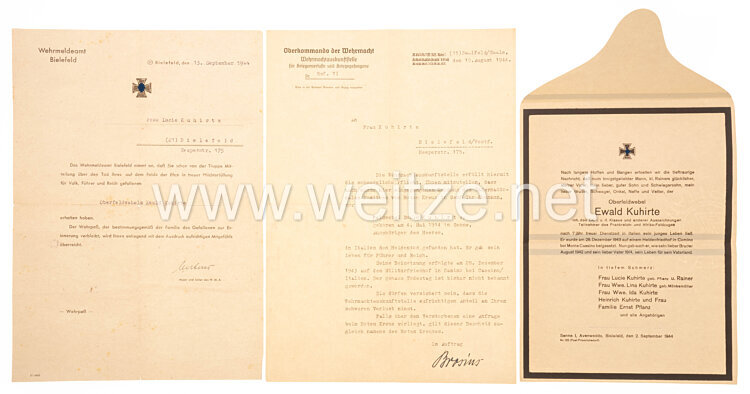
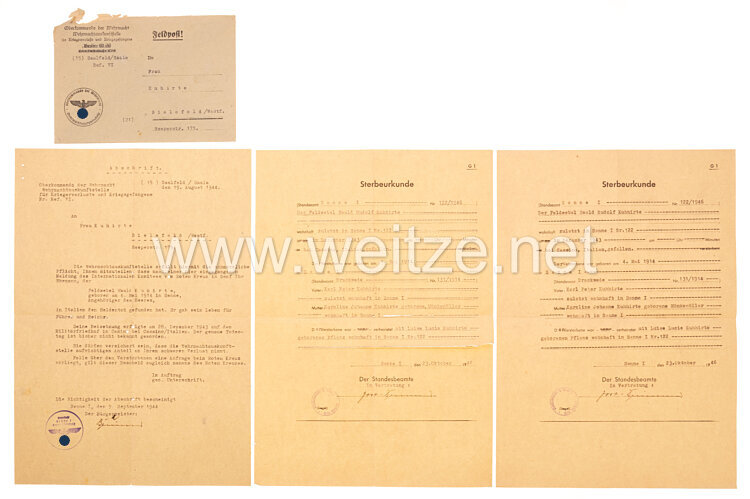
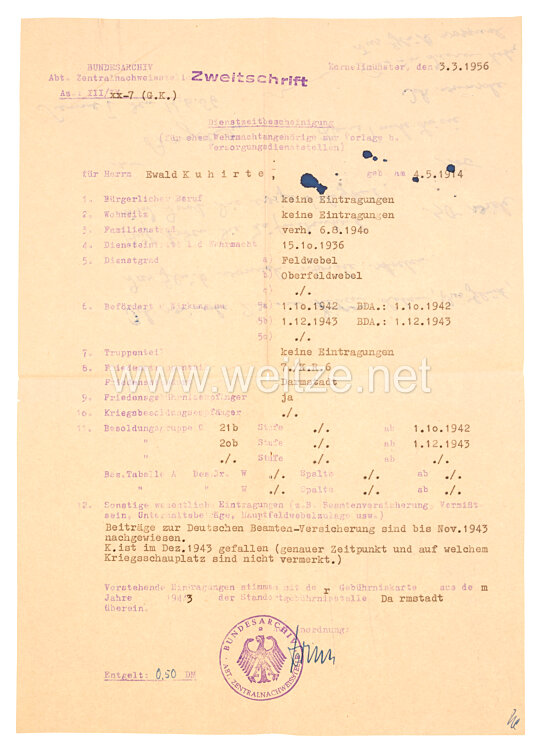
Besitzzeugnis zum Ärmelband Afrika, 2/Panzer Aufkl.Abt. 33, ausgestellt am 25.8.1943, unterzeichnet vom Leutnant. Die Urkunde ist mittig einmal gefaltet worden. Zustand 2. Buch: Mein Kampf - Hochzeitsausgabe, gerichtet an Herrn Ewald Kuhhirte und Frau Pflanz, datiert 6. August 1940, Zustand 2. Portraitfoto vom Oberfeldwebel mit seiner Frau, Maße: 28,2 x 21,3 cm. Trauerblatt vom Oberfeldwebel Ewald Kuhirte, datiert 2.September 1944. Schreiben vom Wehrmeldeamt Bielefeld, über die Mitteilung des gefallenen Oberfeldwebel, datiert 13. September 1944. Sterbeurkunde von Herrn Kuhhirte, Dienstzeitbescheinigung, datiert 3.3.1956, Feldpost gerichtet an Frau Luise Kuhhirte.
Dazu die passende Schirmmütze. Hohe Sattelform, komplett mit Mützenadler, Eichenlaubkranz in Aluminium, Metallkokarde mit Lüftungssieb. Zwischen Adler und Eichenlaubkranz der aufgesteckte Schwedter Traditionsadler ( Vergoldung ist verblasst ), Waffenfarbe goldgelb. Innen Schweißleder mit Blinddruck "Erel Stirnschutz DRGM ", pistaziengrünes Seidenfutter, Zelluloidtrapez mit Hersteller " Erel Sonderklasse Privat ", ein paar minimale Mottenschäden unterhalb des Mützenriemen, Kopfgröße ca. 55. Zustand 2-.
Wehrpaß ausgestellt am 11.8.1936, mit Foto, als Dienstpflichtiger zur Ers.-Res. I gemustert, eingestellt am 17.10.1936 bei der 4./Kav.Rgt.6, weitere Einheiten : Aufkl.Abt.33, Pz.Aufkl-Erst.u.Ausb.Abt.4., Pz. Aufkl.Abt. 115, Ausbildung als Funker, Auszeichnungen : Verwundeten Abzeichen in Schwarz, Eisernes Kreuz II. Klasse, Sturmabzeichen in Silber, Medaille für den italienisch-deutschen Feldzug in Afrika, hat an zahlreichen Kampfhandlungen teilgenommen, siehe Seiten, 32, 33, 47, 48, Frankreichfeldzug, ab 9.4.1941 in Afrika, Festung Tobruk, Marsa Matruh, Al Alamein. Gefallen 3.12.1943 im Raum Cassino, Italie, gebrauchter Zustand.
Besitzzeugnis zum Ärmelband Afrika, 2/Panzer Aufkl.Abt. 33, ausgestellt am 25.8.1943, unterzeichnet vom Leutnant. Die Urkunde ist mittig einmal gefaltet worden. Zustand 2. Buch: Mein Kampf - Hochzeitsausgabe, gerichtet an Herrn Ewald Kuhhirte und Frau Pflanz, datiert 6. August 1940, Zustand 2. Portraitfoto vom Oberfeldwebel mit seiner Frau, Maße: 28,2 x 21,3 cm. Trauerblatt vom Oberfeldwebel Ewald Kuhirte, datiert 2.September 1944. Schreiben vom Wehrmeldeamt Bielefeld, über die Mitteilung des gefallenen Oberfeldwebel, datiert 13. September 1944. Sterbeurkunde von Herrn Kuhhirte, Dienstzeitbescheinigung, datiert 3.3.1956, Feldpost gerichtet an Frau Luise Kuhhirte.