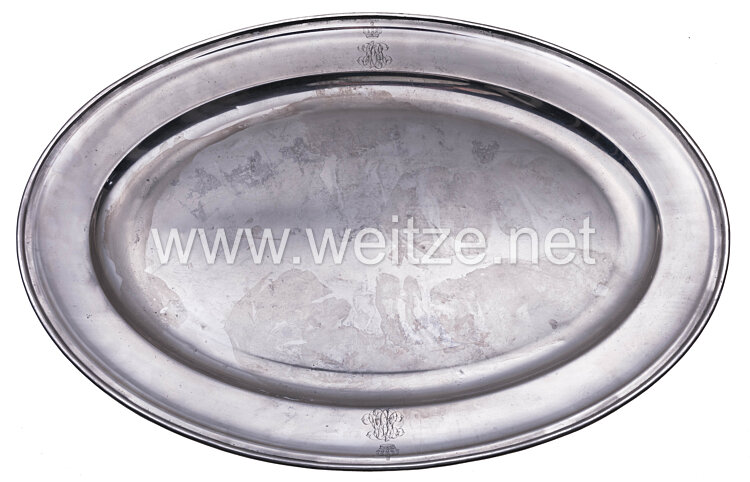
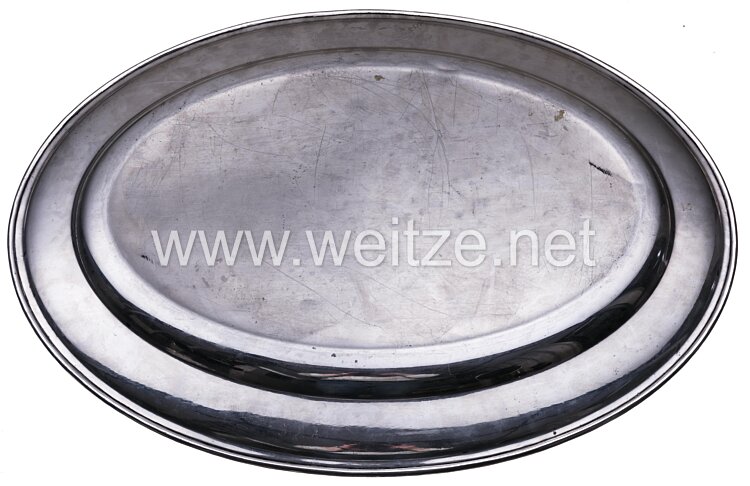
Prussia Large Oval Silver-Plated Serving Tray or Meat Platter from the Estate of Infanterie-Regiment "Bremen" (1. Hanseatisches) Nr. 75

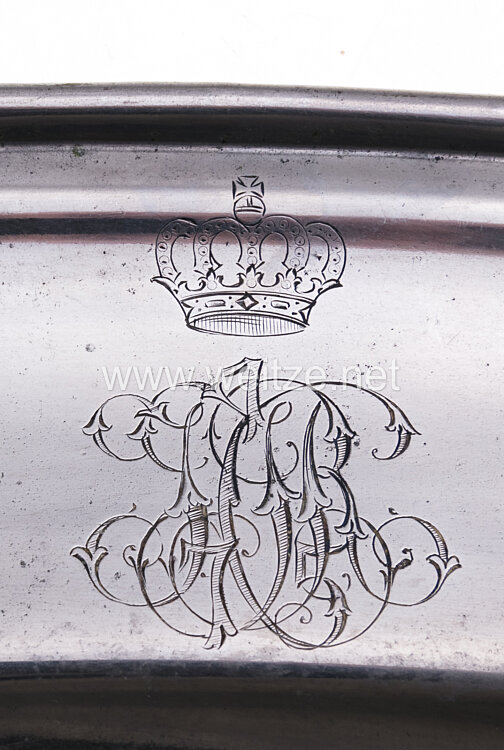
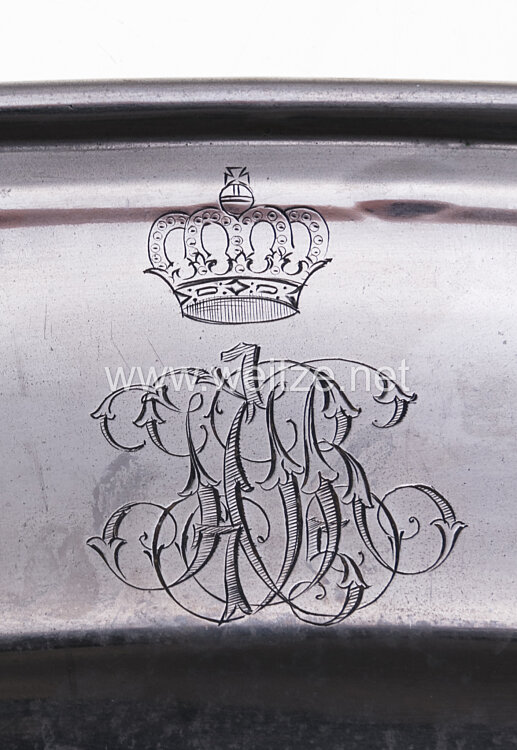
Two engraved monograms on upper rim, dimensions approximately 72 x 53 cm, slightly tarnished, condition 2.
277619
360,00

Prussia Large Oval Silver-Plated Serving Tray or Meat Platter from the Estate of Infanterie-Regiment "Bremen" (1. Hanseatisches) Nr. 75

The silver-plated serving tray described here from the possession of the Infantry Regiment “Bremen” (1st Hanseatic) No. 75 represents a fascinating testimony to Prussian military culture of the late 19th and early 20th centuries. Such serving platters were an integral part of the officers' mess and casino facilities of Prussian infantry regiments and reflect the importance of ceremonial and social traditions in the Imperial Army.

Infantry Regiment No. 75 was established on October 1, 1866, in Bremen and bore the designation “1st Hanseatic Infantry Regiment.” Its formation occurred in the context of Prussian army reform following the Austro-Prussian War of 1866. As a Hanseatic regiment, it represented the military integration of the Free Hanseatic City of Bremen into the Prussian Army. The regiment belonged to the IX Army Corps and was garrisoned in Bremen. The regiment's history was closely connected with the city, and the unit developed a strong local identity that was reflected in numerous traditions and material cultural objects.

During the Franco-Prussian War of 1870-71, the regiment participated in important operations, including the Battle of Beaumont, the Battle of Sedan, and the Siege of Paris. These military successes contributed significantly to the unit's reputation and self-understanding. The victories achieved were preserved in regimental culture and celebrated at social occasions in the officers' mess.

The officers' mess (Offizierskasino) was a central institution in Prussian regimental life. It served not only as a place of relaxation and social gathering but also as a space for cultivating camaraderie and military tradition. The material furnishings of these mess facilities were assembled with great care and often consisted of high-quality items that were either purchased from regimental funds or donated by officers and patrons. Serving trays and meat platters made of silver-plated material were standard equipment for festive dinners and representative events.

The monograms engraved on the tray are typical of military utilitarian objects from this era. Such engravings could include the regimental monogram, initials of donating officers, or references to special occasions. The practice of personalization through engraving served several purposes: it documented provenance, prevented confusion with the property of other units, and gave the object additional symbolic value as part of regimental history.

The considerable dimensions of approximately 72 x 53 cm characterize the tray as representative serving ware for larger social occasions. Such platters were used at banquets, receptions, and other ceremonial events where the material furnishings were meant to demonstrate the regiment's status and dignity. The silver plating gave the object a noble character without incurring the cost of solid silver—a practical solution for military establishments.

The craftsmanship quality of such objects was remarkable in the German Empire. Silver-plated tableware was manufactured by specialized companies that often worked for military clients over generations. Electroplating, a process perfected in the 19th century, enabled the production of durable and aesthetically pleasing utilitarian objects.

During World War I, the regiment fought on various fronts, initially in Belgium and France, later also on the Eastern Front. Casualties were substantial, and the unit was reorganized several times. After the war's end in 1918 and the dissolution of the Imperial Army, the regiment was demobilized in accordance with the provisions of the Treaty of Versailles. The material culture of dissolved regiments, including mess inventory and silverware, was divided, auctioned, or entered private collections.

Today, such objects are important historical artifacts that provide insight into the everyday culture and social practices of the Prussian Army. They document not only the material furnishings of military establishments but also the values of an era in which military honor, tradition, and social representation were closely intertwined. For collectors and historians, they represent valuable sources for researching the military history of the German Empire.