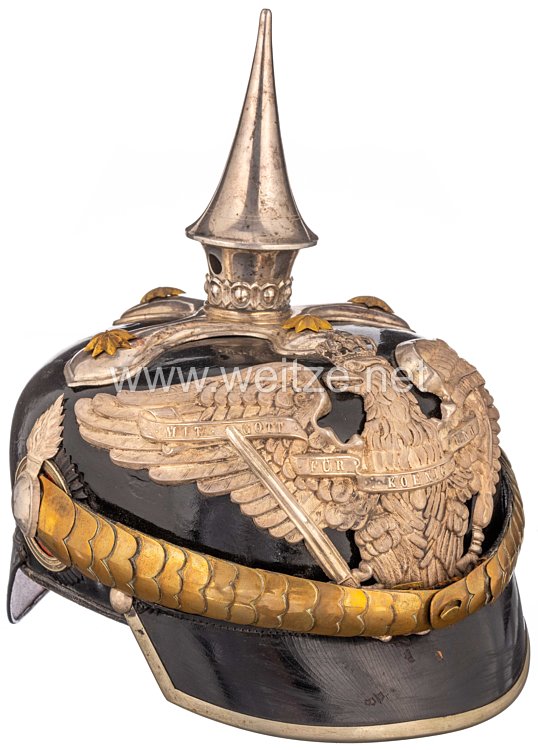
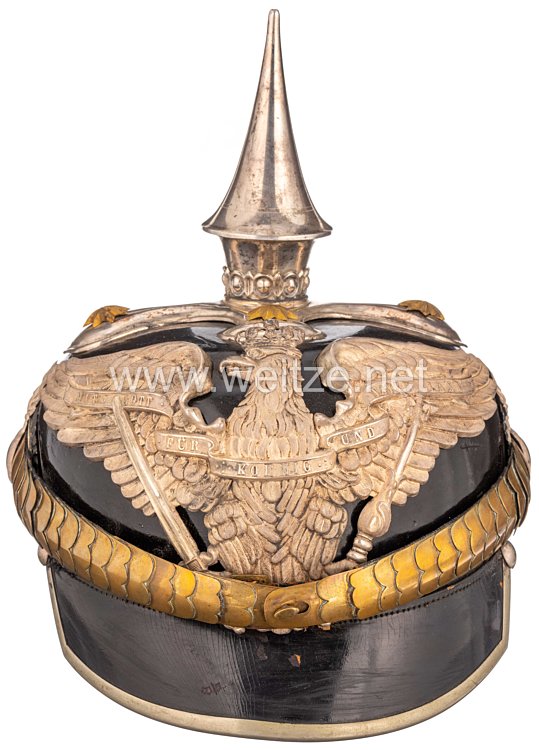
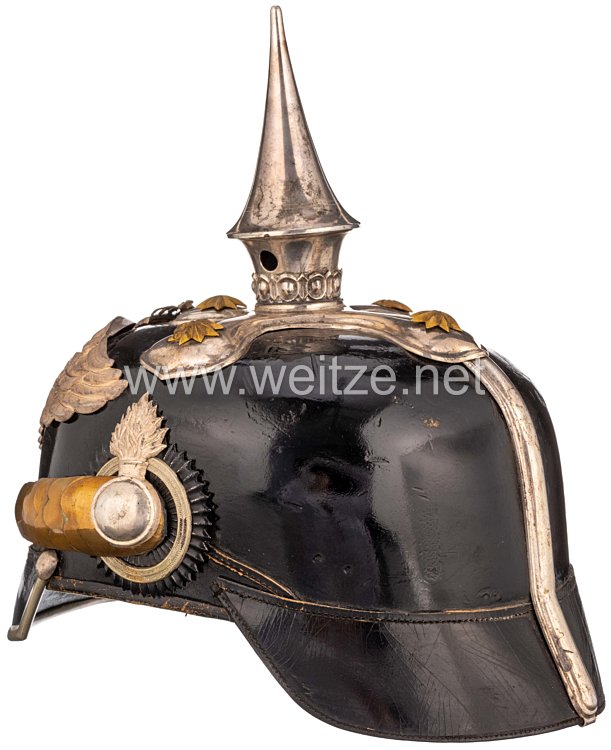
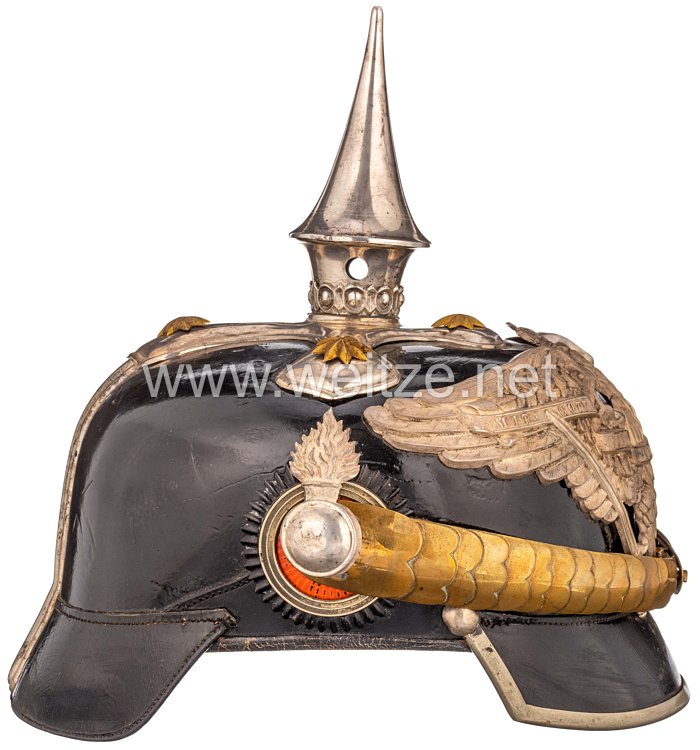
Prussian Pickelhaube for Officers of the Grenadier-Regiment zu Pferde Freiherr v. Derfflinger (Neumärkisches) Nr. 3

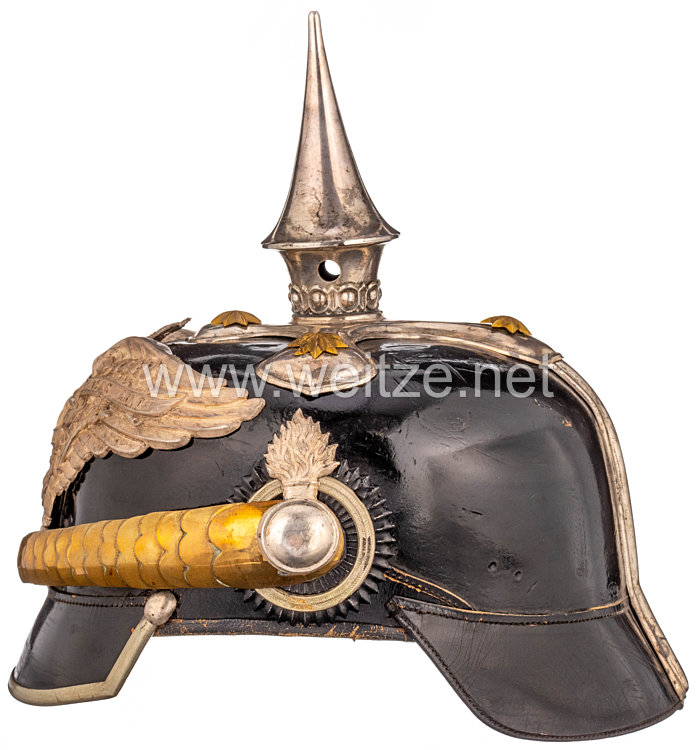
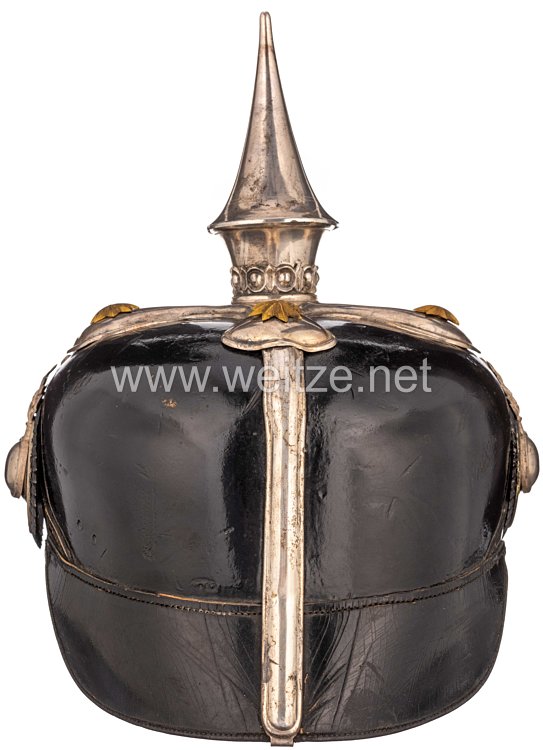
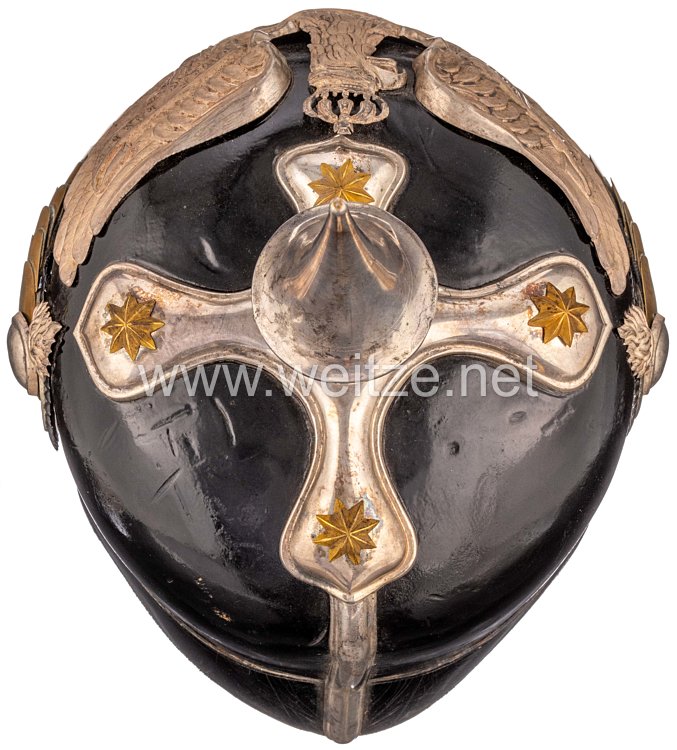
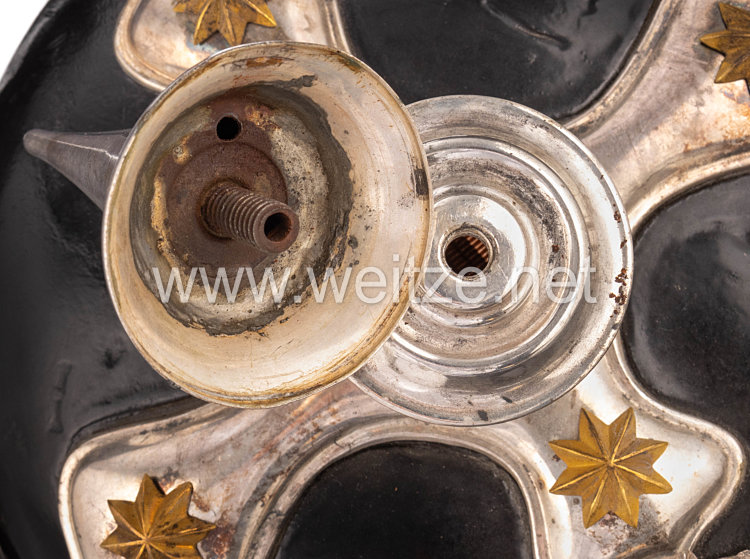
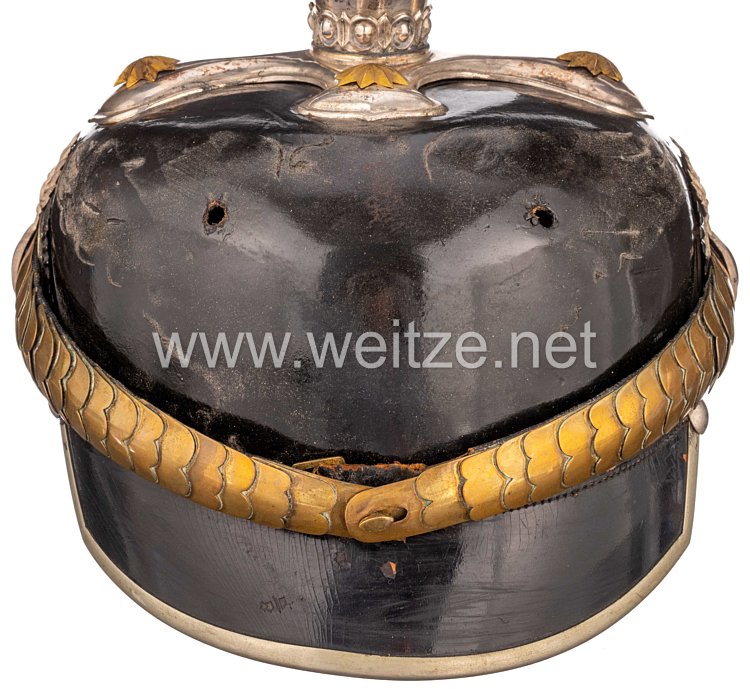
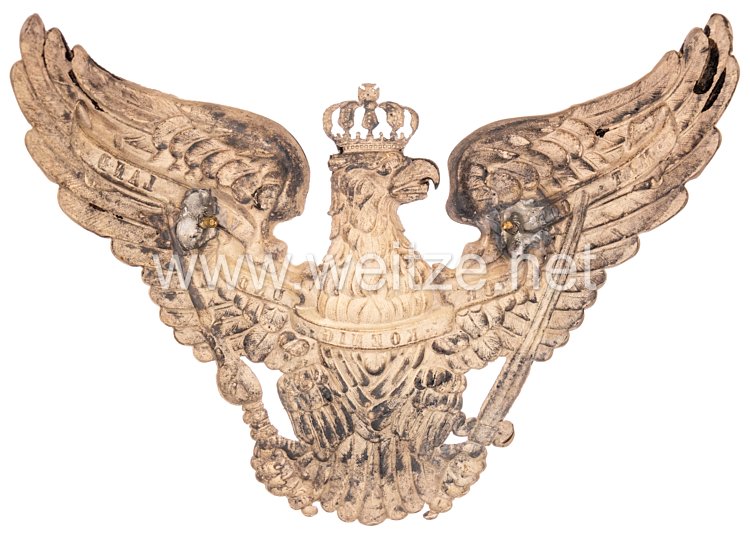
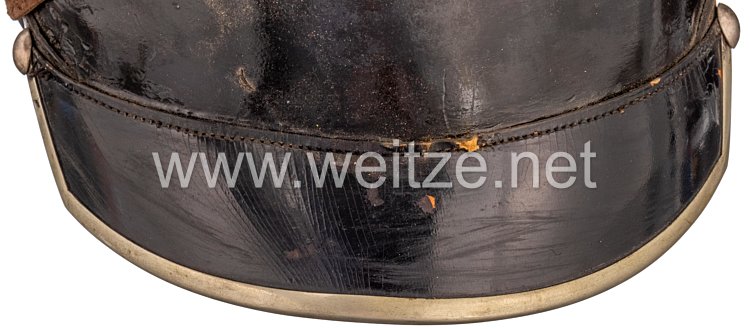
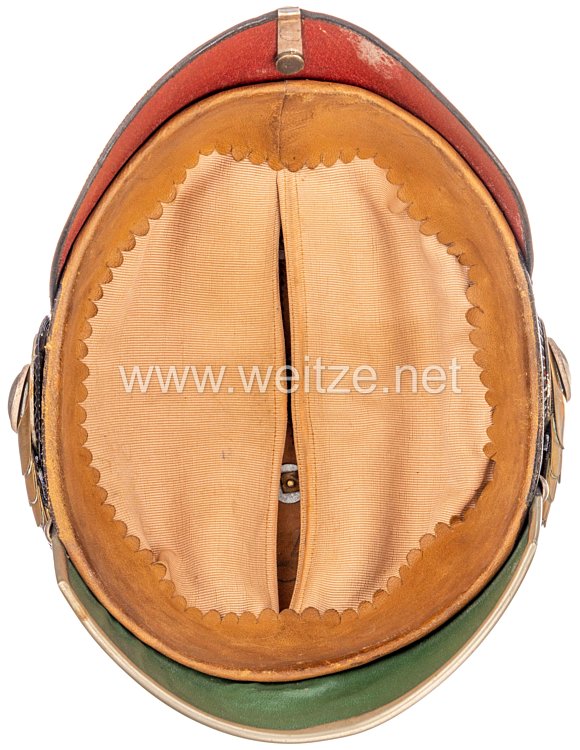
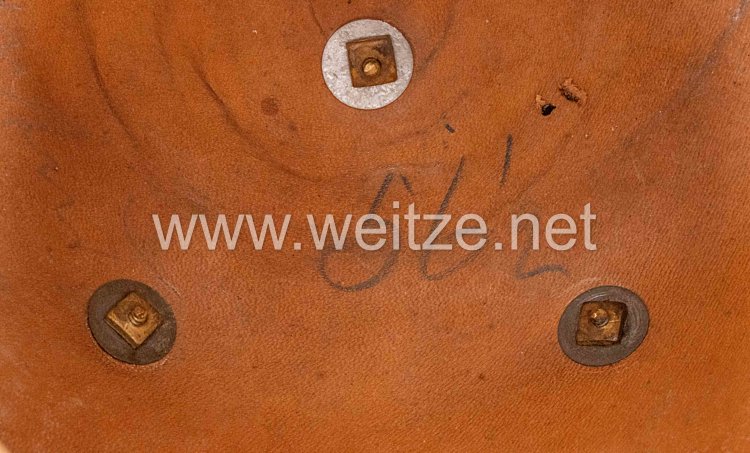
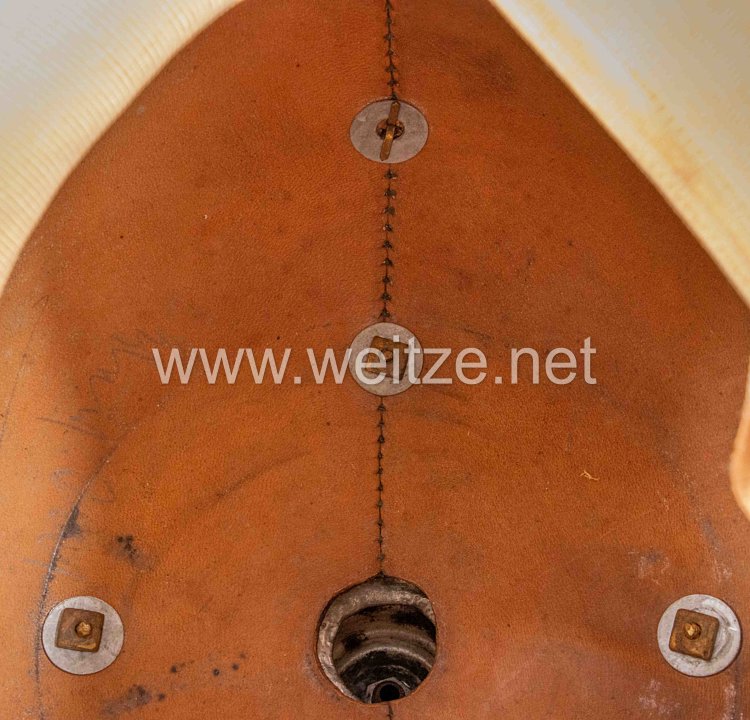
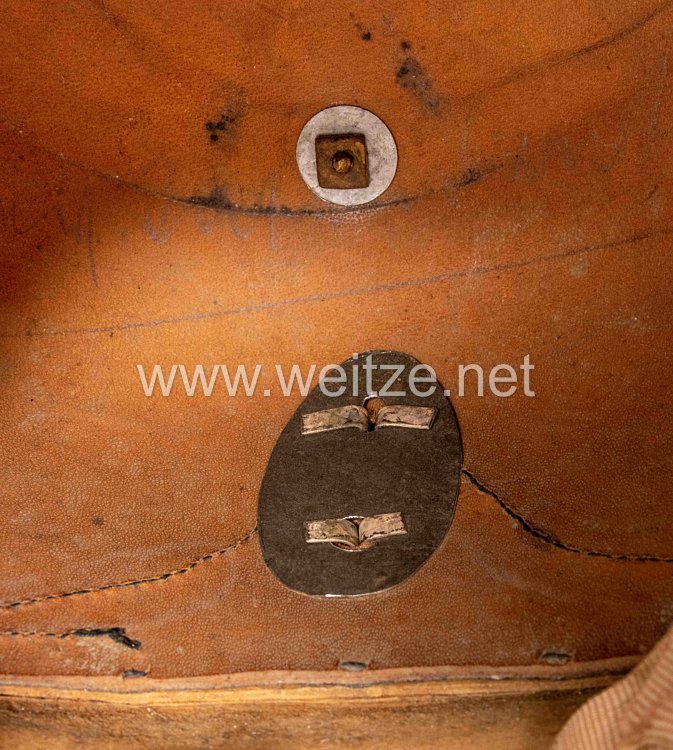
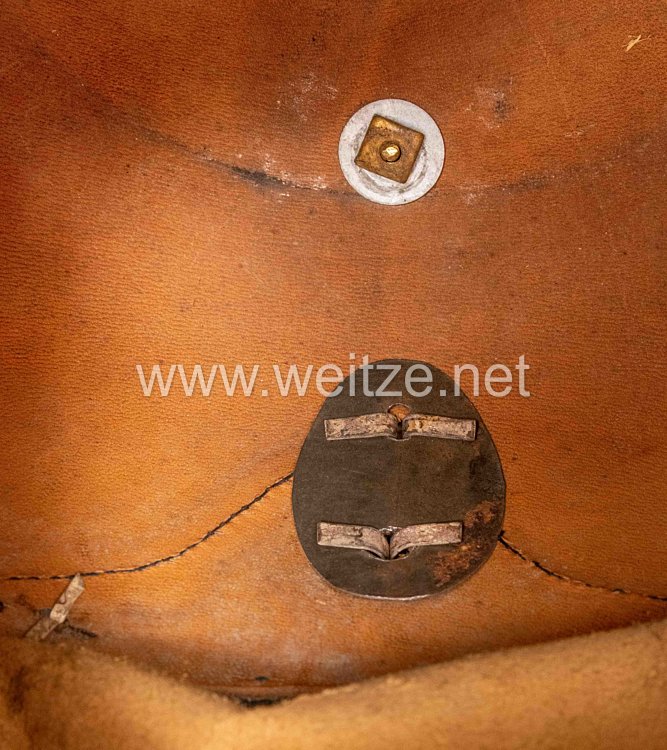
Stationed at Bromberg in Pommern, circa 1914. Elegant leather helmet, complete with all fittings in silver-plated execution. “Frosted” silver-plated wide grenadier eagle with polished edges. Domed gilt scale chains on silver rosettes with embossed flaming grenades, both cockades present. Silver cruciform base with gilt stars and tall elegant spike. Angular front visor. Interior with light brown sweatband and rose silk lining, under the sweatband on the sides with special mounting plates for the flaming grenades. Size 56 1/2. The helmet shows only light wear and is in exceptionally fine condition.

This is certainly the rarest helmet of the Prussian cavalry! In over 30 years, this is only the 4th helmet of this type we have been able to offer!
433518

Officer’s Pickelhaube of the Grenadier-Regiment zu Pferde Freiherr von Derfflinger (Neumärkisches) Nr. 3

Among the vast array of headgear produced for the Prussian military establishment, few pieces command as much reverence among collectors as the Pickelhaube of the mounted grenadier regiments. This officer’s spiked helmet, produced circa 1914 for the Grenadier-Regiment zu Pferde Freiherr von Derfflinger (Neumärkisches) Nr. 3, represents one of the most distinctive and coveted examples of Imperial German military craftsmanship.

The Pickelhaube: An Enduring Icon

The Pickelhaube was adopted by the Prussian Army in October 1842 under King Frederick William IV and became the standard military headgear across all German states by 1887. Its unmistakable silhouette — the leather body crowned by a metal spike — became synonymous with Prussian and later German military power. While field covers were standard after 1892 for active service to conceal the gleaming fittings from enemy observation, the full splendor of the Pickelhaube was displayed during garrison duty and parades, where it served as a powerful emblem of regimental identity and pride.

The Regiment: From Dragoons to Elite Horse Grenadiers

The Grenadier-Regiment zu Pferde Nr. 3 possessed a lineage stretching back over two centuries. Originally created on December 29, 1704 as a dragoon regiment, it was elevated to the prestigious status of “Grenadiere zu Pferd” (Horse Grenadiers) in 1714. This designation historically signified the strongest and most distinguished cavalry soldiers — an elite within the already elite arm of mounted service. The regiment received its final title, Grenadier-Regiment zu Pferde Freiherr von Derfflinger (Neumärkisches) Nr. 3, in 1897, a designation it bore until its dissolution in 1918/1919.

Organizationally, the regiment formed part of the II. Armee-Korps, headquartered in Stettin, and was assigned to the 4th Cavalry Brigade. Its garrison was located in Bromberg (modern-day Bydgoszcz, Poland). When mobilization came in August 1914, the regiment marched to war as part of the Imperial German Army and served throughout the First World War (1914–1918).

Distinguishing Features of the Officer’s Helmet

This helmet is clearly differentiated from standard line cavalry and infantry Pickelhauben by several distinctive features unique to the grenadier cavalry. The most prominent is the wide-winged grenadier eagle frontplate, executed in a frosted silver finish with polished edges — a striking visual effect that set it apart from the standard eagle plates used by other regiments. The flaming grenade emblems embossed on the silver chin chain rosettes constitute the most important distinguishing mark of grenadier cavalry units, symbolizing the regiment’s elite grenadier status.

The helmet features curved gilt scale chin chains attached to silver rosettes bearing the embossed flaming grenades, a silver cross-shaped spike base (Kreuzblatt) adorned with gold stars, and a tall, elegant service spike. Both the national and state cockades are present. The interior is lined with rose-colored silk and fitted with light brown sweat leather, beneath which are special mounting plates for securing the flaming grenade rosettes — a construction detail specific to this type of helmet. The piece is sized at 56 1/2 in German hat measurement.

As was standard practice for commissioned officers in the Prussian Army, this helmet would have been a private purchase. Officers were expected to acquire their uniforms and equipment from private makers at their own expense, which typically resulted in superior materials and craftsmanship compared to government-issued enlisted helmets. The combination of silver fittings, gilt chin chains, and silk lining all reflect this officer-quality construction.

Notable Figures of the Regiment

Among the regiment’s known members, Arno von Lenski joined as a lieutenant on March 22, 1912 in Bromberg, going on to become a prominent military figure in later years. A particularly remarkable personality was Josef Mambo, born in 1885 in Tanga, East Africa, who served as the regiment’s kettle drummer — a vivid reminder of the connections between the German colonial enterprise and the metropolitan army. The regiment’s official history was later published in 1929, authored by Dr. Ernst Zipfel.

Dissolution and Legacy

Following Germany’s defeat in the First World War and the Treaty of Versailles (1919), the regiment was dissolved along with the entire Imperial German Army. Bromberg and its surrounding region were transferred to the newly reconstituted state of Poland. The Pickelhaube itself had already been effectively superseded in field service by the Stahlhelm (steel helmet), introduced in 1916 in response to the devastating head wounds caused by modern artillery and shrapnel.

The traditions of the Grenadier-Regiment zu Pferde Nr. 3 were preserved during the Weimar Republic era by the 3rd Squadron of the 6th (Prussian) Reiter-Regiment of the Reichswehr, ensuring that the regiment’s long and distinguished lineage was not entirely forgotten in the transformed military landscape of interwar Germany.

Today, Prussian cavalry grenadier helmets rank among the rarest and most sought-after pieces in the field of Imperial German militaria. This officer’s Pickelhaube of the Grenadier-Regiment zu Pferde Nr. 3, with its distinctive flaming grenade motifs, frosted silver eagle, and gilt fittings, represents a remarkable survival from the final years of the Prussian military tradition.

r