Hessen Saber for Infantry Officers, as Farewell Gift
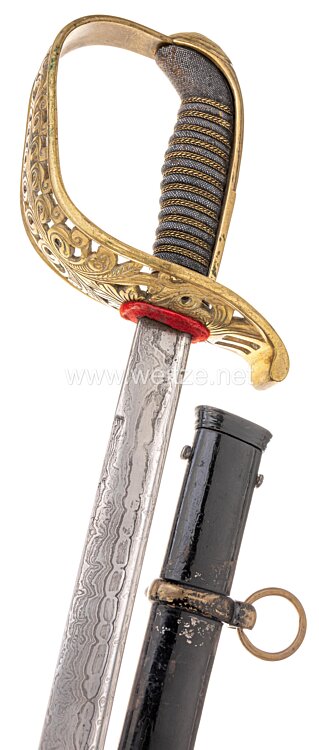
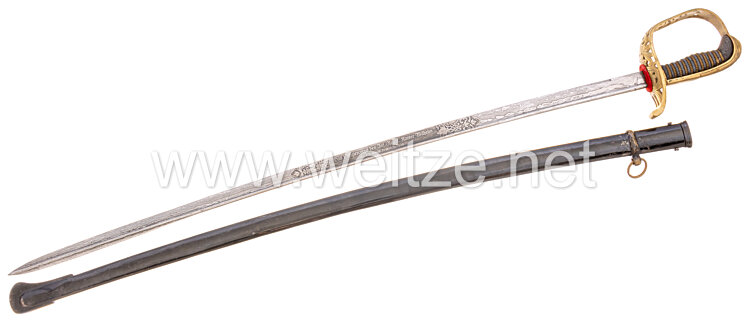
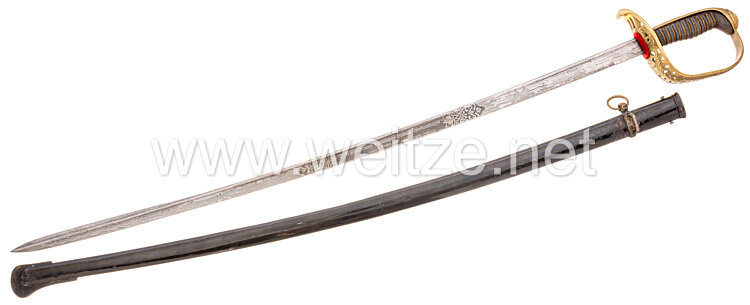
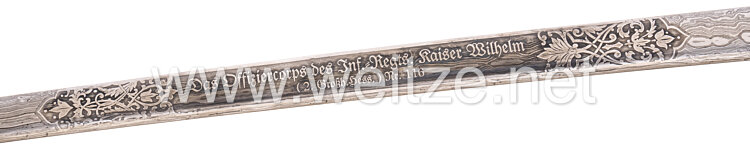
This officer's saber from the Infantry Regiment Kaiser Wilhelm (2nd Grand Ducal Hessian) No. 116 represents a remarkable testament to military tradition in the German Empire at the turn of the 20th century. The piece was presented in 1900 in Giessen as a farewell gift to Captain von Westernhagen and embodies the comradeship and codes of honor of the imperial officer corps.
The Infantry Regiment No. 116 was formed in 1897 through the merger of the Grand Ducal Hessian Life Guard Infantry Regiment and the 3rd Grand Ducal Hessian Infantry Regiment No. 117. The regiment bore the honorary name “Kaiser Wilhelm” in honor of German Emperor Wilhelm I and was stationed in Giessen, an important garrison town in the Grand Duchy of Hesse. The presentation of personalized sabers as farewell gifts was a widespread practice in the officer corps and served to demonstrate the close bonds between comrades.
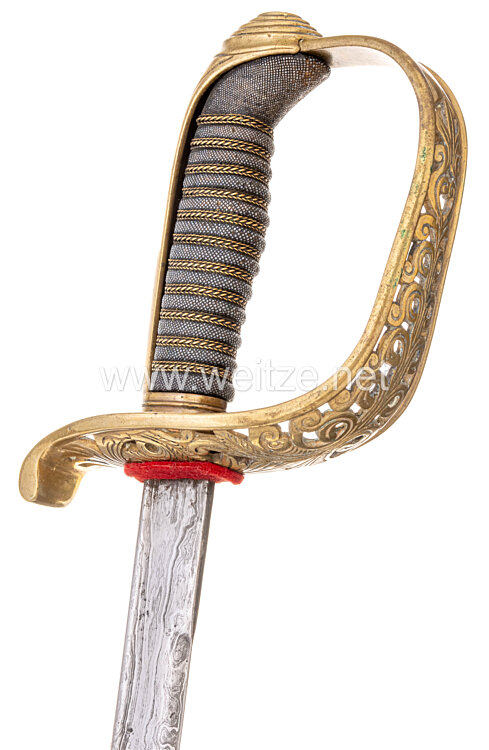
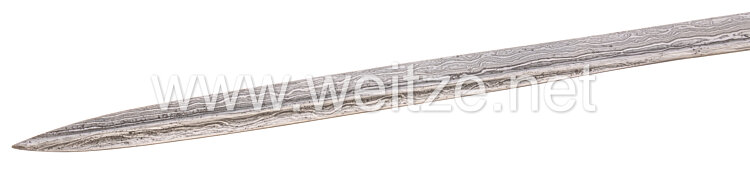
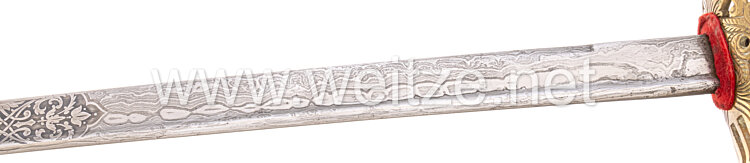
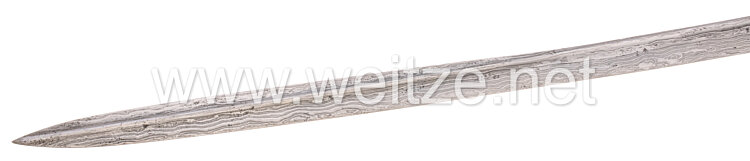
The blade made of Damascus steel represents the high craftsmanship quality that was customary for presentation sabers of this type. Damascus steel, characterized by its wavy pattern, had been known for centuries for its superior strength and flexibility. Although genuine Oriental Damascus work was rare in 19th-century Europe, German blade smiths developed their own techniques for producing laminated steel that exhibited similar aesthetic qualities. The bilateral etching with dedicatory inscriptions was typical of presentation weapons and distinguished them from regular service weapons.
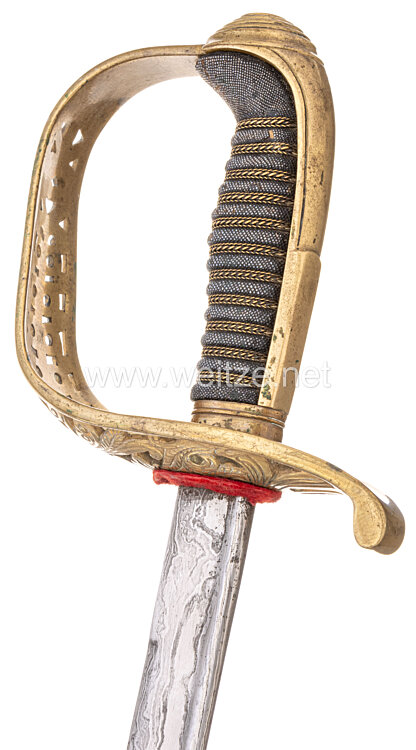
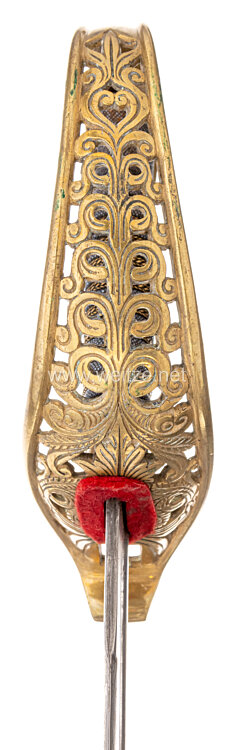
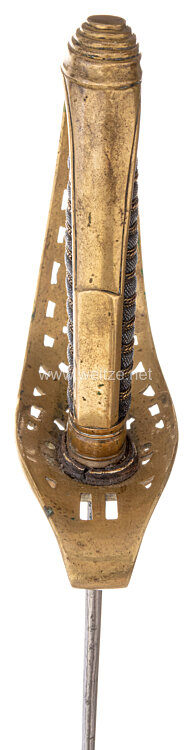
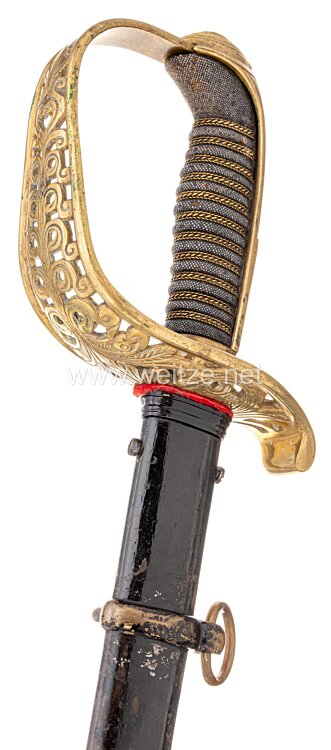
The brass hilt with pierced basket guard corresponds to the regulations for Prussian and Hessian infantry officers of the period. According to the All-Highest Cabinet Order (AKO) of December 3, 1873, and its successor regulations, infantry officers carried a slightly curved saber with basket hilt. The basket served to protect the hand in combat and was characteristically pierced, which had both practical and aesthetic reasons. The shagreen grip (sharkskin) with wire wrapping was standard for officer weapons and provided a secure grip even under difficult conditions.
The black-lacquered steel scabbard with brass suspension ring also corresponds to the uniform regulations of the era. Infantry officers carried their sabers on black leather belts, and the scabbard had to be designed accordingly. The brass suspension ring, although only one remains, enabled attachment to the belt and secure carrying of the weapon.
The historical context of the year 1900 is significant: the German Empire was at the height of its military and economic power under Kaiser Wilhelm II. The army was not only an instrument of defense but a central component of the social order. The officer corps formed an elite whose members were bound by strict codes of honor and deep comradeship. Farewell gifts like this saber document the emotional bonds between officers who often served together for years.
Captain von Westernhagen likely belonged to the Hessian nobility, as suggested by the “von” in his name. Nobles were heavily overrepresented in the officer corps, especially in traditional regiments. His departure from the regiment in 1900 could have had various reasons: transfer to another unit, promotion to a staff position, or retirement. The fact that the entire officer corps of the regiment donated this valuable gift suggests high esteem and popularity.
Such presentation sabers were rarely worn on duty but kept as honors. They document military history on a personal level and are important collector's items today. The preserved condition with minor signs of use, intact Damascus steel, and original etching makes this specimen a valuable historical document of the Wilhelmine era and Hessian military tradition.