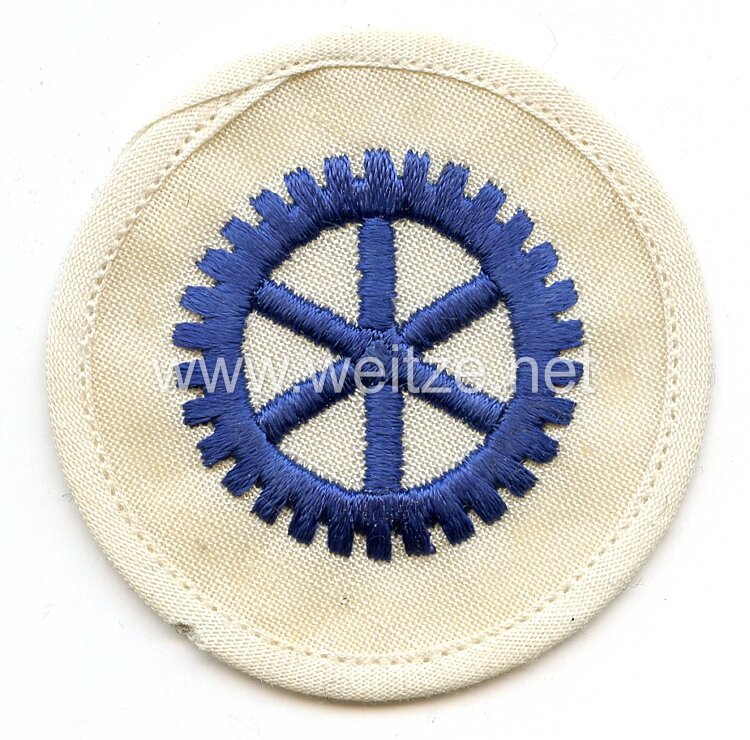
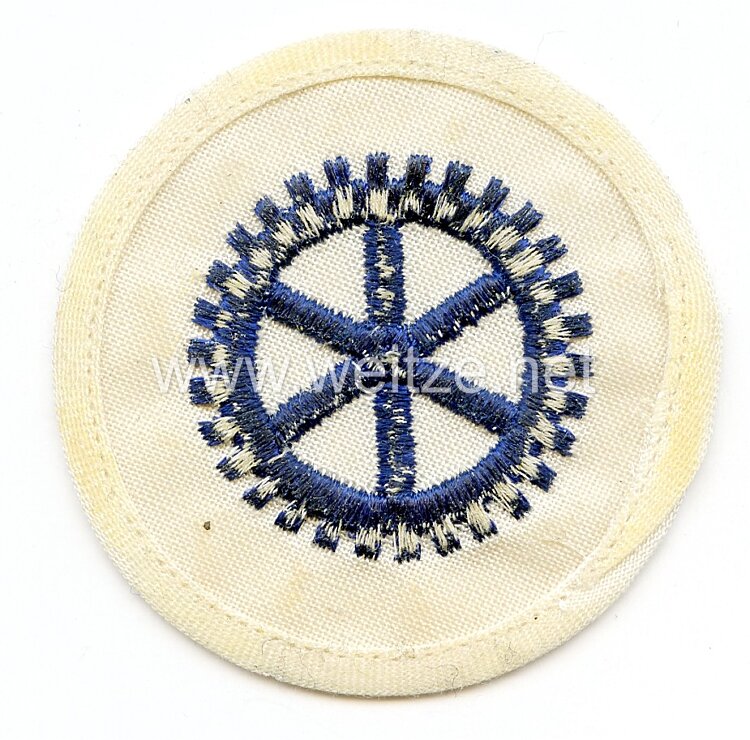
Kriegsmarine Sleeve Insignia Engineering Career Path
The Kriegsmarine sleeve insignia for the engineering career path (Maschinenlaufbahn) represents a significant element of uniform identification in the German Navy during World War II. These special badges were worn on the white service shirt and served the immediate identification of the wearer's career branch within the complex organizational structure of the Kriegsmarine.
The Kriegsmarine, which existed as the official naval force of the German Reich from 1935 to 1945, developed a sophisticated system of rank insignia and career path identifications. Following the reintroduction of conscription and the official breach of the Treaty of Versailles in 1935, the Reichsmarine was renamed Kriegsmarine. This reorganization was accompanied by a redesign of uniform regulations, detailed in the Wehrmacht's dress regulations (Anzugsordnungen).
The engineering career path (Maschinenlaufbahn) formed an essential part of the naval forces. Members of this career path were responsible for operating, maintaining, and repairing ship engines, steam boilers, electrical systems, and later diesel engines. In an era when the technical complexity of warships was rapidly increasing, this career path gained growing importance. From the great battleships like the Bismarck and Tirpitz to the feared Type VII and IX U-boats – highly qualified engineering personnel were indispensable everywhere.
The sleeve insignia for the engineering career path typically displayed a cogwheel as the central symbol, which illustrated the technical orientation of this career path. These badges were manufactured in various versions: embroidered for officers and woven or stamped for non-commissioned officers and enlisted men. The coloring followed the strict regulations of the Kriegsmarine – the cogwheel was usually embroidered or woven in dark blue on a white background for use on the white service shirt.
The white uniform blouse was worn in the Kriegsmarine in various contexts. It served as a summer uniform in warmer climates, at representative occasions, and as a working uniform aboard ship. The attachment of career path badges on the right upper arm was precisely regulated and occurred at a specific height exactly defined in the uniform regulations. This precision in uniform design corresponded to the general German military tradition of order and discipline.
The manufacture of such badges was carried out by various manufacturers and suppliers commissioned by the Wehrmacht. Quality varied depending on the time of production and manufacturer. Early wartime productions often showed higher quality with finer embroidery work, while later productions were simplified due to the strained resource situation of the war. Attachment was usually done by sewing, with some specimens also additionally fixed with adhesive, as appears to be the case with the described object.
The wearer of such a badge underwent specific training in the engineering career path. This began with basic training, followed by technical specialized training at one of the naval schools or technical training institutions of the Kriegsmarine. Locations such as Kiel-Wik, Wilhelmshaven, and Flensburg-Mürwik housed important training facilities. The training included theoretical instruction in mechanical engineering, thermodynamics, and electrical engineering, as well as practical exercises aboard training and school ships.
In the context of militaria collecting, such badges represent important historical documents. They enable historians and collectors to trace the organizational structure and uniform development of the Kriegsmarine. The condition of such objects varies considerably. Adhesive residue on the reverse, as described with this specimen, is a typical characteristic that indicates the attachment practice of the time and underscores the authenticity of the piece.
The historical significance of these badges lies not only in their military function but also in their testimonial value for the social and technical development of maritime warfare. They document the increasing specialization and professionalization of naval forces in the 20th century and stand as examples of the technological evolution of naval warfare in the era of mechanized combat.