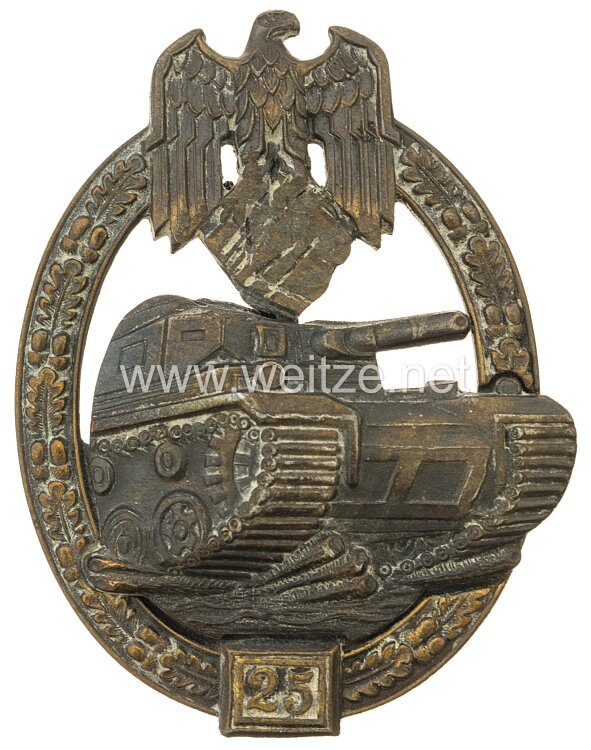
Tank Battle Badge in Bronze with Engagement Number "25" - JFS

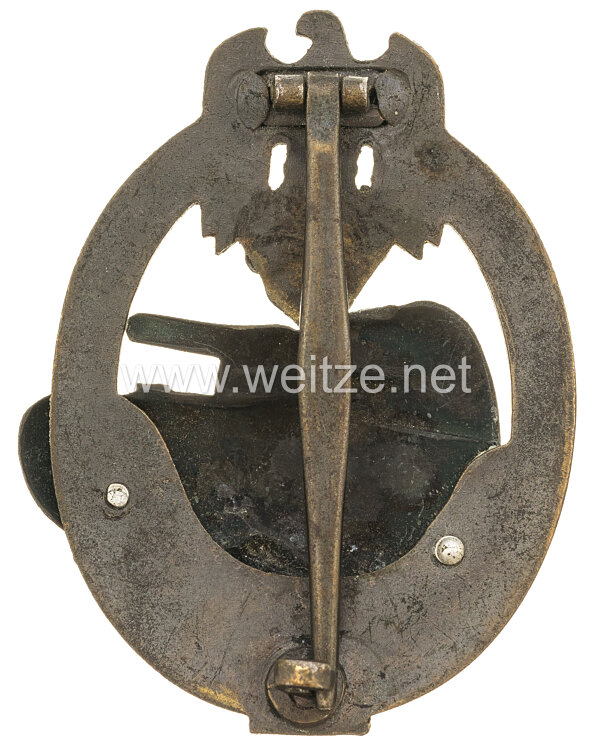
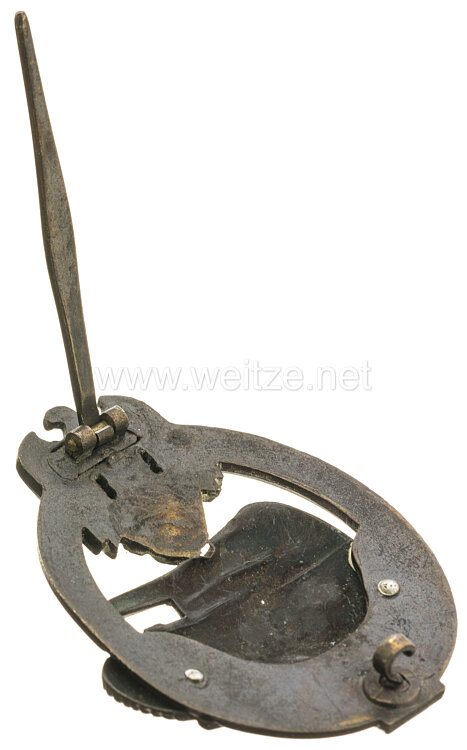
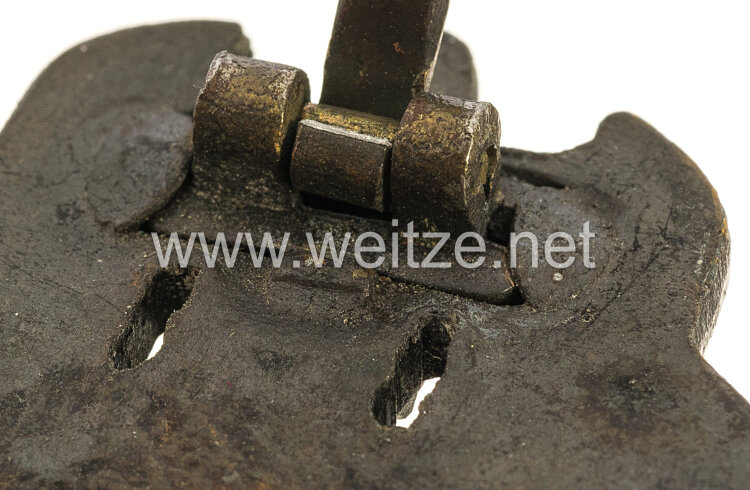
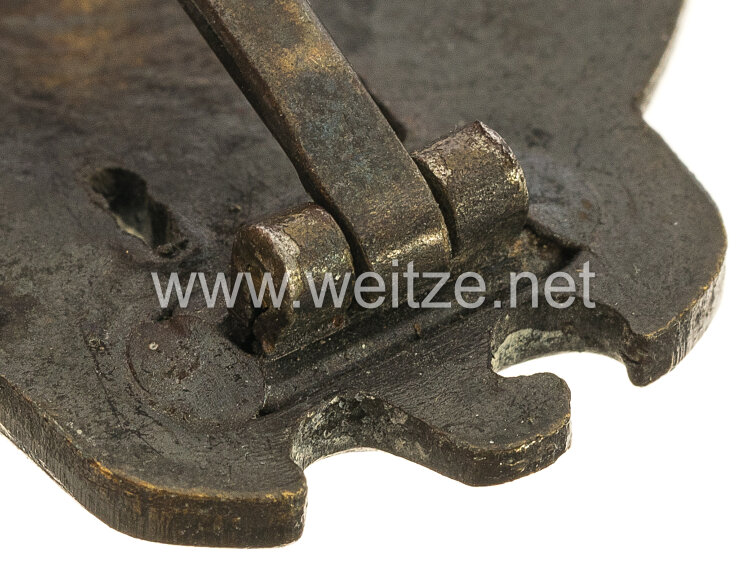
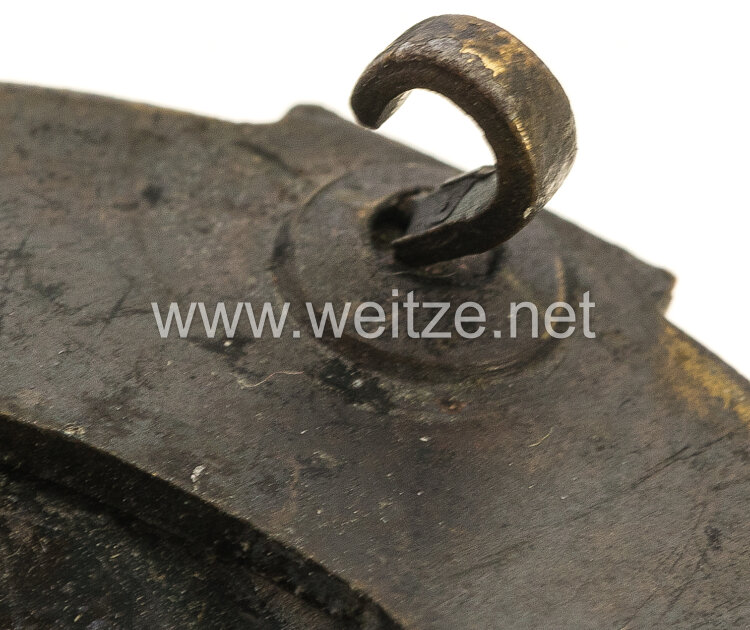
This is a product manufactured by the firm JFS, without maker's mark. Fine zinc, the wreath, the tank and the engagement number bronzed, the tank affixed on the reverse with 2 aluminum rivets, on wide magnetic pin. Worn, denazified after 1945 in prisoner of war captivity. Condition 2.
458116
1.400,00

Tank Battle Badge in Bronze with Engagement Number "25" - JFS

The Tank Battle Badge in Bronze with the engagement number 25 represents a significant document of German military history during the Second World War. This decoration was instituted on December 20, 1939 by Adolf Hitler and was intended to honor the special achievements of tank crews.

The basic form of the Tank Battle Badge depicted a stylized Panzer IV in frontal view, surrounded by an oak leaf wreath. The badge existed in three grades: Bronze (originally called Silver, renamed in 1943), Silver (originally Gold), and Gold for special merit. The award criteria for the Bronze grade included participation in three different tank attacks on three different days, or being wounded during a tank battle.

The specimen described here was manufactured by the firm JFS, one of numerous manufacturers commissioned during the war to produce military decorations. The production used fine zinc, with the wreath, tank, and engagement number bronze-plated. The tank was characteristically attached to the reverse with two aluminum rivets, and the badge was affixed to a broad magnetic pin.

A special component of this badge is the engagement number 25. These additional numbers were introduced on June 22, 1943 and were mounted on the base of the Tank Battle Badge. The numbers 25, 50, 75, and 100 were awarded and represented the number of tank attacks or combat days in which the wearer had participated. The engagement number 25 was the first level of this expanded decoration and already documented considerable combat experience.

Of particular historical interest is the note that this badge was denazified after 1945 during captivity. This was a common occurrence among German soldiers in Allied captivity. Denazification typically involved the removal of swastikas and other NS symbols from uniforms and decorations. On Tank Battle Badges, the swastika was usually located on the tank turret and was frequently mechanically removed or ground off. This practice allowed former soldiers to keep their military decorations as mementos of their service without carrying prohibited symbols.

The firm JFS was among the many manufacturers that produced military decorations during the war. These companies worked under strict quality controls and had to maintain certain standards. The absence of a manufacturer's mark on this specimen was not unusual, as different manufacturers had varying practices regarding the marking of their products.

The material fine zinc was used particularly in the later war years when metal shortages limited the use of non-ferrous metals. The bronzing was achieved through a galvanic process or by lacquering to create the desired metallic effect. The use of aluminum rivets for attaching the tank was a practical solution that ensured both durability and material efficiency.

The indicated condition 2 suggests a worn specimen that shows signs of use but remains well-preserved. This is typical for decorations that were actually worn in the field rather than merely kept as collector's items.

The history of this Tank Battle Badge reflects the complex military decoration culture of the Third Reich while simultaneously documenting the post-war period, when former soldiers attempted to preserve their past while dealing with new political realities. Such objects are today important historical artifacts that provide insights into military history, material culture, and the processing of the past after 1945.