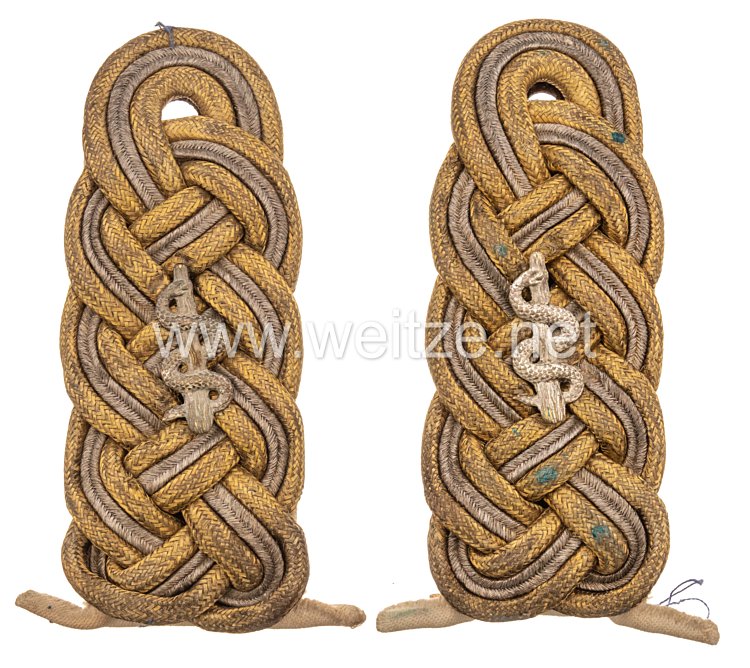
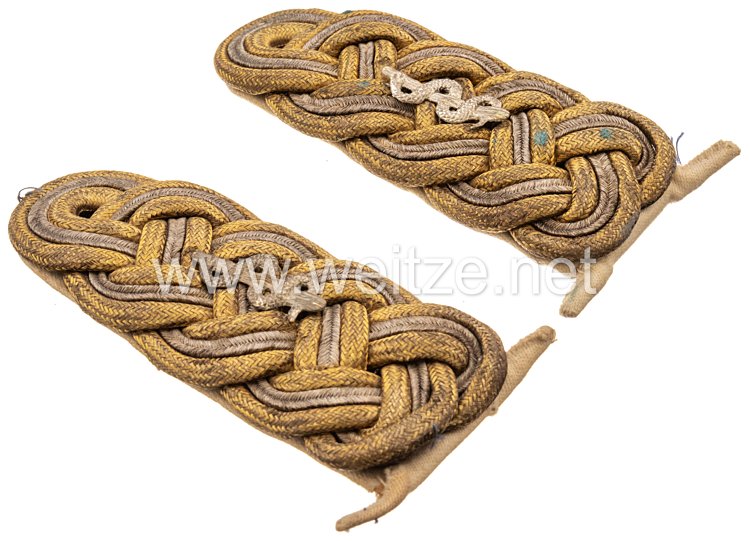
Kriegsmarine Pair of Shoulder Boards for a Rear Admiral or Admiral Medical Staff Officer

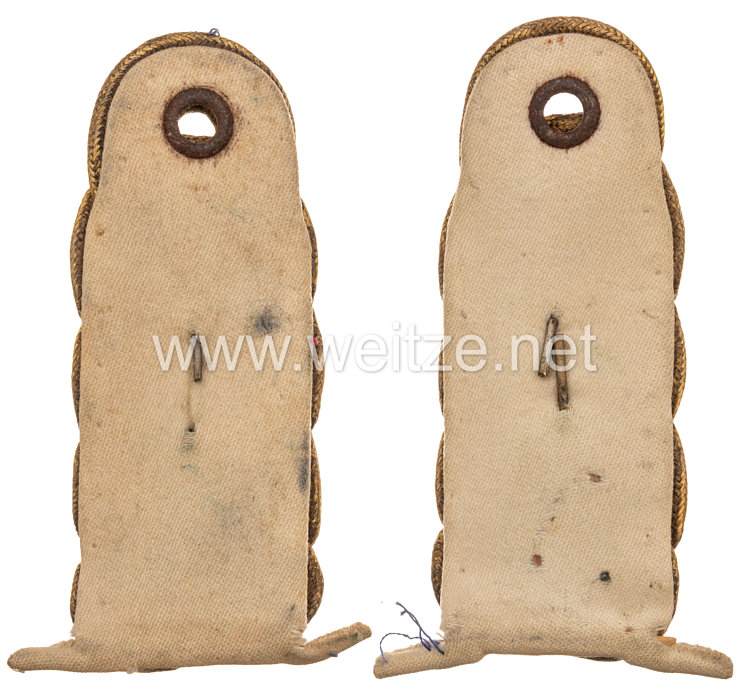
not matching pair, two individual pieces. Version for the white summer tunic. Heavy gold/silver braid on white cloth base with bars (wooden bars no longer present), condition 3-.
441016
850,00

Kriegsmarine Pair of Shoulder Boards for a Rear Admiral or Admiral Medical Staff Officer

The present shoulder boards for Rear Admirals of the Kriegsmarine represent an important component of the rank insignia of the German naval forces during World War II. These two individual pieces, which were not manufactured as a regular pair, were intended for the white summer uniform and display the characteristic design for higher-ranking naval officers.

The Kriegsmarine, founded in 1935 as the successor to the Reichsmarine, established a complex system of rank insignia that differed significantly from the other branches of the Wehrmacht. The shoulder boards (also known as shoulder straps or shoulder cords) served to immediately identify an officer's rank and were worn on both shoulders of the uniform.

The rank of Konteradmiral (Rear Admiral) was the lowest admiral rank in the Kriegsmarine and corresponded to the rank of Major General in the Army or Air Force. A Rear Admiral typically held command over smaller fleet units or important staff positions. The rank insignia for this rank consisted of heavy gold and silver braid, with the specific number and arrangement of stars and braids indicating the precise rank.

The white summer uniform of the Kriegsmarine was worn during warmer months or in tropical deployment areas. This uniform variant followed a long tradition among naval powers worldwide, as white uniforms were more practical and comfortable to wear in hot climates. The shoulder boards for this uniform differed from those of the dark blue standard uniform through their backing of white cloth, while the gold and silver braid indicated the rank.

The manufacture of such rank insignia was carried out according to strict military clothing regulations and naval directives. The heavy braid used consisted of genuine metal threads - gold for higher ranks and silver for certain details. The white cloth backing was mounted on wooden stays that gave the shoulder board shape and stability. The wooden stays, which are no longer present on these specimens, were a characteristic feature of this era.

Interestingly, the description also mentions the Admiralstabsarzt (Admiral Staff Physician). This was a specialized rank in the medical service of the Kriegsmarine. Admiral Staff Physicians wore rank insignia similar to those of admirals, but with specific markings for the medical service. The medical officers of the Kriegsmarine played an important role in caring for crews at sea and in naval hospitals.

The fact that these two shoulder boards are not matching pairs - meaning they represent two individual pieces from different manufactures - is noteworthy from a collector's historical perspective. This could have various causes: replacement procurement after loss or damage of one piece, different production batches, or later compilation from various estates.

The stated condition grade 3- indicates visible signs of use, which is not unusual for textiles and metallic applications from this period. Over eight decades, gold and silver threads can tarnish, textiles can fade or show stains, and structural integrity can be compromised by the loss of wooden stays.

From a historical perspective, such rank insignia are important witnesses to military history. They document not only the hierarchical structures and uniform regulations of the Kriegsmarine, but also the craftsmanship quality of the military outfitters of that time. Companies such as Erel in Berlin or other specialized manufacturers produced these rank insignia according to exact specifications.

The Kriegsmarine existed from 1935 until the unconditional surrender in 1945. During this period, an extensive uniform culture developed with numerous variants for different ranks, uses, and seasons. The shoulder boards for the summer uniform were only one part of this complex system, which also included sleeve badges, cap badges, and other identifications.

The Admiral Staff Physician rank represented the highest medical rank in the Kriegsmarine, equivalent to the combat admiral ranks but within the medical service hierarchy. These officers were responsible for the overall medical strategy, organization of naval medical facilities, and the health standards of the fleet. They combined medical expertise with naval command responsibilities.

The construction technique of these shoulder boards reflects the high standards of German military tailoring. The gold and silver bullion was hand-woven and applied to the cloth base, with each rank having specific patterns prescribed by regulations. The quality of materials and workmanship varied depending on whether they were regulation issue or privately purchased, with officers often acquiring higher-quality versions from specialized military tailors.

Today, such objects are important study pieces for military historians and are preserved in museums and private collections. They help to understand and document the organizational structure, hierarchies, and daily life of historical armed forces.

r