Wehrmacht Heer (WH) Officer's Saber

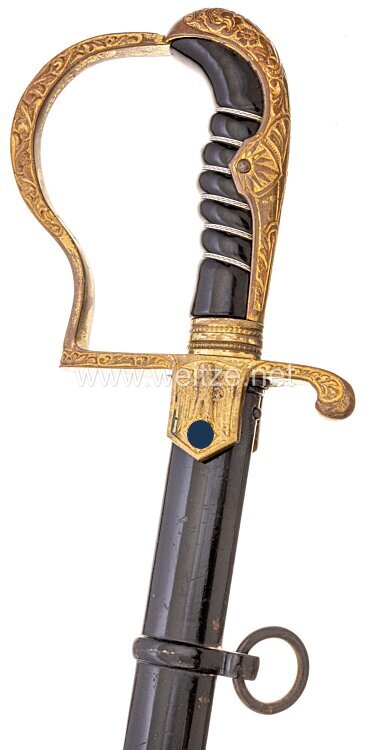
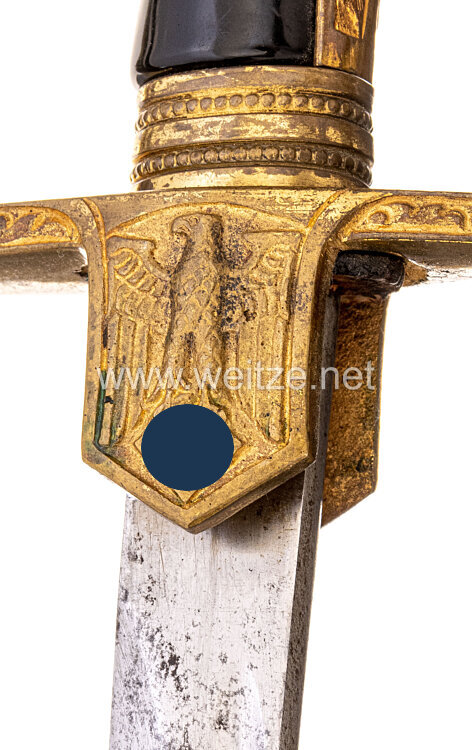
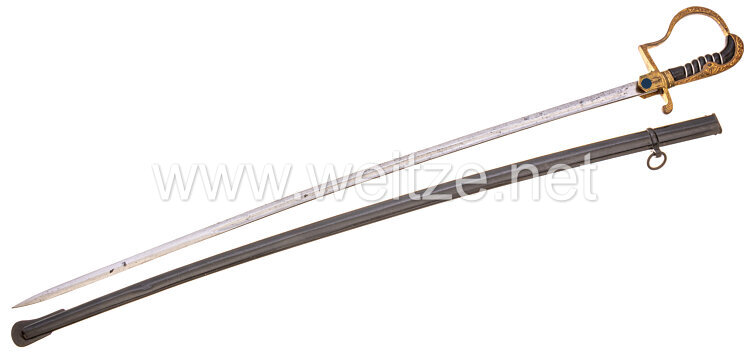
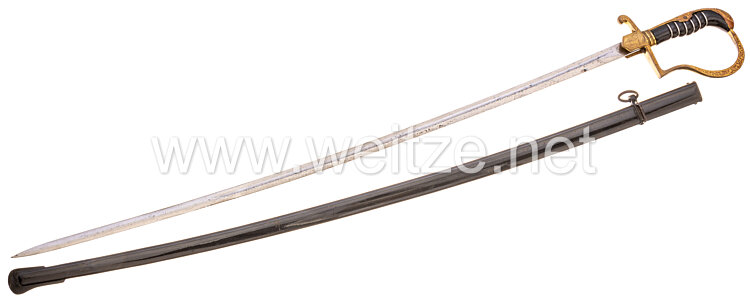
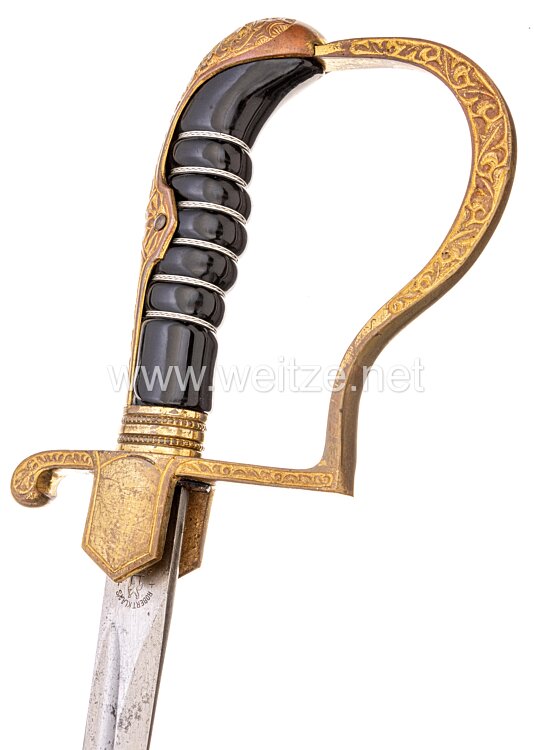
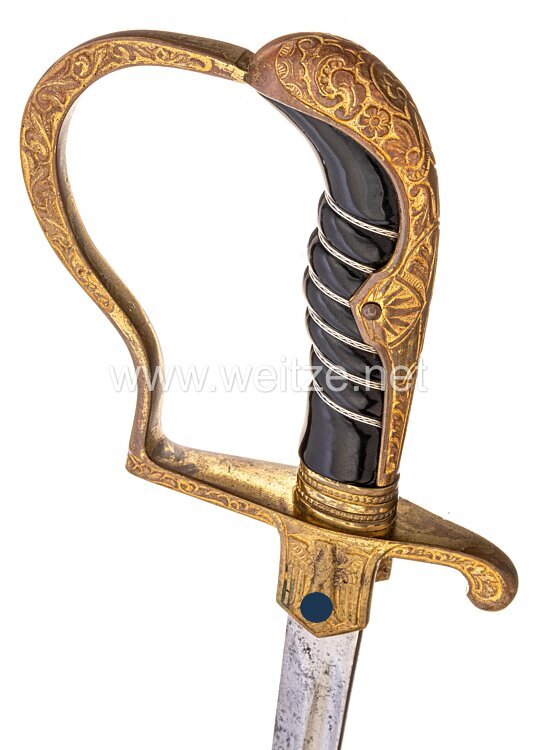
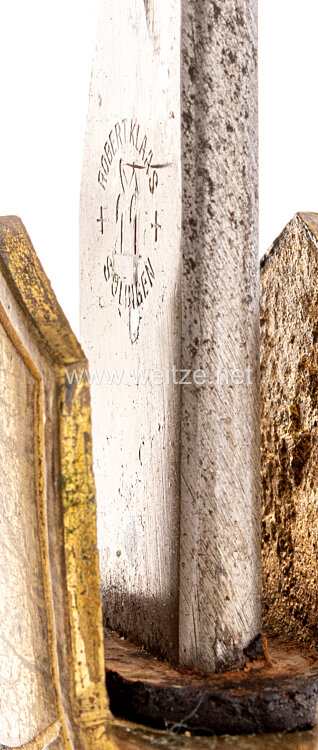
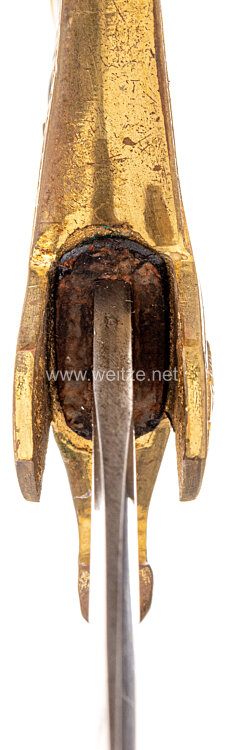
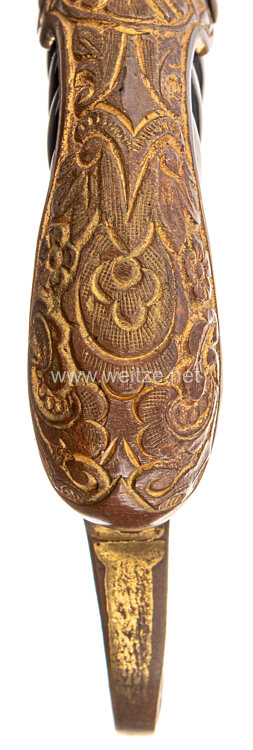
This is a rare variant manufactured by Robert Klaas, Solingen. The nickel-plated blade shows light age spotting, with maker's mark “Robert Klaas Solingen” on the reverse. Gilt brass hilt with floral decoration, the crossguard featuring the WH eagle with drooping wings. Black plastic grip with unusual diagonal wire wrapping. Steel scabbard retains over 80% original finish, with a pressure dent near the tip. Lightly worn, still in very good condition. Condition 2.

Overall length 1020mm
458615
1.550,00

Wehrmacht Heer (WH) Officer's Saber

The Wehrmacht Heer officer's sabre represents a significant chapter in German military history and craftsmanship. This sabre, manufactured by the renowned firm Robert Klaas of Solingen, embodies the tradition of edged weapons in the German military during the Second World War era.

Historical Background

The introduction of the officer's sabre for the Army followed the reintroduction of general conscription in 1935. The Heeresverordnungsblatt (Army Regulation Gazette) established precise specifications for officer's sabres, with these weapons serving primarily as insignia of rank and ceremonial weapons. Unlike earlier epochs, sabres were no longer intended as combat weapons in modern warfare, but retained their symbolic significance for the officer corps.

Robert Klaas Solingen

The firm Robert Klaas ranks among the most traditional blade forges of Solingen, Germany's “City of Blades.” Solingen had established itself over centuries as the center of European blade manufacturing. Klaas was one of several authorized manufacturers of military edged weapons for the Wehrmacht. Other notable manufacturers included Eickhorn, WKC (Weyersberg, Kirschbaum & Co.), and Carl Eickhorn. The quality of Solingen blades was recognized worldwide, and the manufacturer's marking on the blade served as a seal of quality.

Technical Features and Symbolism

The Army officer's sabre was distinguished by characteristic features: the nickel-plated blade typically measured approximately 82-85 cm in length, with a slight curvature. The brass hilt, frequently gilded, displayed floral decoration in the style of the period. A particular identifying feature was the Wehrmacht eagle with drooping wings mounted on the guard, representing the sovereign emblem of the Wehrmacht. This eagle differed distinctly from the Nazi Party eagle through its wing position.

The grip typically consisted of black plastic (Bakelite or similar materials), fitted with wire wrapping. This wrapping served both decorative and practical purposes, ensuring a secure grip. The diagonal wrapping, as found on this specimen, represented a less common variant.

Scabbard and Wearing Method

The steel scabbard was typically painted black and fitted with two mounting rings to which carrying straps were attached. The upper ring served to fasten to the belt, while the lower ring stabilized the scabbard. The scabbard terminated in a reinforced chape that protected the blade's point.

Hierarchy and Wearing Regulations

The wearing of sabres was regulated according to rank. Officers wore the sabre type described here at parades, guard duties, and certain service occasions. Regulations distinguished between various uniform types: with walking-out uniform and parade uniform the sabre was prescribed, while in field service it was generally dispensed with. General staff officers wore a special variant, while medical officers and other special units sometimes had their own versions.

Collector Value and Authenticity

Today, originally preserved Wehrmacht officer's sabres are sought-after collector's items. Authenticity can be verified by several features: correct manufacturer's marking, quality of materials, form of the Wehrmacht eagle, and construction details. The state of preservation plays an essential role in historical and collector value. Specimens with original lacquer on the scabbard and well-preserved gilding are particularly sought after.

Legal Situation

In Germany, military edged weapons bearing NS symbols are subject to special legal provisions. Possession for collecting purposes is fundamentally legal, though public display of sovereign emblems is restricted. Collectors and historians may preserve such objects within the framework of historical research and documentation.

Historical Significance

These sabres document the continuity of military traditions in a time of technological upheaval. While warfare had long been mechanized, traditional insignia of rank such as the officer's sabre maintained the connection to the military past. They are today important witnesses to military history and the craft tradition of Solingen. The officer's sabre represents not merely a weapon, but a symbol of military hierarchy, tradition, and the craftsmanship that characterized German blade manufacture. For military historians, such pieces provide insight into the ceremonial aspects of military culture and the importance placed on tradition even in modern, mechanized warfare.