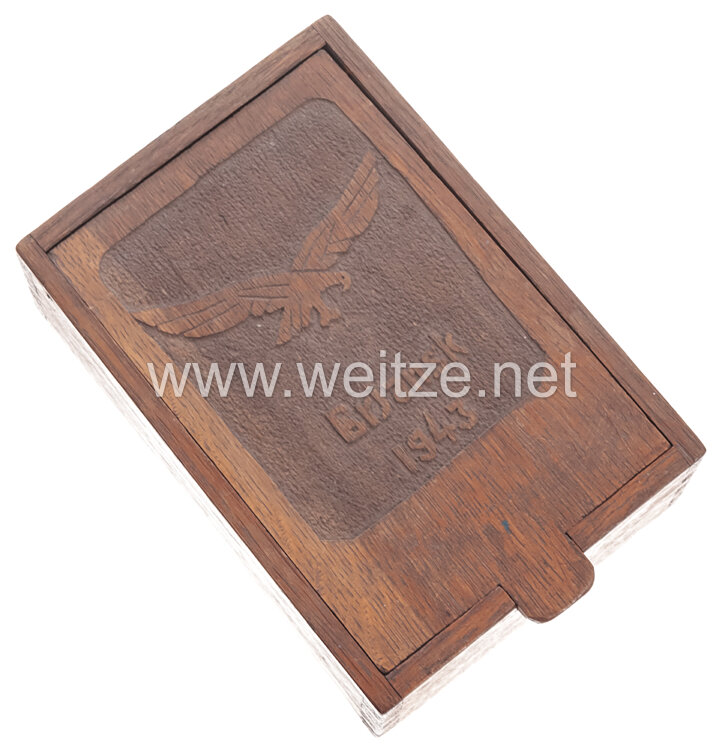
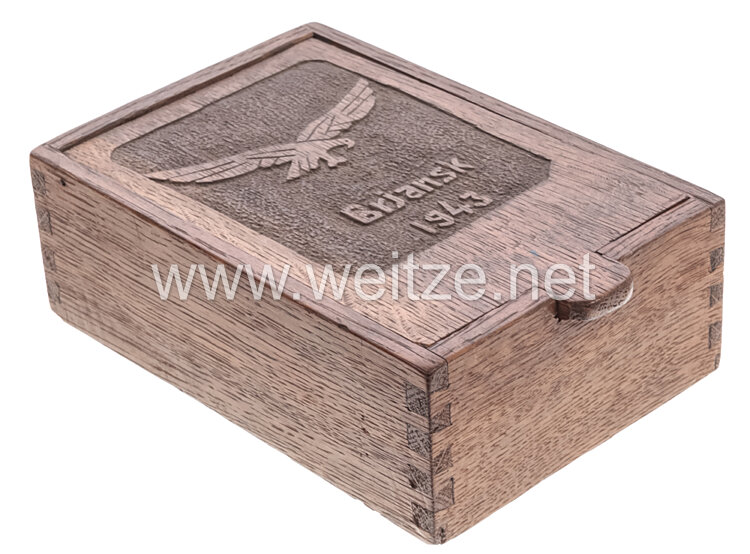
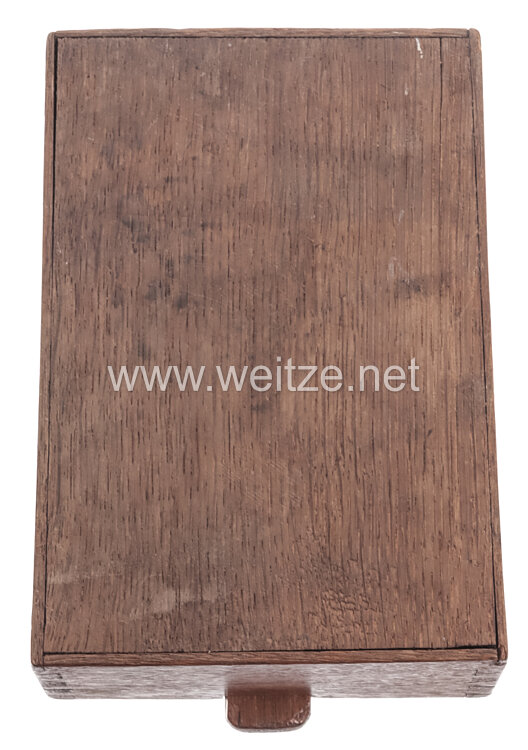
Luftwaffe Box - Brjansk 1943

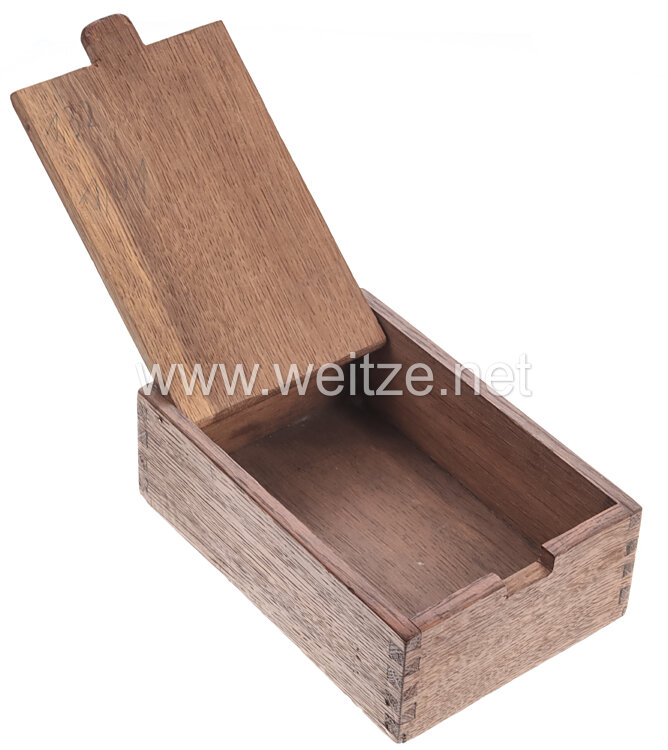
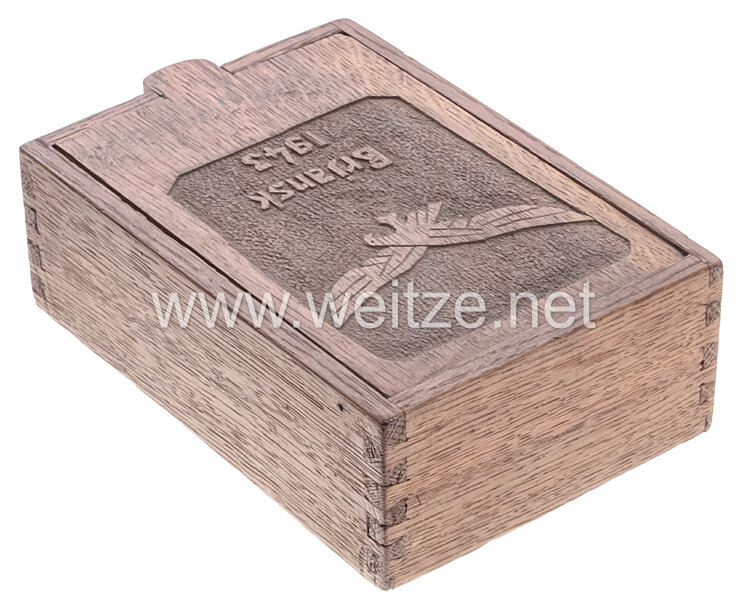
Wooden construction, dimensions approximately 10.5 x 15.5 cm, height approximately 5 cm, imprint “1943 Brjansk”. Denazified, condition 2.
463415
120,00

Luftwaffe Box - Brjansk 1943

Luftwaffe Box from Bryansk 1943: Historical Context

This wooden box inscribed with “1943 Brjansk” represents a characteristic example of trench art and commemorative items produced during World War II by German soldiers and local craftsmen in occupied Eastern Europe.

Bryansk in the Context of the Eastern Campaign

The city of Bryansk (also spelled Briansk or Brjansk) is located approximately 380 kilometers southwest of Moscow and was of considerable strategic importance during Operation Barbarossa and the subsequent occupation period. The Wehrmacht captured the city on October 6, 1941, as part of the offensive against Moscow. Bryansk developed into an important transportation hub and military base for German troops on the Eastern Front.

The Luftwaffe maintained several airfields and supply facilities in the Bryansk region. The year 1943, noted on the box, marks a particularly critical phase of the war in the East. After the defeat at Stalingrad in February 1943 and the Battle of Kursk in summer 1943, German forces found themselves increasingly on the defensive.

Military Souvenirs and Gift Culture

During World War II, it was widespread among German soldiers to create or commission mementos and personal items from their deployment areas. These boxes served various purposes: storage for personal belongings, letters, documents, or as gifts for comrades or family members back home.

The production of such objects was frequently carried out by local craftsmen or prisoners of war, but also by soldiers themselves during quieter periods. The geographical and temporal inscription served as a personal reminder of service in a specific area at a specific time.

Denazification and Historical Processing

The notation “denazified” in the object description indicates that originally present Nazi symbols such as swastikas or other National Socialist emblems were removed. This complies with German legislation, particularly Section 86a of the Criminal Code, which prohibits the use of symbols of unconstitutional organizations. The removal of such symbols was common practice after 1945 and today enables the legal possession and exhibition of such historical objects for documentation and educational purposes.

The Situation in Bryansk 1943

In 1943, the Bryansk region was the scene of intense partisan activity. The extensive forests around Bryansk provided ideal conditions for Soviet partisan units to conduct guerrilla operations against the German occupiers. The Wehrmacht and Luftwaffe repeatedly carried out anti-partisan operations, making the situation increasingly precarious for German troops.

On September 17, 1943, Bryansk was liberated by the Red Army as part of the Soviet counteroffensive following the Battle of Kursk. This marked the end of two years of German occupation. Soldiers who created or acquired mementos such as the described box before this liberation unwittingly documented one of the final phases of the German presence in this area.

Collector Value and Historical Significance

Today, such objects possess significant documentary value. They illustrate not only the material culture of World War II but also the psychological needs of soldiers to record and process their experiences. For military historians, they provide insights into the daily life of troops beyond the major battles and strategic operations.

The wooden box from Bryansk 1943 stands as an example of thousands of similar objects created during the war. It recalls a time of great human tragedy and today serves as a sobering testimony to history that can contribute to education and remembrance.