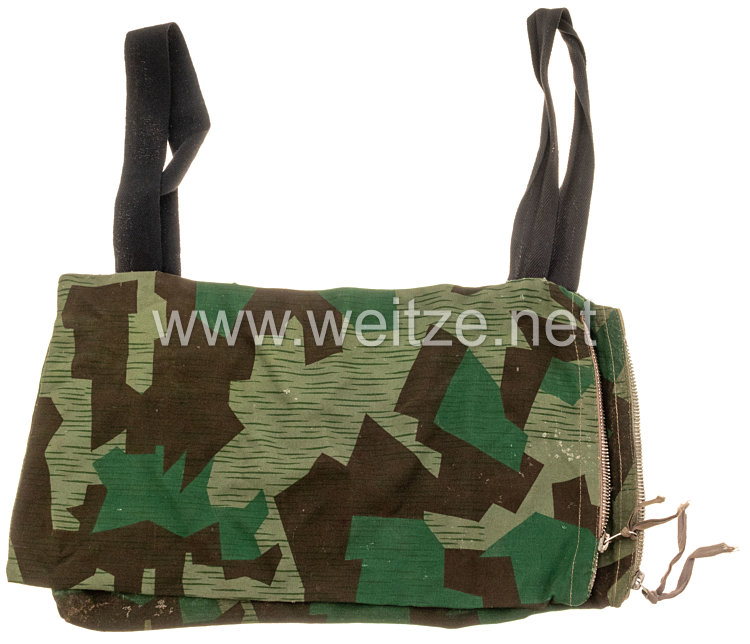
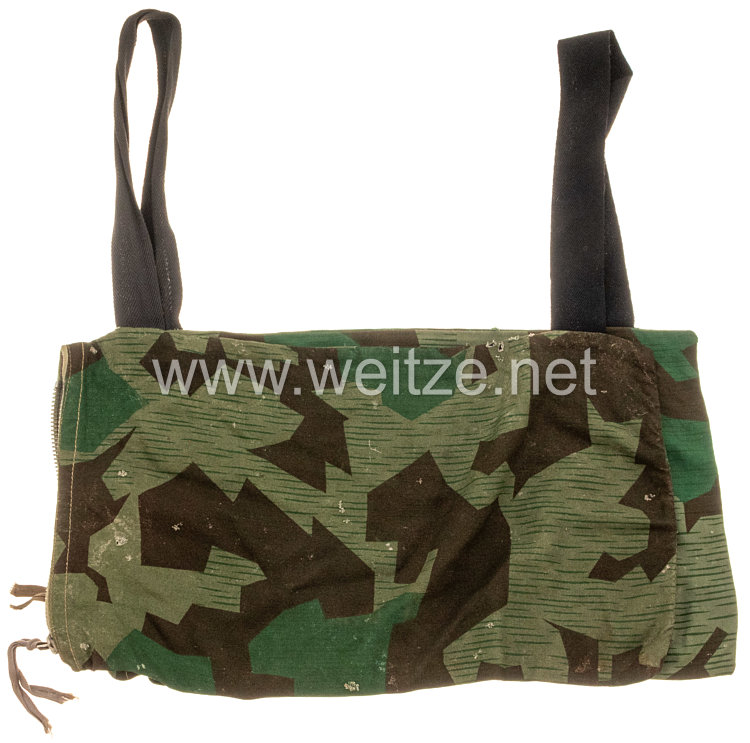
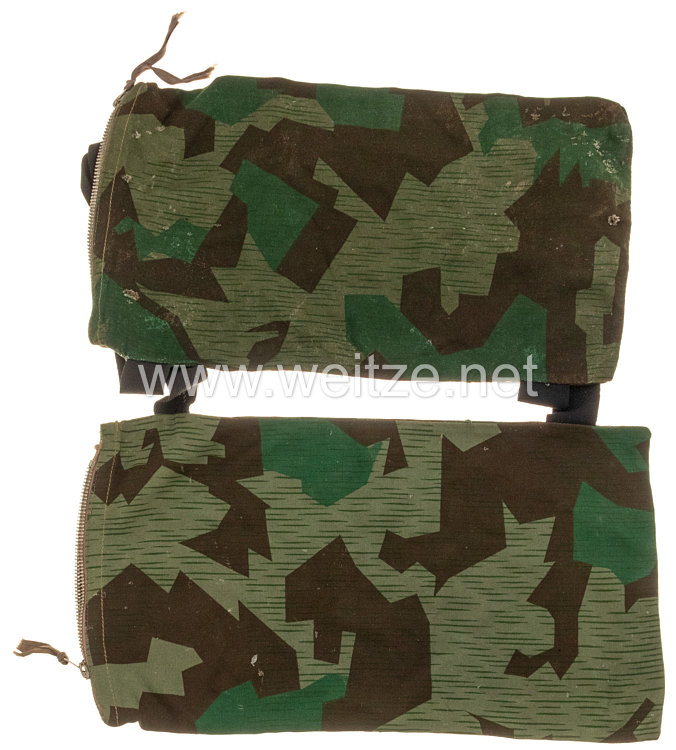
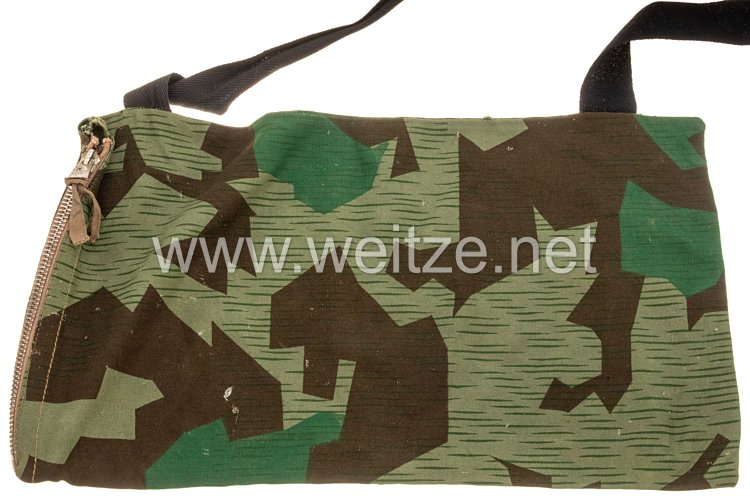
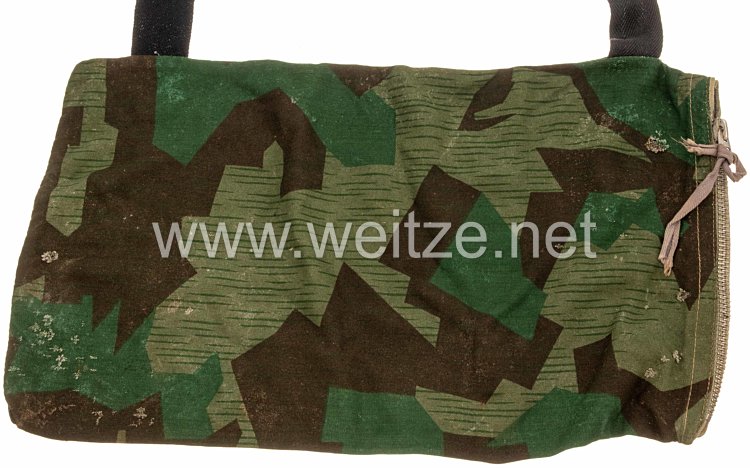
Luftwaffe Hand Grenade Pouch for Paratroopers in Splinter Camouflage
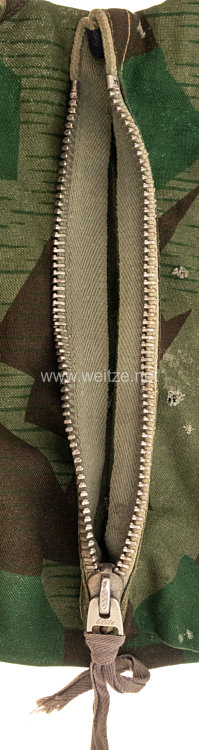
The hand grenade pouch for paratroopers in Splinter camouflage pattern represents a characteristic piece of equipment used by the German Luftwaffe during World War II. This specialized pouch was designed to meet the particular requirements of airborne troops, who were considered elite units within the Wehrmacht.
The Splinter camouflage pattern, also known as “Splittermuster 31” or “Reichswehr-Splittermuster,” was introduced in the early 1930s and was one of the world's first military camouflage patterns. It consisted of a characteristic pattern of angular patches in various shades of brown and green on a beige or light gray background. This pattern was used on shelter quarters, covers, and various pieces of equipment.
The Luftwaffe Fallschirmjäger (Paratrooper) force was established in 1936 and quickly developed into one of the most prestigious combat units of the German armed forces. After spectacular operations during the capture of the Belgian Fort Eben-Emael in 1940 and the airborne Battle of Crete in 1941, the paratroopers were predominantly employed as ground troops.
The hand grenade pouch was an essential component of combat equipment. Hand grenades played a central role in World War II infantry tactics, especially in close combat and bunker warfare. The German forces primarily used the Stielhandgranate 24 (stick hand grenade) and later the improved Stielhandgranate 43, whose characteristic form with a long wooden handle required special carrying solutions.
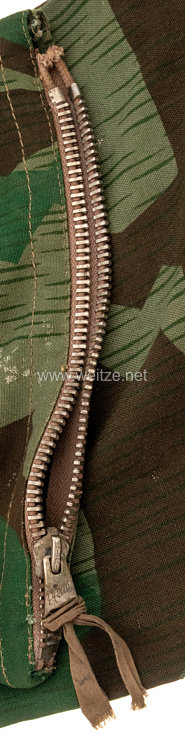
The production around 1944 falls into a period when German war industry was under increasing pressure. Material shortages and production bottlenecks led to various improvisations and simplifications. The fact that this specimen is printed on one side only and was assembled from two different pouches is typical of this period. Such manufacturing compromises were necessary to maintain supply to the troops.
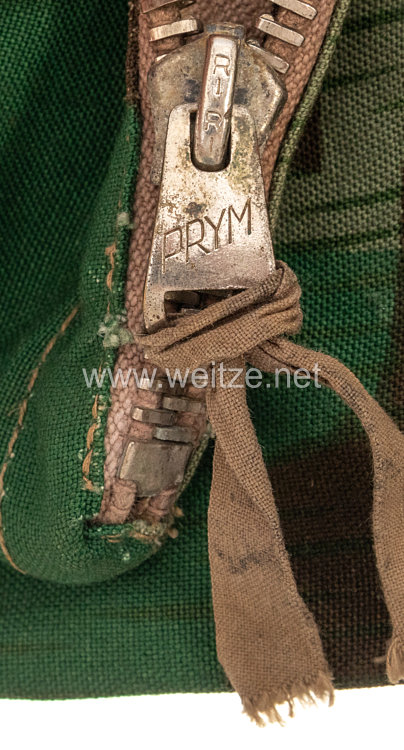
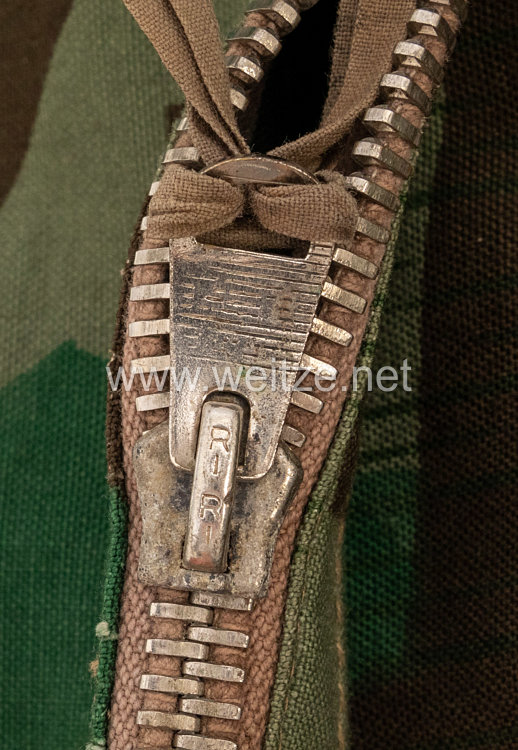
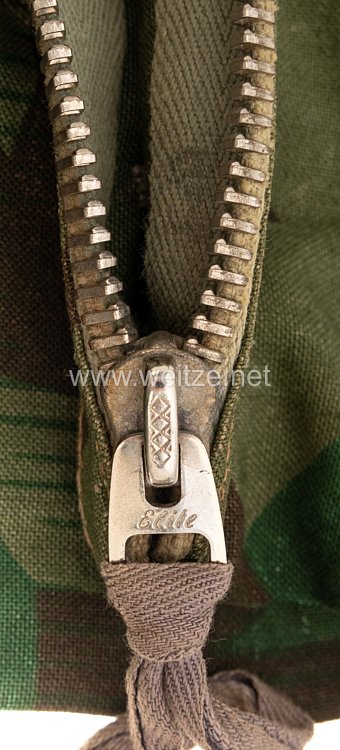
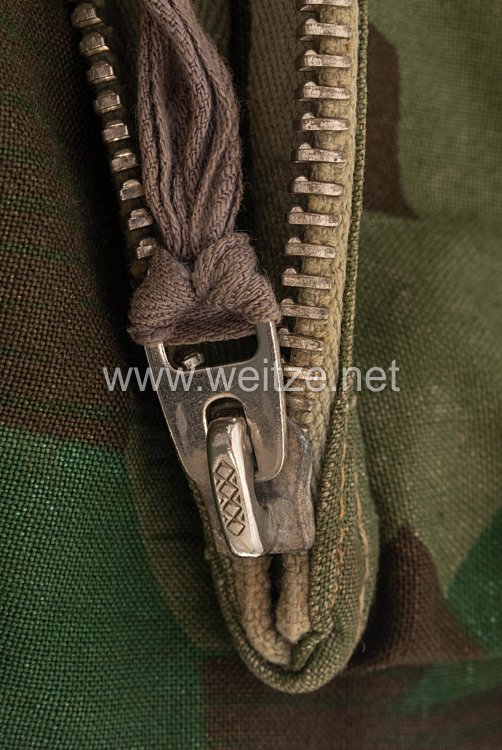
The fasteners from the companies “Prym” and “Elite” point to the civilian supply industry that was massively involved in war production. The Prym company from Stolberg was a traditional manufacturer of metal goods and haberdashery that produced various military equipment parts during the war. The use of components from different manufacturers in a single piece of equipment was quite common in the late war period.
The combat clothing and equipment of the paratroopers differed in several aspects from the regular Wehrmacht. Luftwaffe personnel generally wore field-gray uniforms, while Army units used a more greenish shade. Paratroopers also required special equipment that could withstand the stresses of jumping and was practical in ground combat.
Camouflage material was used with varying intensity by the German armed forces. While the Waffen-SS developed its own camouflage patterns and employed them relatively widely, the Wehrmacht remained with field-gray uniforms with occasional use of camouflage covers. The Splinter pattern was mainly used for shelter quarters and equipment items, while complete camouflage in combat clothing was rarer.
The military significance of hand grenades and their transport cannot be overestimated. In German infantry close combat doctrine, hand grenades were indispensable for urban warfare, trench warfare, and position fighting. Paratroopers, who often operated in small groups behind enemy lines, were particularly dependent on these weapons.
Today, such equipment items are important historical documents that provide insight into the material culture of World War II. They document not only military organization but also the industrial conditions under which they were manufactured. The wear marks and repairs tell of the harsh conditions at the front and the attempts to keep the material operational for as long as possible.
The ergonomic design of such pouches reflected accumulated combat experience. Accessibility, weight distribution, and durability were crucial factors that influenced design decisions. The carrying strap, even if later replaced, was essential for distributing the load during long marches and combat operations.