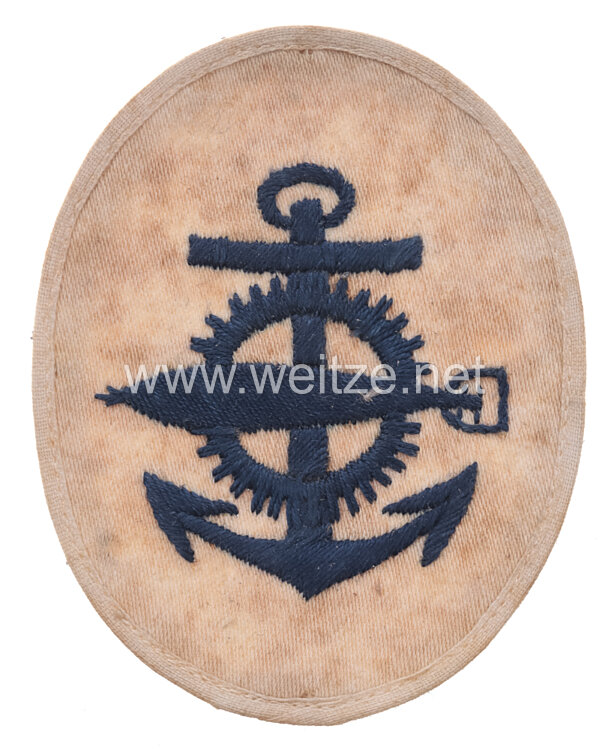
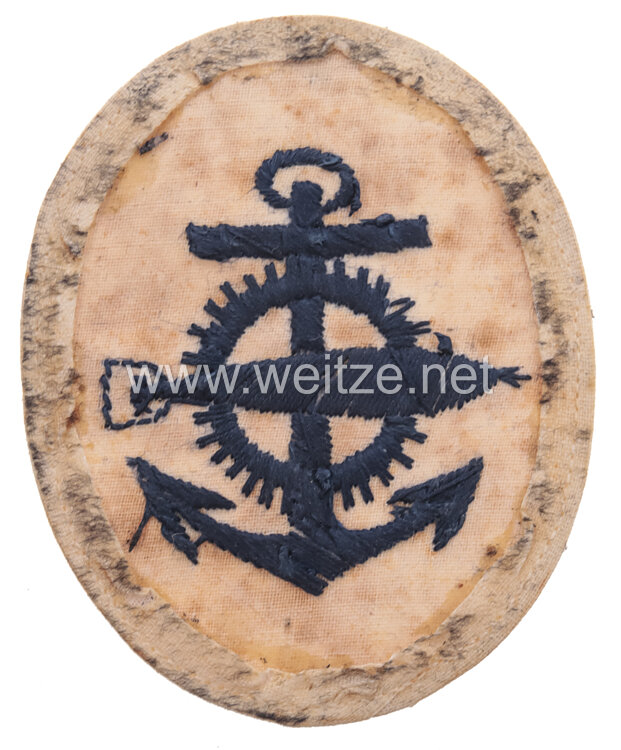
Kriegsmarine Sleeve Insignia Senior Torpedo Mechanic Petty Officer
The sleeve badge for Obertorpedomechanikermaat (Senior Torpedo Mechanic Petty Officer) of the Kriegsmarine represents a fascinating example of the complex rank system and specialization identification of the German Navy during World War II. This hand-embroidered version for the white blouse demonstrates the high craftsmanship quality and detailed hierarchy within the technical crews of the Kriegsmarine.
The Kriegsmarine, as the official designation of the German Navy from 1935 to 1945, developed a differentiated system of career badges to identify the various specializations and ranks within the crews. The rank of Obertorpedomechanikermaat designated an experienced non-commissioned officer in technical service, specialized in the maintenance, upkeep, and operation of torpedo weapons and their mechanical systems.
Torpedo technology represented one of the most complex and critical weapon systems of the Kriegsmarine during World War II. Torpedo mechanics were highly specialized professionals who had to undergo intensive training. They were responsible for maintaining torpedo tubes, setting torpedoes, checking depth control and detonation systems, and diagnosing technical problems. Their work was particularly crucial on submarines, where torpedo reliability could determine the success or failure of a mission.
The sleeve badge described here was made for the white summer blouse, which was part of the Kriegsmarine's summer uniform. The hand-embroidered execution indicates high-quality manufacturing, either privately procured or made by specialized tailors. During the war years, both machine-made and hand-embroidered variants of sleeve badges existed, with hand-embroidered examples often considered particularly high-quality and frequently preferred by officers and non-commissioned officers.
The career badges of the Kriegsmarine followed a standardized system that was detailed in dress regulations and uniform instructions. These badges were worn on the left upper arm and showed the respective specialty through specific symbols. For technical careers such as torpedo mechanics, these were typically stylized representations of gears, torpedoes, or other technical symbols, combined with rank insignia.
The rank Maat corresponded to a non-commissioned officer without sword knot and represented an important rank that already included considerable responsibility and leadership duties. The prefix “Ober” (senior) designated a higher level within this specialization, comparable to an experienced specialist non-commissioned officer. These men formed the backbone of technical crews and were often responsible for training younger sailors.
The use of such badges on the white uniform served not only practical identification purposes but also played an important role for morale and esprit de corps. The visible recognition of specialized skills through corresponding badges promoted pride in one's profession and identification with the respective specialty.
From a historical perspective, such sleeve badges document the high degree of specialization and professionalization of the Kriegsmarine. The technical complexity of modern naval warfare required a broad spectrum of specialized professionals, from mechanics to radio operators to navigation specialists. The system of career badges made this structure recognizable at a glance and contributed to the efficient organization of service operations.
Today, such sleeve badges are important military-historical artifacts that provide insight into the organization, hierarchy, and technical specialization of the Kriegsmarine. They document not only military structures but also craftsmanship manufacturing standards and the material culture of the time. For collectors and historians, they offer valuable information about the uniforming and appearance of the German Navy during World War II.