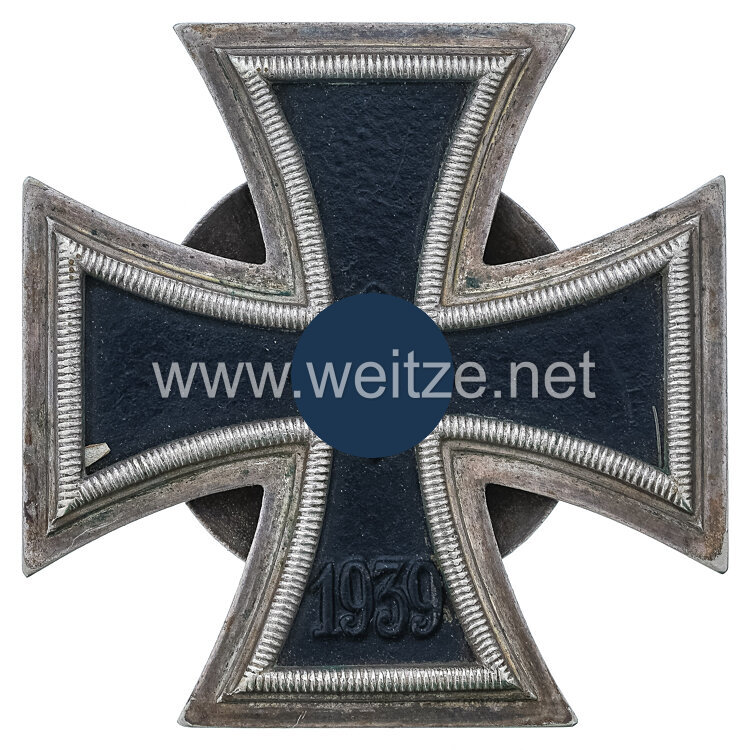
Iron Cross 1939 1st Class on Screw Disc - B.H.Mayer

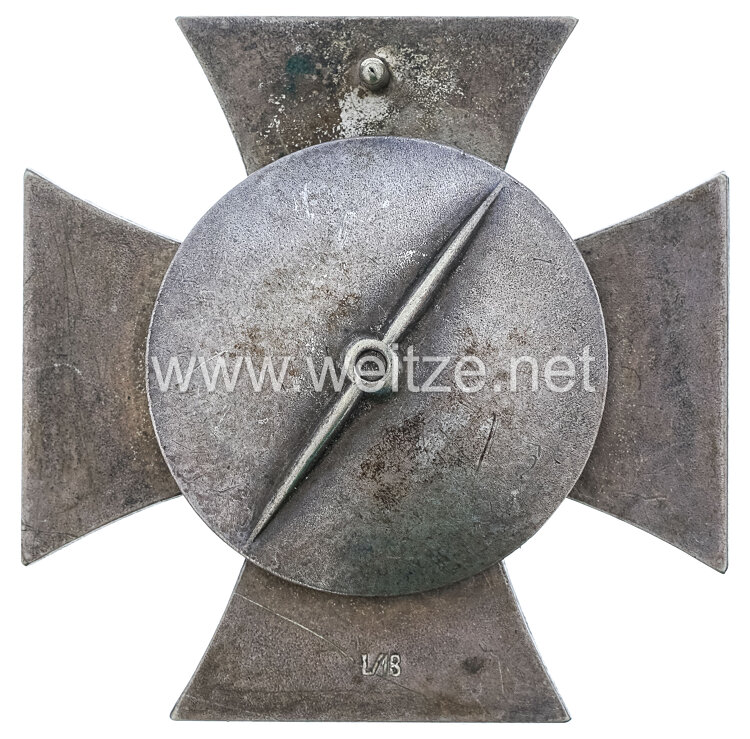
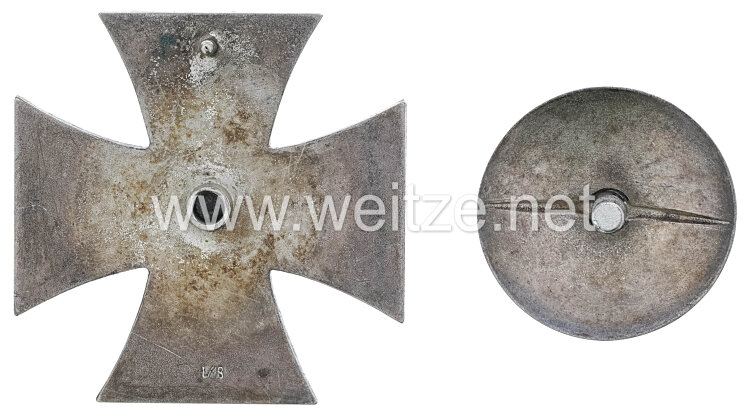
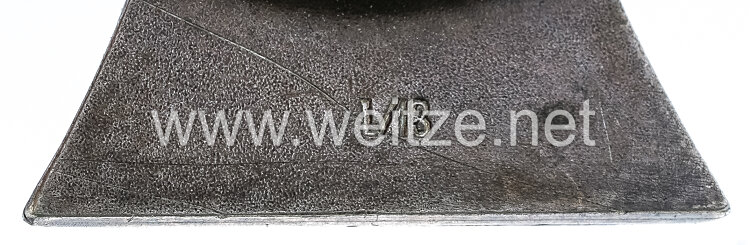
blackened iron core, reverse marked “L/18”. Lightly worn, Condition 2.
467215
600,00

Iron Cross 1939 1st Class on Screw Disc - B.H.Mayer

The Iron Cross 1st Class of the 1939 pattern represents one of the most significant military decorations of the German Reich during World War II. This particular class of the order was re-instituted by Adolf Hitler on September 1, 1939, the day of the German invasion of Poland, after the Iron Cross had previously been awarded during the Wars of Liberation in 1813 and during World War I in 1914.

The specimen described here bears the maker's mark “L/18”, which identifies the renowned firm B.H. Mayer of Pforzheim. This traditional manufacturer was among the officially authorized producers of orders and decorations of the Third Reich. The medal and metalware company B.H. Mayer was established in the 19th century and had earned an excellent reputation for producing high-quality decorations.

The technical execution of the Iron Cross 1st Class differed fundamentally from the 2nd Class. While the Iron Cross 2nd Class was worn on a ribbon, the 1st Class was designed as a pin-back badge attached directly to the uniform. The present piece shows the typical screw-disc attachment, whereby a flat disc with threading was mounted on the reverse, which was screwed through the uniform tunic. This construction ensured secure fastening and prevented the loss of the valuable decoration during combat operations.

The blackened iron core forms the characteristic feature of this decoration. The three-part construction consisted of a frame made of silver or silver-plated material, into which the iron, blackened core was set. This design followed the traditional symbolism of the Iron Cross, which since its institution by King Frederick William III of Prussia on March 10, 1813, embodied the connection between noble metal and simple iron – a symbol for the unity of all social classes in the fight for the fatherland.

The award practice for the Iron Cross 1st Class was significantly more restrictive than for the 2nd Class. While the 2nd Class was already awarded for basic bravery and devotion to duty, the 1st Class required multiple proven acts or special achievements. Furthermore, the recipient had to already possess the Iron Cross 2nd Class. During World War II, an estimated 450,000 to 500,000 Iron Crosses 1st Class were awarded – compared to several million of the 2nd Class.

The 1939 design differed from earlier versions through the addition of the swastika in the center as well as the year “1939” on the lower arm of the cross. In the upper arm was the crown with three oak leaves and the “W” for King Wilhelm, thereby preserving historical continuity with the original institution.

The description of the object as “lightly worn, condition 2” indicates authentic use during the war. Many of these decorations today show signs of wear that testify to their use on uniforms. Condition grade 2 corresponds in militaria collecting terminology to a very good to good condition with minimal signs of wear.

The maker's marks on the reverse of the orders are today of great interest to collectors and historians, as they enable precise attribution and authentication. The Reich Ministry of Economics had introduced a system of coded manufacturer marks to control and monitor production. B.H. Mayer produced high-quality orders in considerable quantities throughout the war.

After 1945, wearing the Iron Cross with swastika was prohibited in Germany. However, the Law on Titles, Orders and Decorations of 1957 permitted wearing a denazified version with oak leaves instead of the swastika. Today, these decorations are important historical documents that document the military history of the 20th century in museums and private collections.