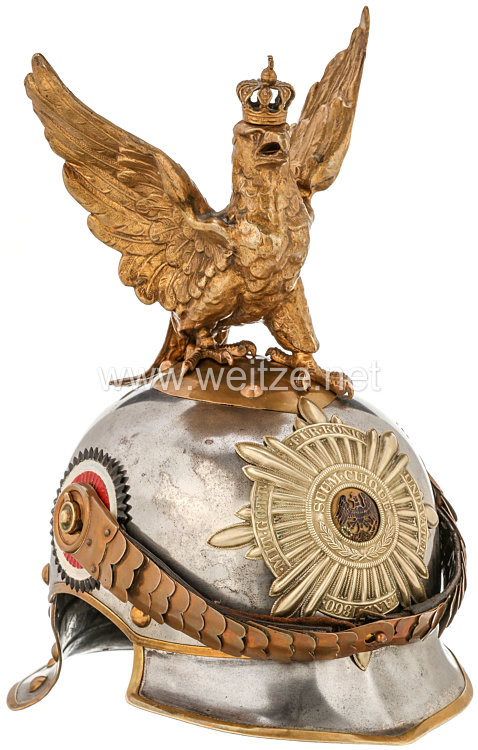
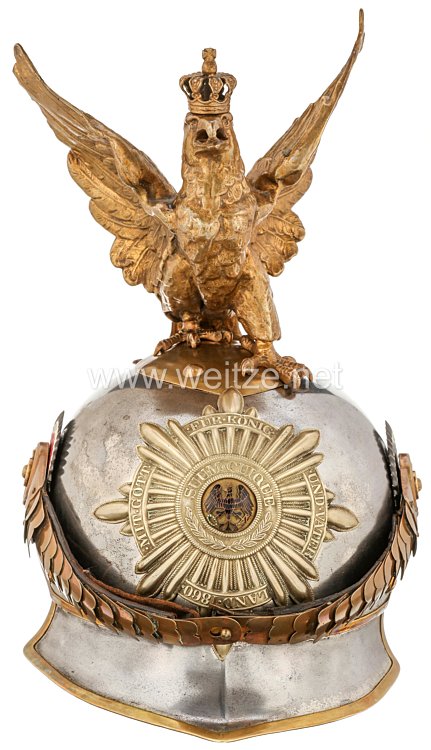
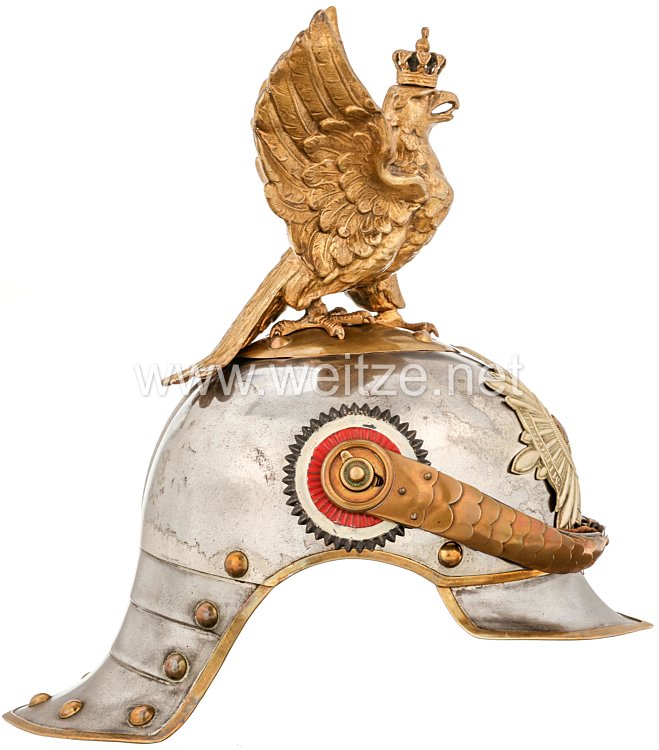
Preußen Helm Modell 1889/94 für Unteroffiziere der Leibgendarmerie
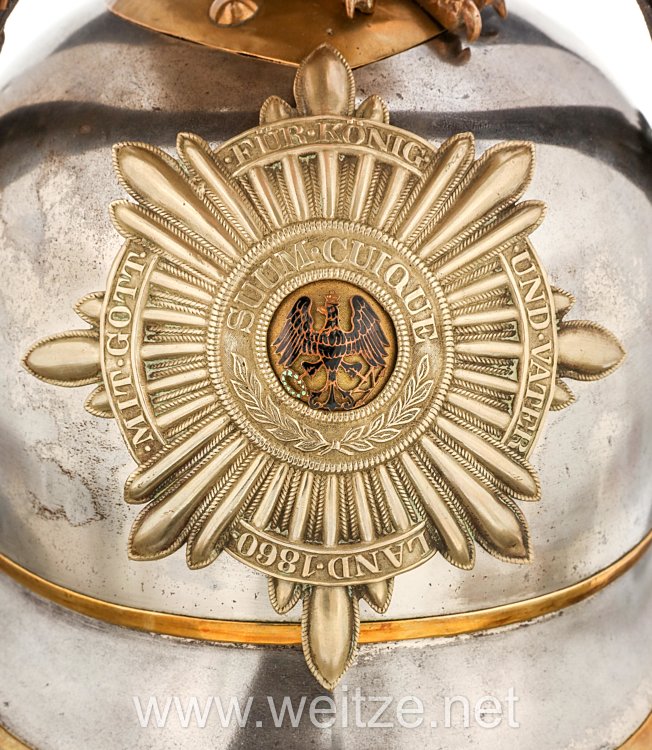
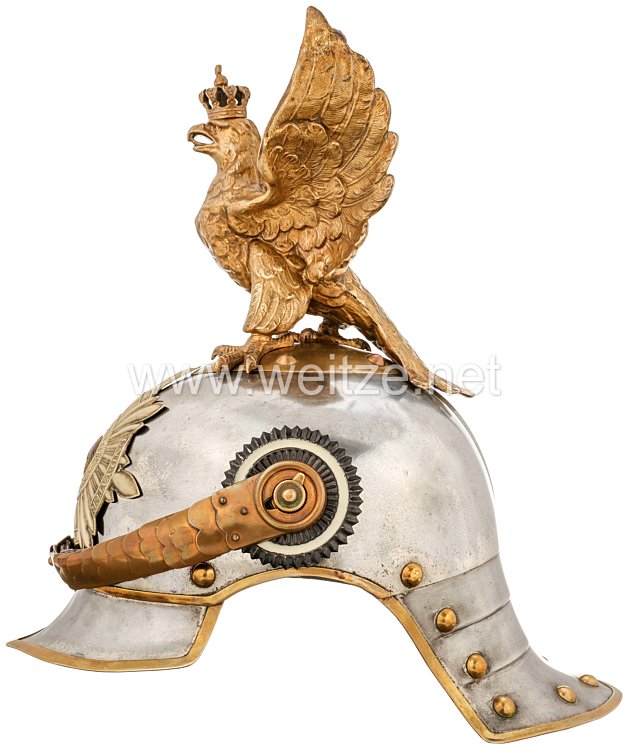
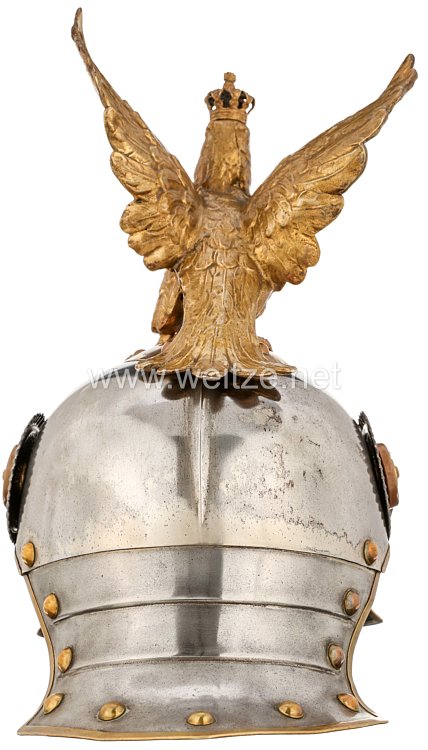
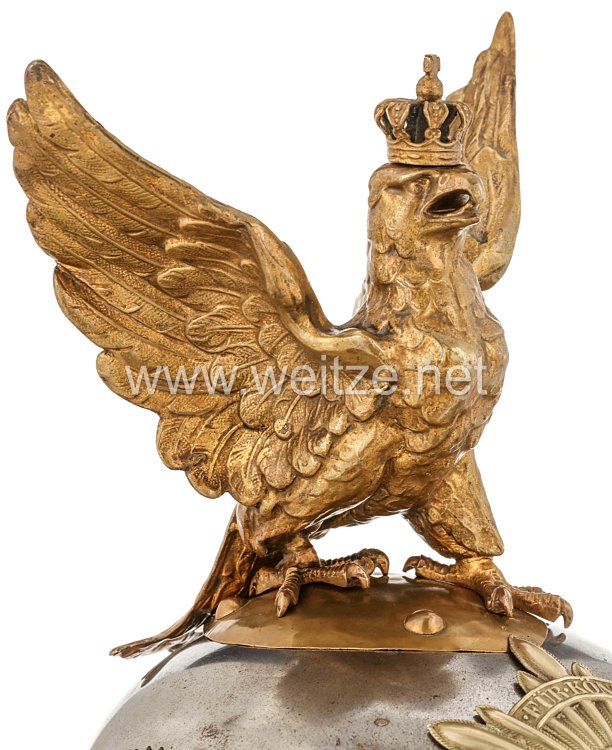
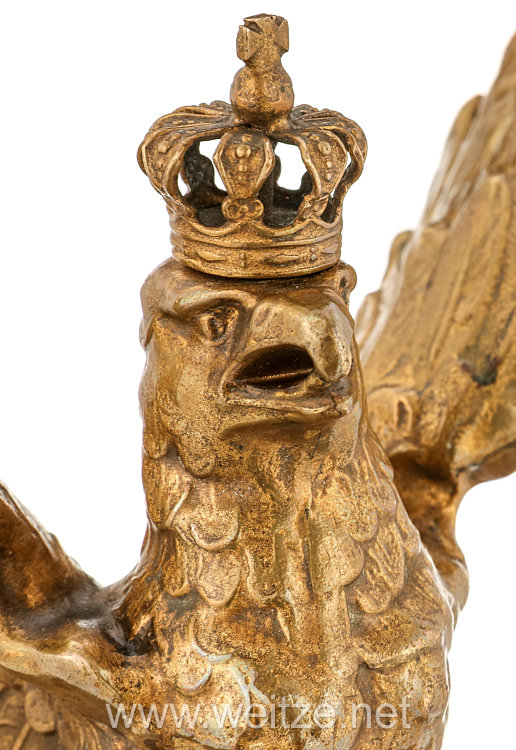
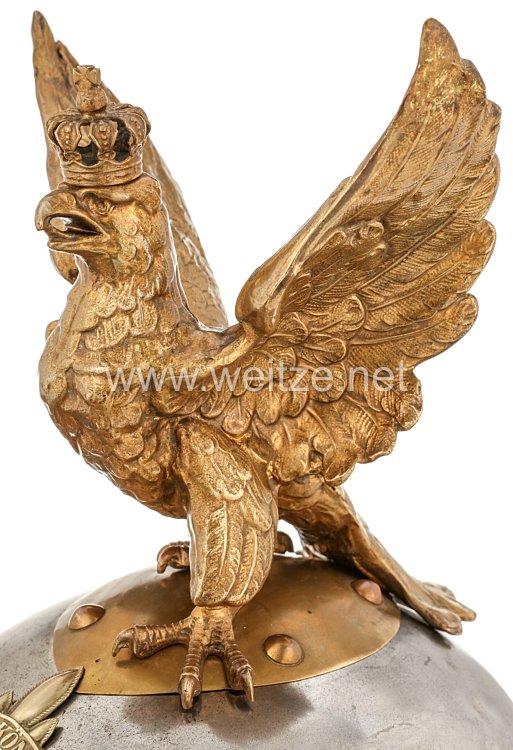
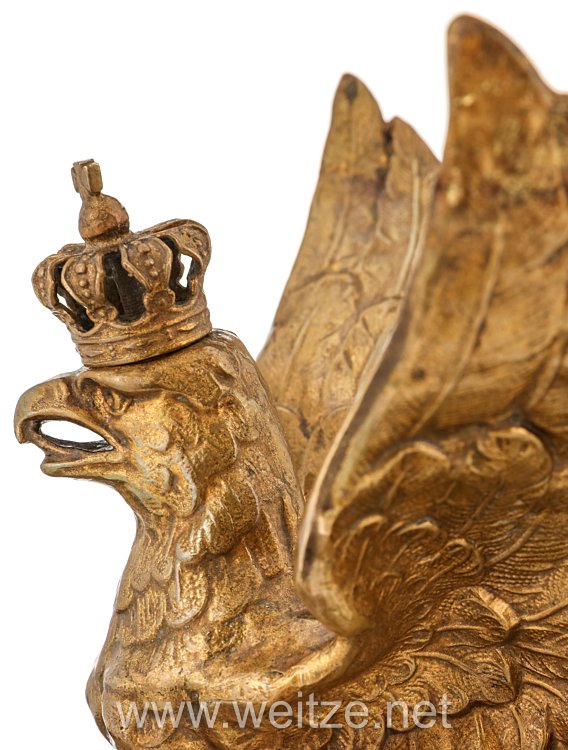
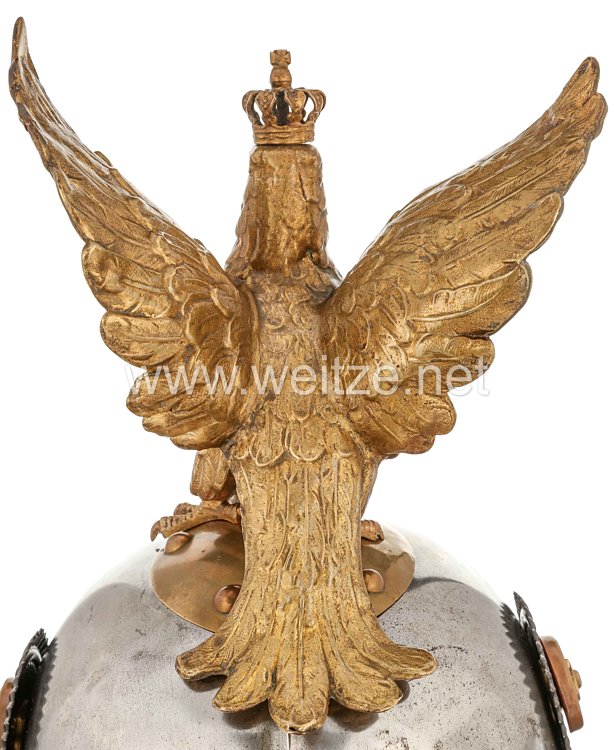
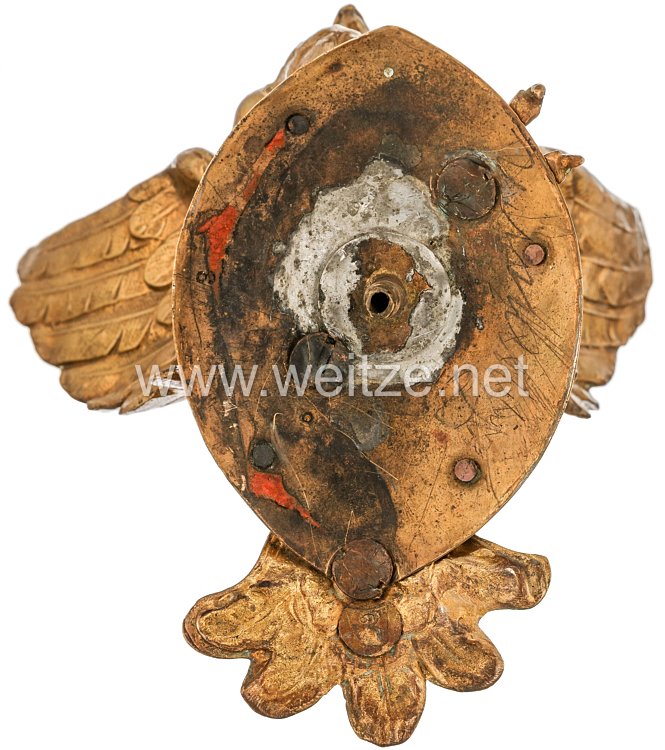
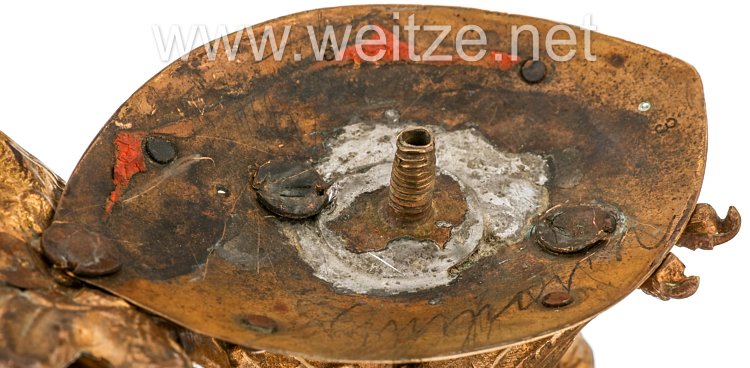
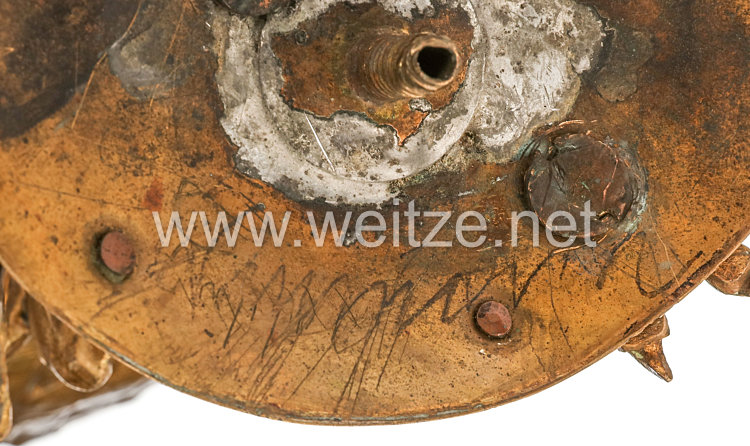
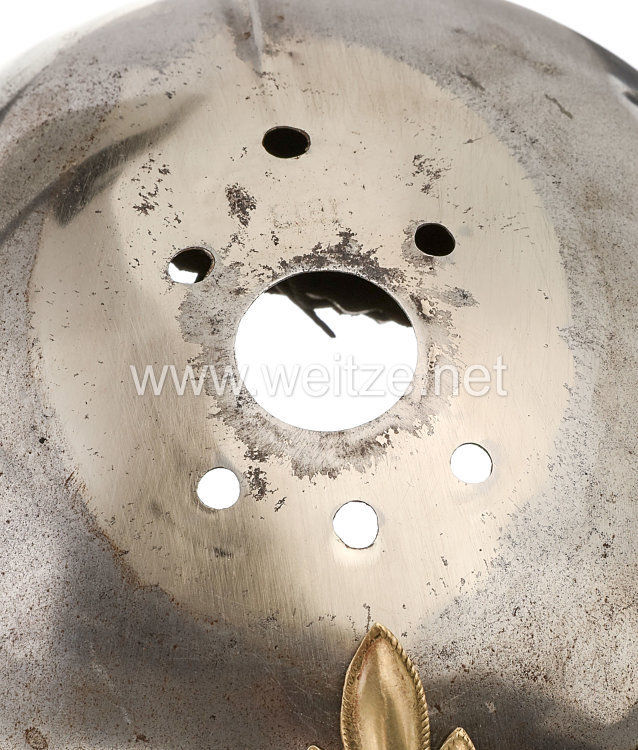
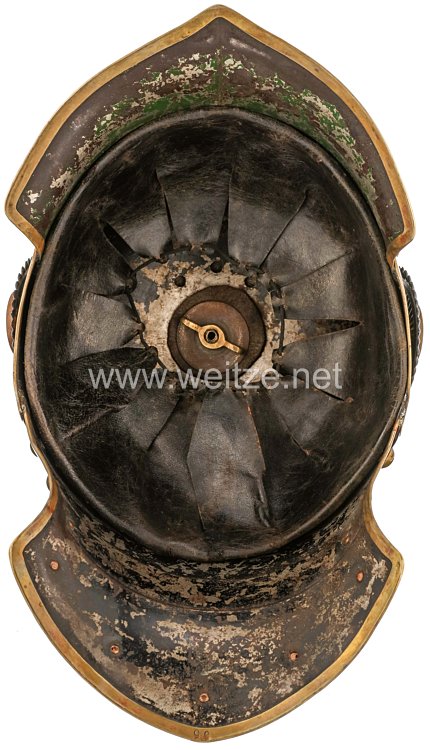
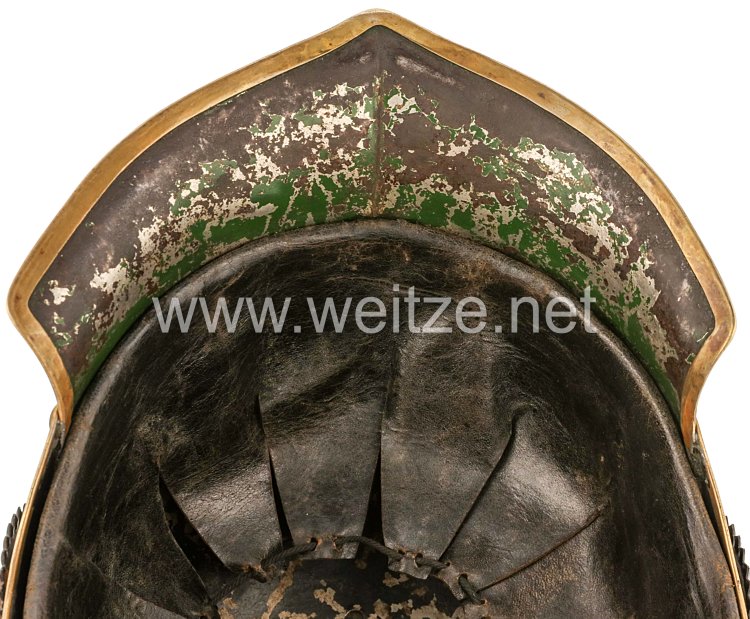
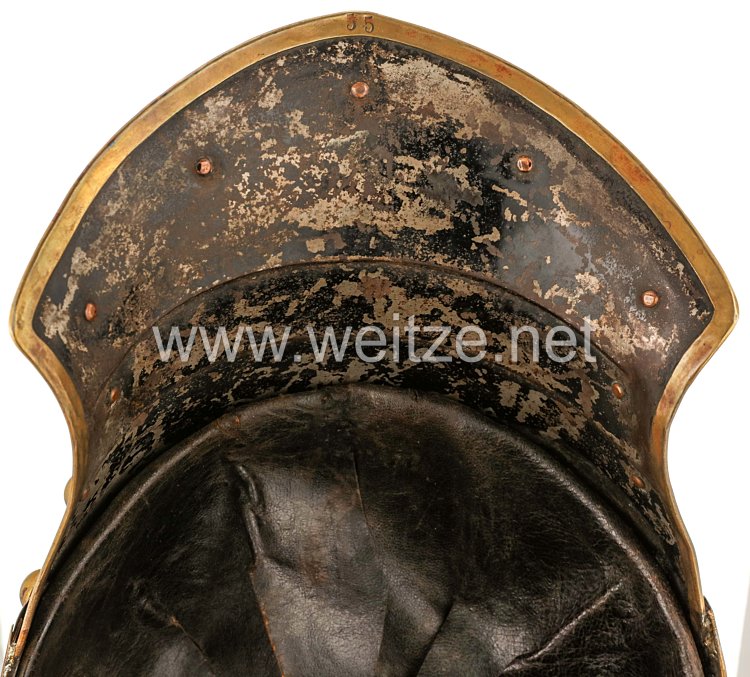
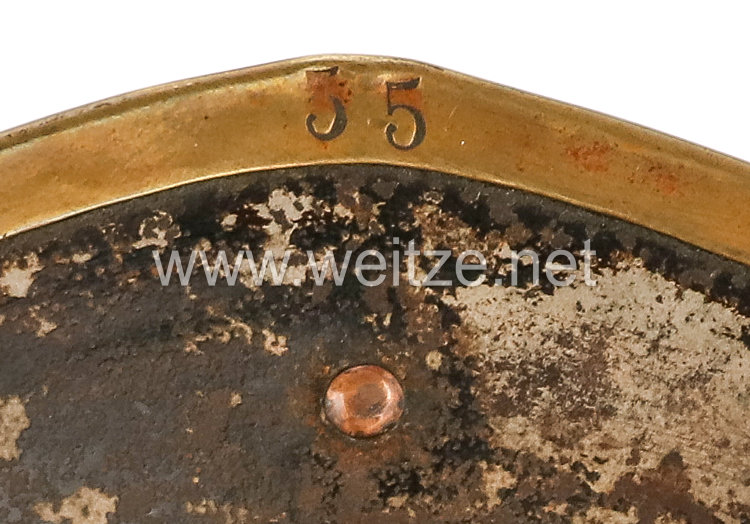
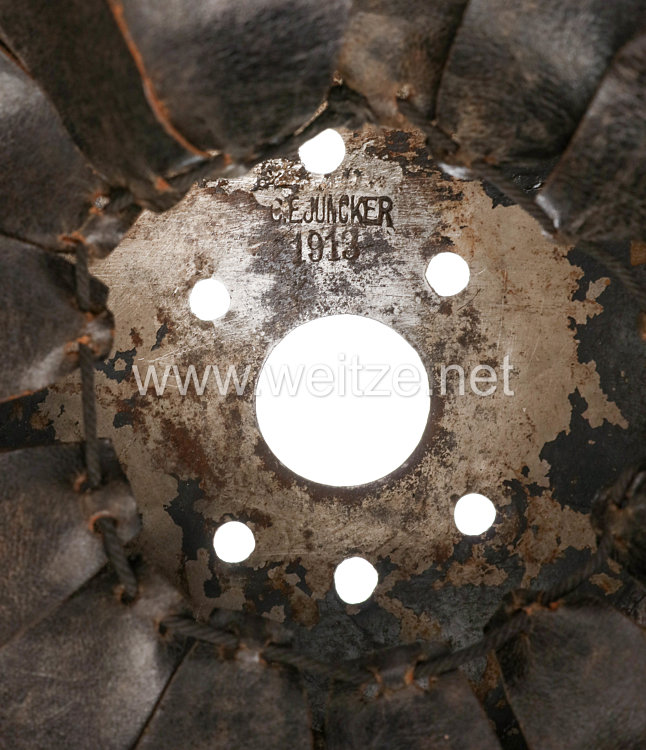
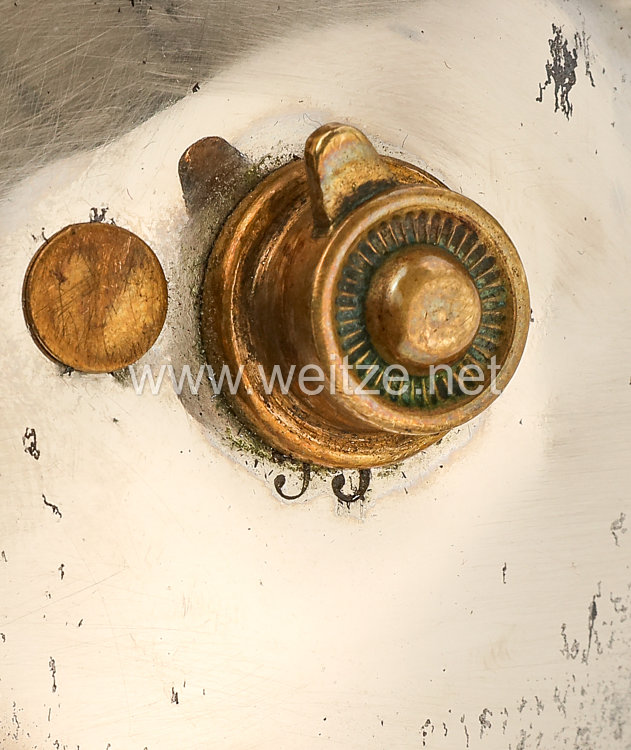
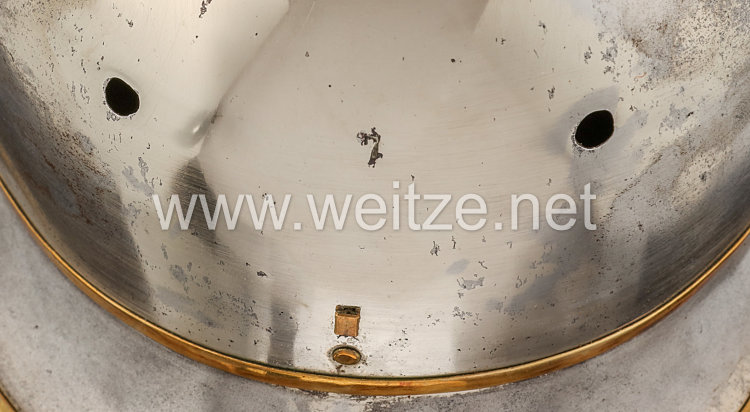
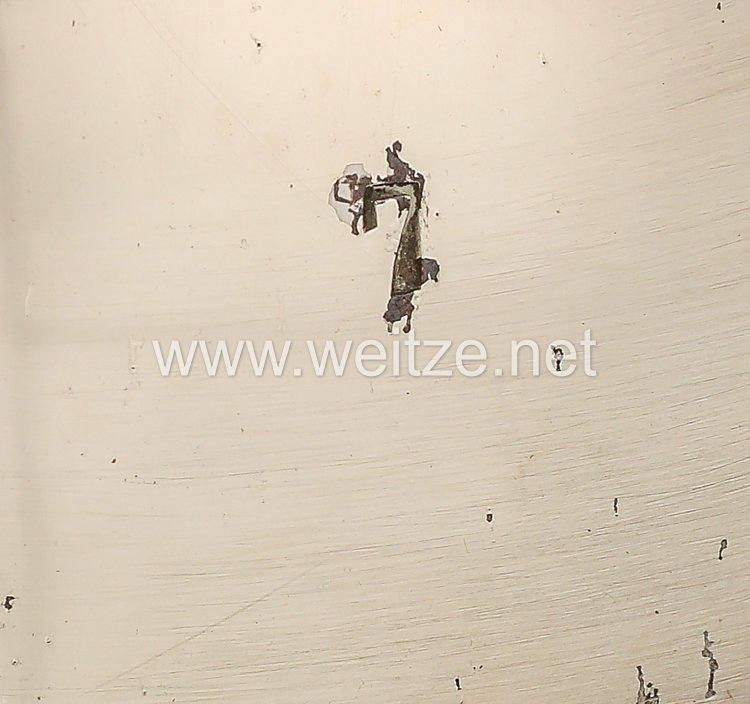
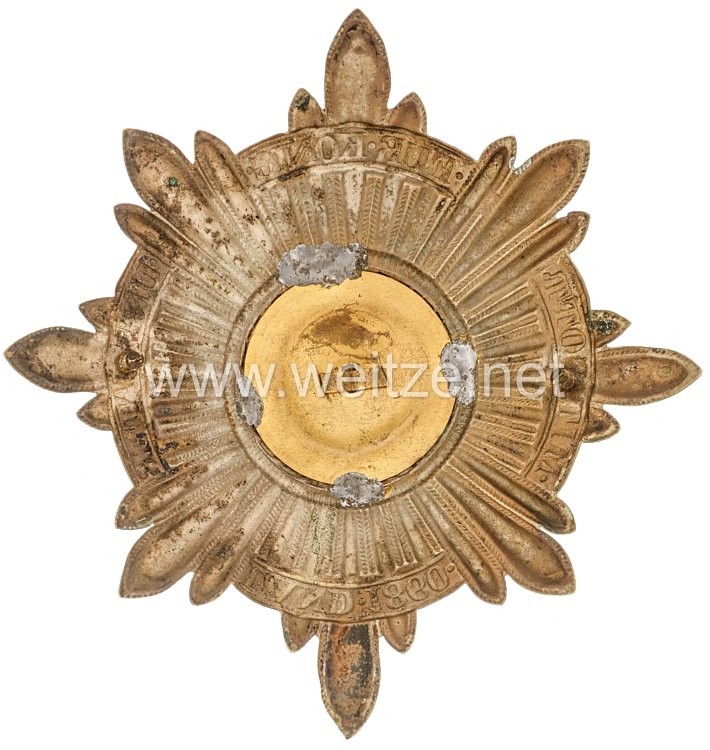
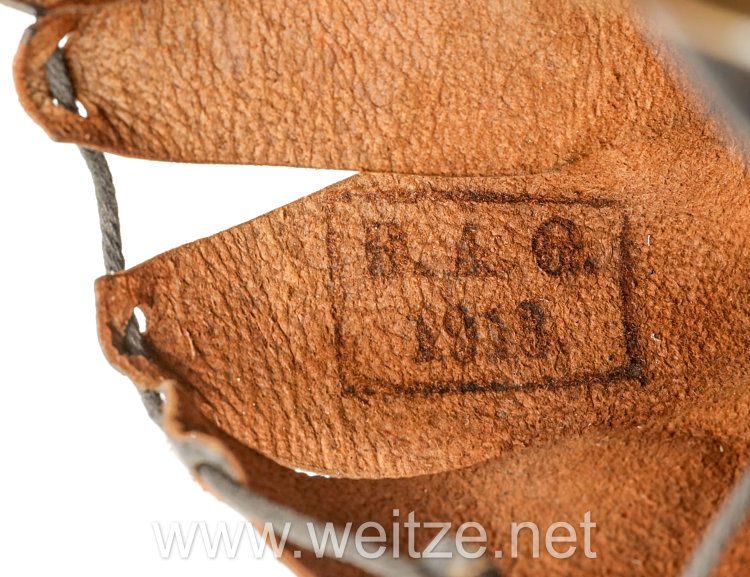
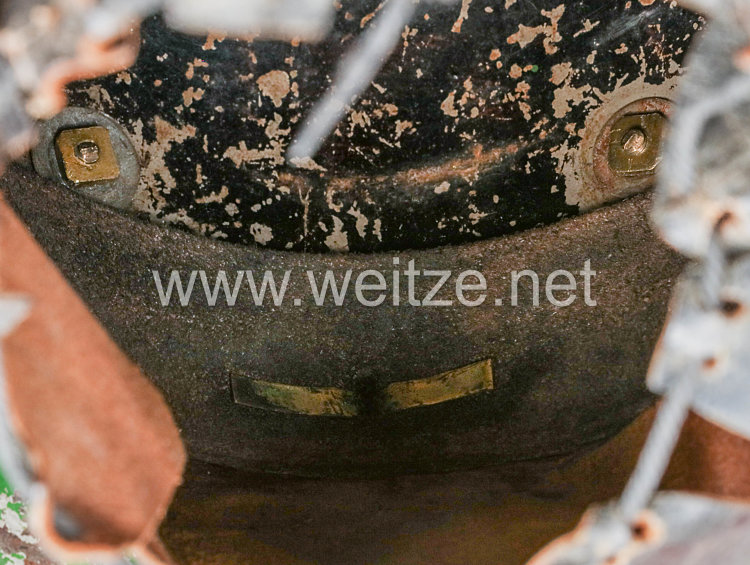
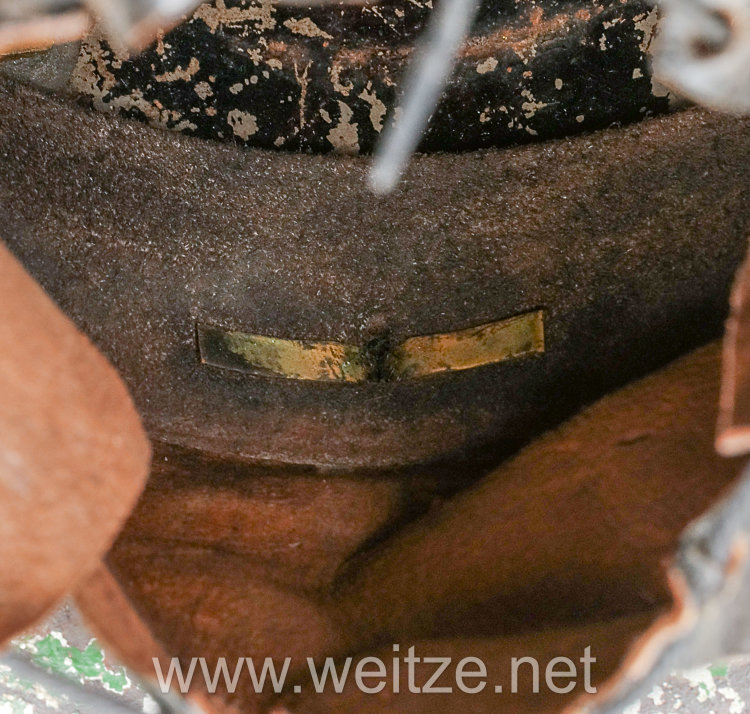
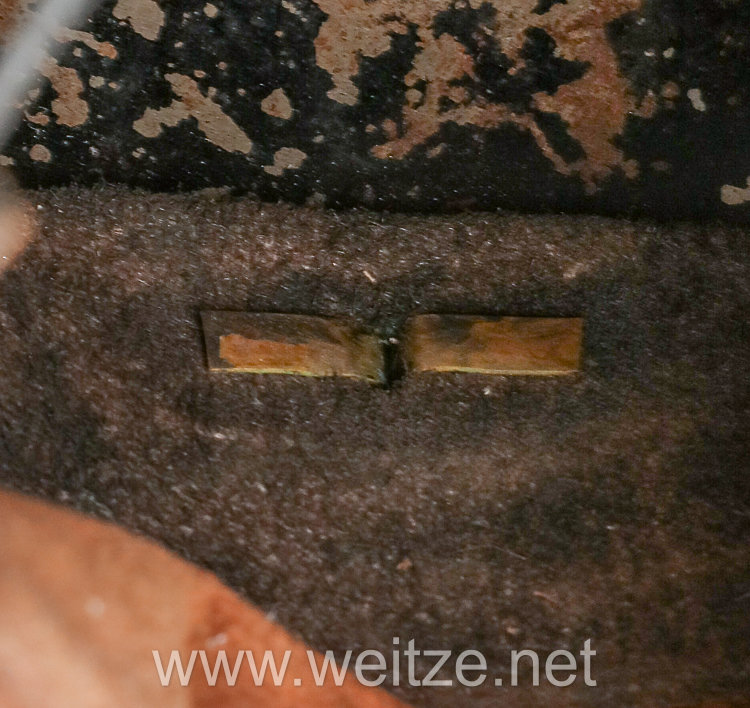
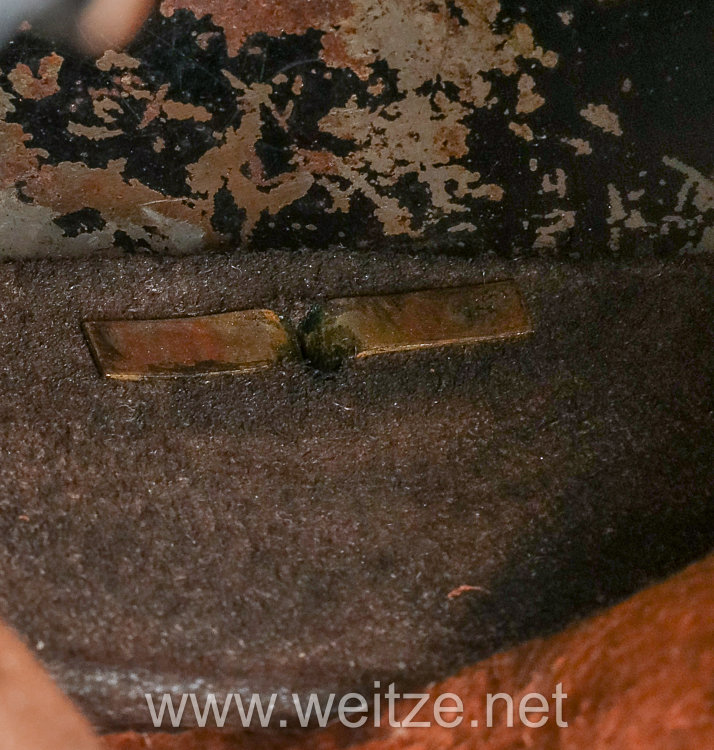
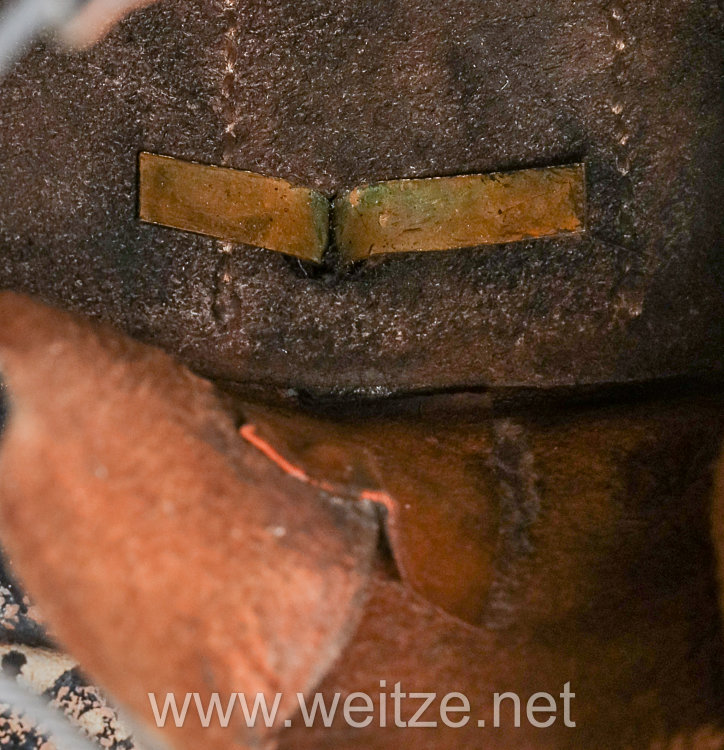
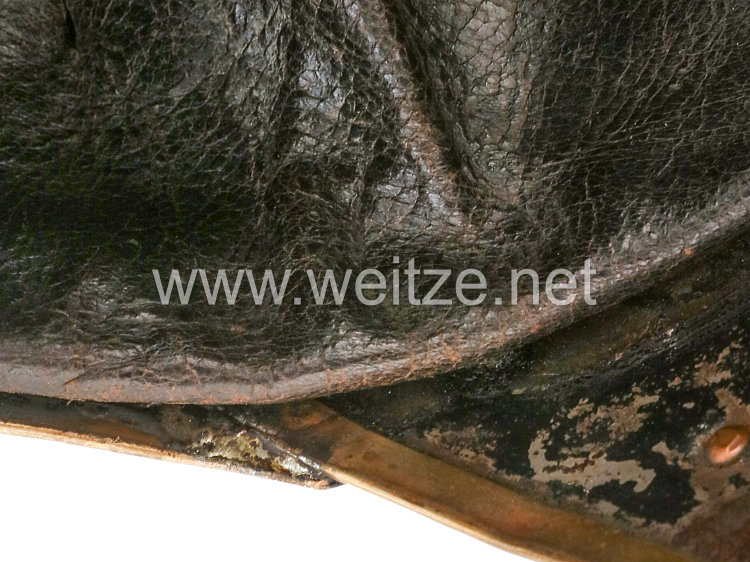
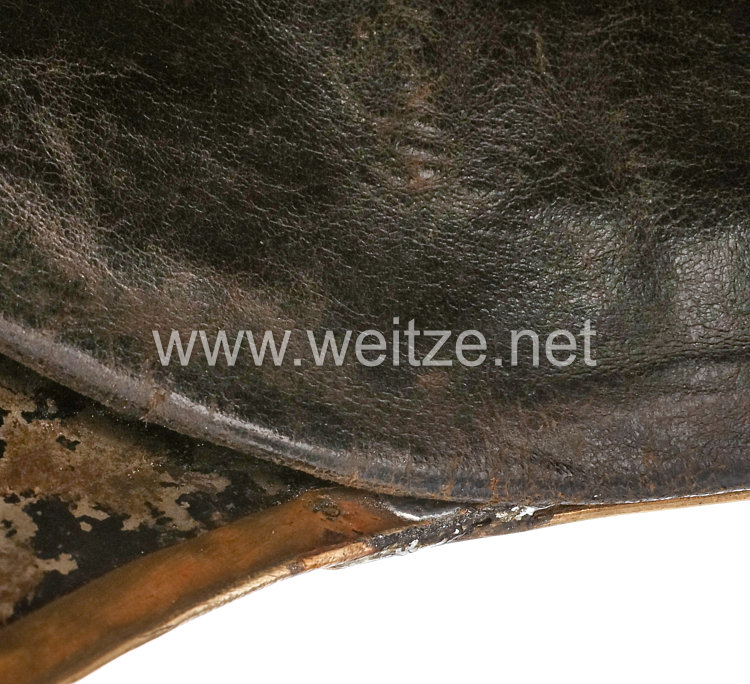
Kammerstück, 1913. Fertigung in schöner Friedensqualität, komplett mit allen Beschlägen. Die Helmglocke Stahl vernickelt mit Tombak Beschlägen mit eckigem, vorn zugespitztem Vorderschirm und eckigem geschweiften, in der Mitte ebenfalls zugespitzten Hinterschirm. Aufgelegter Gardestern mit emailliertem Schwarzen Adler im Zentrum, gewölbte Schuppenketten aus Tombak an Knopf 94, beide Kokarden. Komplett mit aufgesetztem Paradeadler mit hochgestellten Flügeln in Tombak vergoldet, mit aufgeschraubter Krone. Innen mit schwarzem gelaschten Lederfutter, im Futter innen gestempelt "B.A.G. 1913", die Helmglocke gestempelt "C.E. Juncker 1913", der Vorderschirm grün, der Nackenschirm schwarz lackiert. Größe 55. Getragener Helm in Originalzustand, Zustand 2.
Dieser Helm stammt aus der legendären Sammlung von Wolfgang Schulze von Mertschinsky, dieser Helm ist auch abgebildet im Fachbuch von Jan K. Kube "Militaria der deutschen Kaiserzeit - Helme und Uniformen 1871 - 1914" von 1977. Dies ist der 1. Helm, den wir in über 30 Jahren Geschäftstätigkeit anbieten können, uns ist kein weiteres Original bekannt. Mit Sicherheit der seltenste Helm der Preußischen Armee.
Die Leibgendarmerie bezeichnete Ordonnanzabteilungen in der Preußischen Armee, welche dem König zur besonderen Verfügung stand. Seine Aufgaben waren Ordonnanzdienst, wie das Überbringen von Briefen und Befehlen aus dem königlichen Kabinett, das Mitführen und Bereithalten wichtiger Unterlagen sowie die Begleitung Ihrer Majestät bei Staatsbesuchen, Manövern und Reisen. Wenn fremde Herrscher am Hofe weilten, versahen sie auch dort den Ordonnanzdienst. Des Weiteren gehörte die Teilnahme der Leibgendarmerie an allen Paraden des Gardekorps und an den Kaisermanövern zu ihren Aufgaben. Dabei wurden die Standarten des Kaisers und der Kaiserin mitgeführt. Bei den alljährlich stattfindenden Kaisermanövern blies ein Trompeter der Leibgendarmerie bei Übungsende das Signal: „Das Ganze Halt!“. Die Leibgendarmerie bestand ab 1889 aus dem 1. und 2. Zug mit 2 x 24 Wachtmeistern. Der 1. Zug stand dem Kaiser zur Verfügung, der 2. Zug der Kaiserin.
Während des Ersten Weltkrieges wurde der 1. Zug zum Großen Hauptquartier kommandiert. Die Friedensuniformen wurden bis Kriegsende bei dieser Truppe beibehalten. Die Leibgendarmerie war die einzige deutsche Einheit, welche nicht mit einer feldgrauen Uniform ausgestattet wurde.
Dieser Helm stammt aus der legendären Sammlung von Wolfgang Schulze von Mertschinsky, dieser Helm ist auch abgebildet im Fachbuch von Jan K. Kube "Militaria der deutschen Kaiserzeit - Helme und Uniformen 1871 - 1914" von 1977. Dies ist der 1. Helm, den wir in über 30 Jahren Geschäftstätigkeit anbieten können, uns ist kein weiteres Original bekannt. Mit Sicherheit der seltenste Helm der Preußischen Armee.
Die Leibgendarmerie bezeichnete Ordonnanzabteilungen in der Preußischen Armee, welche dem König zur besonderen Verfügung stand. Seine Aufgaben waren Ordonnanzdienst, wie das Überbringen von Briefen und Befehlen aus dem königlichen Kabinett, das Mitführen und Bereithalten wichtiger Unterlagen sowie die Begleitung Ihrer Majestät bei Staatsbesuchen, Manövern und Reisen. Wenn fremde Herrscher am Hofe weilten, versahen sie auch dort den Ordonnanzdienst. Des Weiteren gehörte die Teilnahme der Leibgendarmerie an allen Paraden des Gardekorps und an den Kaisermanövern zu ihren Aufgaben. Dabei wurden die Standarten des Kaisers und der Kaiserin mitgeführt. Bei den alljährlich stattfindenden Kaisermanövern blies ein Trompeter der Leibgendarmerie bei Übungsende das Signal: „Das Ganze Halt!“. Die Leibgendarmerie bestand ab 1889 aus dem 1. und 2. Zug mit 2 x 24 Wachtmeistern. Der 1. Zug stand dem Kaiser zur Verfügung, der 2. Zug der Kaiserin.
Während des Ersten Weltkrieges wurde der 1. Zug zum Großen Hauptquartier kommandiert. Die Friedensuniformen wurden bis Kriegsende bei dieser Truppe beibehalten. Die Leibgendarmerie war die einzige deutsche Einheit, welche nicht mit einer feldgrauen Uniform ausgestattet wurde.