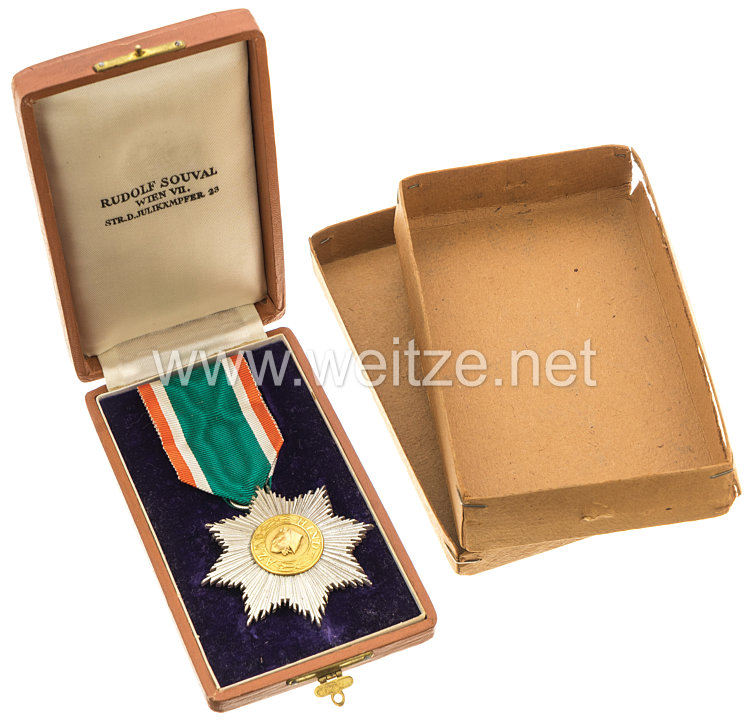
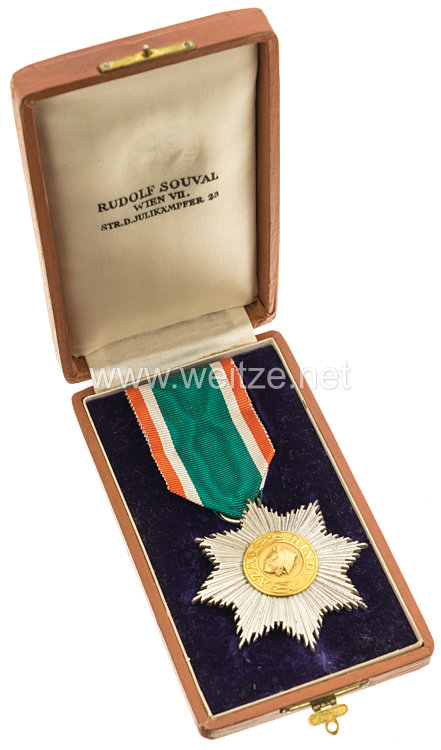
Order “Azad Hind” of the Provisional Government of Free India 1942 - 1945
The Azad Hind Order (translated: “Order of Free India”) represents one of the most fascinating and historically complex chapters in World War II decorations. This award was instituted by the Provisional Government of Free India (Arzi Hukumat-e-Azad Hind) under the leadership of Subhas Chandra Bose between 1943 and 1945.
Historical Background: Subhas Chandra Bose, a prominent Indian nationalist and former president of the Indian National Congress, escaped from British internment in 1941 and reached Germany via Afghanistan and the Soviet Union. In Berlin, he collaborated with the Axis powers to fight British rule in India. On October 21, 1943, Bose proclaimed the Provisional Government of Free India in Singapore and simultaneously assumed supreme command of the Indian National Army (INA), composed primarily of Indian prisoners of war and defectors.
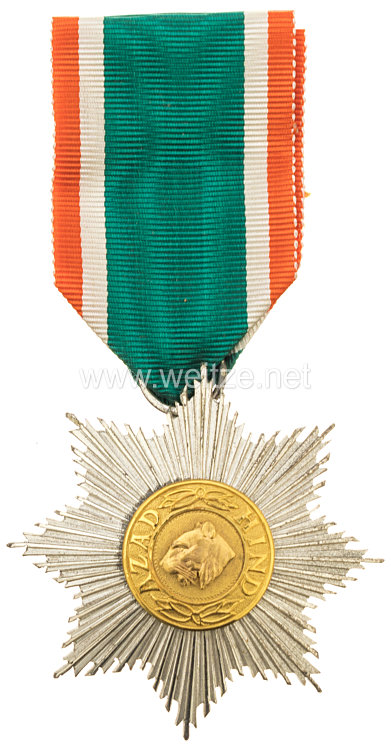
The Azad Hind Order was instituted in several classes, modeled after European order systems. The 3rd Class, known as Vir-e-Hind (Hero of India), was intended for significant military and civil merit. The hierarchical system included higher classes such as Sardar-e-Jang (War Leader) and Vir-e-Hind of the 1st and 2nd Classes.
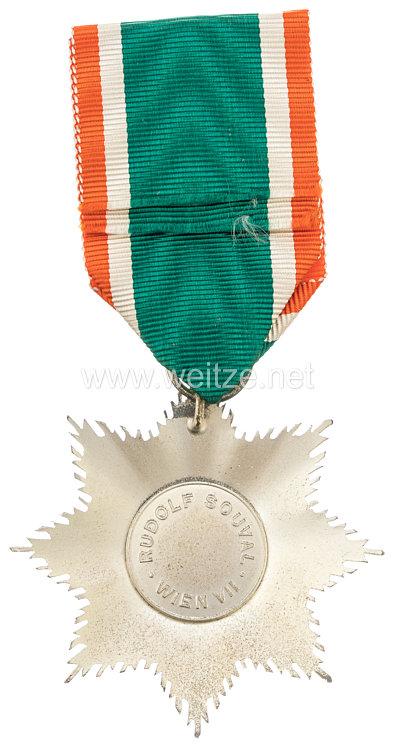
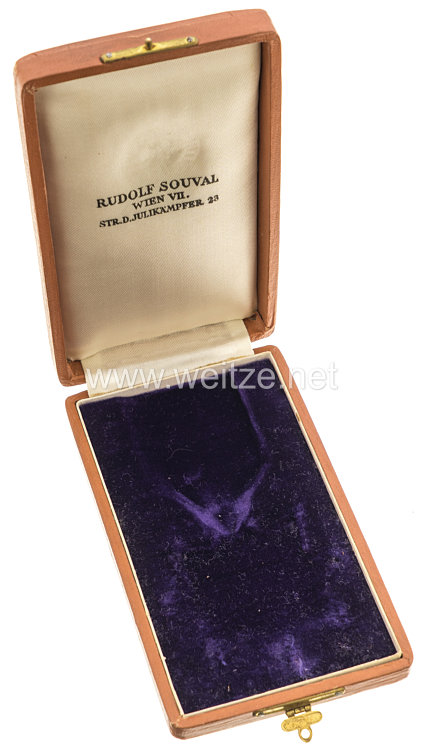
Manufacture and Design: The decorations were manufactured by the renowned Viennese firm Rudolf Souval, one of the most prominent manufacturers of military orders and decorations during the Nazi era. The workshop in Vienna VII produced numerous German and allied awards with the highest craftsmanship quality. The design of the star typically features a multi-pointed star with a gilded center, frequently displaying the leaping tiger of the INA or national Indian symbols. The combination of silver-plated body and gilded center was characteristic of this order class.
The Indian National Army: The INA, under Bose's leadership as “Netaji” (revered leader), comprised approximately 43,000 soldiers at its peak. It fought alongside Japanese forces in Burma and participated in the Imphal Campaign (1944), a failed attempt to invade India. The army consisted of three brigades and included the famous Rani of Jhansi Regiment, a women's unit led by Captain Lakshmi Sahgal.
Award Practice: The Azad Hind Orders were conferred upon officers and soldiers of the INA as well as civilian supporters of the movement. Awards were presented in ceremonial occasions, often in Bose's presence. The decorations were intended to underscore the legitimacy of the provisional government and strengthen troop morale. Due to the short existence of the government and military defeats from 1944 onwards, relatively few examples were awarded in total.
Historical Significance: The Azad Hind Order remains a controversial historical artifact. In India, Subhas Chandra Bose is widely venerated as a freedom fighter, while his collaboration with the Axis powers is viewed critically internationally. The decorations document a little-known aspect of World War II in the Asia-Pacific theater and the complex political alliances of that time.
Following the Japanese capitulation in August 1945, the Provisional Government was dissolved. Bose presumably died in an aircraft crash in Taiwan on August 18, 1945, although the exact circumstances remain the subject of speculation to this day. The surviving INA soldiers were captured by the British, and the famous Red Fort Trials in Delhi 1945-46 made the INA officers into folk heroes and contributed to the Indian independence movement.
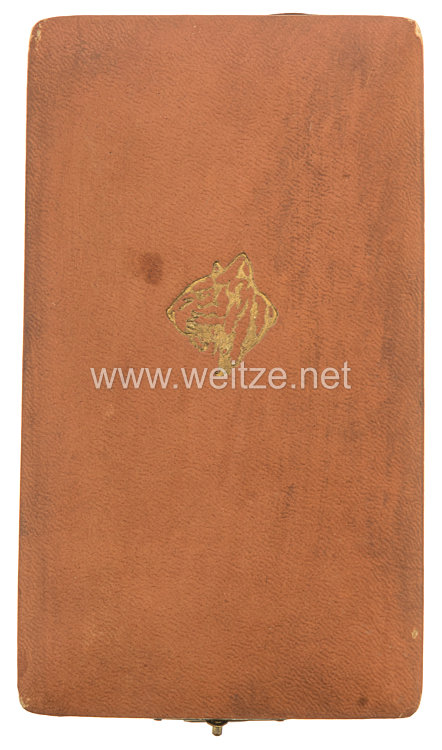
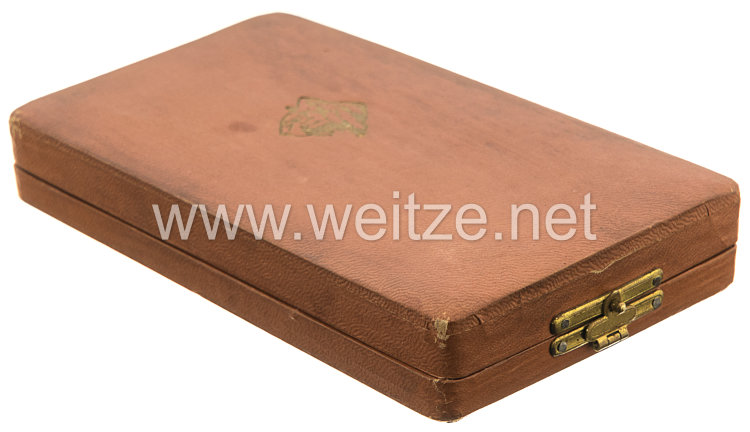
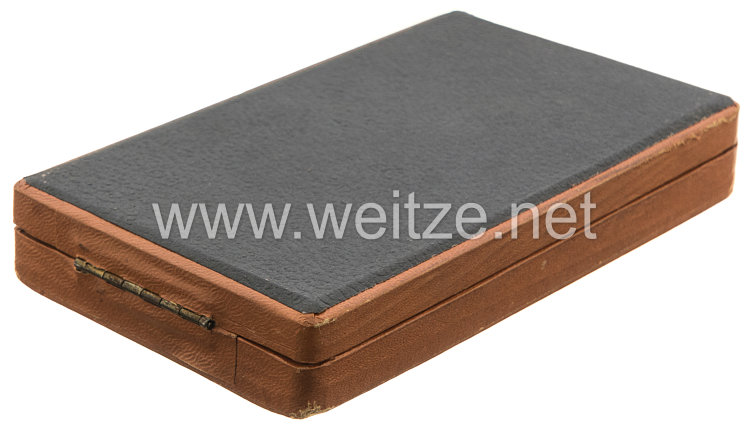
Collector Value and Authenticity: Original Azad Hind Orders with the maker's mark of Rudolf Souval are today rare and sought-after collector's items. The marking on the reverse confirms authenticity and provenance. Examples in original presentation cases with cardboard boxes are particularly valuable, as many presentation cases were lost over the decades.