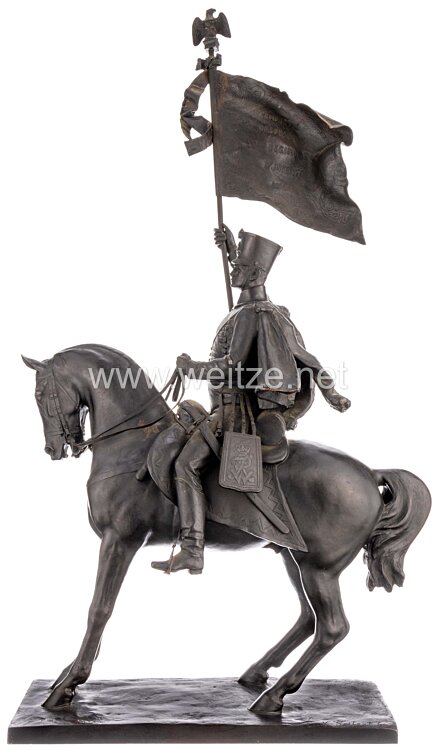
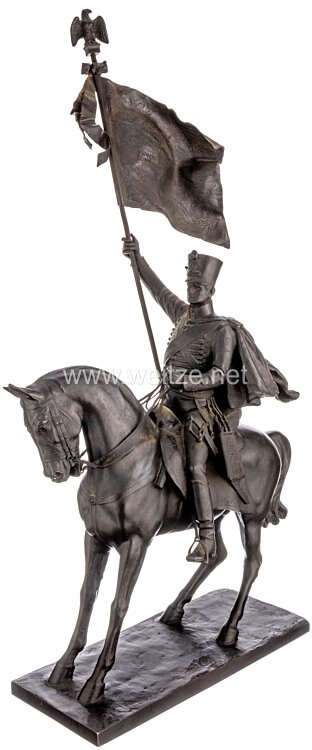
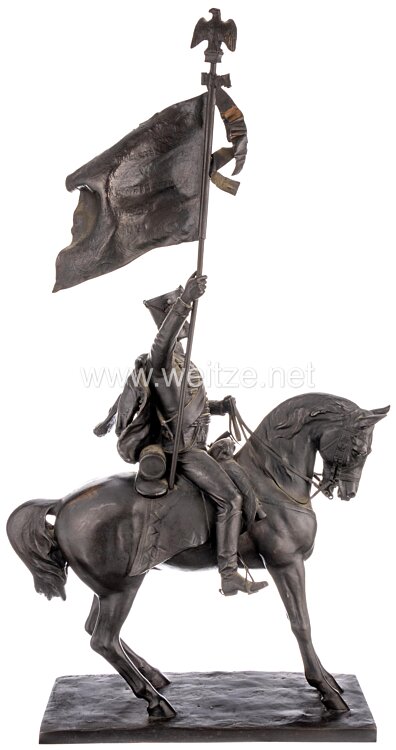
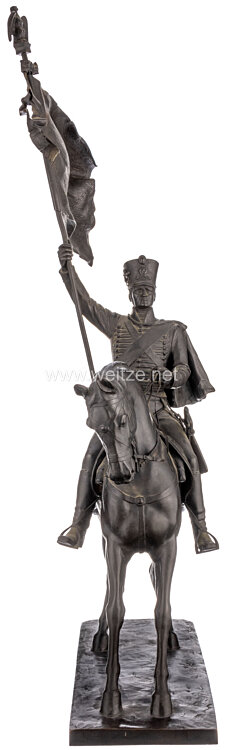
Preußen bronzene Reiterstatue eines Husaren des Husarenregiments "von Prittwitz" (1. Leib-Husaren-Regiment Nr. 1) mit der 1807 in der Schlacht bei Heilsberg eroberten Fahne des französischen 55. Infanterie-Regiments
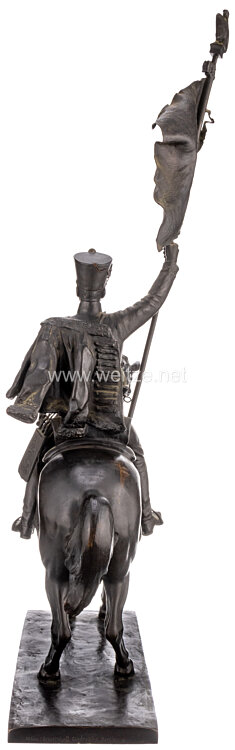
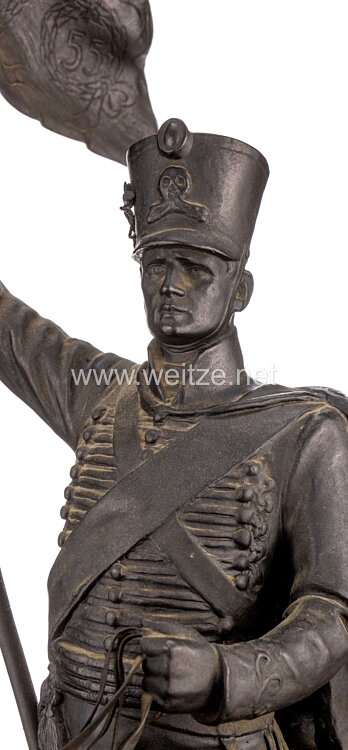
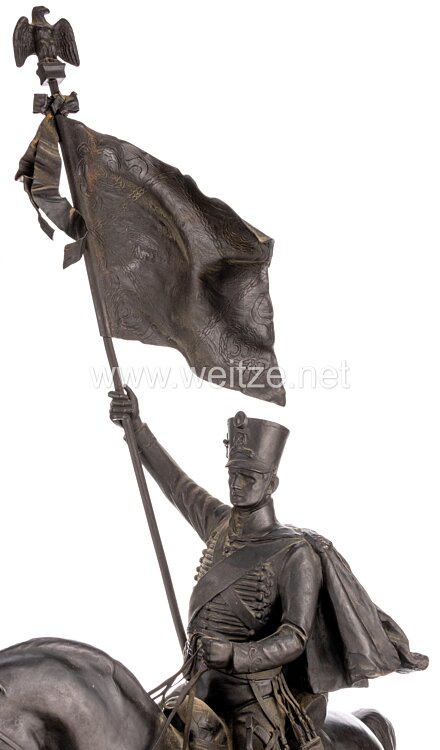
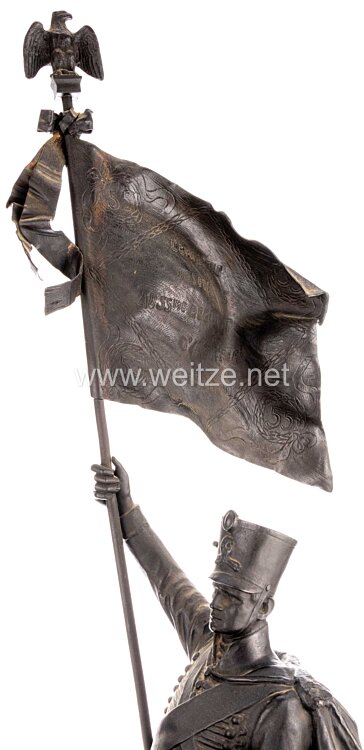
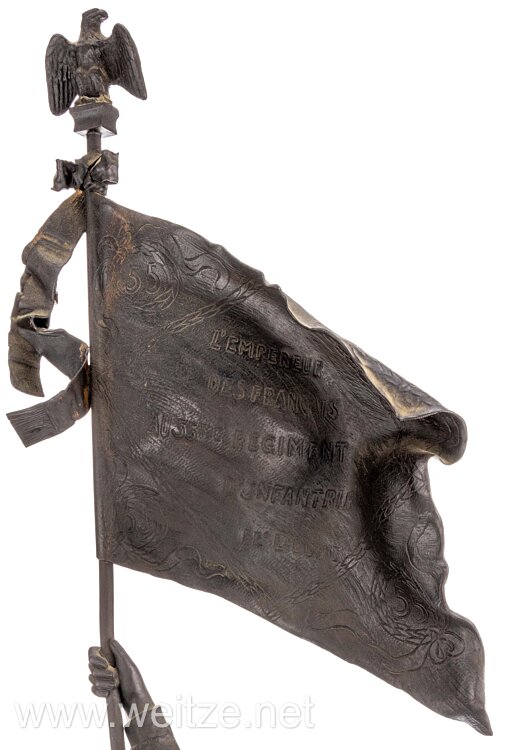
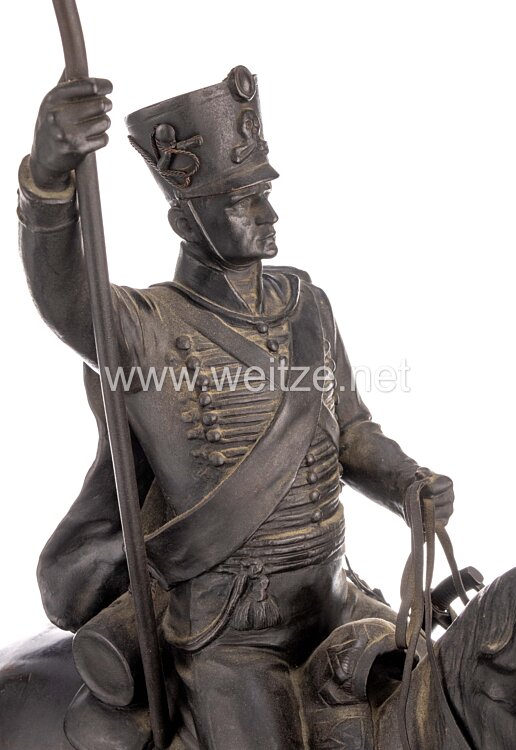
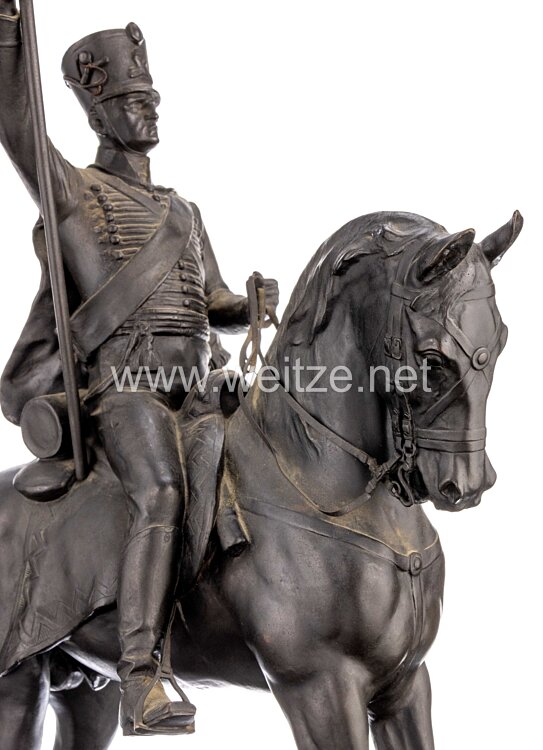
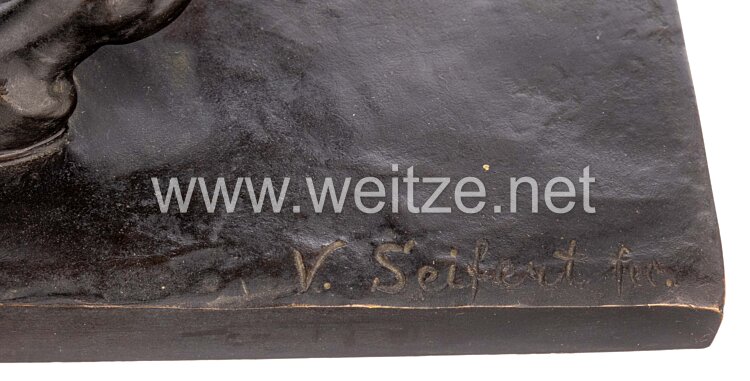
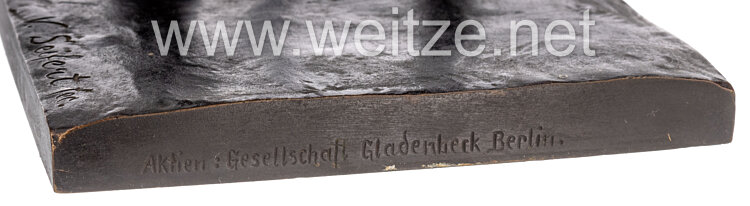
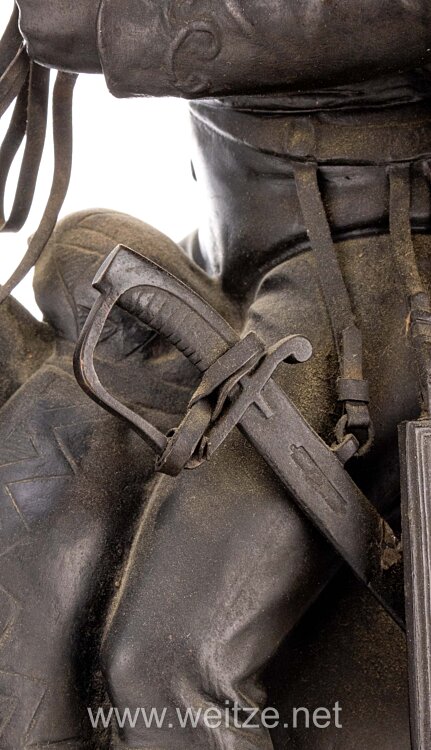
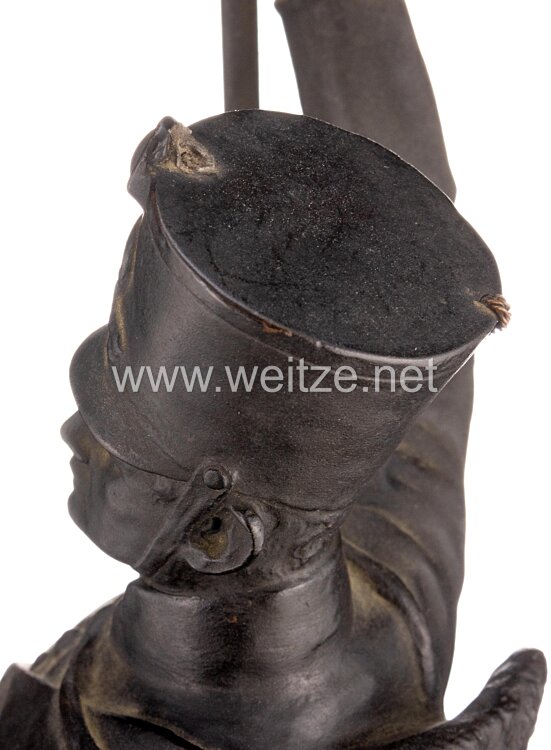
Sehr lebensechte und detailgetreu gearbeitete Statue des Husaren, dieser auf seinem Pferd reitend, die linke Hand an den Zügeln, das Pferd im Halten begriffen, in der rechten Hand die Fahne des französischen Regiments mit dem napoleonischen Adler auf der Spitze, die wehende Fahne auf der linken Seite mit der Inschrift «L’Empereur des Francais au 55e Regiment d’Infantrie de‘ Ligne». Die Details der Uniform sehr schön ausgearbeitet, der Tschako mit dem Totenkopf, auf der linken Seite der Säbel und die Säbeltasche mit dem Monogramm «♔WR», umhängend der Dolman und der Riemen für den Karabiner. Die Sockelplatte mit der Signatur des Künstlers «V. Seifert fec.», an der Seite der Gießer «Aktien:Gesellschaft Gladenbeck Berlin.». Bronzeguss brüniert. Gesamthöhe 62.3 cm. Gewicht 10.35 Kg. Die Brünierung an zwei bis drei Stellen berieben, zwei sehr kleine Beschädigungen: die Quaste des Faustriemens fehlt wie auch der Stutz auf dem Tschako. Sehr schön erhalten! Zustand 2.
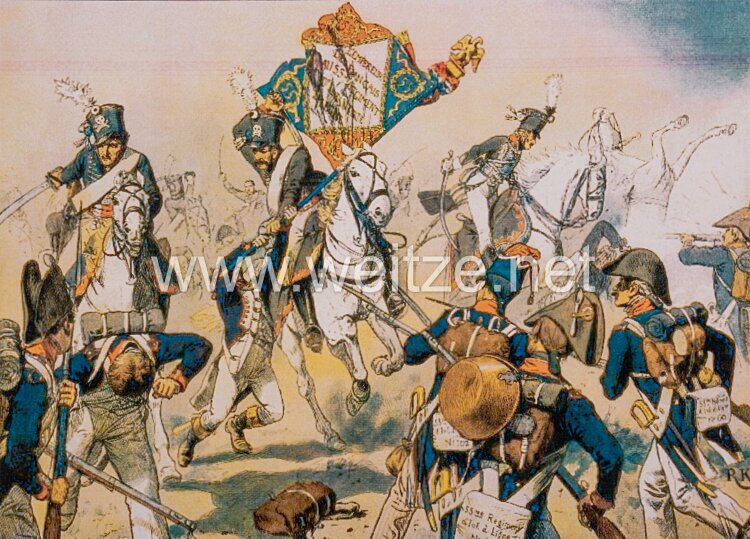
Das 1. Leib-Husaren-Regiment Nr. 1 mit dem Standort Danzig/Langfuhr gehört mit zu den bekanntesten Regimentern des Deutschen Heeres. 1741 stiftete Friedrich II. das fünfte Husaren-Regiment welches die Bezeichnung "Regiment schwartze Husaren" erhielt. Es wurde mehrfach umbenannt und erhielt 1804 den Namen "von Prittwitz". Im vierten Koalitionskrieg gegen Napoleon 1806/07 war das Regiment zunächst in Polen stationiert und wurde dann an die Weichsel bis nach Thorn vorgezogen. So entging das Regiment auch der Katastrophe von Jena/Auerstedt am 14. Oktober 1806. Am 7./8. Februar 1807 konnten die russischen Streitkräfte in der Schlacht von Preußisch Eylau den Vormarsch der französischen Truppen stoppen und verschanzten sich in Heilsberg (Lidzbark Warmiński). Währenddessen wurde die Festung Danzig von den Franzosen belagert und erobert. Am 10. Juni griffen die Franzosen die preußischen und russischen Truppen in Heilsberg an. Trotz mehrerer Angriffe konnten die Franzosen aber keinen Sieg erringen. Im Laufe der Gefechte tat sich das Husaren-Regiment "von Prittwitz" besonders hervor. Das 55e régiment d’infanterie wurde von den Husaren aufgerieben und die Regimentsfahne erobert. Es handelt sich um einen der wenigen Siege der Koalitionspartner gegen Napoleon in dieser Zeit und war von hoher moralischer Bedeutung für die Truppen und ging so in die Erinnerungskultur ein. Am 14. Juni 1807 kam es jedoch zur Schlacht bei Friedland, wo nun die Koalitionspartner unterlagen und zum Frieden gezwungen waren. Nach dem Frieden von Tilsit am 7. Juli 1807 waren die Prittwitz-Husaren nun das einzige Husarenregiment der Preußischen Armee, das noch volle Mannschaftsstärke erreichte.
Die Statue wurde wahrscheinlich zur 100Jahrfeier des Ereignisses 1907 geschaffen und dem 1. Leib-Husaren-Regiment Nr. 1 in Danzig geschenkt. Victor Heinrich Seifert (*1870 in Döblin, †1953 in Berlin) war ein bekannter Bildhauer seiner Zeit, der seit spätestens 1902 tätig war. Die Bronzegießerei Gladenbeck in Friedrichshagen gehörte zu den bekanntesten Gießereien zu dieser Zeit. Aus ihr gingen zahlreiche bedeutende Standbilder und Denkmale sowie Groß- und Kleinplastiken hervor, darunter auch die Viktoria der Berliner Siegessäule.
Eine besonders schöne und historisch interessante Arbeit! Wir freuen uns sehr Ihnen dieses Objekt anbieten zu können!
Das 1. Leib-Husaren-Regiment Nr. 1 mit dem Standort Danzig/Langfuhr gehört mit zu den bekanntesten Regimentern des Deutschen Heeres. 1741 stiftete Friedrich II. das fünfte Husaren-Regiment welches die Bezeichnung "Regiment schwartze Husaren" erhielt. Es wurde mehrfach umbenannt und erhielt 1804 den Namen "von Prittwitz". Im vierten Koalitionskrieg gegen Napoleon 1806/07 war das Regiment zunächst in Polen stationiert und wurde dann an die Weichsel bis nach Thorn vorgezogen. So entging das Regiment auch der Katastrophe von Jena/Auerstedt am 14. Oktober 1806. Am 7./8. Februar 1807 konnten die russischen Streitkräfte in der Schlacht von Preußisch Eylau den Vormarsch der französischen Truppen stoppen und verschanzten sich in Heilsberg (Lidzbark Warmiński). Währenddessen wurde die Festung Danzig von den Franzosen belagert und erobert. Am 10. Juni griffen die Franzosen die preußischen und russischen Truppen in Heilsberg an. Trotz mehrerer Angriffe konnten die Franzosen aber keinen Sieg erringen. Im Laufe der Gefechte tat sich das Husaren-Regiment "von Prittwitz" besonders hervor. Das 55e régiment d’infanterie wurde von den Husaren aufgerieben und die Regimentsfahne erobert. Es handelt sich um einen der wenigen Siege der Koalitionspartner gegen Napoleon in dieser Zeit und war von hoher moralischer Bedeutung für die Truppen und ging so in die Erinnerungskultur ein. Am 14. Juni 1807 kam es jedoch zur Schlacht bei Friedland, wo nun die Koalitionspartner unterlagen und zum Frieden gezwungen waren. Nach dem Frieden von Tilsit am 7. Juli 1807 waren die Prittwitz-Husaren nun das einzige Husarenregiment der Preußischen Armee, das noch volle Mannschaftsstärke erreichte.
Die Statue wurde wahrscheinlich zur 100Jahrfeier des Ereignisses 1907 geschaffen und dem 1. Leib-Husaren-Regiment Nr. 1 in Danzig geschenkt. Victor Heinrich Seifert (*1870 in Döblin, †1953 in Berlin) war ein bekannter Bildhauer seiner Zeit, der seit spätestens 1902 tätig war. Die Bronzegießerei Gladenbeck in Friedrichshagen gehörte zu den bekanntesten Gießereien zu dieser Zeit. Aus ihr gingen zahlreiche bedeutende Standbilder und Denkmale sowie Groß- und Kleinplastiken hervor, darunter auch die Viktoria der Berliner Siegessäule.
Eine besonders schöne und historisch interessante Arbeit! Wir freuen uns sehr Ihnen dieses Objekt anbieten zu können!