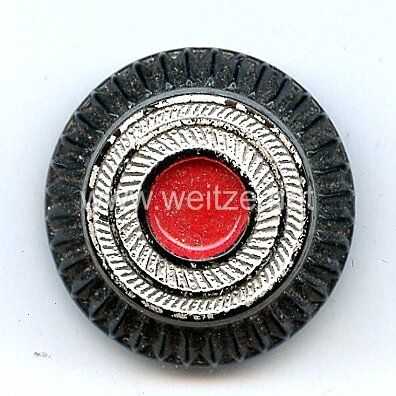
Kriegsmarine Cockade for Enlisted Men's Visor Cap

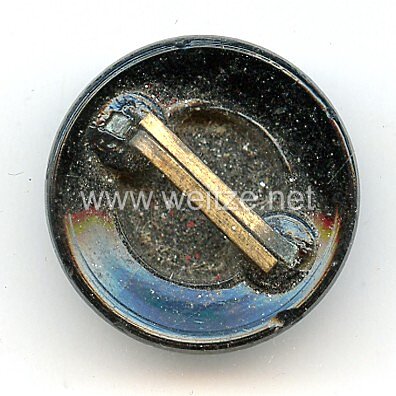
circa 1943/44. Manufactured from glass (!), color lacquered, reverse with 2 attachment prongs. Unworn, condition 2.
451113
20,00

Kriegsmarine Cockade for Enlisted Men's Visor Cap

The Kriegsmarine cockade for the peaked cap represents a fascinating example of late-war uniform equipment of the German Navy during World War II. This particular specimen from the period 1943/44 illustrates the increasing material shortages that confronted the German Reich in the final phase of the war.

The Tellermütze (peaked cap or visor cap) had been a central element of German naval uniforms since the Imperial Navy. For enlisted personnel of the Kriegsmarine, the regulation headgear consisted of a dark blue peaked cap with a black lacquered visor and chin strap. The cockade, as a national insignia, was an indispensable component of this uniform and had to be precisely attached according to the Kriegsmarine uniform regulations.

In traditional manufacture, cockades were produced from metal, typically aluminum, zinc, or other non-ferrous metals that were enameled or lacquered. The coloring followed the Reich colors: black-white-red in concentric circles. However, this particular specimen deviates significantly from this norm, as it was manufactured from glass – an extraordinary choice of material clearly attributable to the wartime situation.

From 1943 onwards, the raw material situation in the German Reich deteriorated dramatically. The Reich Office for Metals had already imposed strict rationing in previous years, reserving nearly all non-ferrous metals for the armaments industry. Uniform effects and insignia that were not directly war-essential had to be manufactured from substitute materials. This policy led to the development of so-called war-time versions or substitute versions of numerous uniform items.

The use of glass as a substitute material was unusual but not without precedent. The German glass industry possessed considerable capacity and expertise in manufacturing precise glass components. Through colored lacquering, the glass could reproduce the required optical properties of the cockade. The rear attachment using two mounting pins corresponded to the standard construction and enabled secure attachment to the cap.

The unworn condition of this specimen suggests that it was either produced shortly before the war's end and never issued, or that it was stored as a spare part. The fact that such substitute materials were used at all underscores the totalization of the war economy in the final war years. Even seemingly insignificant uniform items were affected by material shortages.

From a collector's and military-historical perspective, such glass versions of cockades are extremely rare. Most were either never issued or were lost in the chaos of the war's final phase. The fragility of the material also led to high loss rates. Surviving specimens provide important insights into the improvisational capability of the German war economy and the increasing desperation in material supply.

The cockade as a symbol embodied national affiliation and military discipline. Even as the Wehrmacht retreated on all fronts and defeat became foreseeable, the regime insisted on correct uniforming. This demonstrates the importance attached to symbolic elements even in hopeless situations.

Technologically, this object documents the adaptability of German industrial enterprises. The manufacture of precise, color-lacquered glass components with functioning fastening elements required specialized expertise. Smaller subcontractors or converted civilian productions were likely commissioned with this manufacture.

In the context of Kriegsmarine uniform history, this object marks a turning point from traditional craftsmanship to war-induced emergency production. It stands as an example of the material realities of the final war years and offers an authentic insight into the everyday history of the German armed forces beyond the great battles and strategic decisions.

r