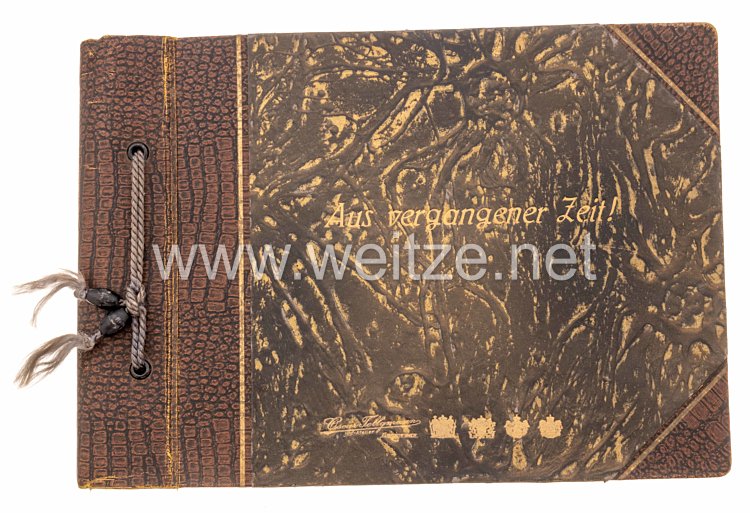
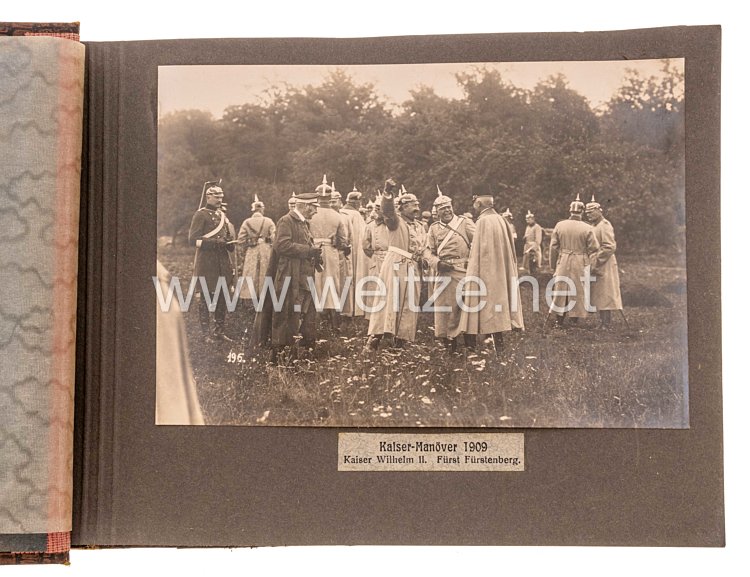
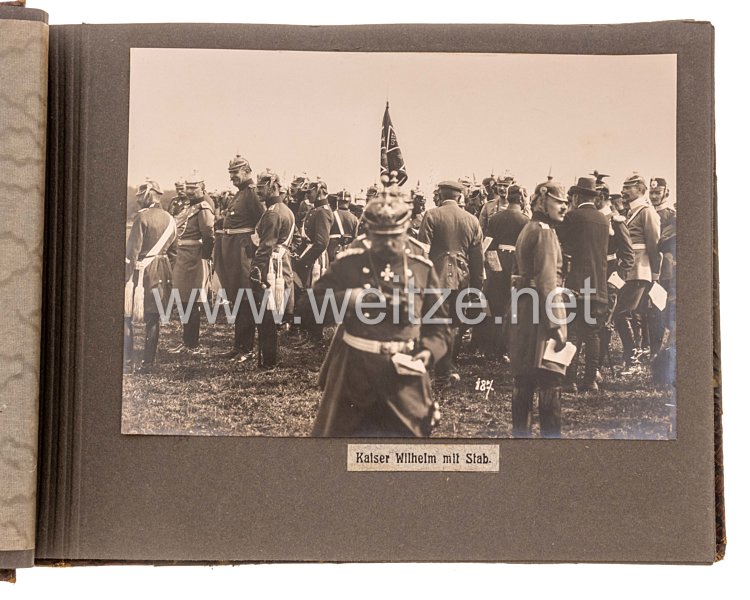
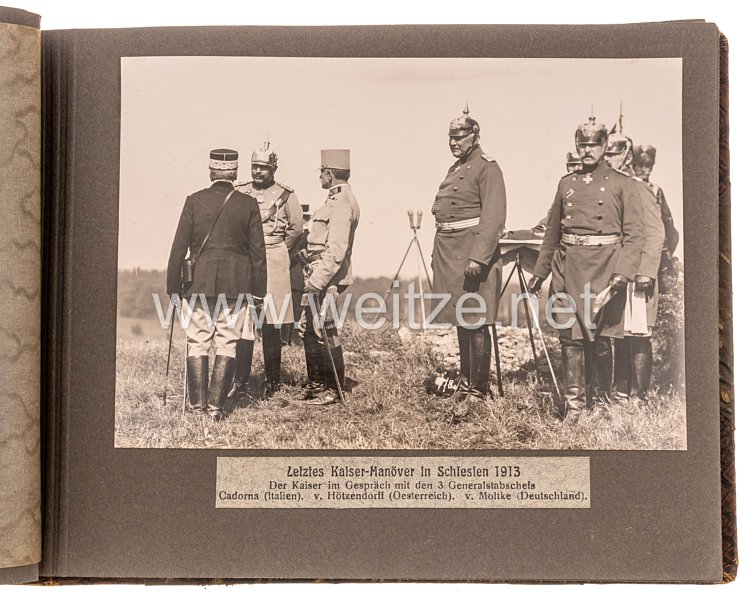
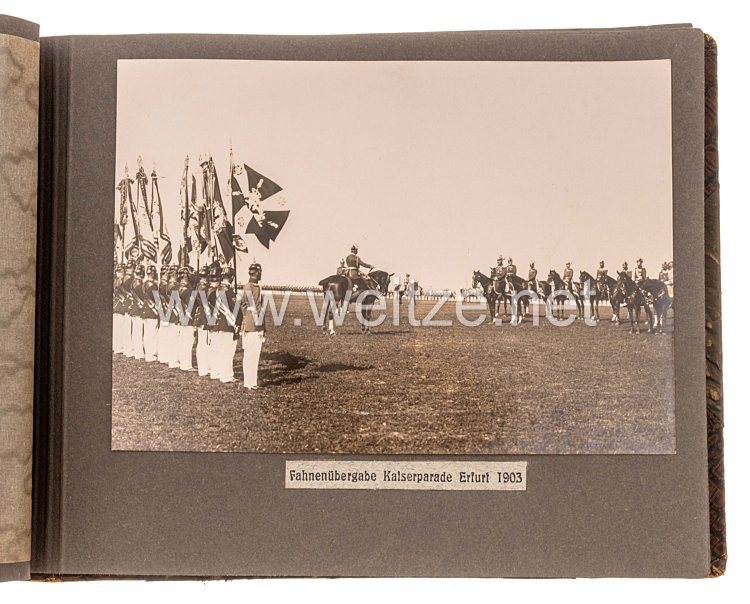
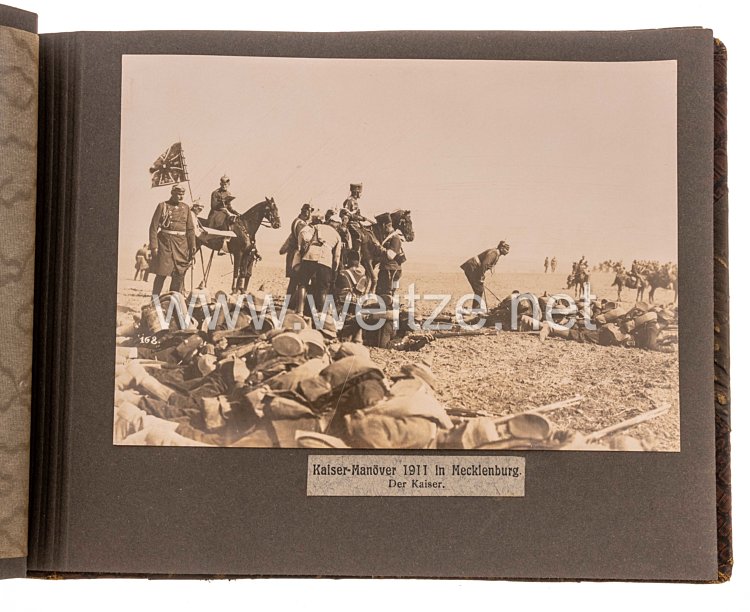
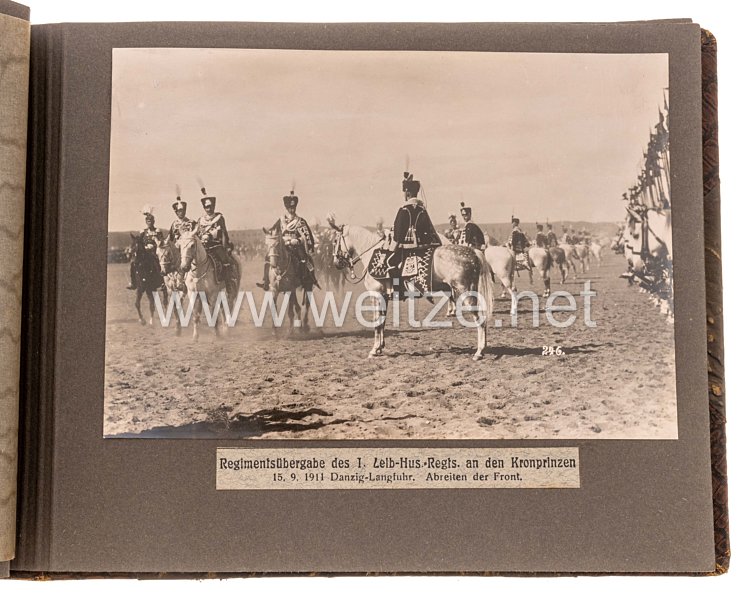
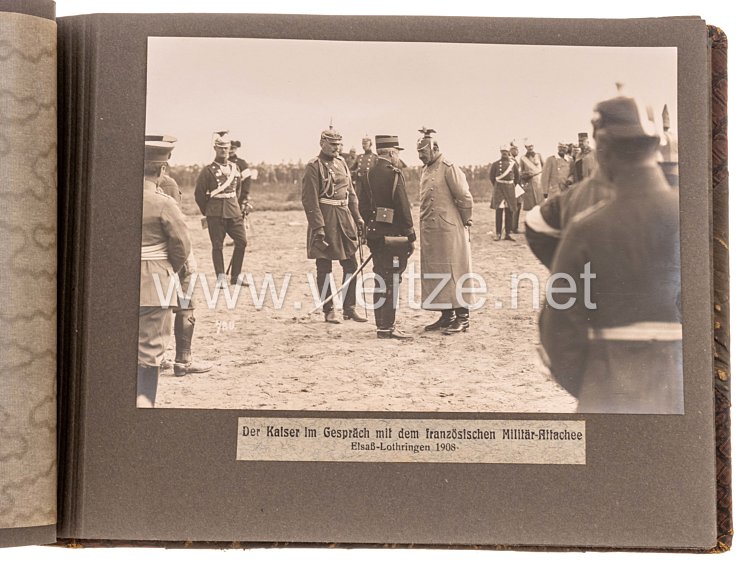
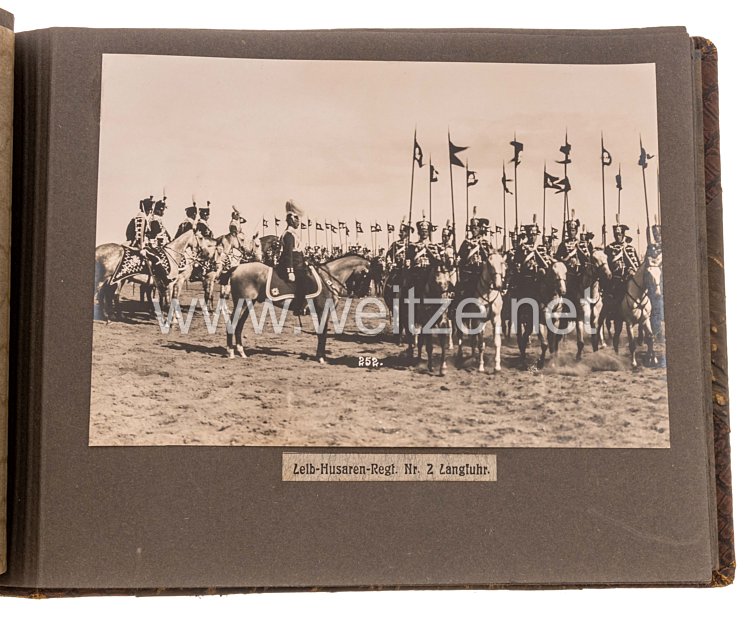
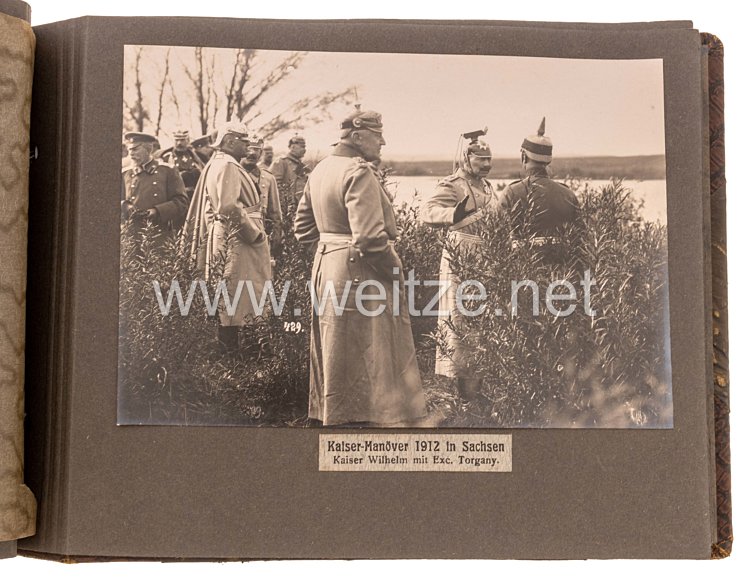
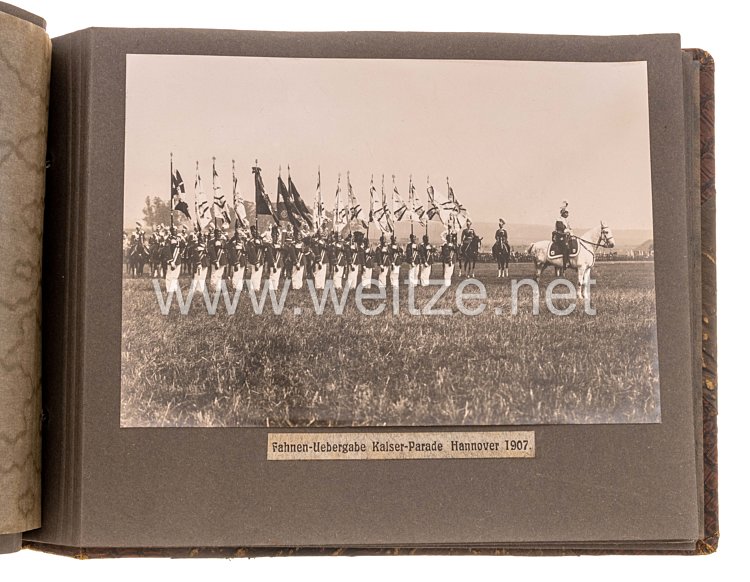
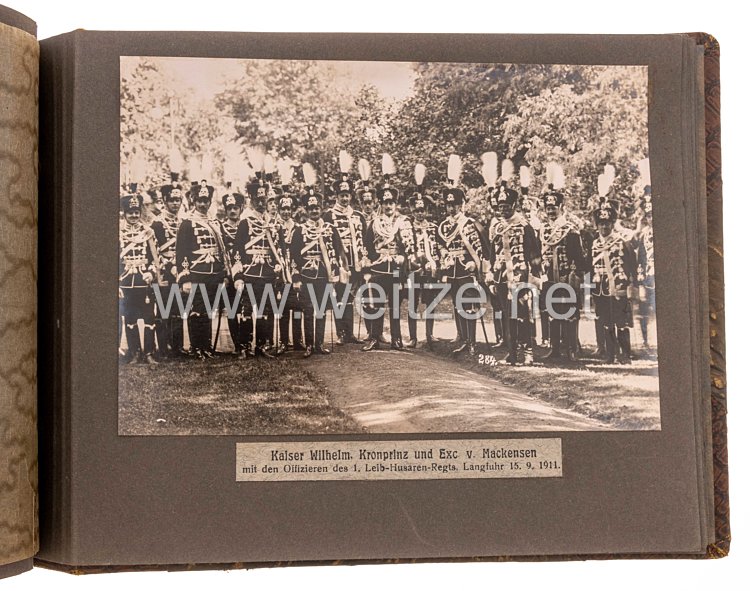
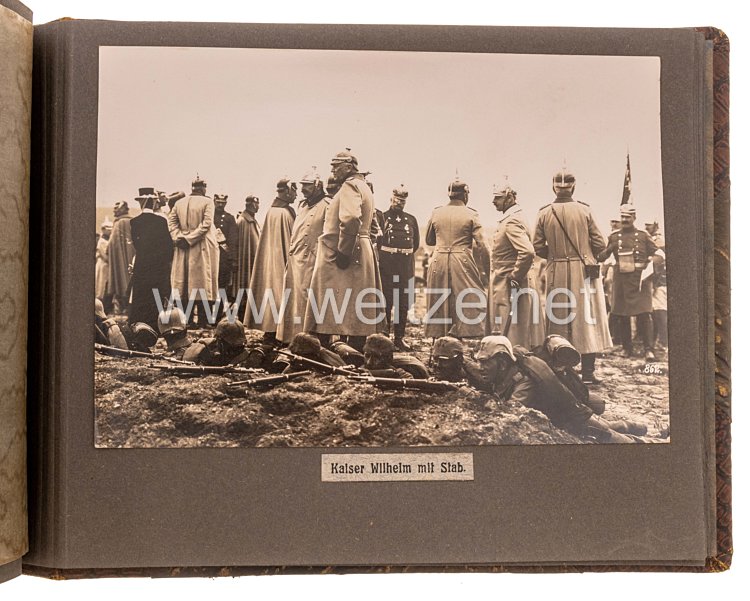
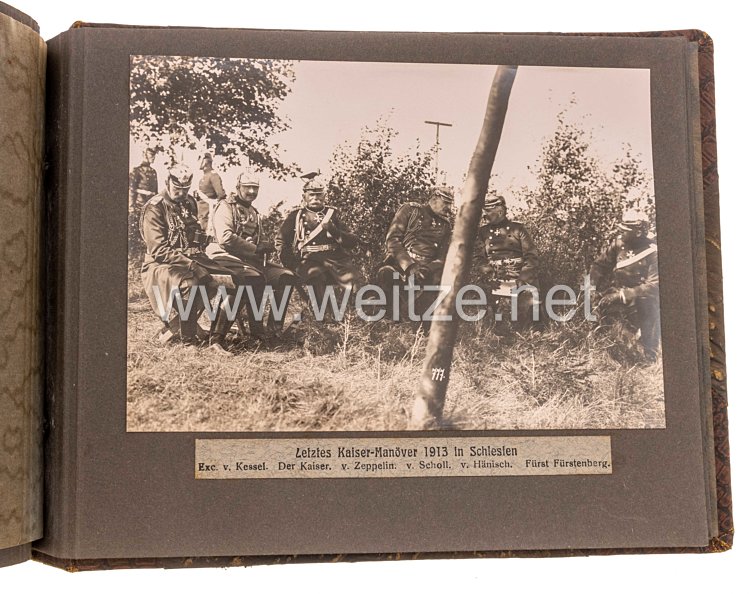
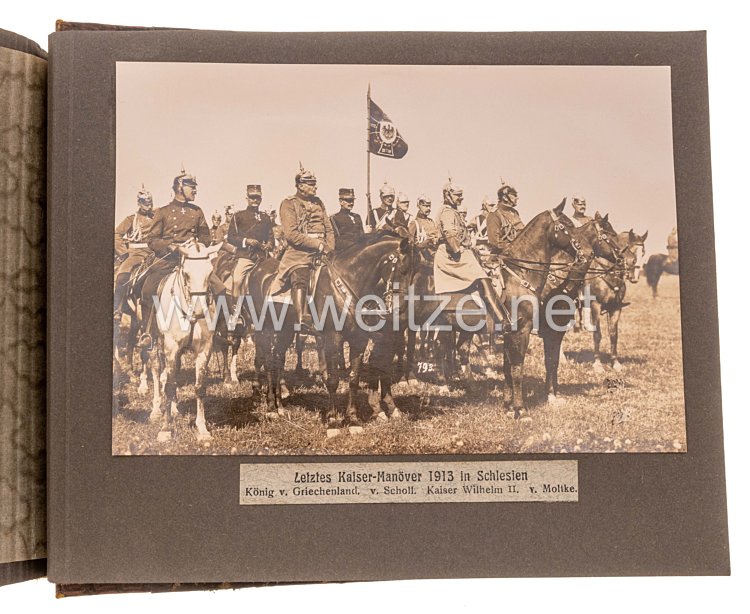
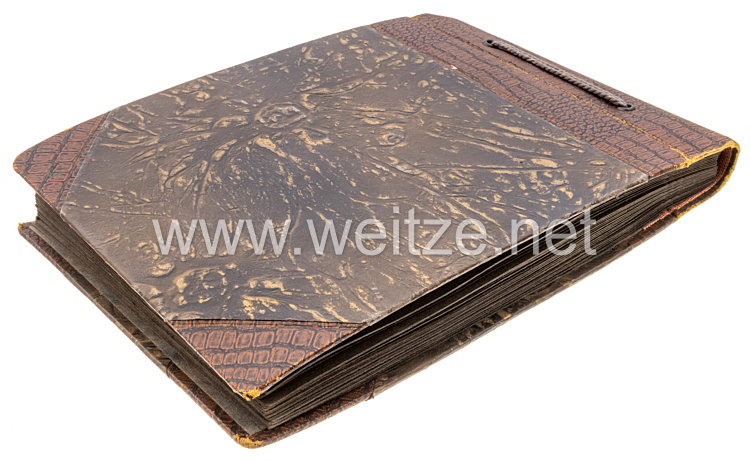
This photo album originates from the court studio of Oscar Tellgmann in Eschwege and impressively documents the public life of Kaiser Wilhelm II during the height of the German Empire between 1903 and 1913. With its 29 large-format original photographs, it offers a fascinating glimpse into the staging of imperial power and military splendor during the last peaceful years before World War I.
Oscar Tellgmann established himself in the first decades of the 20th century as one of the leading photographers for military images in the German Reich. His court studio in the Hessian city of Eschwege enjoyed high prestige, and his specialty was maneuver and parade photography. The technical challenges of photography at that time required considerable skill: the relatively long exposure times, even with the more advanced cameras of the turn of the century, made it difficult to capture moving scenes sharply. Tellgmann mastered this art and created images of remarkable clarity and composition.
The period from 1903 to 1913 covered by the album was a phase of intense military activity and representation in the German Empire. Wilhelm II, who had reigned since 1888, had a particular fondness for the military and its public display. The annual autumn maneuvers became major events at which the Kaiser was personally present and directed or observed the strategic exercises. These maneuvers took place in various regions of the Reich and attracted not only military observers from home and abroad, but also photographers like Tellgmann who documented these events for posterity.
The parades and troop reviews formed an essential part of imperial representation. In Berlin, Potsdam, and other garrison towns, splendid military parades took place regularly, where the various branches of the Prussian-German army displayed their uniforms, equipment, and discipline. The cavalry in gleaming cuirassier uniforms, the infantry with pickelhaube-adorned heads, and the artillery with their imposing guns offered a colorful, albeit captured in black and white, spectacle.
The dissemination of such photographs occurred through various channels. Tellgmann's photographs were not only compiled in elaborately bound albums like the present one, but also produced as postcards and published in illustrated magazines. The postcard experienced its heyday as a mass medium during this period, and military motifs, especially those featuring the Kaiser, enjoyed great popularity. Magazines such as “Die Woche,” “Illustrirte Zeitung,” or “Berliner Illustrirte Zeitung” regularly used photographs from court studios for their reports on imperial activities.
The photo album format itself was a popular medium in Wilhelmine Germany. With dimensions of approximately 24.5 x 17 cm, this album corresponded to a common format that was large enough to showcase the details of the photographs, yet compact enough for private viewing. Such albums were both published by publishing houses and produced in limited editions for collectors and interested citizens. They served the culture of remembrance and the spread of the Kaiser cult, which reached its peak during this period.
The photographic technique of the time was based on glass plate negatives and later on roll films, which enabled higher image quality. Large-format photographs required correspondingly large cameras and much experience in handling them. Photographers had to be not only technically proficient but also have a good sense of composition and timing. During maneuvers, this often meant positioning themselves at strategically advantageous locations to obtain the best shots.
The years immediately before World War I were characterized by increasing nationalism and militarism. The photographic documentation of military events contributed to the glorification of the armed forces and reinforced patriotic sentiment among the population. At the same time, these images document a vanished world today: the magnificent uniforms, the strict hierarchy, and the self-confidence of the Empire, which would end only a few years later in the trenches and in defeat.
Today, such photo albums are of considerable historical value. They serve as primary sources for the study of the Wilhelmine era, military history, the history of photography, and the visual culture of the Empire. The condition grade 2 indicates good preservation, which is remarkable given the age of over one hundred years. The album “Aus vergangener Zeit” (From Times Past) truly lives up to its title: it is a window into a long-vanished epoch of German history.