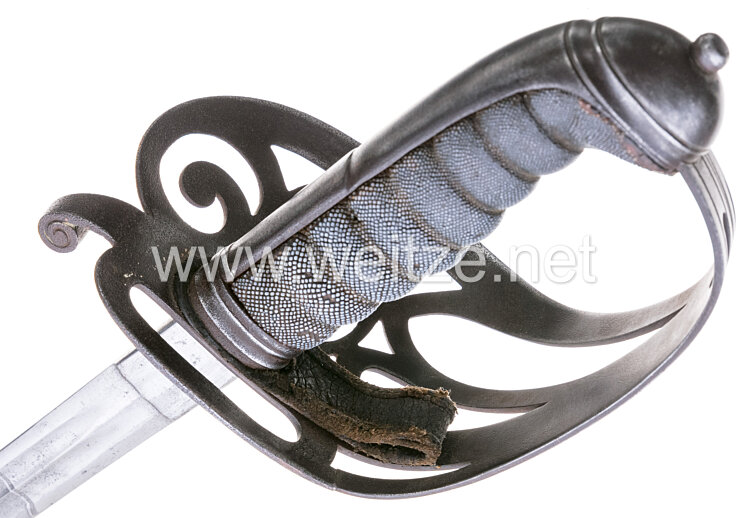
Brunswick Infantry Sword Old Model for Officers and Reserve Officers in the I. or II. Battalion of Infantry Regiment No. 92
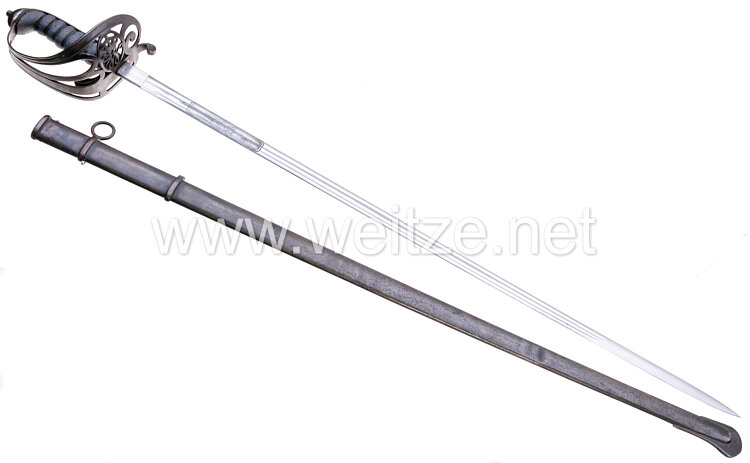
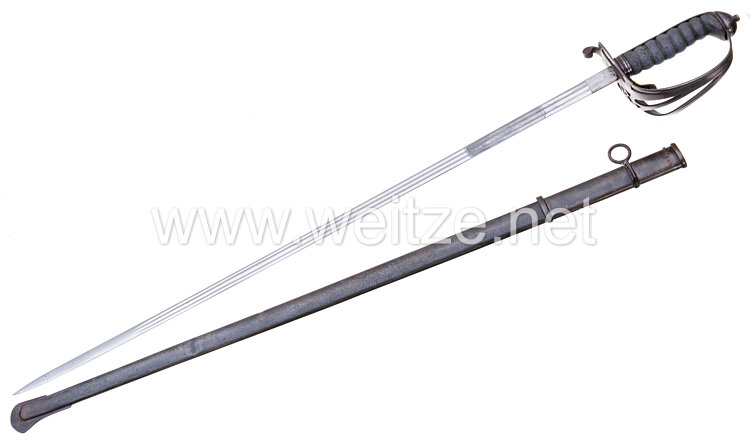
Overall length 1005 mm.
The Brunswick Infantry Officer's Sword represents a fascinating chapter in German military history of the early 20th century, particularly the independent military tradition of the Duchy of Brunswick. This exemplary piece dates from around 1910 and was intended for officers and reserve officers of Infantry Regiment No. 92, a significant formation within the Brunswick contingent of the Imperial Army.
The Duchy of Brunswick retained a certain degree of military autonomy even after the founding of the German Empire in 1871. As one of the smaller German federal states, Brunswick maintained its own troop contingents which, although subordinated to the Prussian Army Corps, preserved their own traditions, uniforms, and equipment. Infantry Regiment No. 92 was the duchy's main infantry formation and officially bore the designation "Ducal Brunswick Infantry Regiment No. 92".
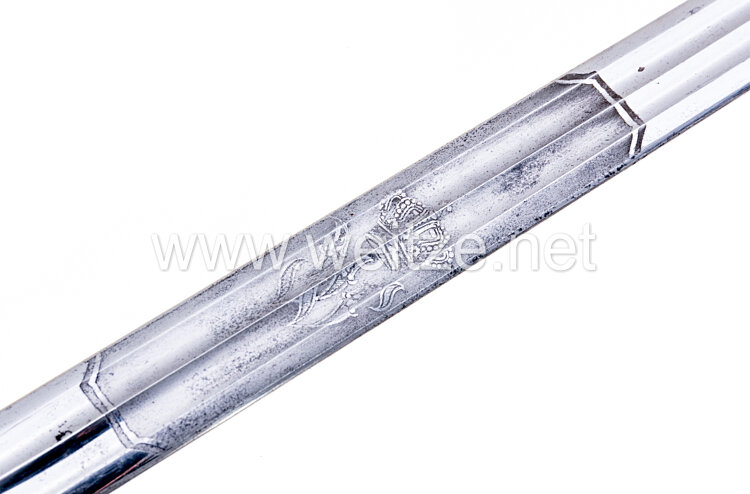
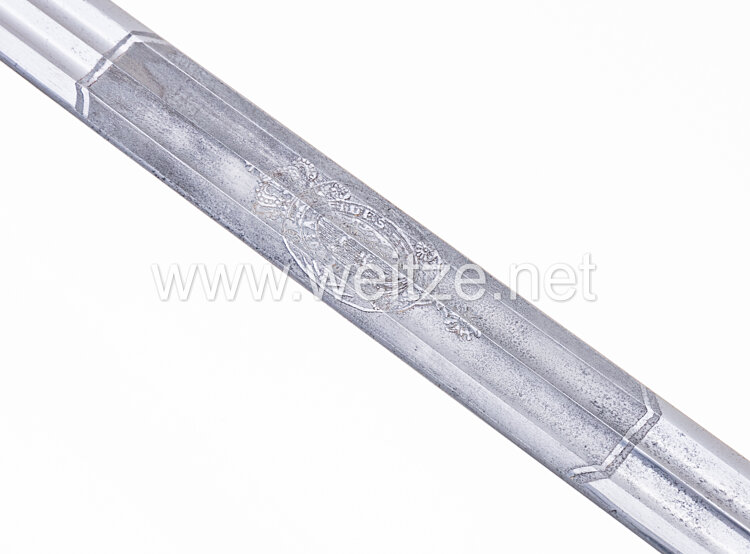
The blade of this sword displays characteristic features of German edged weapon production of that era. The double-fullered construction served not only aesthetic purposes but also reduced the weapon's weight without compromising its structural integrity. The etched panels on both sides of the blade were typical for officer's swords of this period and served for identification and representation.
Particularly significant are the heraldic symbols on the blade. The monogram "Crown over W" refers to Duke Wilhelm, who ruled from 1831 to 1884, and later to his successor. The Brunswick coat of arms, traditionally showing a leaping horse (the famous Saxon Steed), emphasizes the regional identity and loyalty of the troops. These symbols were not merely decorative elements but manifested the officer's bond to his sovereign and his regiment.
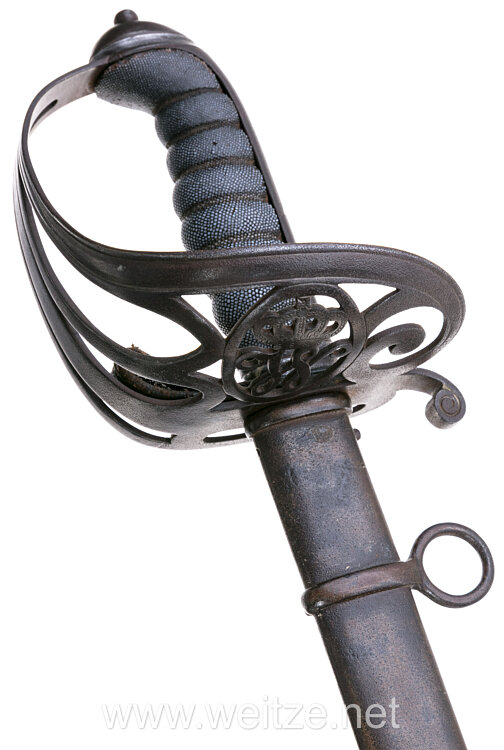
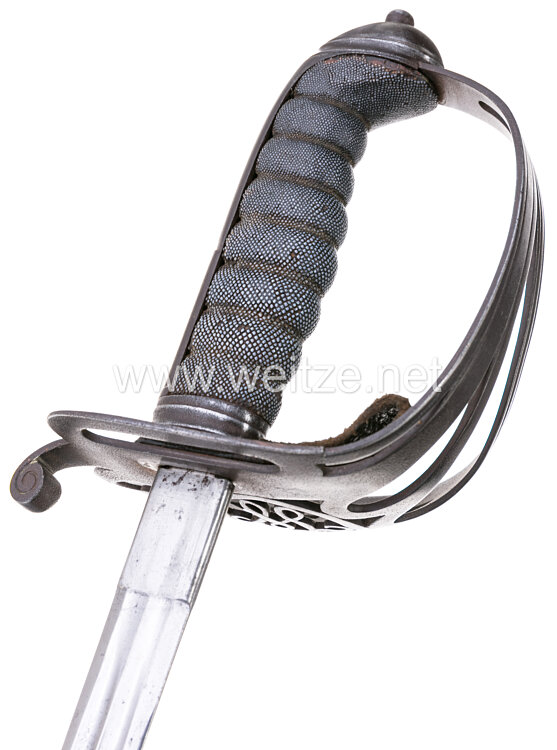
The steel hilt with its pierced ducal monogram demonstrates the high craftsmanship of German weapon smiths. The pierced work required considerable technical skill and made each sword an individual work of art. The original sharkskin grip (ray skin) provided a non-slip surface, additionally reinforced by silver wire binding – a standard feature on higher-quality officer's swords.
The military regulations of the German Empire prescribed specific weapon types for different units and ranks. The "old model" mentioned in the description indicates that this is a traditional design, possibly dating back to regulations from the 19th century. Officers in the 1st and 2nd battalions carried this weapon as part of their service uniform, both at ceremonial occasions and in the field.
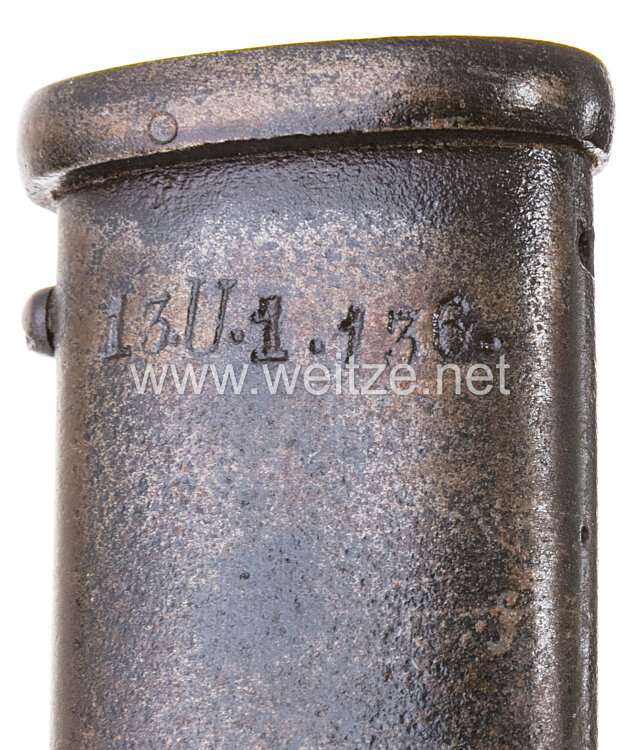
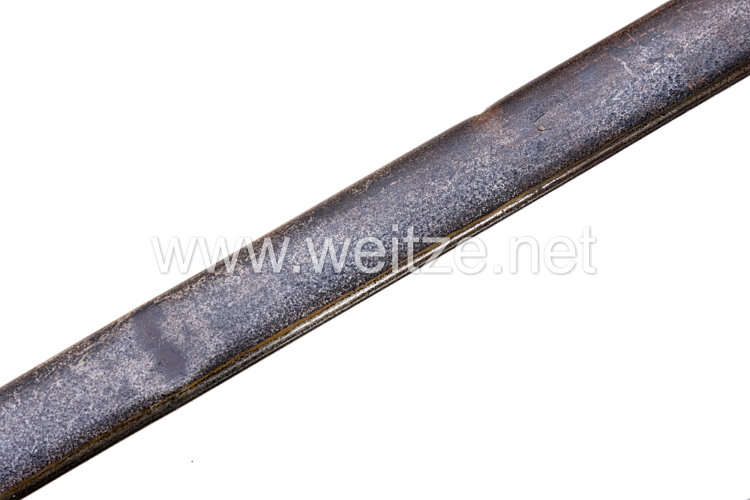
The accompanying steel scabbard with its two ring bands also corresponds to the military standard of the time. The stamp "13. U. 1. 136" is probably an inventory or issue number, typical of the precise administration of military equipment in the German Army. Such markings enabled the tracking and assignment of equipment items.
Infantry Regiment No. 92 was stationed in Brunswick and consisted of several battalions. The officers of this unit came from both active service and the reserve, with reserve officers often drawn from the educated bourgeoisie and representing an important link between the military and civil society after their active service.
With the outbreak of World War I in 1914, the regiment mobilized and fought on various fronts. Traditional edged weapons like this sword lost their practical significance in modern warfare but retained their symbolic value as signs of rank and honor. After the end of the monarchy in 1918 and the dissolution of the old army, these weapons also lost their official function.
Today, such Brunswick officer's swords are sought-after collector's items that possess not only military-historical value but also represent testimonies to German craftsmanship and regional identity. They document an era in which military tradition, craft excellence, and symbolic representation were inextricably linked. The preservation of such objects contributes to understanding the complex military structures of the German Empire and illustrates the diversity of regional traditions within the Imperial Army.
The weapon's construction reflects the evolutionary development of European military swords. By 1910, the sword had largely ceased to be a practical combat weapon, having been superseded by modern firearms. However, it retained crucial ceremonial and symbolic functions, serving as a visible marker of officer status and a connection to centuries of military tradition. The specific designation for officers of the 1st or 2nd battalion indicates the precise hierarchical and organizational structure of the Imperial German Army, where even minor distinctions in equipment helped maintain order and identity within the military establishment.