Submarine War Badge
The U-Bootkriegsabzeichen (U-Boat War Badge) ranks among the most recognizable military decorations of the German Kriegsmarine during World War II. This award symbolizes the harsh and dangerous service of submarine crews deployed in the Atlantic, North Sea, and other theaters of war.
The badge was instituted on October 13, 1939 by Grand Admiral Erich Raeder, then Commander-in-Chief of the Kriegsmarine. The award criteria were modified several times to reflect changing wartime conditions. Originally, a submariner had to complete at least two successful war patrols to receive the decoration. Throughout the war, these criteria were adjusted according to tactical circumstances.
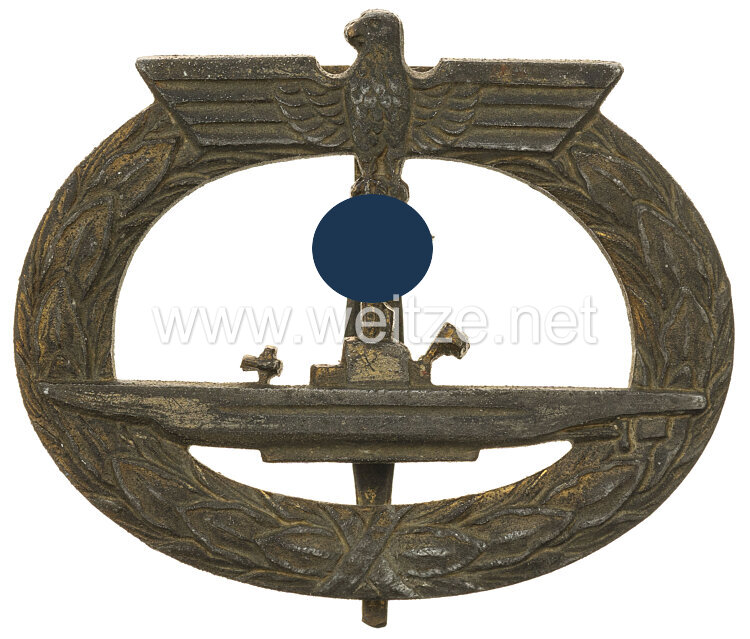
The badge's design features a submarine in frontal view, surrounded by an oval wreath of oak leaves. Above the submarine sits an eagle with spread wings, clutching a swastika in its talons. The design was created by Berlin sculptor Paul Casberg, who designed several Wehrmacht decorations. The badge was manufactured in various materials, including bronze alloy, zinc, and increasingly fine zinc (Feinzink) as the war progressed, since higher-quality materials were needed for armaments production.
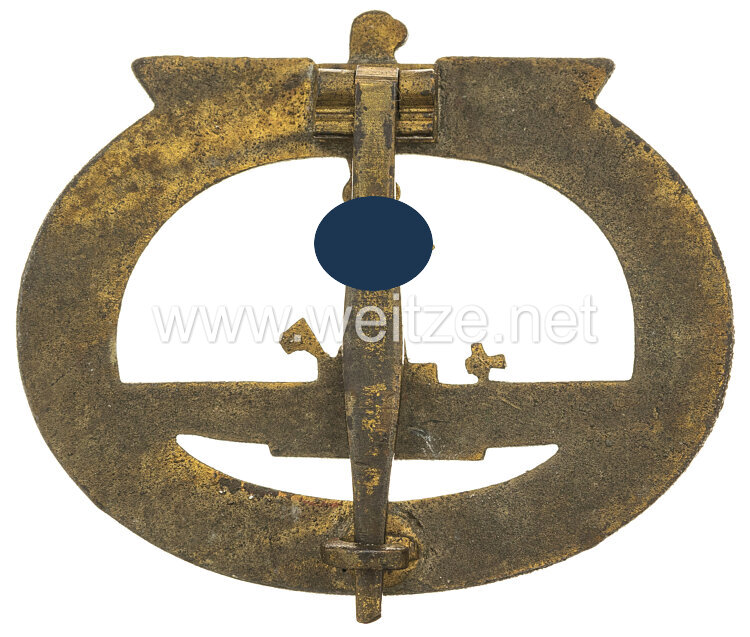
Production was carried out by various companies, including well-known manufacturers such as Schwerin Berlin, Friedrich Orth of Vienna, and Funcke & Brüninghaus of Lüdenscheid. Many examples bear a manufacturer's mark on the reverse, but numerous pieces exist without maker marks, which was not uncommon in wartime production. Quality of execution varied considerably depending on the time of manufacture and production conditions.
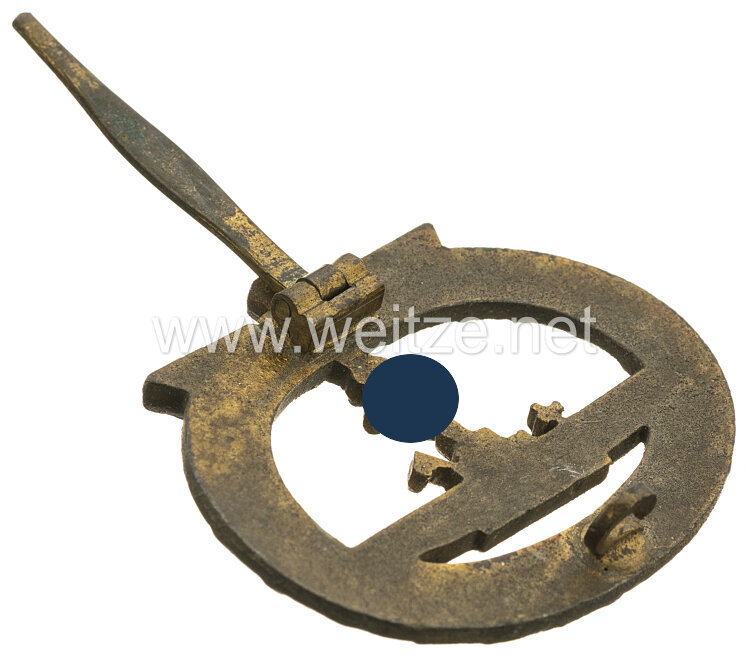
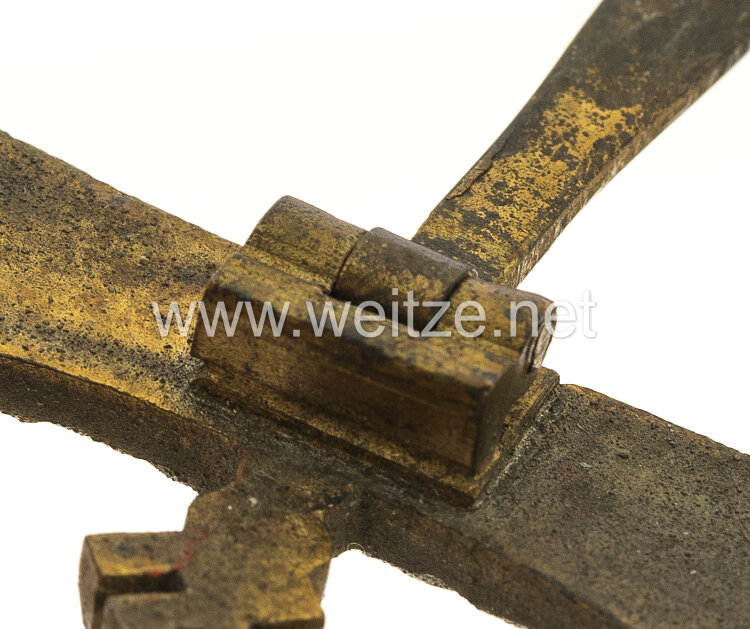
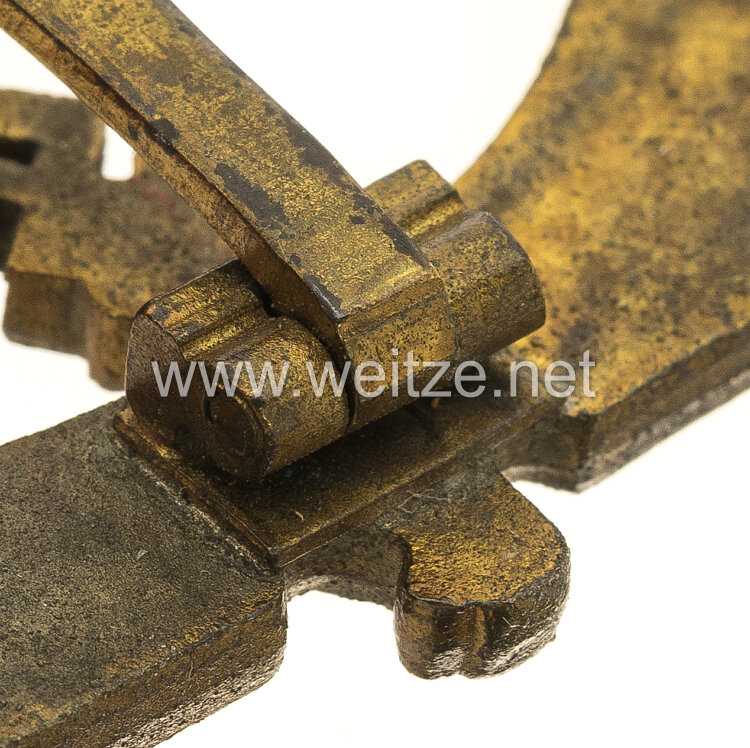
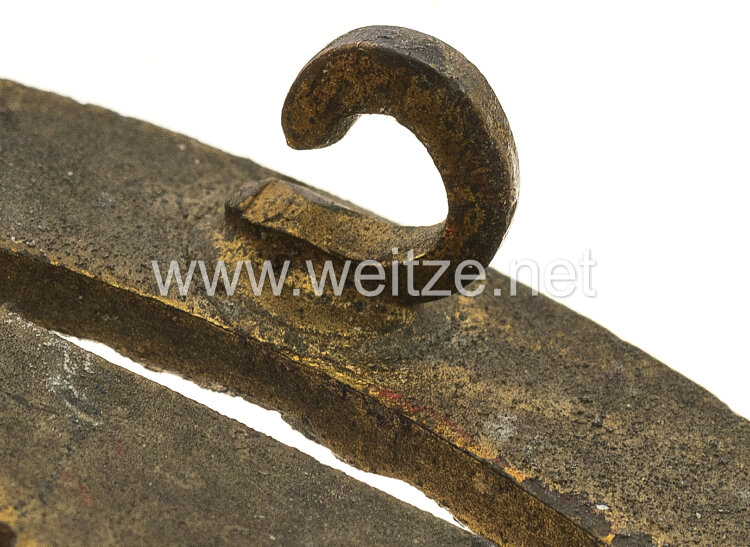
The present example made of fine zinc without maker's mark is characteristic of production from the middle to late war period. The use of fine zinc as material indicates the increasing material shortages that burdened Germany from 1942/43 onwards. Despite the less noble material, these badges were highly valued by their recipients, as they symbolized the extremely dangerous service aboard U-boats.
U-boat warfare was one of the highest-casualty branches of the German Wehrmacht. Of approximately 40,000 submariners, around 30,000 perished – a loss rate of approximately 75 percent. Wearers of the U-Boat War Badge were acutely aware of the enormous dangers: depth charges, destroyers, aircraft, and the cramped, hazardous conditions aboard made every mission a risk.
Following Germany's unconditional surrender in May 1945, wearing all NS symbols was prohibited. However, the Law on Titles, Orders and Decorations of 1957 in the Federal Republic of Germany permitted wearing war decorations in denazified form, meaning without the swastika. For the U-Boat War Badge, this meant creating a version without the National Socialist symbol.
From a collector's perspective, U-Boat War Badges are highly sought-after objects in militaria collections today. Condition plays an essential role. A condition 2 designation indicates a worn piece with normal signs of use but without significant damage. Such examples are authentic historical witnesses and are valued by collectors because they document actual use.
Historical evaluation of the U-Boat War Badge must occur within the context of its time. On one hand, it represents the personal courage and extraordinary achievements of crews under extreme conditions; on the other hand, it is connected with the National Socialist war of aggression. U-boat warfare was primarily directed against Allied merchant shipping and aimed to bring Great Britain to its knees through blockade. Operation Drumbeat off the American coast in 1942 and the Battle of the Atlantic were central campaigns of this naval war.
Today, such objects serve in museums and collections as important sources for researching the military history of World War II. They remind us of technical developments in submarine construction, strategies of naval warfare, and not least the human fates on all sides of the conflict.