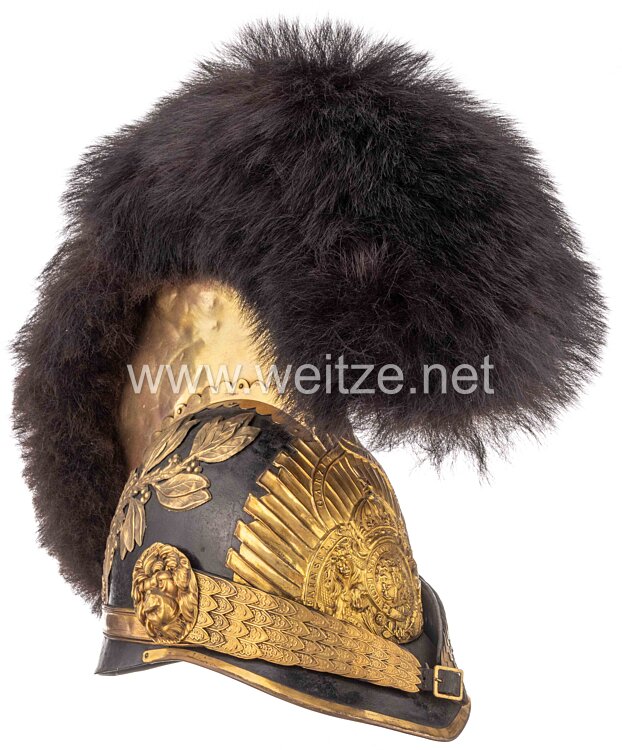
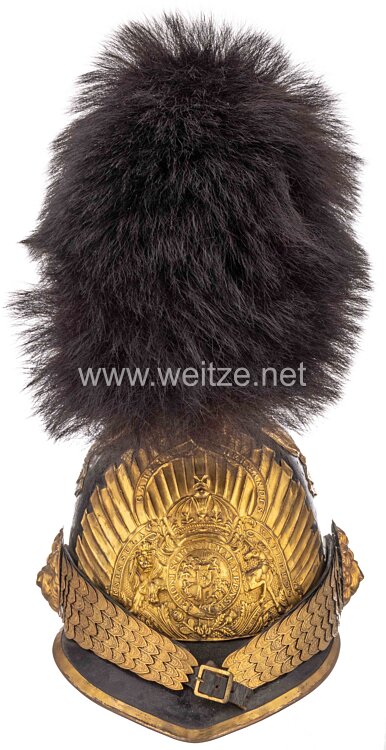
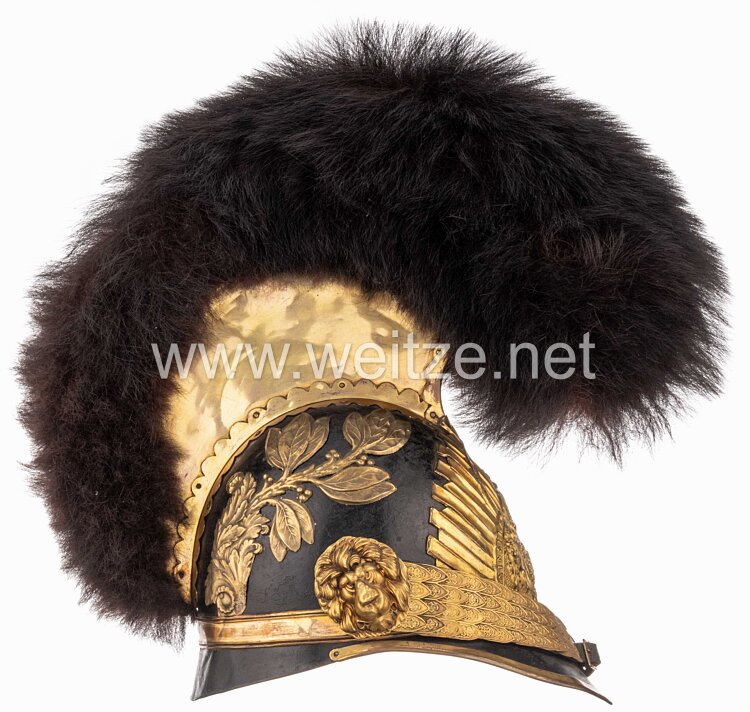
Kingdom of Hanover Helmet M 1817 for Officers of the Leib-Kürassier-Regiment

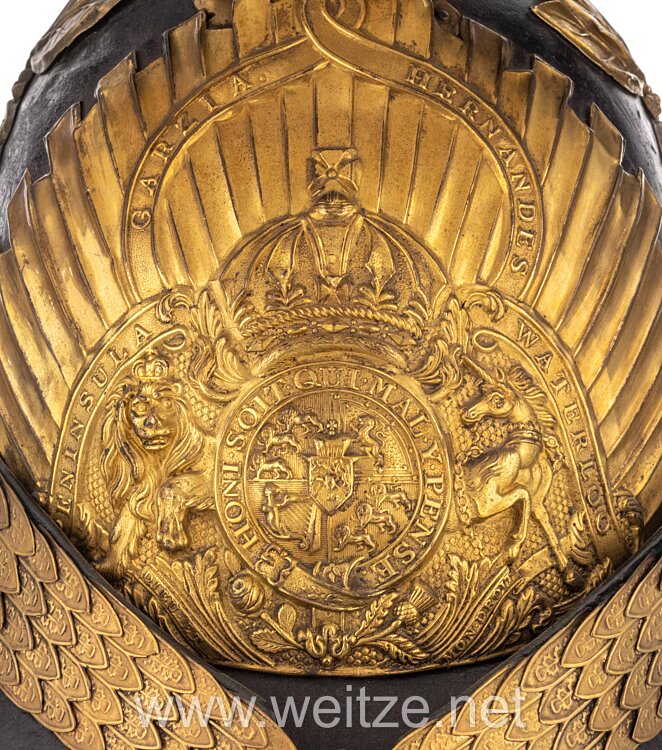
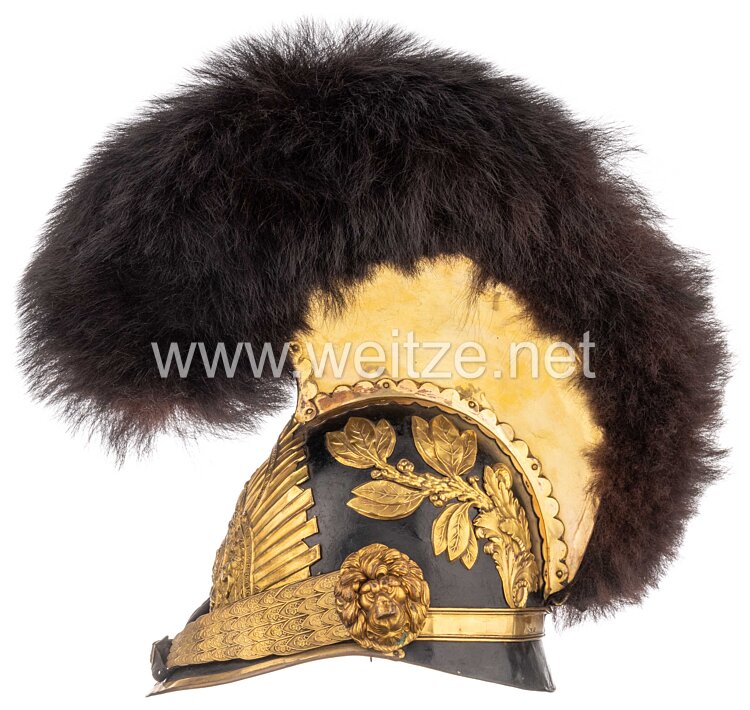
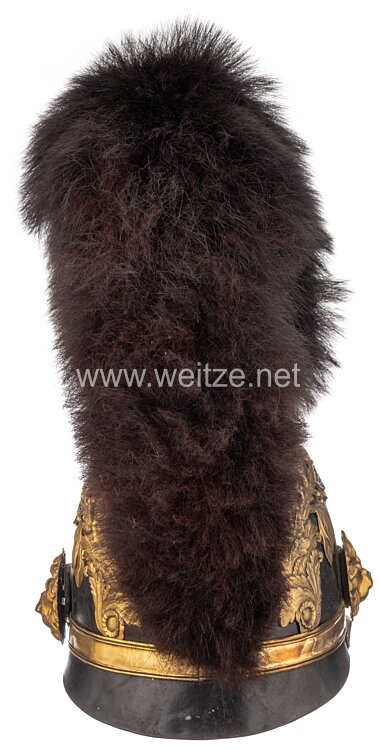
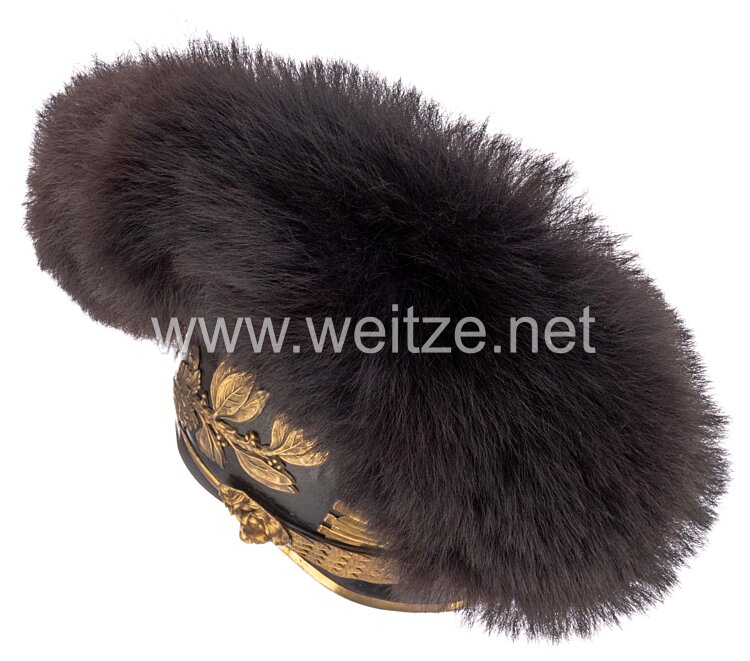
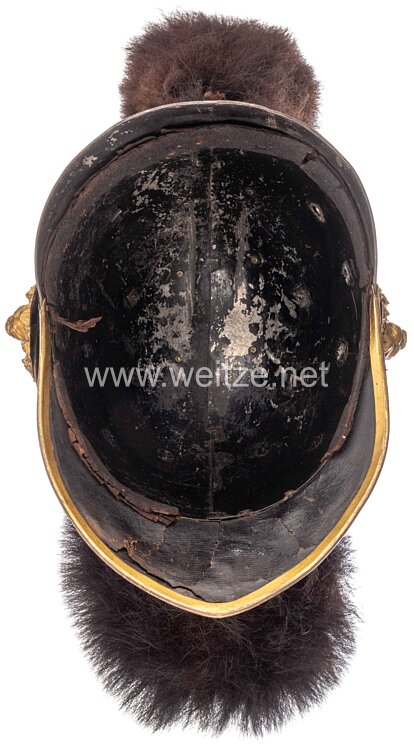
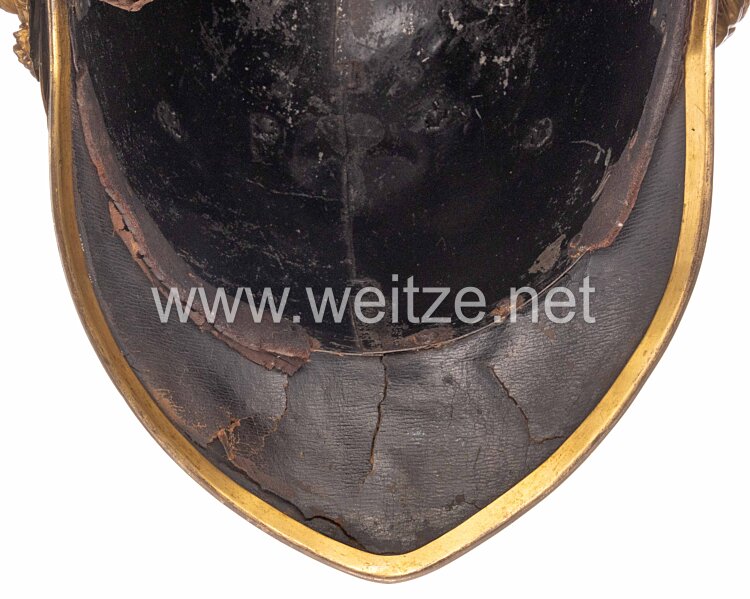
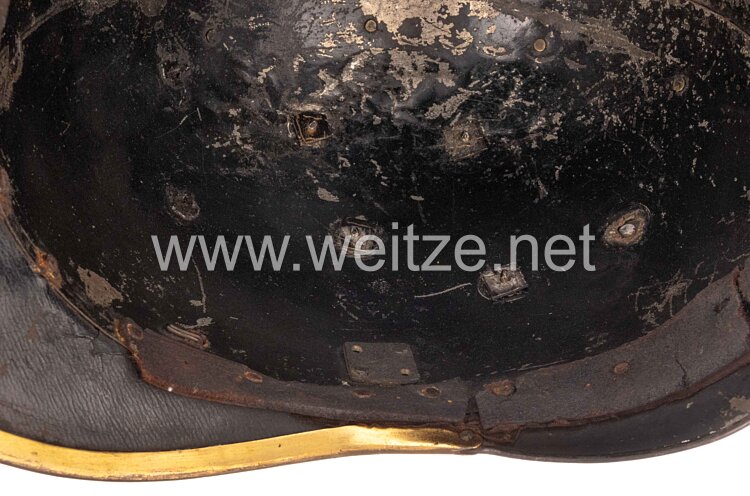
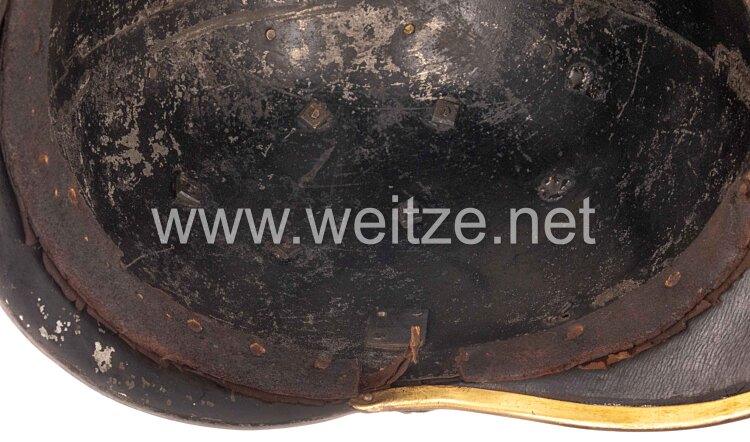
circa 1830, from the period of the Personal Union of Great Britain and Hanover during the reign of King William IV. Magnificent tall helmet of blackened sheet iron, manufactured after the English model, complete with all fittings. Applied to the front is the large multi-rayed emblem with the English coat of arms featuring the crown, the lion and the unicorn, and the mottoes “Honi soit qui mal y pense” and “Dieu et mon droit”, as well as the battle honors “Peninsula”, “Garzia”, “Hernandes”, “Waterloo”. Wide “feathered” scale chains with oak leaf decorations on large lion head rosettes. Applied to the rear of the skull are large floral decorations. Tall brass comb with a magnificent bearskin caterpillar. The interior lining is missing, the front peak lined with blackened leather, which is brittle. Size approximately 59. Condition 2.

Extremely rare, offered by us for the first time in over 35 years.


450912

Kingdom of Hanover Helmet M 1817 for Officers of the Leib-Kürassier-Regiment

This magnificent officer's helmet crafted from blackened iron sheet represents a fascinating epoch in European history when the Kingdom of Hanover and Great Britain were united in personal union. The helmet was manufactured around 1830 during the reign of King Wilhelm IV, who ruled both Great Britain and Hanover from 1830 to 1837. This period marked a significant transformation in Hanoverian military uniform when Wilhelm IV gave his Hanoverian army British-style uniforms in 1832.

The Hanoverian Army had been re-established in 1813 following the end of Napoleon's occupation. Many exiled Hanoverians had served in the King's German Legion in British service from 1803 to 1816 during the French occupation. This close connection between British and Hanoverian forces is clearly reflected in the design of this helmet, which was manufactured following English models.

The centerpiece of the helmet is the large multi-rayed emblem featuring the English coat of arms with the crown, lion, and unicorn. The mottoes “Honi soit qui mal y pense” (Shame on him who thinks evil of it) and “Dieu et mon droit” (God and my right) underscore the close connection to the British Crown. These heraldic elements illustrate the dynastic connection between the two kingdoms that had existed since 1714.

Particularly remarkable are the honor banners mounted on the helmet: “Peninsula”, “Garzia”, “Hernandes”, and “Waterloo”. These banners commemorate the valiant service of Hanoverian troops, particularly the King's German Legion, during the Napoleonic Wars. The Peninsula Campaign (1808-1814) refers to the protracted campaign on the Iberian Peninsula, while García Hernández references the battle of 1812. The mention of Waterloo (1815) honors the participation of Hanoverian units in this decisive battle that sealed Napoleon's final defeat.

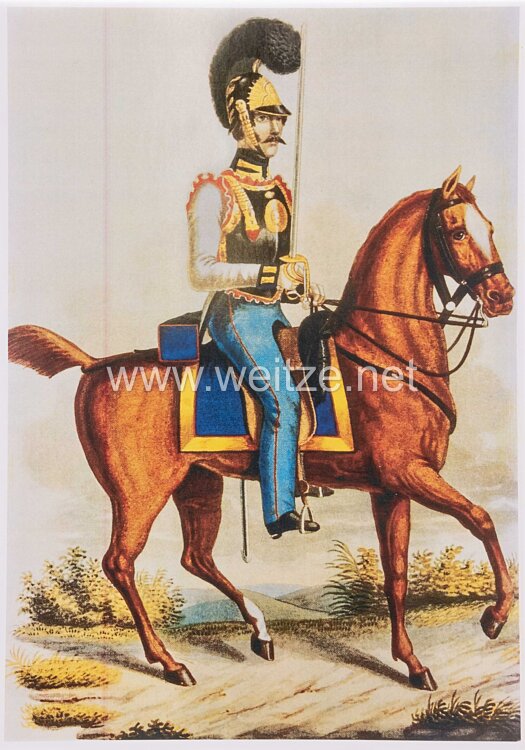
The helmet was worn by officers of the Leib-Kürassier-Regiment (Life Cuirassier Regiment), the elite heavy cavalry unit of the Kingdom of Hanover. The elaborate construction with its tall brass crest crowned by a magnificent bearskin crest, along with the wide feathered scaled chains with oak leaf decorations attached to large lion-head rosettes, demonstrate the high status of these officers. The floral decorations on the crown and the front visor lined with blackened leather testify to the craftsmanship of this period.

The British-style uniforms that Wilhelm IV introduced in 1832 differed from British originals through ornaments, arms, and cockades in the Hanoverian colors of yellow-white-black. This uniform reform symbolized the close bond between the two realms but would endure for only a few years.

The end of this era came in 1837 with Wilhelm IV's death. The personal union that had existed since 1714 ended abruptly when Victoria became Queen of Great Britain but could not inherit Hanover due to Salic law. Wilhelm's brother Ernst August I became King of Hanover and introduced Prussian-style uniforms to the army and cavalry beginning in 1837, though his Garde du Corps retained the Pickelhaube. British-style uniforms and equipment such as this helmet type were phased out during the late 1830s and 1840s. The Kingdom of Hanover itself ended in 1866 when it was annexed by Prussia following the Austro-Prussian War, bringing Hanoverian military independence to its conclusion.

r