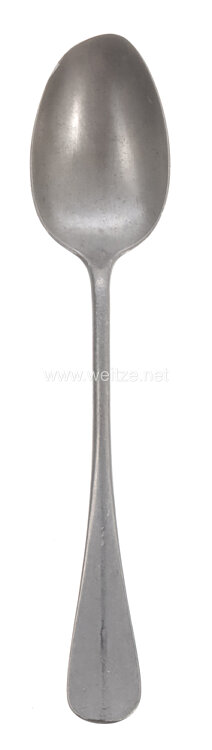
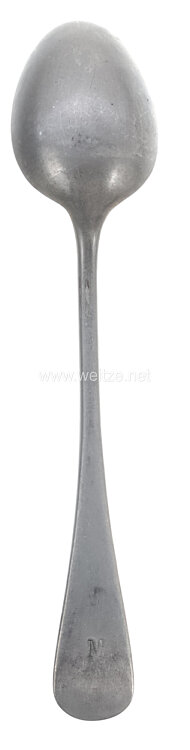
Reichsmarine - Canteen Cutlery Tablespoon

Nickel silver, with acceptance stamp "M", condition 2-.
465011
25,00

Reichsmarine - Canteen Cutlery Tablespoon

This Reichsmarine soup spoon represents an authentic example of everyday equipment items used by the German Navy during the interwar period. Manufactured from fine zinc and bearing the characteristic acceptance stamp “M”, this piece of cutlery documents the material culture and supply organization of German naval forces between 1919 and 1935.

The Reichsmarine officially came into existence on January 1, 1921, emerging from the Imperial Navy of World War I after the Treaty of Versailles imposed drastic restrictions on German military forces. The Versailles Treaty limited the German Navy to a maximum of 15,000 personnel and permitted only a severely reduced fleet without submarines, modern battleships, or aircraft carriers. Within this context of restriction and reorganization, the Reichsmarine had to rebuild its entire infrastructure, including the supply of equipment and canteen provisions.

The use of fine zinc as a material for canteen utensils was both practical and economically sensible during this period for several reasons. Zinc was inexpensive, resistant to corrosion from saltwater and moisture—a crucial advantage in maritime service—and relatively easy to process. In an era of economic constraints following World War I and the hyperinflation of the early 1920s, the Reichsmarine had to manage with limited resources. Precious metals or high-quality stainless steel were unaffordable for simple canteen items for enlisted personnel.

The acceptance stamp “M” (Marine/Navy) identifies the cutlery as officially approved and inspected naval property. Such stamps were part of a comprehensive system of military quality control and inventory management. The Reichsmarine maintained strict regulations regarding the procurement, marking, and administration of all equipment items, even seemingly insignificant objects like eating utensils. This served not only quality assurance purposes but also prevented theft and ensured proper attribution of property within various naval installations.

Canteens and messes played a central role in the lives of naval personnel. Aboard ships and in shore facilities, canteens served as social gathering places where crew members took their meals and spent their limited leisure time. The quality of provisions and the condition of canteen facilities had direct impacts on troop morale and combat effectiveness. Naval leadership was aware of this significance and developed detailed regulations for canteen management.

The Reichsmarine underwent significant developments during its existence. Under the leadership of officers such as Admiral Erich Raeder, who was appointed Commander-in-Chief of the Reichsmarine in 1928, cautious modernization began within the constraints of Versailles. The construction of “pocket battleships” such as the Deutschland-class demonstrated attempts to develop innovative warship concepts that formally complied with treaty restrictions while still possessing military striking power.

On June 1, 1935, the Reichsmarine was renamed the Kriegsmarine as the Nazi regime openly announced rearmament. Items from the Reichsmarine period were partially retained for continued use, partially replaced with new equipment bearing updated markings.

From a collecting and historical perspective, such everyday objects as canteen spoons offer valuable insights into the material culture and daily life of military personnel. While spectacular uniforms, weapons, and decorations often take center stage, these more modest objects tell stories of daily routines, supply logistics, and practical aspects of military service. They document manufacturing processes, material procurement, and administrative systems of their era.

The condition of this piece is rated as “2-” which, according to common collector grading systems, corresponds to good to very good condition with slight signs of use. This indicates that the spoon was actually used in service and thus represents an authentic testimony to military everyday reality, as opposed to unused warehouse stock.

Such artifacts serve as tangible connections to the experiences of thousands of German naval personnel who served during the Weimar Republic era. They remind us that military history encompasses not only battles and strategic decisions but also the mundane necessities of daily life—eating, sleeping, and maintaining routine in the structured environment of naval service. The simple soup spoon becomes a window into understanding how the Reichsmarine functioned as an institution, managed its resources, and cared for its personnel during a challenging period in German history.

r