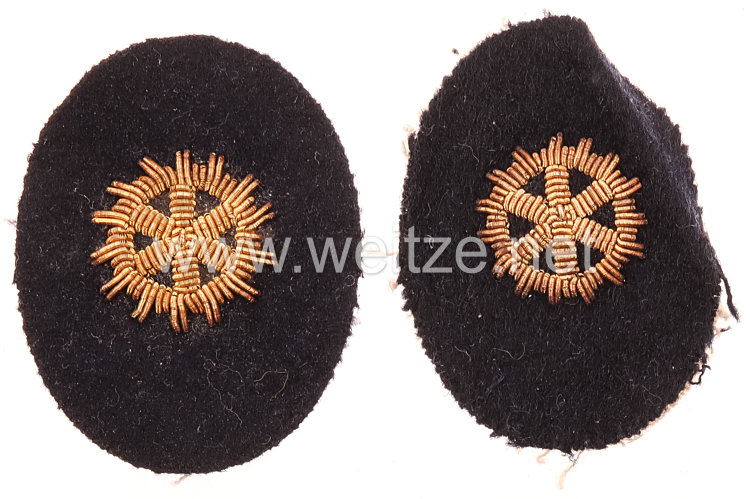
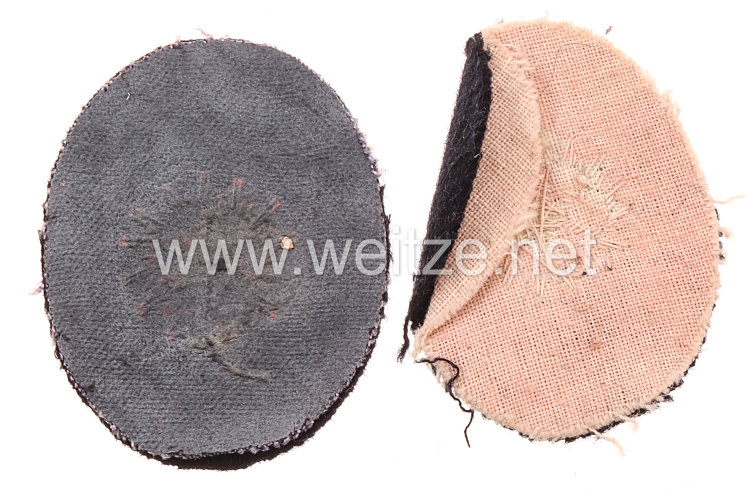
Kriegsmarine Pair of Sleeve Insignia for an Officer and Engineer

Hand-embroidered metallic thread, condition 2.


443511
20,00

Kriegsmarine Pair of Sleeve Insignia for an Officer and Engineer

These Kriegsmarine sleeve insignia for an officer and engineer represent a fascinating example of military rank insignia from the Third Reich era. These hand-embroidered metal thread badges document the complex hierarchy and organizational structure of the German Kriegsmarine during World War II.

Historical Background

The Kriegsmarine was officially established on June 1, 1935, when the German Reich under Adolf Hitler began rearmament and rejected the provisions of the Treaty of Versailles. The navy replaced the Reichsmarine of the Weimar Republic and was intended to be developed into a powerful naval force. Grand Admiral Erich Raeder led the Kriegsmarine from 1935 to 1943, followed by Grand Admiral Karl Dönitz.

Rank Insignia and Uniform Regulations

Kriegsmarine sleeve insignia followed precise regulations laid down in the Anzugsordnungen (dress regulations) and Bekleidungsvorschriften (clothing regulations). Officer ranks were indicated by different arrangements of gold braid on dark blue sleeve cuffs. The width of the braids, their number, and any stars above them indicated the wearer's exact rank.

Engineering Officers in the Kriegsmarine

Particularly noteworthy is the designation “Ing.” on these badges, indicating engineering officers. This special officer category was responsible for the technical aspects of warships. Engineering officers wore additional markings on their rank insignia, typically in the form of purple or pink backing between the gold braids, distinguishing them from naval line officers.

Engineering officers formed an essential component of the Kriegsmarine, as increasingly complex ship systems, propulsion plants, electrical engineering, and weapons systems required highly qualified specialists. Their training took place at specialized naval schools and included comprehensive technical and engineering studies.

Manufacturing Technique

The hand-embroidered execution with metal threads marks these badges as high-quality pieces. During the war, rank insignia were manufactured in both hand-embroidered and machine-made versions. Hand-embroidered examples with genuine metal threads were usually more expensive and were preferably worn by officers for dress uniforms or special occasions.

The embroidery was typically done on a dark blue cloth base, using gilt or silvered metal threads. The craftsmanship required considerable skill, and specialized military embroiderers and military suppliers manufactured these badges.

Wear and Uniforms

Sleeve insignia were worn on various Kriegsmarine uniform types, including the dark blue dress uniform, the white summer suit, and certain service uniforms. The positioning was precisely prescribed and was located on the lower sleeve, approximately 10 centimeters above the cuff.

Collector Value and Preservation

The condition rating of “2” indicates good to very good preservation. Such pairings of sleeve insignia are today sought-after military historical collectibles that represent important testimonies of naval history. They enable historians and collectors to reconstruct and study the hierarchical structures and appearance of the Kriegsmarine.

Historical Significance

These sleeve insignia document not only military ranks but also the technological development of naval warfare in the 20th century. The existence of specialized engineering officers underscores the increasing importance of technical expertise in modern armed forces, a trend that continues to this day.

Context of Service

Engineering officers served aboard all types of Kriegsmarine vessels, from battleships like the Bismarck and Tirpitz to U-boats, cruisers, destroyers, and auxiliary vessels. Their responsibilities included maintaining and operating engines, electrical systems, damage control systems, and all mechanical aspects of the vessel. The technical complexity of German warships required a large corps of qualified engineering personnel, making these officers indispensable to naval operations throughout the war.

r