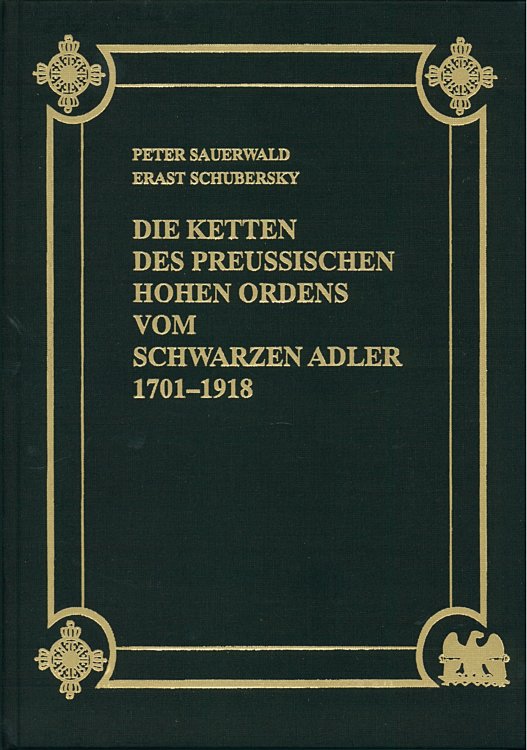
The Chains of the Prussian High Order of the Black Eagle 1701 - 1918,

Osnabrück, Biblio Verlag, 1995, hardcover, full cloth binding, DIN A4, 159 pages, with partially colored illustrations, edition limited to 500 copies, condition 2
1410
50,00

The Chains of the Prussian High Order of the Black Eagle 1701 - 1918,

This publication examines the order chains of the Prussian High Order of the Black Eagle, the highest decoration of the Kingdom of Prussia from its foundation in 1701 until the end of the monarchy in 1918. Published by Biblio Verlag in Osnabrück in 1995 in a limited edition of only 500 copies, this scholarly work documents across 159 pages the art-historical and political development of this most prestigious Prussian decoration.

The Order of the Black Eagle was founded on January 17, 1701, by Elector Frederick III of Brandenburg, immediately before he crowned himself Frederick I, “King in Prussia,” on January 18, 1701, in Königsberg. The foundation of the order was thus inseparably linked to Brandenburg-Prussia's elevation to a kingdom and was intended to symbolically underscore the new royal dignity. The order was deliberately conceived as the highest decoration and stood in direct competition with other significant European orders such as the English Order of the Garter or the French Order of the Holy Spirit.

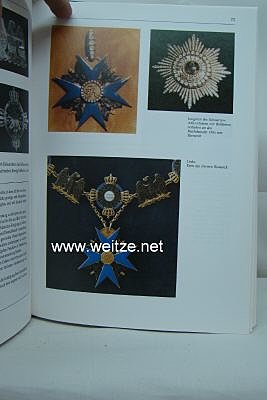
The order chain represented the most magnificent and precious element of the order's insignia. It was worn exclusively on the most solemn occasions and consisted of artistically crafted golden links decorated with enamel, precious stones, and pearls. The chain links typically displayed the Prussian coat of arms, crowned eagles, order crosses, and the motto “SUUM CUIQUE” (To Each His Own), which had been the order's motto since 1701. The order cross hung from the chain, a golden, white-enameled cross with the black Prussian eagle at its center.

The bestowal of the Order of the Black Eagle was strictly limited and subject to rigorous statutes. Originally, the number of knights was restricted to 30, though this limitation was later removed. The order was primarily awarded to members of the high nobility, foreign monarchs and princes, and occasionally to distinguished statesmen and military officers. Recipients were typically already bearers of other high decorations and belonged to Europe's uppermost social stratum.

Over the more than two centuries of its existence, the design of the order chain underwent various stylistic changes corresponding to the respective art-historical epochs and personal preferences of the reigning monarchs. Under Frederick William I (1713-1740), the “Soldier King,” the order experienced a rather austere design, while under Frederick II the Great (1740-1786), rococo-influenced elements were added. The order chains of the 19th century showed increasingly historicist tendencies and were manufactured with ever greater elaboration.

The craftsmanship of the order chains was entrusted to the most renowned goldsmiths and jewelers of their time, primarily court suppliers based in Berlin. Each chain was a unique piece of the highest artistic and material quality. The production of a complete order chain could take several months and consumed considerable sums from the royal purse.

With the end of the monarchy in November 1918 and the abdication of Emperor Wilhelm II, the conferral practice of the Order of the Black Eagle also ended. The Weimar Republic abolished all monarchical orders and decorations, rendering the Order of the Black Eagle a historical relic. Many of the order chains are today preserved in museums, collections, and archives, where they are maintained as significant testimonies to Prussian sovereign representation.

This scholarly work from Biblio Verlag comprehensively documents this development based on historical sources, archival materials, and photographic illustrations of surviving examples. The partially colored illustrations enable viewers to appreciate the splendor and craftsmanship of these objects. For collectors, historians, and art historians, this limited publication represents an indispensable reference source that deepens understanding of the symbolic and material culture of the Prussian monarchy.

The order chains serve not merely as decorative objects but as material expressions of power, legitimacy, and European dynastic networks. Their study reveals insights into the self-representation of the Prussian state, the evolution of courtly ceremony, and the artistic tastes of successive eras. As such, they remain subjects of enduring scholarly interest and continue to captivate those interested in the material culture of European royalty.