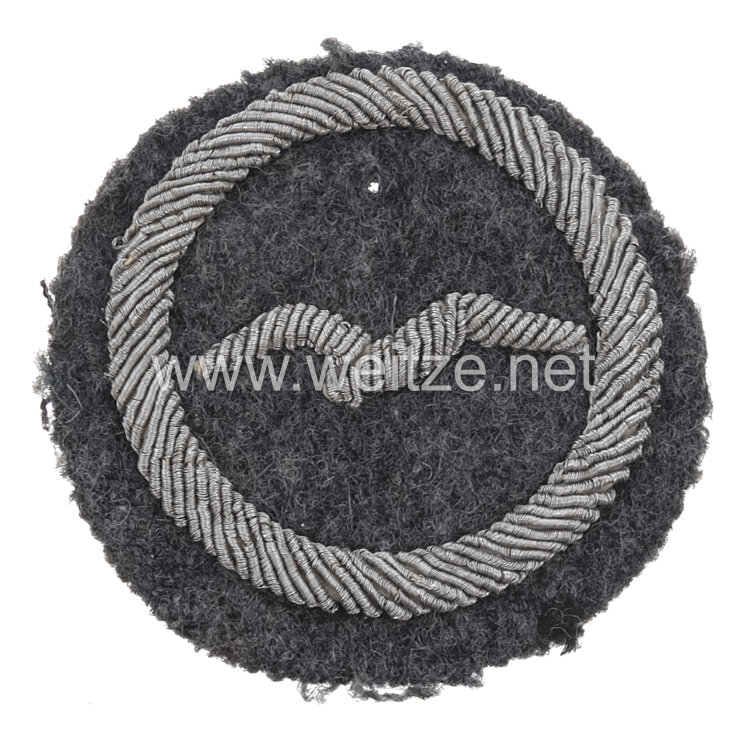
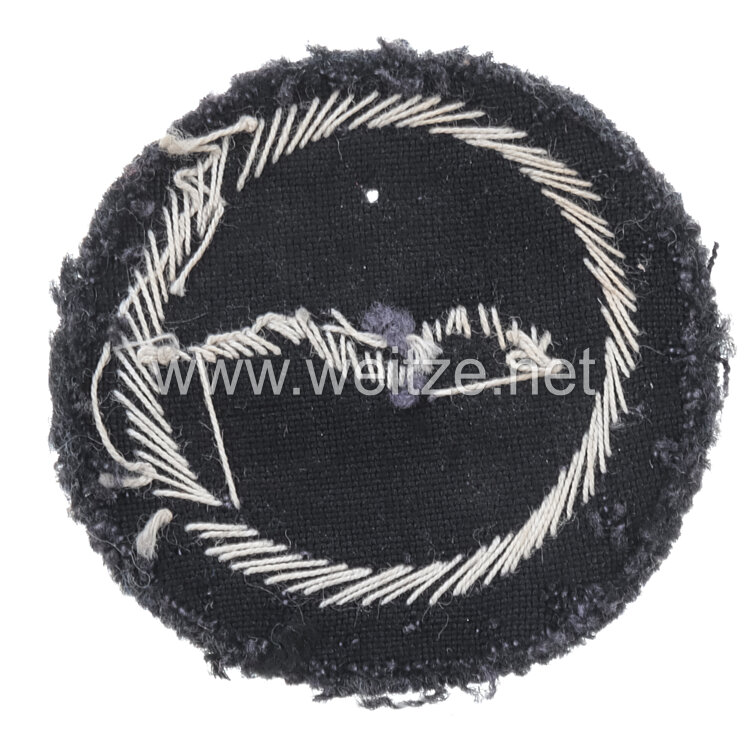
Glider Pilot Badge Class “A”

Metal bullion hand-embroidered version for Luftwaffe uniform. Worn condition, Grade 2.
463509
50,00

Glider Pilot Badge Class “A”

The German Glider Pilot Badge Level A

The Glider Pilot Badge in its Level A variant represents a fascinating chapter of German aviation history during the National Socialist period. This award was part of a multi-tiered system for recognizing achievements in gliding, which held a special tradition in Germany.

Historical Background

After World War I, the Treaty of Versailles of 1919 prohibited Germany from developing and possessing powered aircraft for military purposes. This restriction paradoxically led to intensive promotion of gliding, as it was not covered by the treaty limitations. During the 1920s and early 1930s, Germany developed into the world's leading nation in gliding. The Rhön mountains became the center of this movement, and events such as the Rhön gliding competitions attracted international attention.

With the Nazi seizure of power in 1933, gliding was systematically integrated into pre-military training. The National Socialist Flying Corps (NSFK) took over the organization and implementation of flight training. Gliding served as the foundation for later powered flight training and was an important component of recruitment for the Luftwaffe, officially established in 1935.

The Badge System

The Glider Pilot Badge existed in three levels: A, B, and C, representing different performance levels. Level A was the introductory level and was awarded after fulfilling basic requirements. Typically, the candidate had to complete several straight-line flights with a minimum flight duration and demonstrate basic knowledge of aircraft systems and meteorology.

Level B required advanced skills such as turning flights and longer flight times, while Level C, the highest award, demanded proof of cross-country flights and altitude gains. This gradation reflected the systematic training concept that was characteristic of German flight training during this era.

Design and Manufacturing

The specimen described here is a metal thread hand-embroidered version for the Luftwaffe uniform. This manufacturing technique was typical for higher-quality badges and testified to the craftsmanship of German uniform insignia. In this technique, metal threads – usually made of silver-plated or gold-plated wire – were embroidered onto a fabric base. The result was an elegant, three-dimensional appearance that differed significantly from printed or woven variants.

The basic form of the glider pilot badge typically showed a stylized glider, often surrounded by a wreath. The different levels were identified by various design elements or inscriptions. The hand-embroidered version was more elaborate to manufacture than machine-made variants and was preferably worn by officers and non-commissioned officers.

Wearing and Significance

The Glider Pilot Badge was worn on the Luftwaffe uniform at a prescribed location, usually on the left breast. It served not only as proof of achievement but also as a visible sign of the wearer's flying qualification. In an organization that placed great value on hierarchy and qualification, such badges had considerable symbolic significance.

For many young men, obtaining the Glider Pilot Badge was the first step on the path to pilot training. The award documented the successful completion of an important training phase and opened the way to further aviation qualifications.

Production and Variants

Various manufacturers produced Glider Pilot Badges, leading to variations in execution and quality. In addition to hand-embroidered versions, there were also stamped metal badges and machine-woven fabric variants. The choice of version often depended on the wearer's rank, budget, and personal preferences.

The quality of metal thread embroidery varied between different manufacturers. Renowned companies such as BEVO (Bandfabrik Ewald Vorsteher) produced high-quality woven badges, while specialized ateliers manufactured the more elaborate hand-embroidered versions.

Collector Value and Preservation

Today, original Glider Pilot Badges from the World War II era are sought-after collector's items. The evaluation of such a piece depends on various factors: condition, manufacturing method, rarity, and authenticity. A worn specimen in condition 2, as described here, shows moderate signs of use but retains its main features and details. This is a typical and acceptable condition for a piece that was actually worn.

The historical significance of these badges lies in their documentation of an important aspect of German military history and the development of aviation. They serve as reminders of a time when gliding had both sporting and military significance, and Germany was a world leader in this field.

Context in Aviation History

The German emphasis on gliding training proved highly effective in producing skilled pilots. The ability to fly without an engine taught fundamental principles of aerodynamics, weather reading, and aircraft handling that transferred directly to powered flight. Many of the Luftwaffe's most successful pilots began their careers in gliders, and the systematic approach to training became a model studied by other nations.

The badge system itself reflected German organizational efficiency and the culture of documented achievement that permeated military and civilian life during this period. Each badge represented not just individual accomplishment but participation in a larger national project of aviation development.