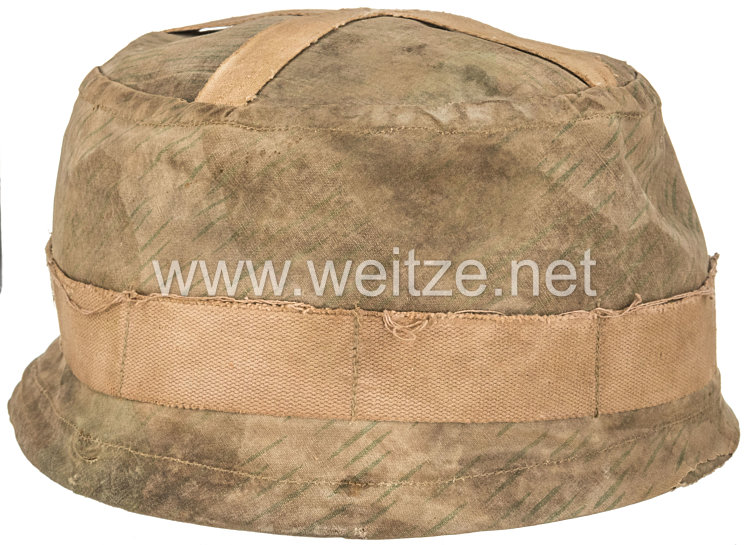
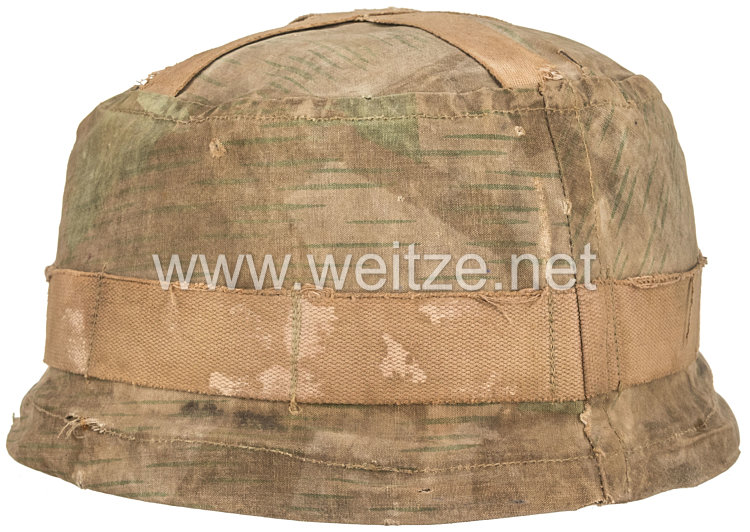
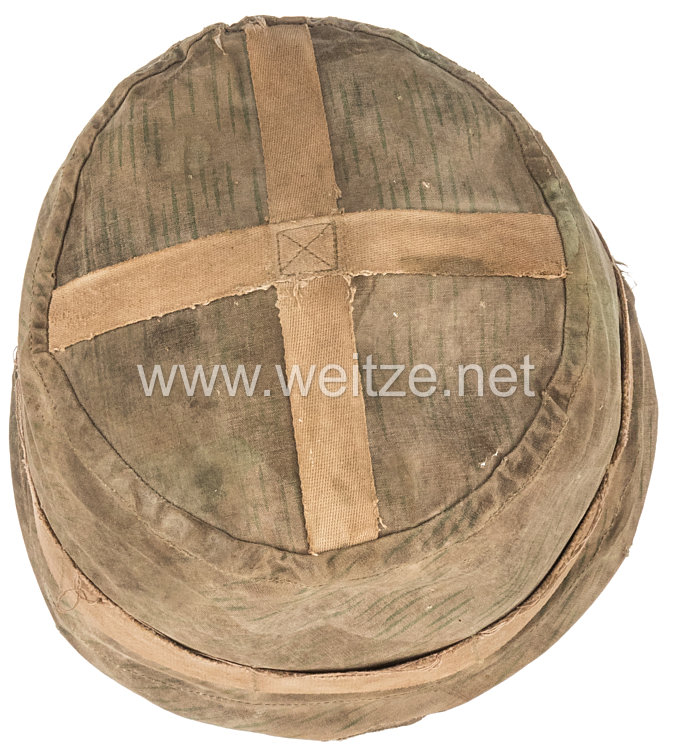
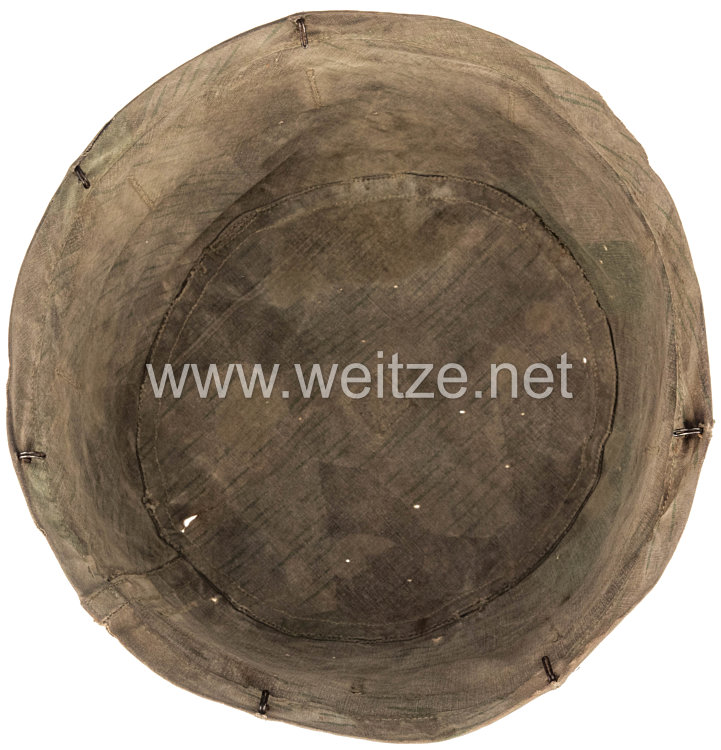
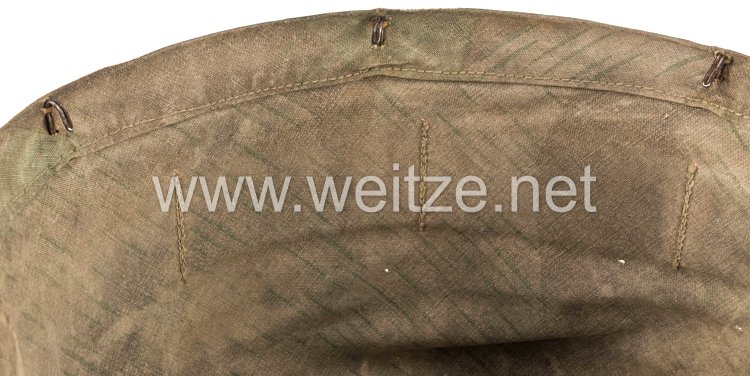
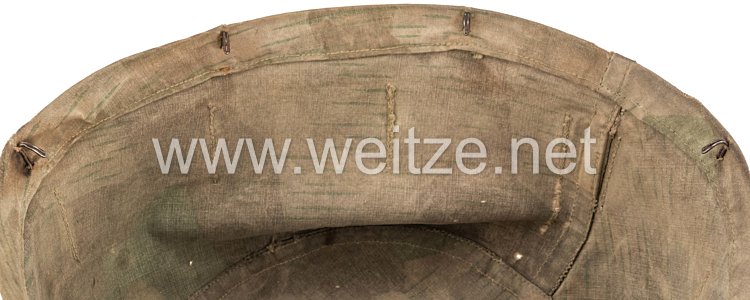
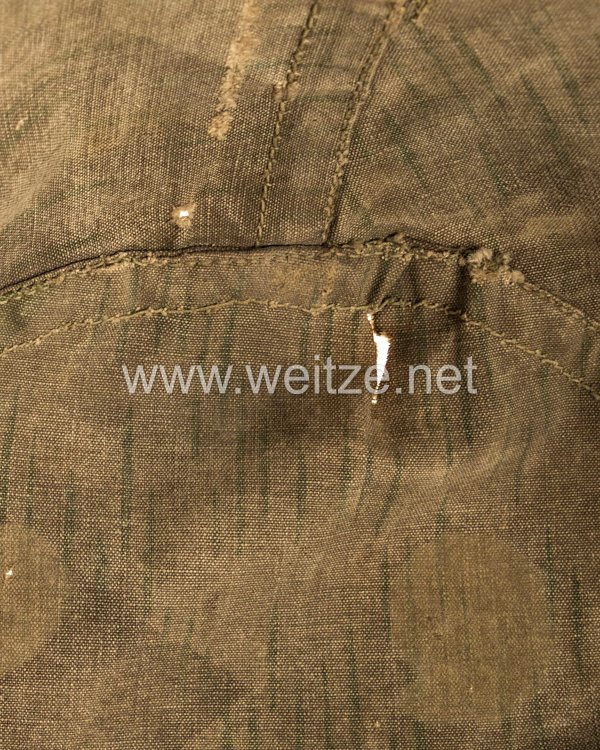
Luftwaffe Camouflage Cover for Steel Helmet M 38 for Paratroopers
The camouflage cover for the M 38 steel helmet for paratroopers represents one of the rarest and most sought-after pieces of equipment from the German Luftwaffe during World War II. These special camouflage covers were developed exclusively for the elite units of the German paratrooper force and embody the technical innovation and tactical development of camouflage in modern warfare.
The German Fallschirmjäger (paratroopers), officially organized as part of the Luftwaffe, received their own variant of the steel helmet from 1938, the M 38. This differed from the regular Army steel helmet M 35 through its smaller size and the absence of side ventilation holes, which were considered an injury risk during parachute jumps. The characteristic helmet rim was kept significantly shorter to prevent snagging on parachute lines.
The Splinter camouflage pattern (also known as “Splittertarn”) used on this helmet cover was developed by the Reichswehr in the early 1930s and officially introduced in 1931. The pattern is characterized by its distinctive splinter-like shapes in various shades of green and brown, applied to a lighter base color. The double-sided printing was typical for German camouflage materials of this era and demonstrated the high quality of German textile manufacturing.
The six sewn-in magnetic hooks at the lower edge of the cover represented an innovative fastening method. These hooks were attached to the helmet rim and ensured a secure hold even under extreme conditions such as parachute drops or combat. The magnetic fastening was a technical peculiarity that enabled quick and secure changing of the cover.
The Fallschirmjäger units were first deployed on a larger scale in May 1940 during the Western Campaign, with the capture of the Belgian fortress Eben-Emael on May 10, 1940, considered a tactical masterstroke. The most spectacular and simultaneously costliest deployment occurred in May 1941 during Operation Mercury, the airborne landing on Crete. The high losses led to large-scale parachute operations being largely discontinued thereafter, with the paratroopers increasingly employed as elite infantry.
Camouflage covers were not part of every soldier's regular basic equipment but were issued depending on the situation. Their use was particularly intended for operations in forested or heavily structured terrain. The fact that this cover shows clear signs of wear and the camouflage pattern is faded testifies to its actual use in the field.
The extreme rarity of such camouflage covers for paratrooper helmets can be explained by several factors: First, these were only produced in limited quantities for a comparatively small elite unit. Second, intensive use under combat conditions led to high loss rates. Third, many of these items of equipment were destroyed or lost after the war. Surviving examples are now mainly in museums or significant private collections.
The use of camouflage patterns by the Luftwaffe differed in part from that of the Army. While the Army developed and used various camouflage patterns, the Luftwaffe largely remained with the proven Splinter pattern. This enabled standardized production and logistics within the service branch.
From a conservation perspective, this object shows typical aging and wear signs: the fading of colors is due to UV radiation and weather influences, while the wear marks testify to mechanical stress during field deployment. The condition grade 2-3 corresponds to a good to satisfactory condition with clear but not destructive signs of use.
Such objects today are of immense historical significance for understanding the equipment and tactics of German armed forces in World War II. They document not only the material culture of the time but also the technological developments in the field of camouflage and soldier equipment that continue to influence military practice to this day.