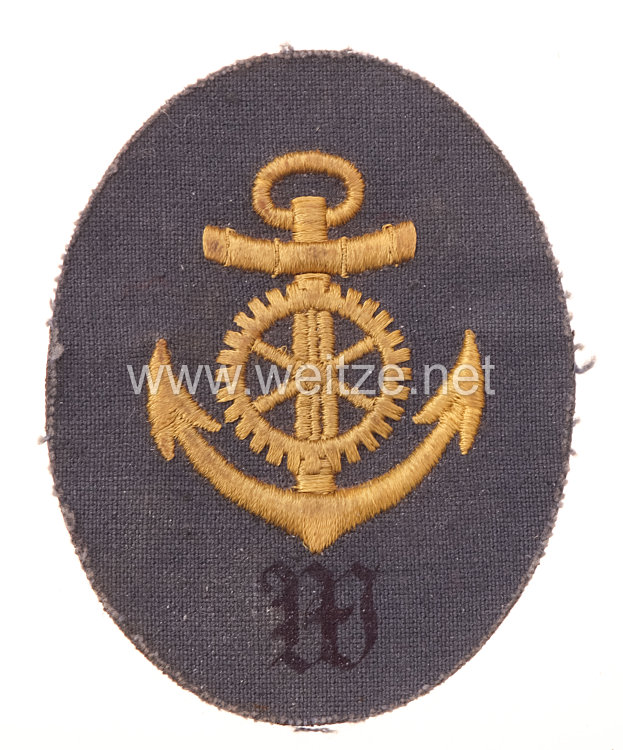
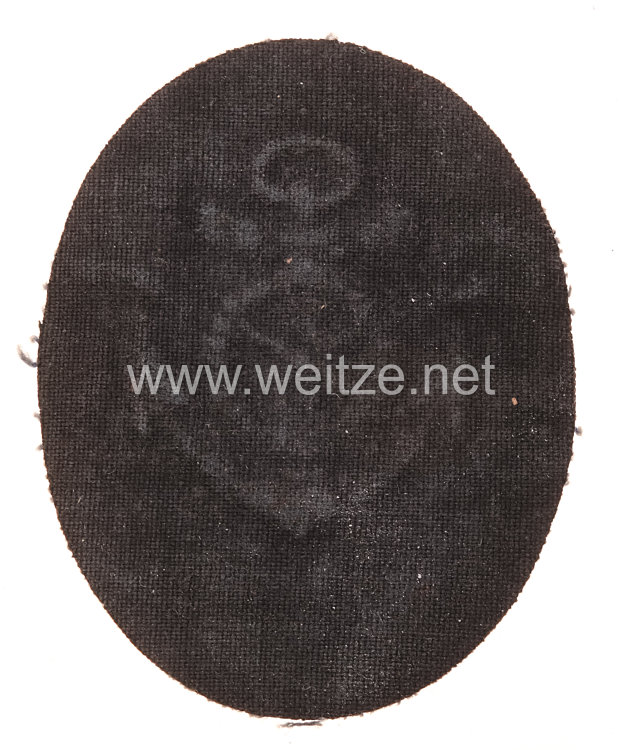
Kriegsmarine Sleeve Insignia Maschinenmaat “W”

probably for foul weather gear, embroidered on sturdy linen but not rubberized, the W printed, the letter possibly stands for “Wilhelmshaven” or “Wache” (guard duty), condition 2
444309
120,00

Kriegsmarine Sleeve Insignia Maschinenmaat “W”

This Kriegsmarine sleeve insignia for a Maschinenmaat (engine room petty officer) bearing the letter “W” represents a fascinating aspect of German naval uniform studies from the Second World War period. This particular badge was likely manufactured for Wetterzeug (weatherproof clothing) and demonstrates the complex identification systems used within the Kriegsmarine to denote ranks, functions, and unit affiliations.

The Kriegsmarine, which served as the official designation of German naval forces from 1935 to 1945, developed a comprehensive system of uniform badges and identification markers. The rank of Maat designated a non-commissioned officer without sword knot in the enlisted and NCO career path. A Maschinenmaat was specifically assigned to the technical crew and responsible for operating, maintaining, and monitoring the ship's engine systems.

The technical execution of this badge is noteworthy: it was embroidered on firm linen but not rubberized. This suggests use for regular service clothing or special equipment pieces. The fact that the “W” was printed rather than embroidered indicates rationalized production methods, as became common particularly in the later war years when material and labor shortages led to simplified manufacturing techniques.

The letter “W” on this badge raises interesting questions about its precise attribution. Several interpretations are historically plausible: it could stand for “Wilhelmshaven,” one of the most important Kriegsmarine bases on the North Sea coast. Wilhelmshaven was home to the North Sea Naval Station and housed significant shipyards, training facilities, and fleet units. Alternatively, the “W” might stand for “Wache” (watch/guard) and indicate a special service function, such as membership in a watch crew or guard duty.

The Wetterzeug of the Kriegsmarine was an essential component of maritime equipment. These weatherproof garments protected crews from harsh conditions at sea—wind, spray, rain, and cold. Since these items were worn over the regular uniform, they required their own markings so that rank and function remained recognizable even when weather clothing was closed. The sleeve badges on weatherproof gear were therefore not merely decorative but fulfilled an important functional role in military hierarchy and organization aboard ship.

The uniform regulations of the Kriegsmarine were detailed and subject to various changes during the war years. The Anzugordnung für die Kriegsmarine (Dress Regulations for the Kriegsmarine, A.O.K.) precisely specified which badges were to be worn where and how. For non-commissioned officers like the Maschinenmaat, specific regulations applied regarding sleeve insignia, which indicated rank through the number and arrangement of chevrons and other symbols.

The production of uniform badges was carried out both by official naval departments and by private manufacturers approved by the Navy. Quality and execution could vary, especially toward the end of the war when resource scarcity led to simplified production methods. The badge described here with its printed “W” might originate from this later period or represent a local special production.

The technical crew of a warship, to which the Maschinenmaate belonged, was indispensable for operating the complex propulsion systems, generators, and technical systems. These men often worked under difficult conditions in the engine rooms, far from daylight, and bore considerable responsibility for their ships' operational readiness.

Today, such sleeve insignia are important military-historical documents that provide insight into the organization, hierarchy, and daily life of the Kriegsmarine. They enable historians and collectors to reconstruct and understand the complex structures and identification systems of this era. The condition 2 rating of this specimen indicates good preservation, which is remarkable for textiles from this period.