Italien Geschenkschwert an General Emanuele Pugliese, überreicht von der jüdischen Gemeinde von Italien
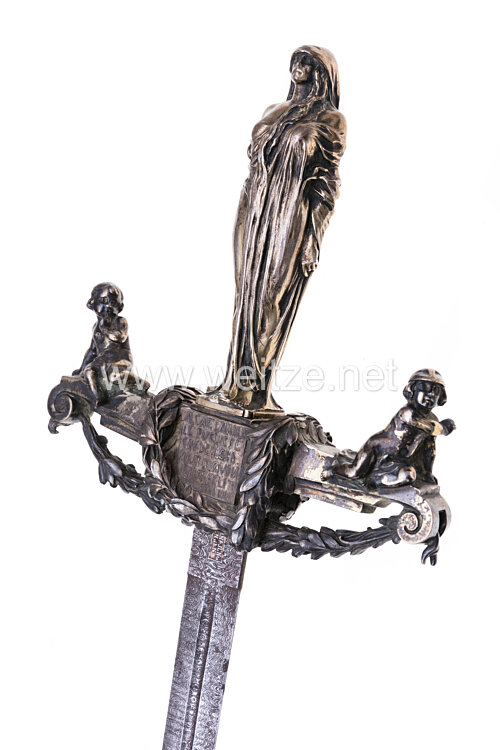
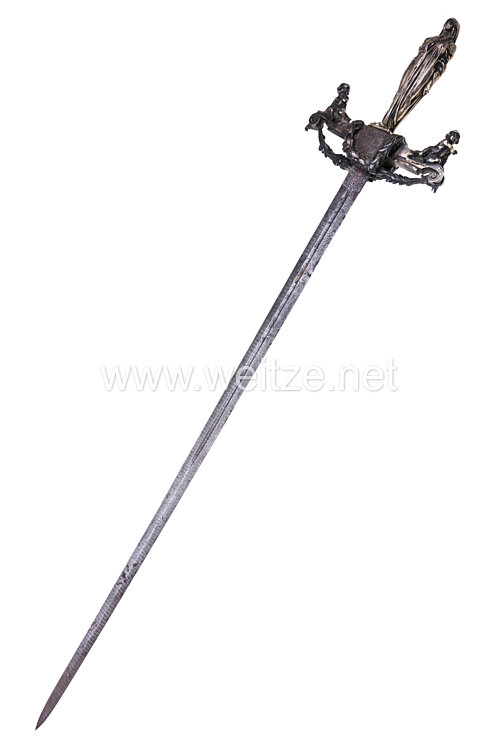
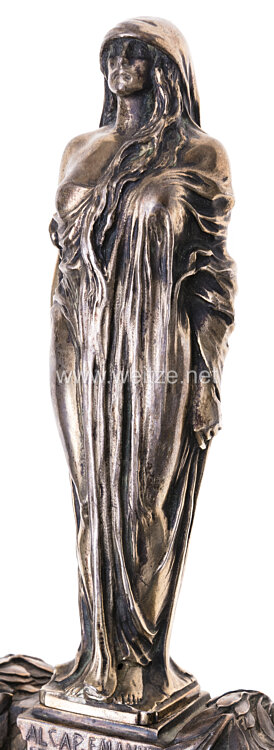
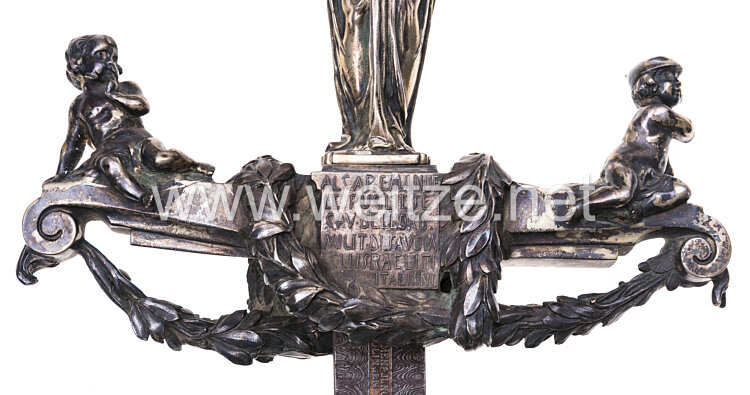
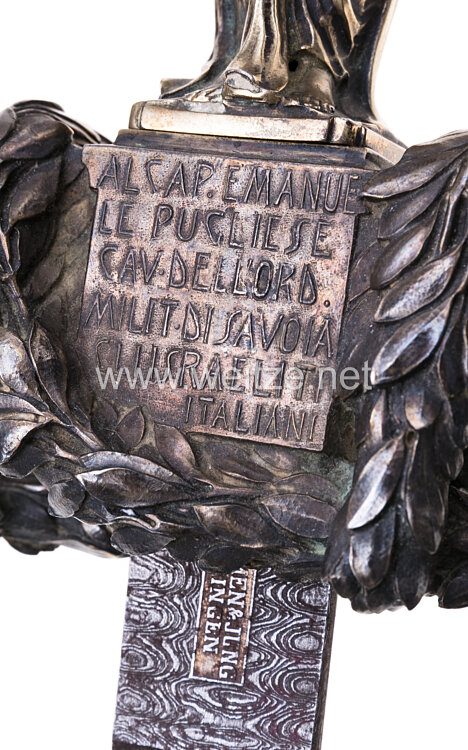
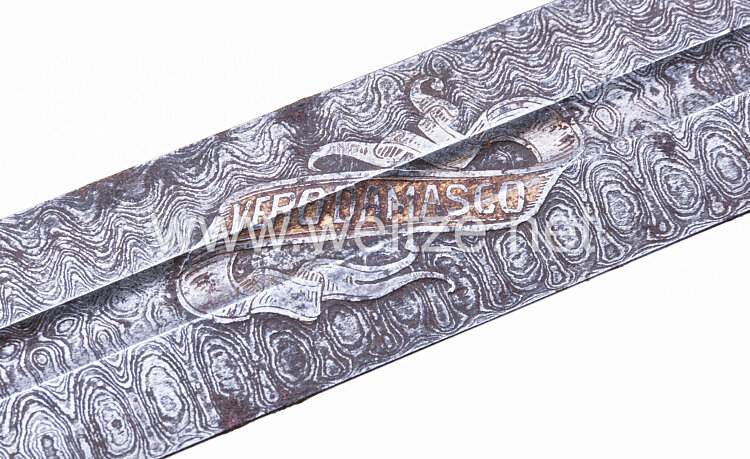
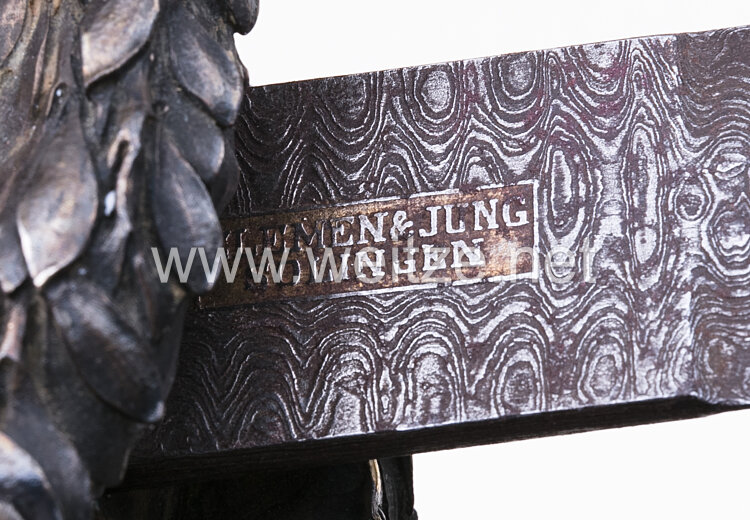
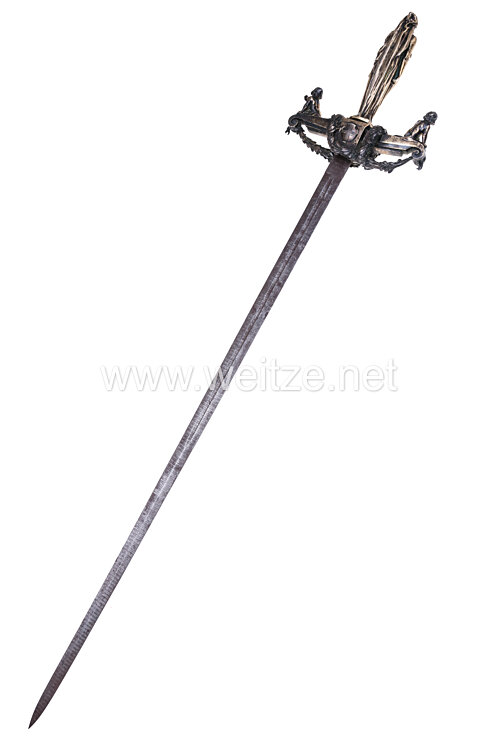
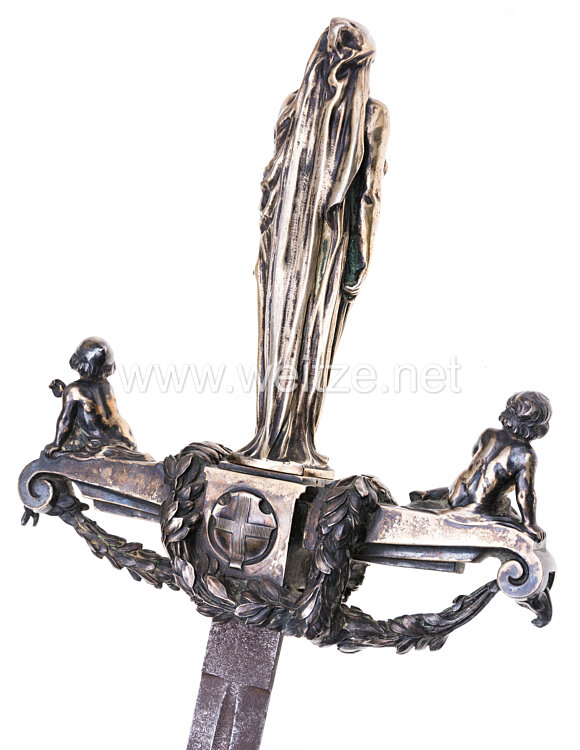
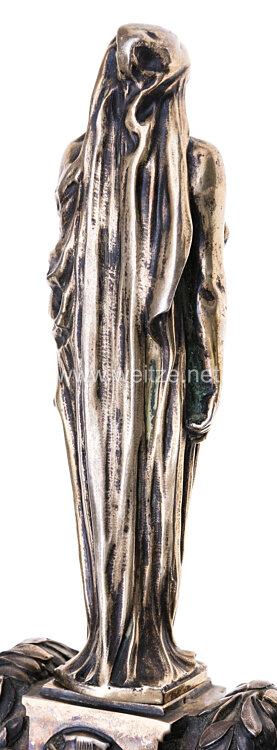
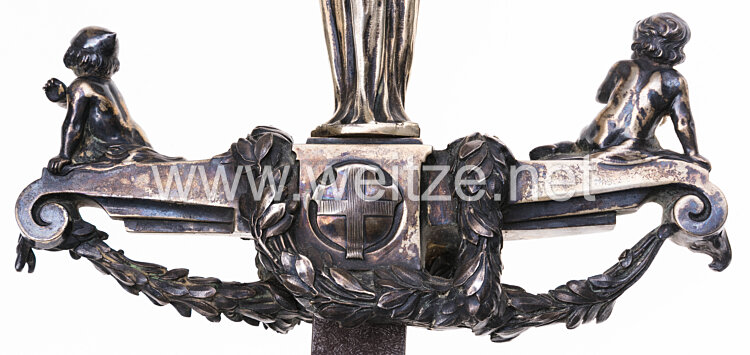
Das Schwert im klassischen Design, Griff und Parierstange als allegorische Kompositionen aus vergoldetem Silber. Griff in der Form einer Frau, "La Italia" symbolisierend, zwei sitzende Kinder auf der Parierstange als Symbol für die "Kinder Italiens". Die Parierstange ist mit Lorbeerblättern dekoriert, militärische Verdienste symbolisierend. Deren Mitte mit einem Schild, beschriftet "Al. Cap. Emanuele Pugliese Cav. Del Ord. Milit. Di Savoia S. I. Israeliti Italiani". Klinge aus feinstem Damaststahl, auf der Fehlschärfe die deutsche Herstellermarke von "Clemens & Jung Solingen".
Das Schwert wurde offensichtlich ohne Scheide übergeben, Gesamtlänge 120 cm.
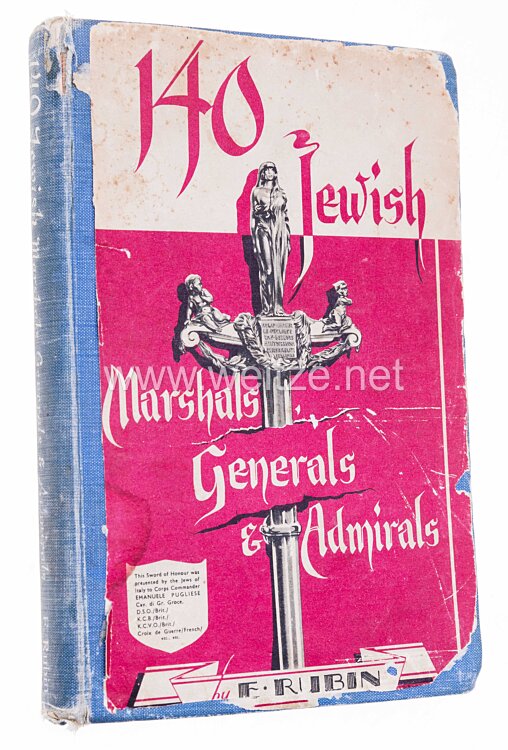
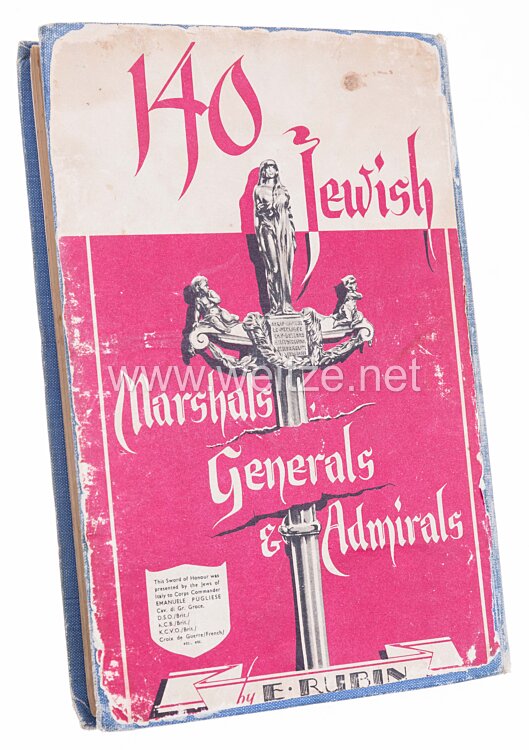
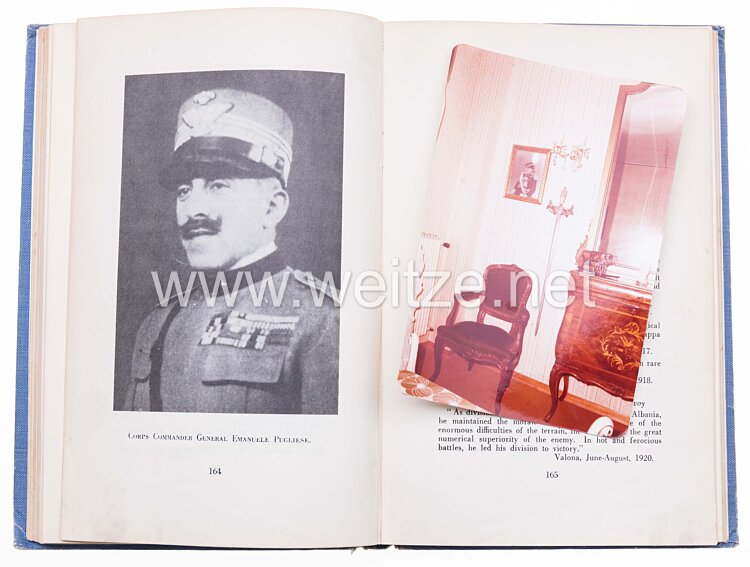
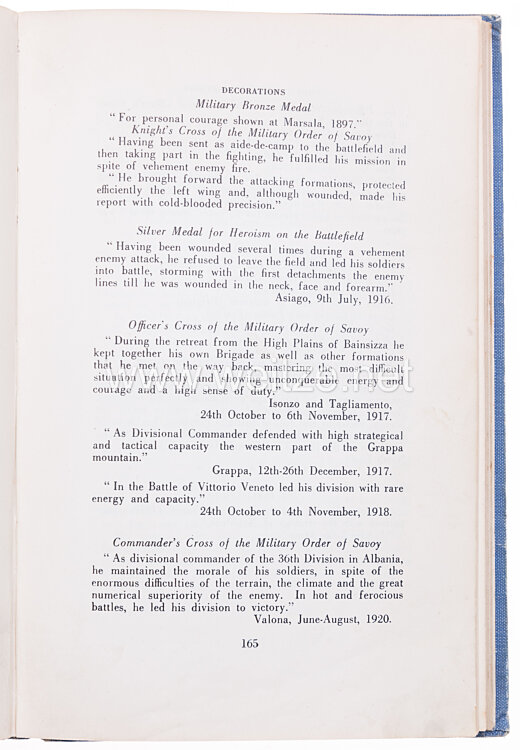
Dieses Schwert wurde als Einband Illustration für das Buch "140 Jewish Marshals, Generals and Admirals" von E. Rubin verwendet. Ein Geschenkband mit der Widmung des Autors an Pugliese, datiert 1952, liegt dem Schwert bei. Auf den Seiten 163 - 166 findet sich eine detaillierte Biografie von E. Pugliese mit allen seinen Verdiensten und Auszeichnungen sowie einem Bild in Uniform. Ebenfalls enthalten eine Aufnahme von 1960 von Puglieses Wohnzimmer mit dem Schwert an der Wand neben seiner Fotografie.
Eindrucksvolles Geschenkschwert von historischer Bedeutung. Bis heute ist kein weiteres Geschenkschwert an einen jüdischen General bekannt.
Mit Italiens Eintritt in den Ersten Weltkrieg 1915 meldeten sich viele Juden freiwillig und dienten in allen militärischen Bereichen. In den folgenden drei Jahren des Konflikts dienten 8.000 jüdische Italiener tapfer in den Reihen der Armee. 500 Soldaten jüdischen Glaubens fielen in der Verteidigung der Flagge und die doppelte Anzahl wurde verwundet. Oberst Emanuele Pugliese zeichnete sich während der Schlacht von Vittorio Veneto aus und wurde bei Kriegsende zum General befördert.
Emanuele Pugliese war einer der wenigen jüdischen Generale im Ersten Weltkrieg mit herausragenden Verdiensten. Das Schwert wurde überreicht auf Grund der erfolgreichen Verteidigung des Monte Grappa (Oktober-Dezember 1917) und den Kämpfen bei Vittorio Veneto, wofür Pugliese ebenfalls das Offizierskreuz des Militärordens von Savoyen erhielt.
Das Schwert wurde offensichtlich ohne Scheide übergeben, Gesamtlänge 120 cm.
Dieses Schwert wurde als Einband Illustration für das Buch "140 Jewish Marshals, Generals and Admirals" von E. Rubin verwendet. Ein Geschenkband mit der Widmung des Autors an Pugliese, datiert 1952, liegt dem Schwert bei. Auf den Seiten 163 - 166 findet sich eine detaillierte Biografie von E. Pugliese mit allen seinen Verdiensten und Auszeichnungen sowie einem Bild in Uniform. Ebenfalls enthalten eine Aufnahme von 1960 von Puglieses Wohnzimmer mit dem Schwert an der Wand neben seiner Fotografie.
Eindrucksvolles Geschenkschwert von historischer Bedeutung. Bis heute ist kein weiteres Geschenkschwert an einen jüdischen General bekannt.
Mit Italiens Eintritt in den Ersten Weltkrieg 1915 meldeten sich viele Juden freiwillig und dienten in allen militärischen Bereichen. In den folgenden drei Jahren des Konflikts dienten 8.000 jüdische Italiener tapfer in den Reihen der Armee. 500 Soldaten jüdischen Glaubens fielen in der Verteidigung der Flagge und die doppelte Anzahl wurde verwundet. Oberst Emanuele Pugliese zeichnete sich während der Schlacht von Vittorio Veneto aus und wurde bei Kriegsende zum General befördert.
Emanuele Pugliese war einer der wenigen jüdischen Generale im Ersten Weltkrieg mit herausragenden Verdiensten. Das Schwert wurde überreicht auf Grund der erfolgreichen Verteidigung des Monte Grappa (Oktober-Dezember 1917) und den Kämpfen bei Vittorio Veneto, wofür Pugliese ebenfalls das Offizierskreuz des Militärordens von Savoyen erhielt.