Wehrmacht : großer Nachlass des Ritterkreuzträgers Generalleutnant Curt Badinski
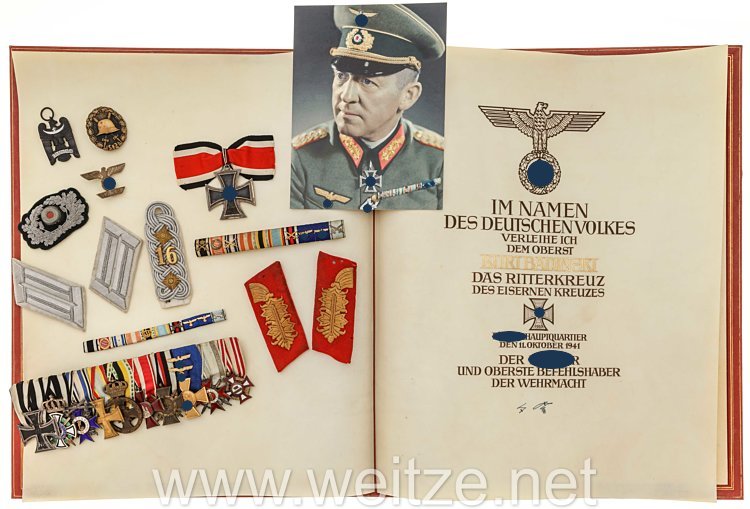
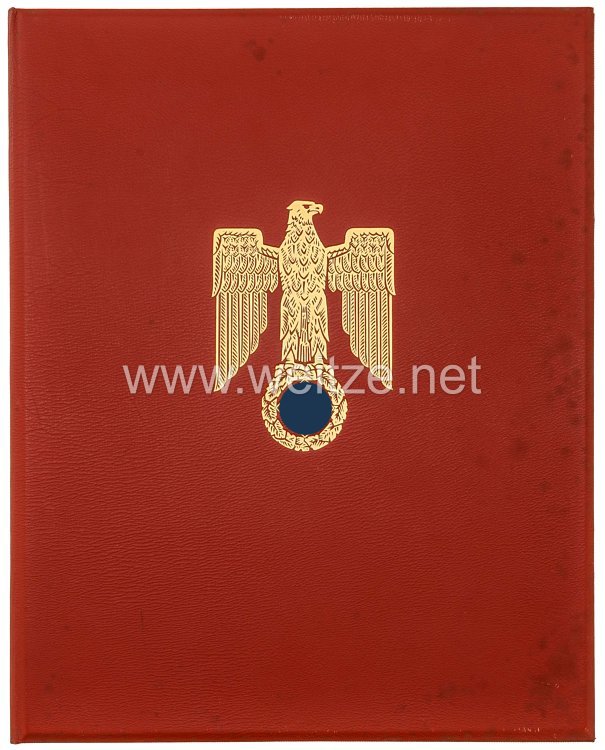
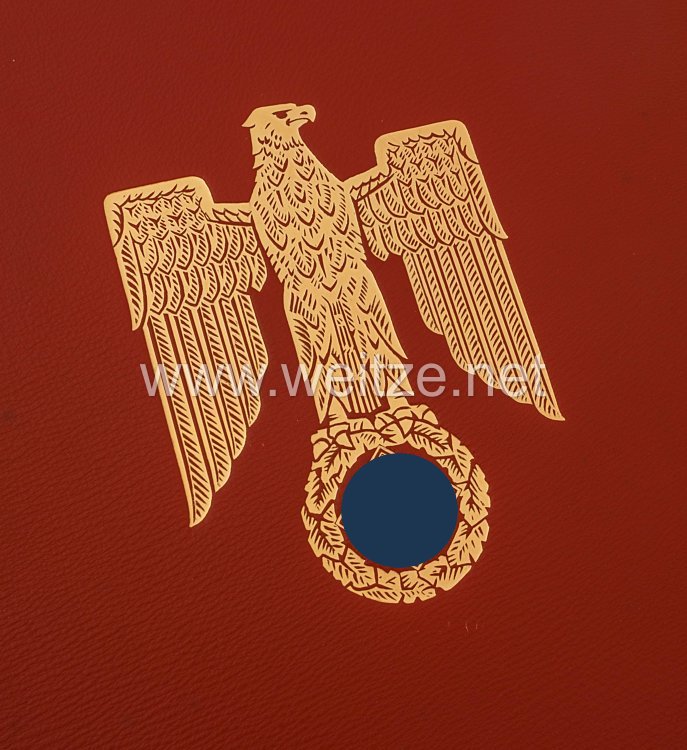
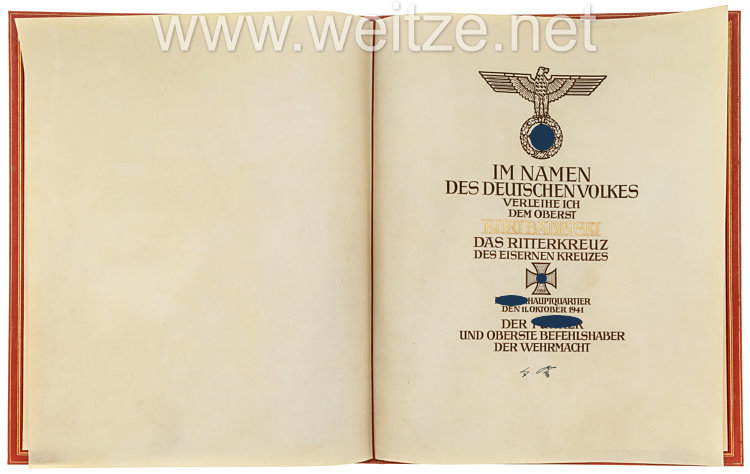
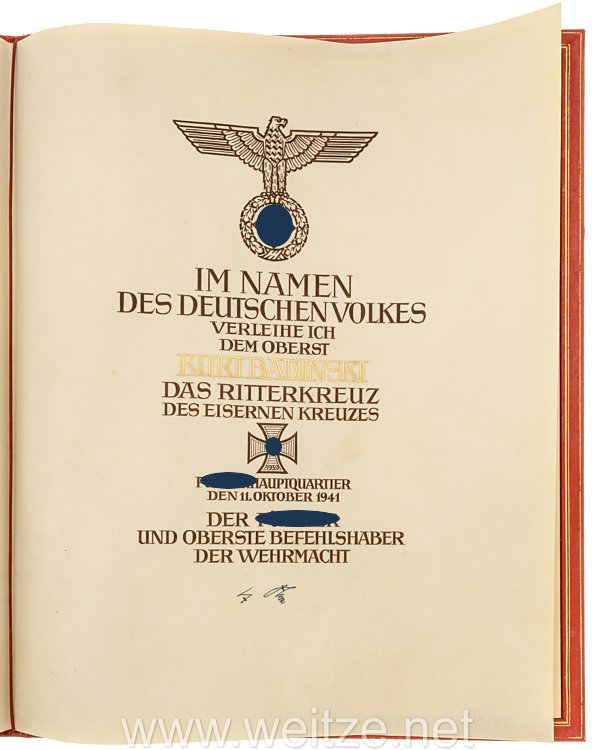
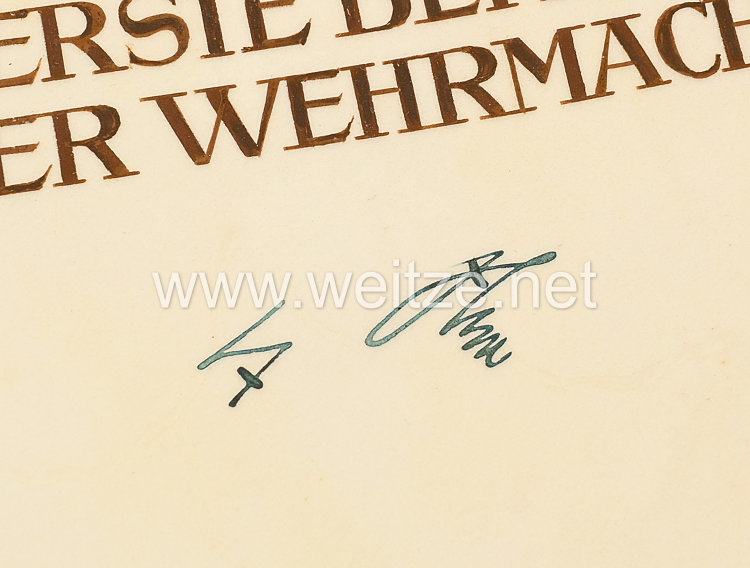
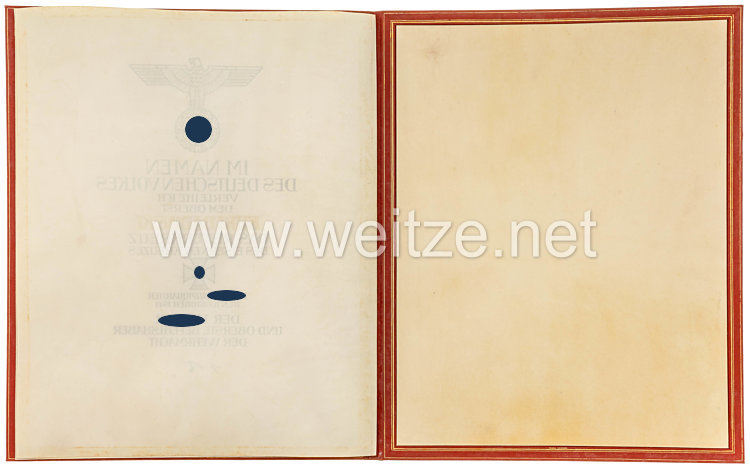
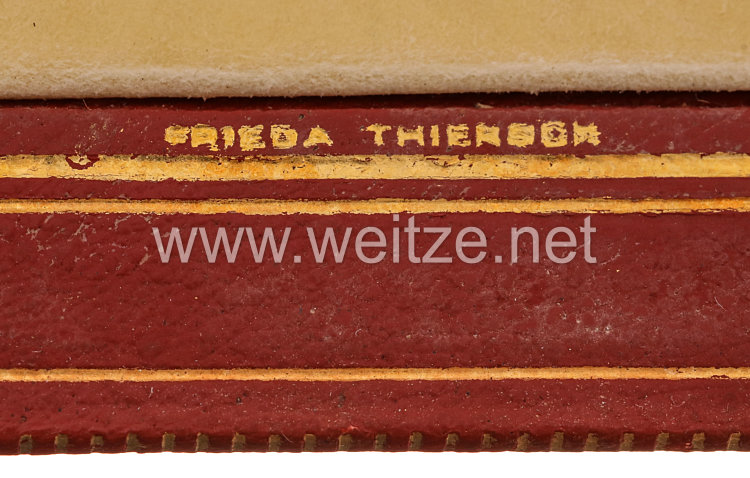
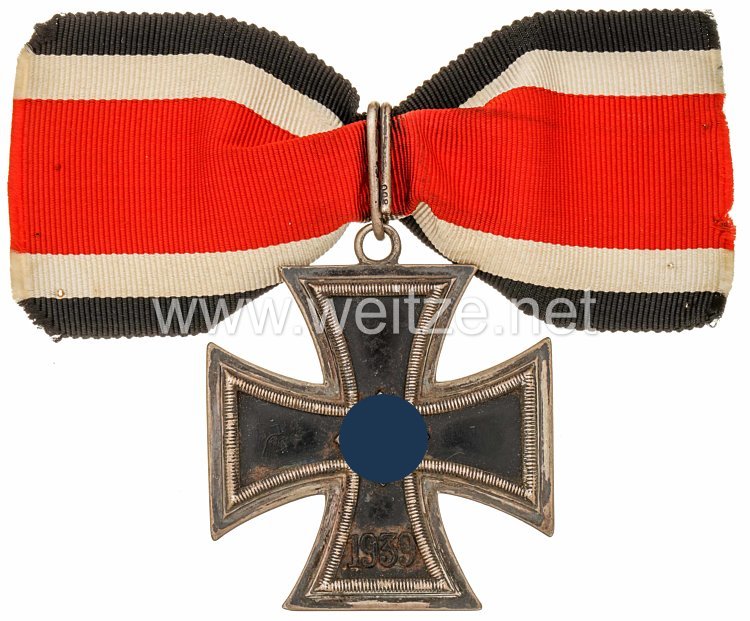
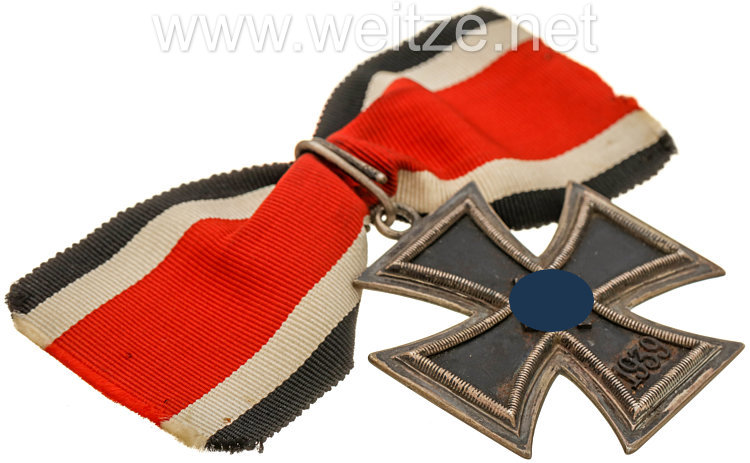
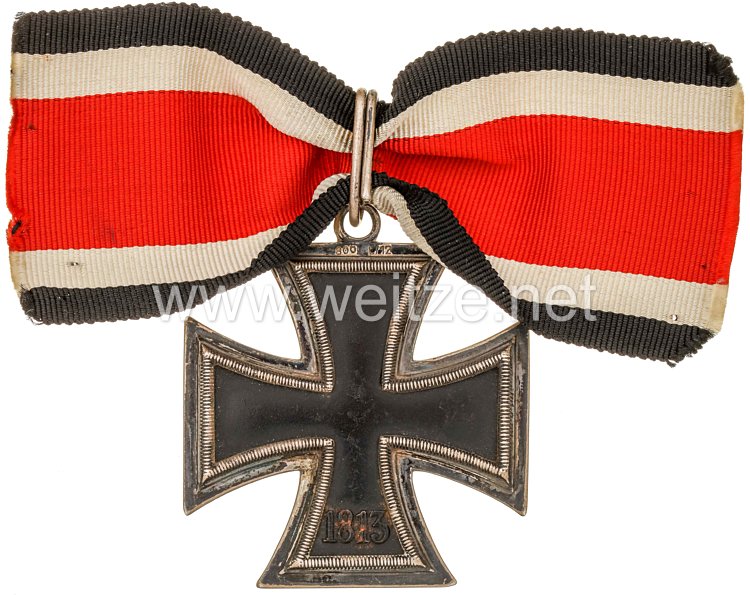
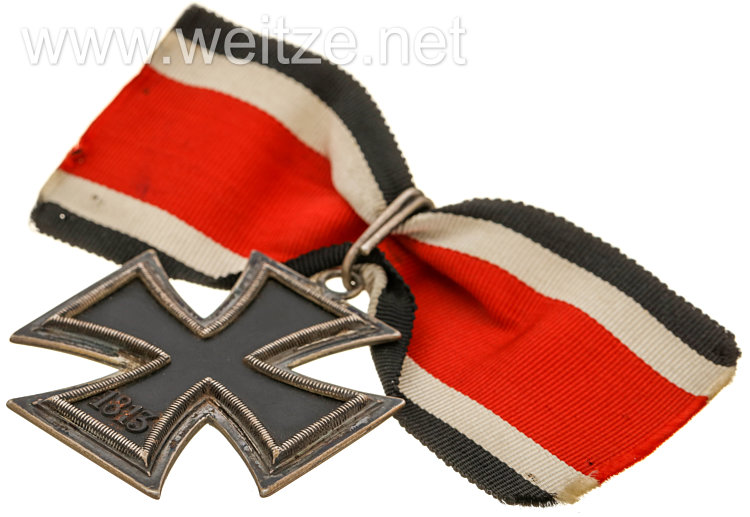
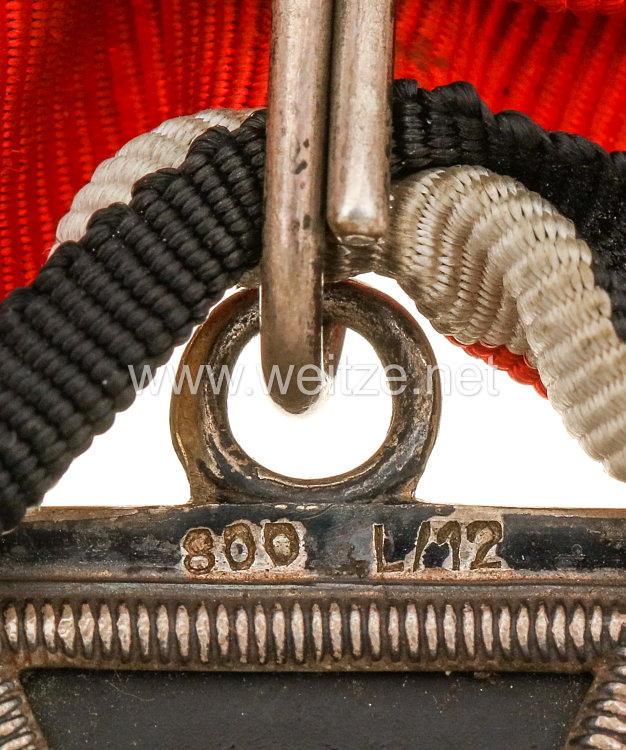
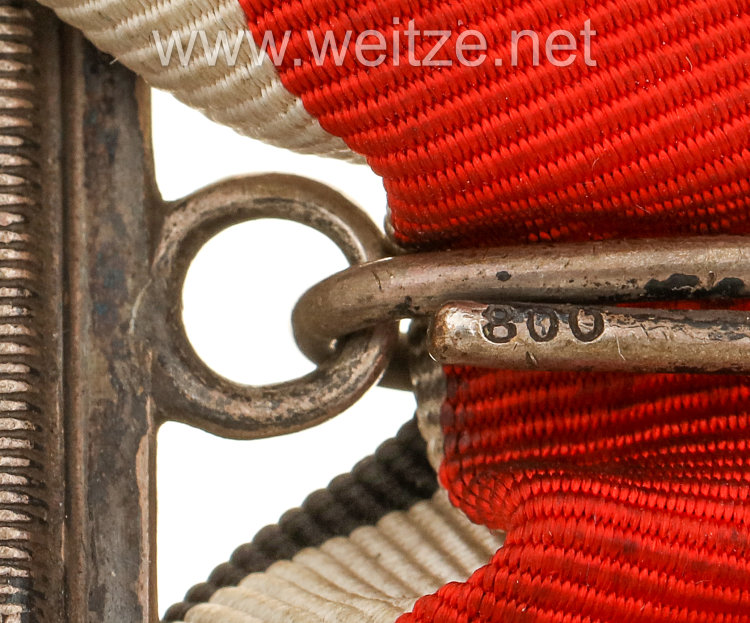
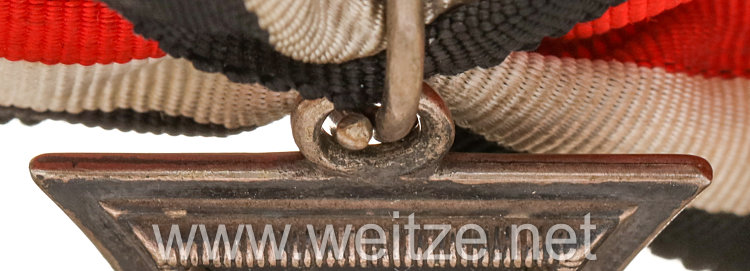
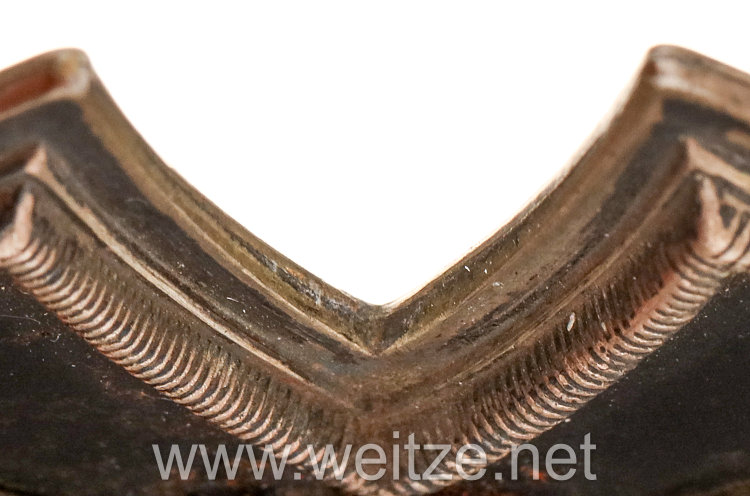
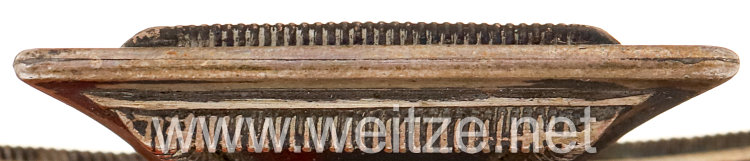
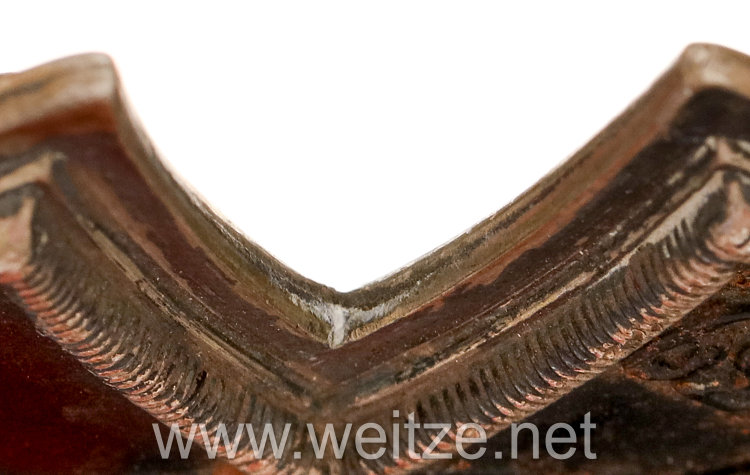
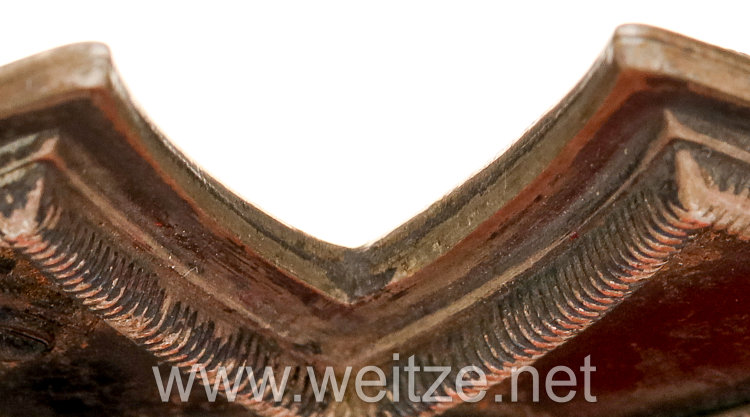
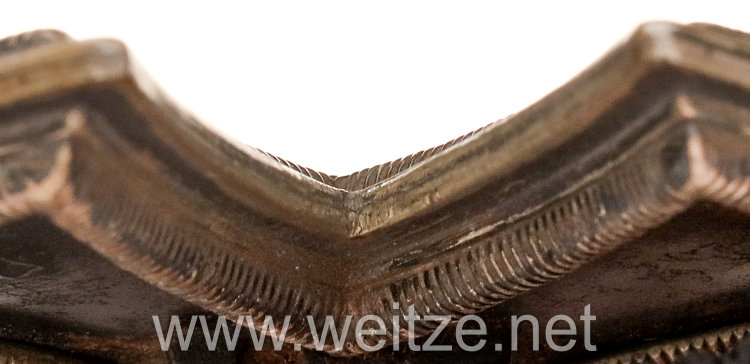
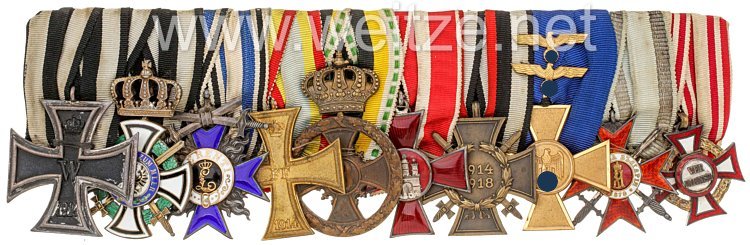
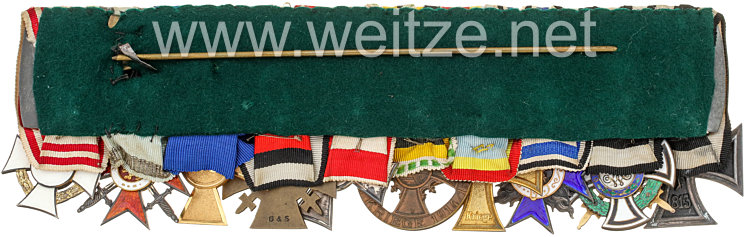
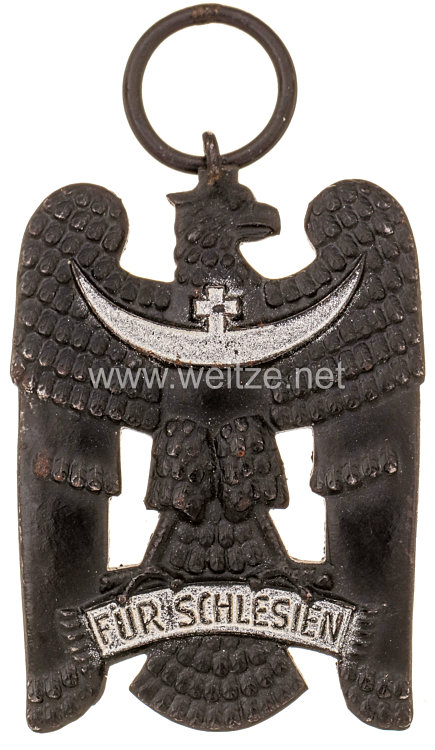
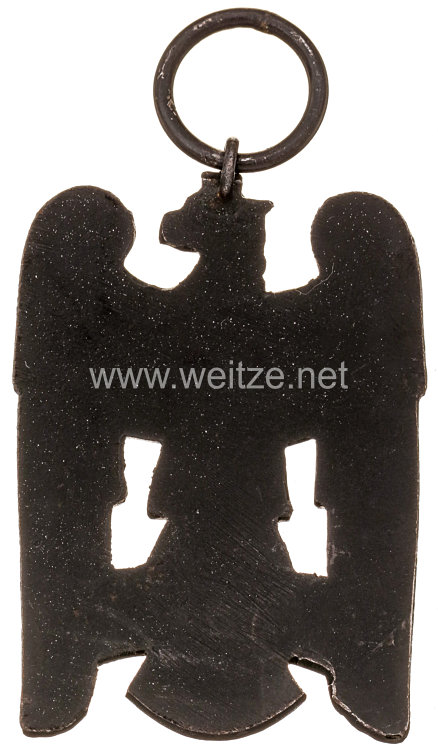
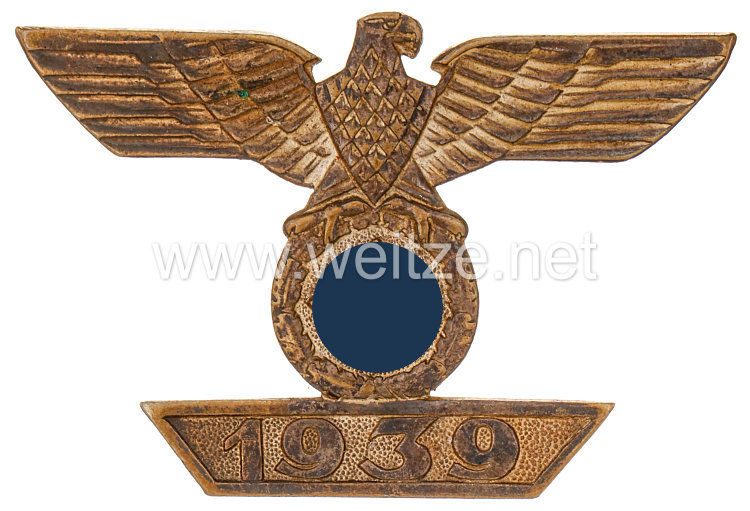
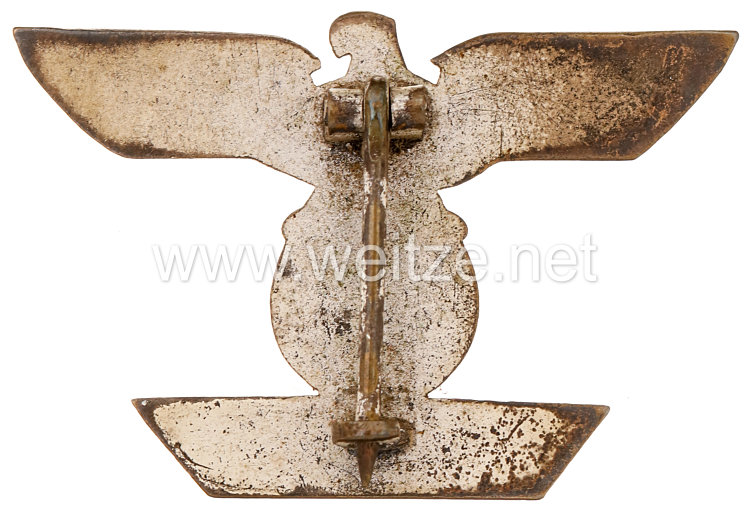
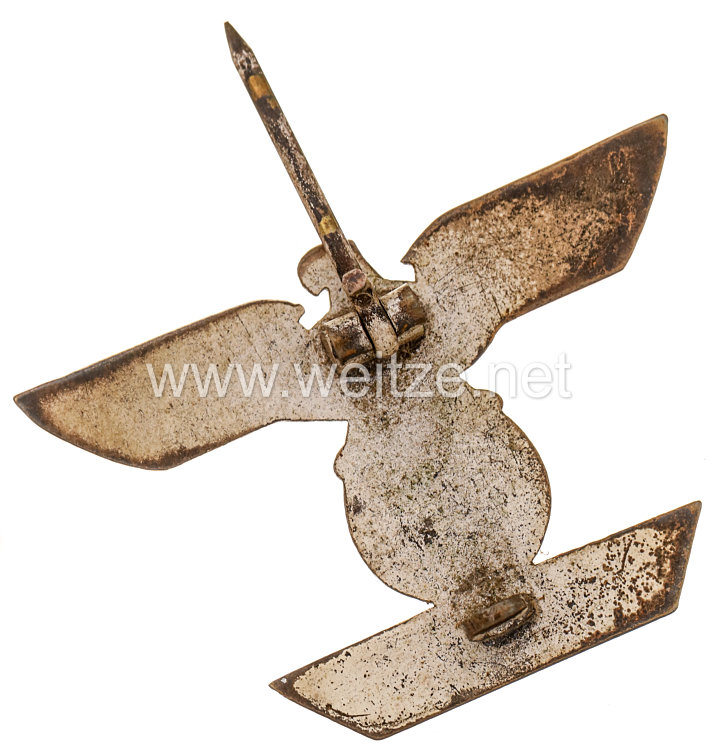
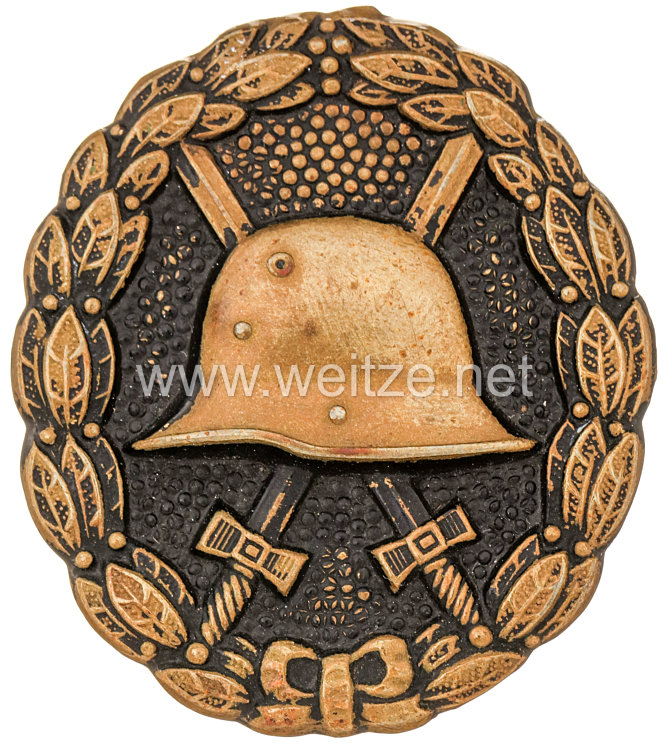
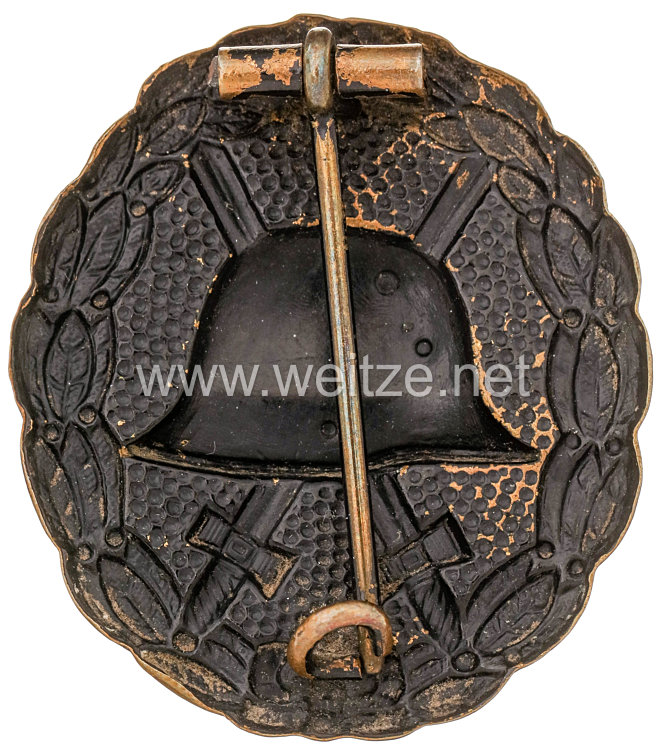
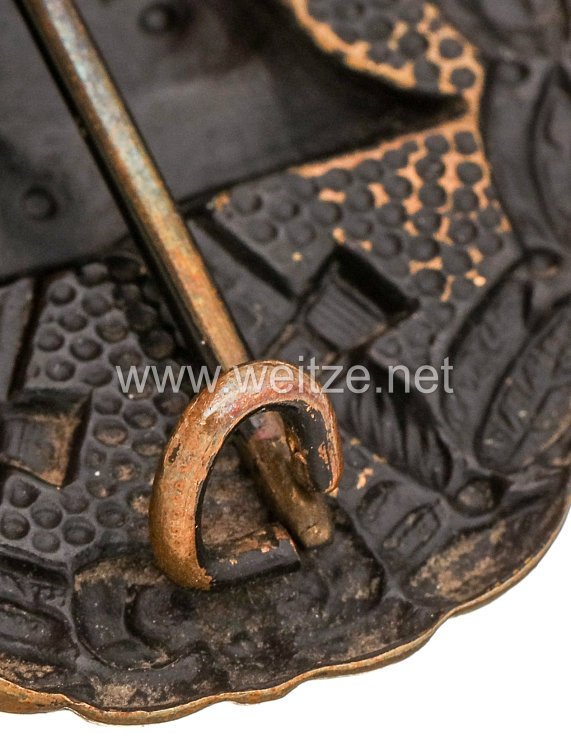
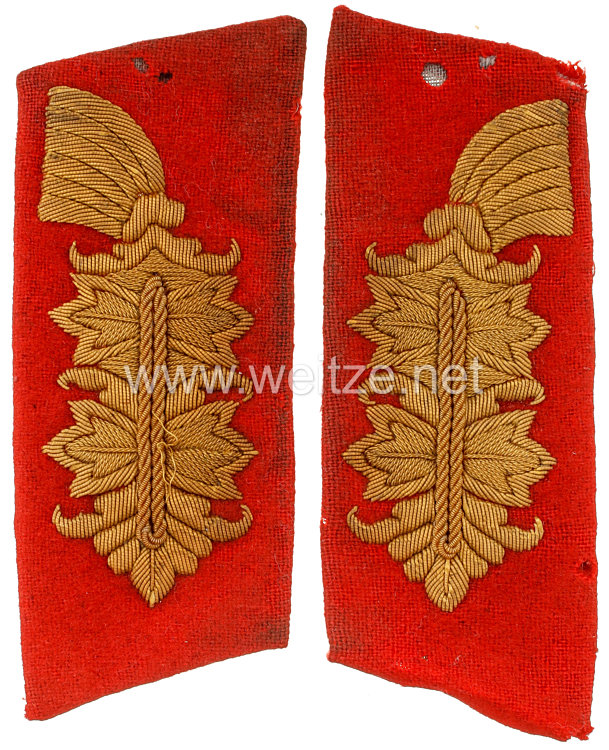
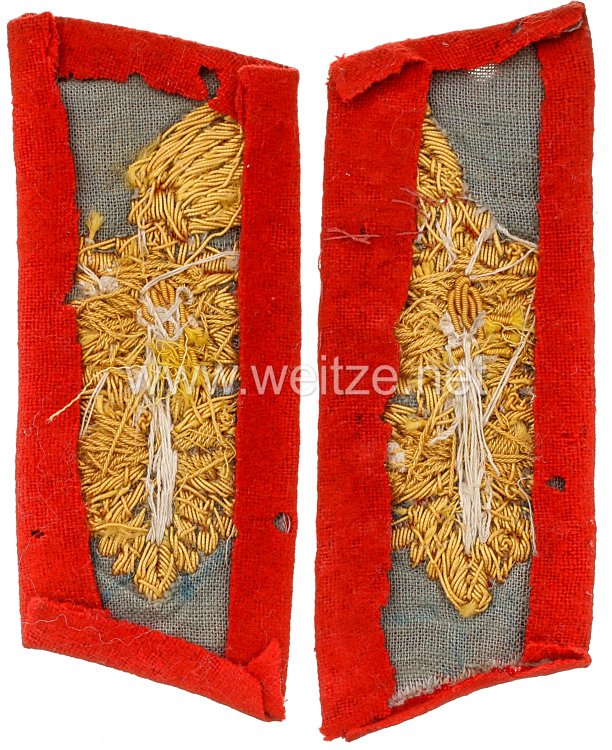
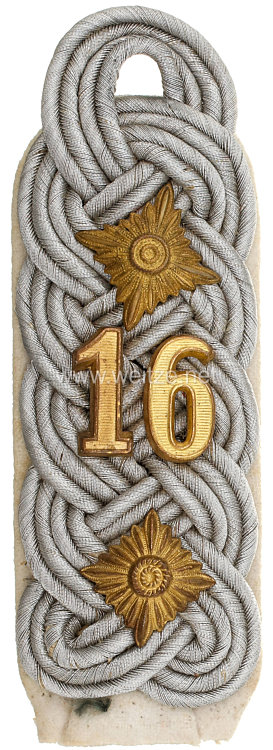
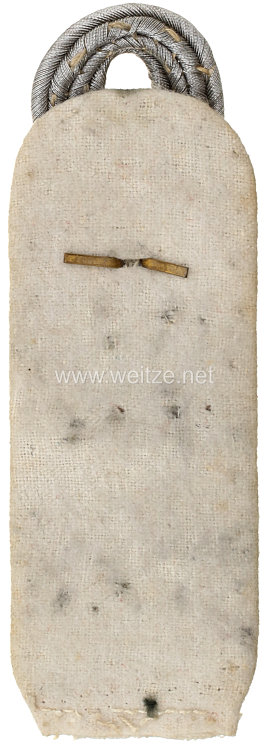
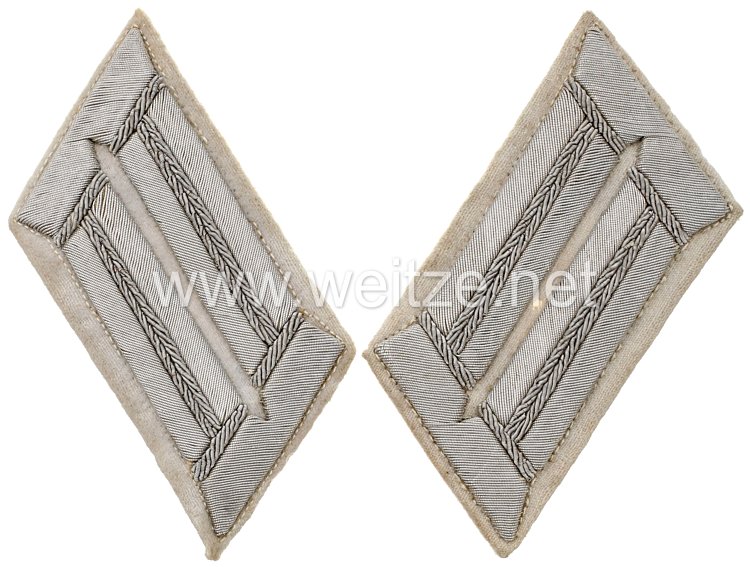
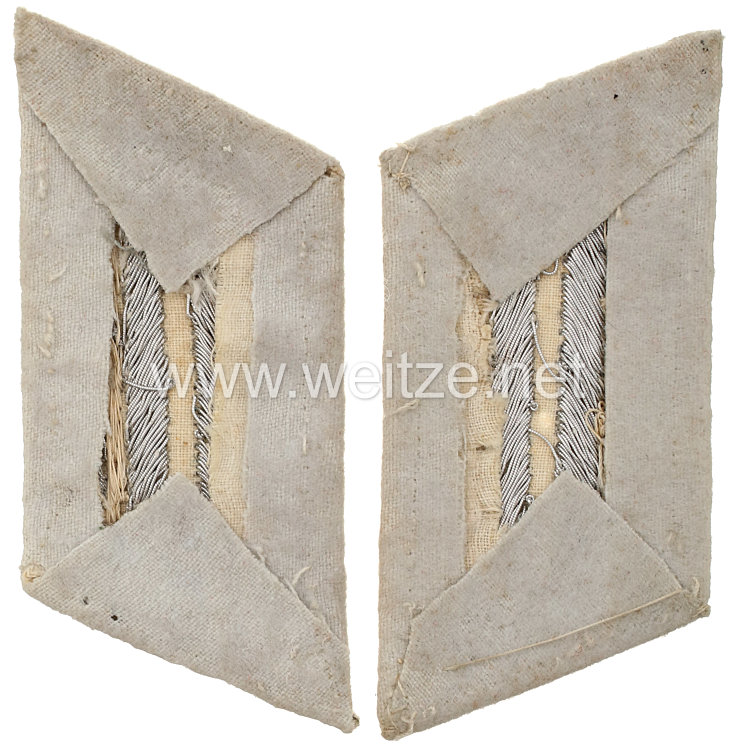
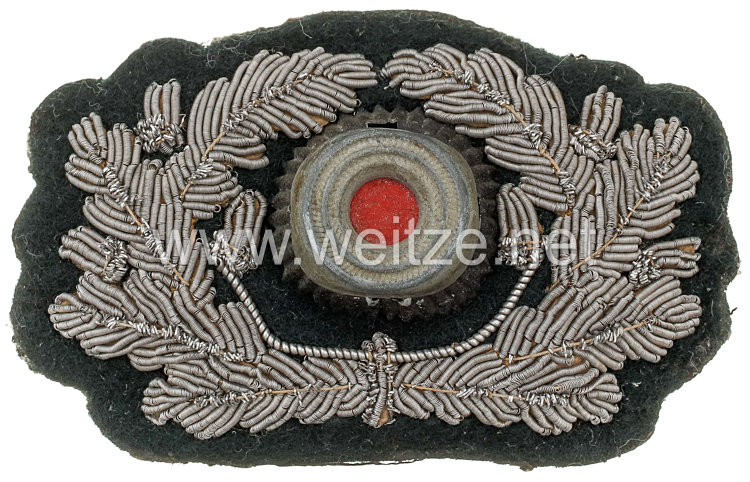
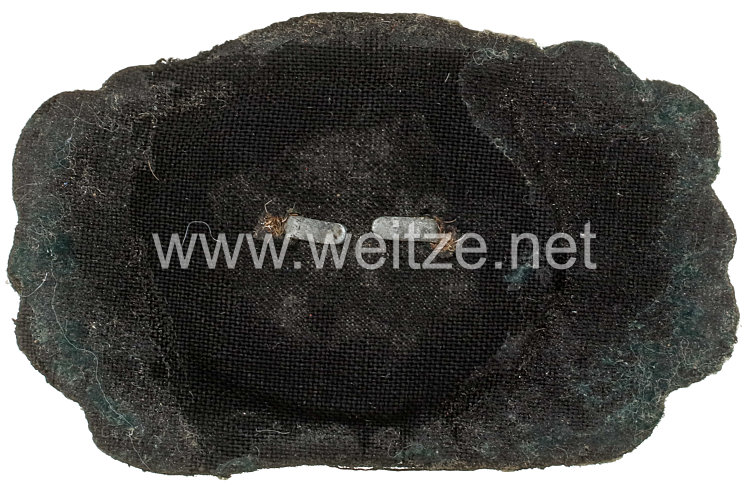
Das Ritterkreuz zum Eisernen Kreuz 1939 ist eine typische Fertigung der Fa. C. E. Juncker, Berlin. Geschwärzter Eisenkern und Silberrahmen, rückseitig gestempelt "800 L/12", der Bandring gestempelt "800" Silber. Komplett am original Halsbandabschnitt. Deutlich getragen mit leichten Rostspuren, Zustand 2-3. Dazu die Große Verleihungsurkunde zum Ritterkreuz des Eisernen Kreuzes ausgestellt auf "Oberst Kurt Badinski", datiert " Führerhauptquartier, den 11. Oktober 1941". Mit Original-Tintenunterschrift der Führers und Reichskanzlers Adolf Hitler. Die Ritterkreuzmappe aus rotem Leder mit Gold geprägtem Hoheitsadler. Die Urkunde auf großem Pergament-Doppelblatt von Hand geschrieben, der Name des Beliehenen in erhabenem Gold gehalten. Am rückseitigen unteren Rand mit Signatur "Frieda Thiersch". Die Verleihungsmappe befindet sich in sehr gutem Zustand, die Ecken nur minimal bestoßen, der rote Halteriemen für das Pergamentblatt ist unbeschädigt. Maße 45 x 36 cm. Große Ordensschnalle mit 10 Auszeichnungen: Eisernes Kreuz 1914 2. Klasse. Preußen Hausorden Hohenzollern Kreuz der Ritter mit Schwertern. Silber vergoldet, im unteren Kreuzarm gestempelt "825" Silber. Bayern Militär-Verdienst-Orden 3. Klasse mit Schwertern, das Medaillon aus Gold. Mecklenburg-Schwerin Militär Verdienst Kreuz 1914 2. Klasse. Sachsen-Meiningen Ehrenzeichen für Verdienst im Kriege 1915 - 1918. Hamburg Hanseatenkreuz. Ehrenkreuz für Frontkämpfer 1914-1918. Wehrmacht Dienstauszeichnung für XXV Jahre mit 2 (!) aufgelegten Bandadlern. Bulgarien Militär-Verdienstorden Ritterkreuz. Österreich Militär-Verdienstorden Kreuz 3. Klasse mit Kriegsdekoration. Zustand 2. Dazu 2 passende Feldspangen. Wiederholungsspange "1939" zum Eisernen Kreuz 1914 1. Klasse, Buntmetall. 1. Weltkrieg Verwundetenabzeichen in Schwarz und Schlesischer Adler 2. Klasse. Weiterhin ein Paar stark getragene Kragenspiegel als General sowie die Kragenspiegel und 1 Schulterstück und Mützeneichenlaub als Oberst im Infanterie-Regiment Nr. 16.
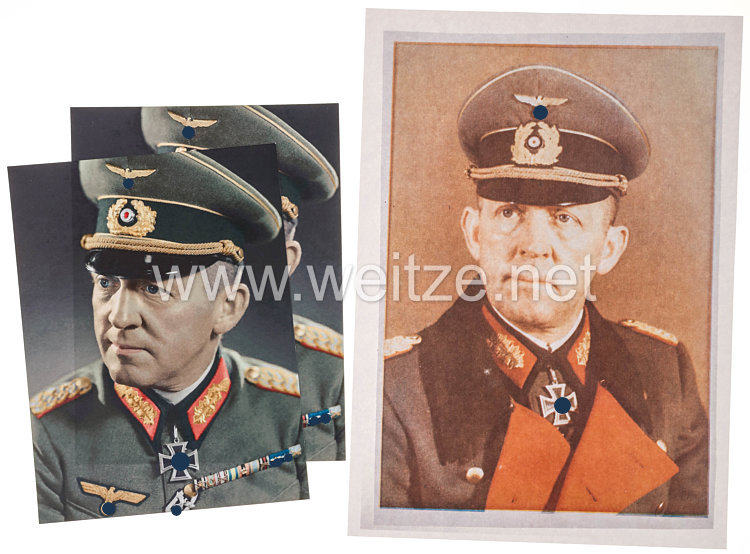
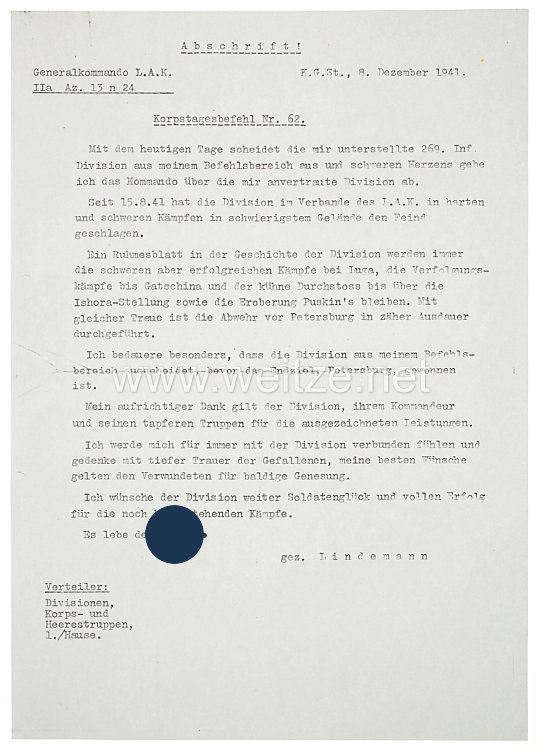
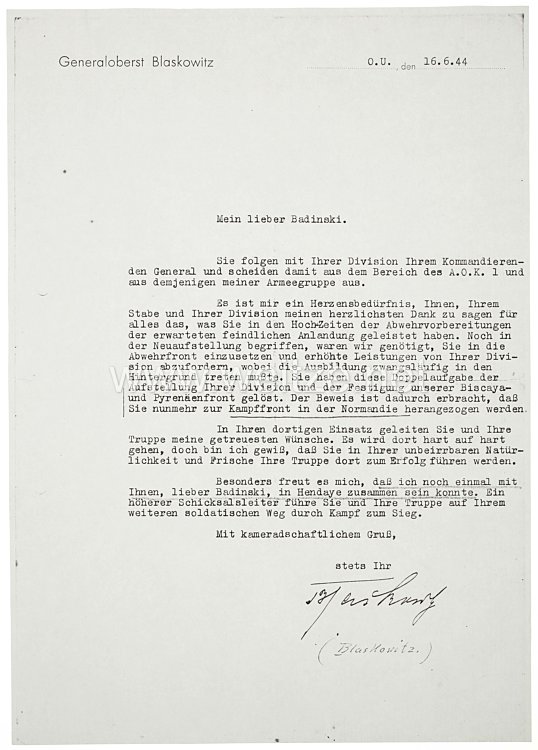
Dazu 2 sehr schönes Repro-Farbfotos von General Badinski sowie in Fotokopie der Korpstagesbefehl vom 8.1.1941 des Generalkommando L.A.K. und ein Brief von Generaloberst Blaskowitz an Badinski, datiert 16.6.1944.
Ein schöner Nachlass eines tapferen Generals.
Curt Badinski trat am 15. Januar 1910 als Fahnenjunker in die kaiserliche Armee ein. Zu Kriegsbeginn Leutnant und Zugführer im Lauenburgischen Jäger-Bataillon Nr. 9.
Im Sommer 1915 wurde er als Bataillonsadjutant verwundet. Am 18. August 1916 Beförderung zum Oberleutnant, ab Herbst 1916 Kompanieführer. Im Frühjahr 1917 wechselte er dann als Adjutant zur 22. Infanterie-Brigade, bis Kriegsende im Stabsdienst. Nach 1918 Übernahme in die Reichswehr.
Am 1. August 1933 Beförderung zum Major, am 1.März 1936 zum Oberstleutnant, Kommandeur des I. / Infanterie-Regiment 16 in Oldenburg. Am 1. August 1938 Beförderung zum Oberst. Ab Sommer 1939 Regimentskommandeur Infanterie-Regiment 489. Teilnahme am Westfeldzug 1940 gegen Frankreich. Zum Sommer 1941 führte er sein Regiment dann im Ostfeldzug beim Angriff auf Nordrussland. Am 11. Oktober 1941 wurde ihm das Ritterkreuz des Eisernen Kreuzes verliehen. Anfang Januar 1942 gab er sein Kommando über das Infanterie-Regiment 489 ab, Versetzung in die Führerreserve. Mitte Januar 1942 wurde er mit der Führung der 23. Infanterie-Division beauftragt. Mit seiner Beförderung zum Generalmajor am 1. Februar 1942 Ernennung zum Kommandeur der 23. Infanterie-Division ernannt. Am 1. September 1942 Ernennung zum Kommandeur der 269. Infanterie-Division ernannt, Verlegung nach Norwegen. Am 1. März 1943 Beförderung zum Generalleutnant. Ende November 1943 gab er sein Kommando ab. Er wurde dafür jetzt zum Kommandeur der neuen 276. Infanterie-Division ernannt. Einsatz an der Invasionsfront in Frankreich. Im August 1944 geriet er dann im Kessel von Falaise in alliierte Gefangenschaft. Entlassung im Sommer 1947.
General Badinski starb am 27. Februar 1966 in Oldenburg.
Der Nachlass ist 100% zusammengehörig und in allen Teilen original, es wurde nichts nach 1945 hinzugefügt. Hierfür geben wir unsere lebenslange Echtheits-Garantie.
Dazu 2 sehr schönes Repro-Farbfotos von General Badinski sowie in Fotokopie der Korpstagesbefehl vom 8.1.1941 des Generalkommando L.A.K. und ein Brief von Generaloberst Blaskowitz an Badinski, datiert 16.6.1944.
Ein schöner Nachlass eines tapferen Generals.
Curt Badinski trat am 15. Januar 1910 als Fahnenjunker in die kaiserliche Armee ein. Zu Kriegsbeginn Leutnant und Zugführer im Lauenburgischen Jäger-Bataillon Nr. 9.
Im Sommer 1915 wurde er als Bataillonsadjutant verwundet. Am 18. August 1916 Beförderung zum Oberleutnant, ab Herbst 1916 Kompanieführer. Im Frühjahr 1917 wechselte er dann als Adjutant zur 22. Infanterie-Brigade, bis Kriegsende im Stabsdienst. Nach 1918 Übernahme in die Reichswehr.
Am 1. August 1933 Beförderung zum Major, am 1.März 1936 zum Oberstleutnant, Kommandeur des I. / Infanterie-Regiment 16 in Oldenburg. Am 1. August 1938 Beförderung zum Oberst. Ab Sommer 1939 Regimentskommandeur Infanterie-Regiment 489. Teilnahme am Westfeldzug 1940 gegen Frankreich. Zum Sommer 1941 führte er sein Regiment dann im Ostfeldzug beim Angriff auf Nordrussland. Am 11. Oktober 1941 wurde ihm das Ritterkreuz des Eisernen Kreuzes verliehen. Anfang Januar 1942 gab er sein Kommando über das Infanterie-Regiment 489 ab, Versetzung in die Führerreserve. Mitte Januar 1942 wurde er mit der Führung der 23. Infanterie-Division beauftragt. Mit seiner Beförderung zum Generalmajor am 1. Februar 1942 Ernennung zum Kommandeur der 23. Infanterie-Division ernannt. Am 1. September 1942 Ernennung zum Kommandeur der 269. Infanterie-Division ernannt, Verlegung nach Norwegen. Am 1. März 1943 Beförderung zum Generalleutnant. Ende November 1943 gab er sein Kommando ab. Er wurde dafür jetzt zum Kommandeur der neuen 276. Infanterie-Division ernannt. Einsatz an der Invasionsfront in Frankreich. Im August 1944 geriet er dann im Kessel von Falaise in alliierte Gefangenschaft. Entlassung im Sommer 1947.
General Badinski starb am 27. Februar 1966 in Oldenburg.
Der Nachlass ist 100% zusammengehörig und in allen Teilen original, es wurde nichts nach 1945 hinzugefügt. Hierfür geben wir unsere lebenslange Echtheits-Garantie.