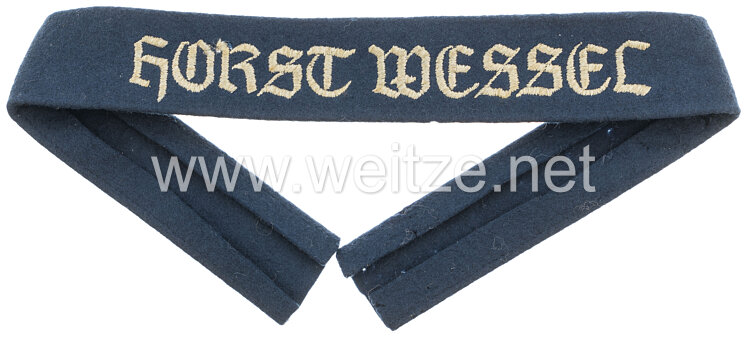
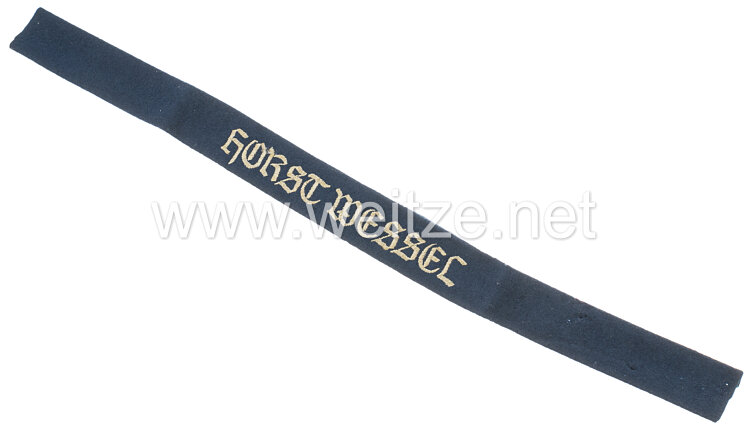
Luftwaffe Cuff Title 1st Model "Horst Wessel" for Enlisted Men
The Luftwaffe cuff title “Horst Wessel” in its first model version represents a significant distinction and tradition badge of the German Air Force during World War II. This machine-embroidered version for enlisted ranks embodies the military honor of a specific unit named after one of the most controversial figures of the National Socialist movement.
Historical Background: Jagdgeschwader 134 was established on April 1, 1936, in Dortmund and received the traditional name “Horst Wessel” at its founding. Horst Wessel (1907-1930) was an SA-Sturmführer who was killed in a confrontation in Berlin and was posthumously elevated to martyr status by Nazi propaganda. The song named after him became the party anthem of the NSDAP. The naming of the Luftwaffe unit was part of the systematic appropriation of Nazi symbolism by the Wehrmacht.
Organizational Development: In November 1938, Jagdgeschwader 134 was redesignated as Jagdgeschwader 26, but retained the traditional name “Horst Wessel.” JG 26 developed into one of the most famous and successful fighter wings of the Luftwaffe, operating primarily on the Western Front, particularly during the Battle of Britain and the defense against Allied bomber formations.
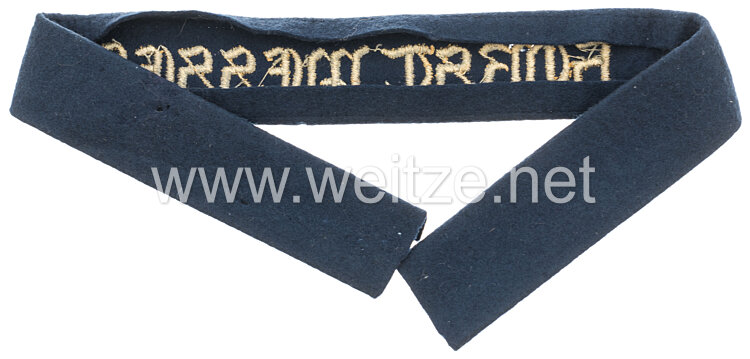
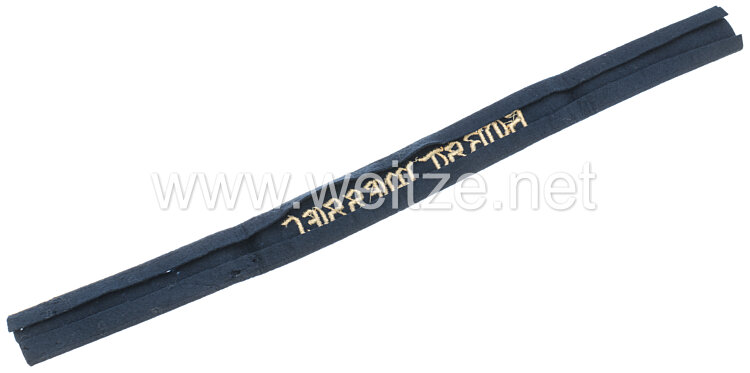
The Cuff Title - Technical Characteristics: The present example represents the first model of the cuff title, which was intended for enlisted ranks. The machine-embroidered version was the standard version for non-commissioned officers and enlisted men, while higher ranks sometimes wore hand-embroidered variants. The bands were typically made on a dark blue or black background with silver or white lettering. The inscription “Horst Wessel” was executed in Sütterlin script or Latin letters. The length of 46 cm corresponds to the usual dimensions that allowed the band to be sewn around the lower sleeve of flying blouses or uniform jackets.
Wearing Regulations: According to Luftwaffe uniform regulations, the cuff title was worn on the left lower sleeve, approximately 15 cm above the cuff. It was awarded after a certain period of service with the corresponding unit and was tied to active membership. Upon transfer to another unit, the cuff title generally had to be removed unless special regulations allowed continued wearing as a tradition award.
Production and Variants: The manufacture of such cuff titles was carried out by various manufacturers, both military depots and private uniform insignia companies. Machine embroidery enabled cost-effective mass production, which was necessary for equipping enlisted ranks. Several models and variants existed, differing in details such as font style, thread thickness, and quality of execution.
Condition and Collector Value: The described example shows typical signs of wear, which proves its authentic use during wartime. The slight moth damage is not unusual for textiles of this age and minimally affects the historical value. Worn examples are particularly interesting from a collecting-historical perspective, as they represent direct evidence of military practice.
Historical Context: Cuff titles like this are today important military-historical documents that document the organizational structure and tradition maintenance of the German Luftwaffe. They must be viewed in the context of their time - as part of a dictatorial system that combined military honors with political propaganda. The scholarly examination of such objects serves to understand the mechanisms of totalitarian rule and the integration of ideological elements into military structures.
Research Significance: For military historians and researchers, such artifacts provide valuable insights into the daily life of Luftwaffe personnel, the award systems, and the ideological indoctrination within the armed forces. The “Horst Wessel” cuff title specifically illustrates how the Nazi regime sought to perpetuate its martyrology and political narrative through military tradition. These items serve as tangible reminders of a dark chapter in history and are studied to ensure that the lessons of the past are not forgotten.