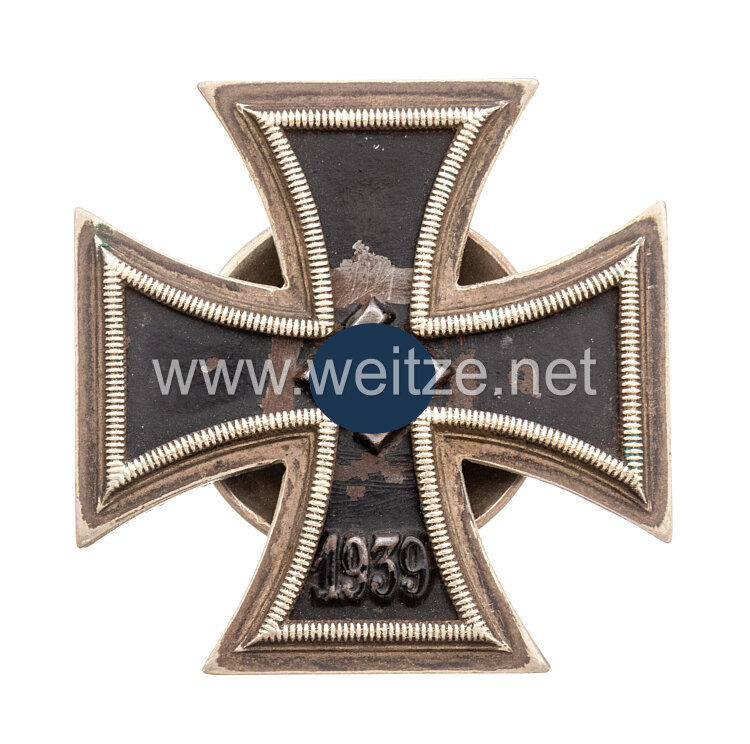
Iron Cross 1939 1st Class on Screw Disc - Meybauer
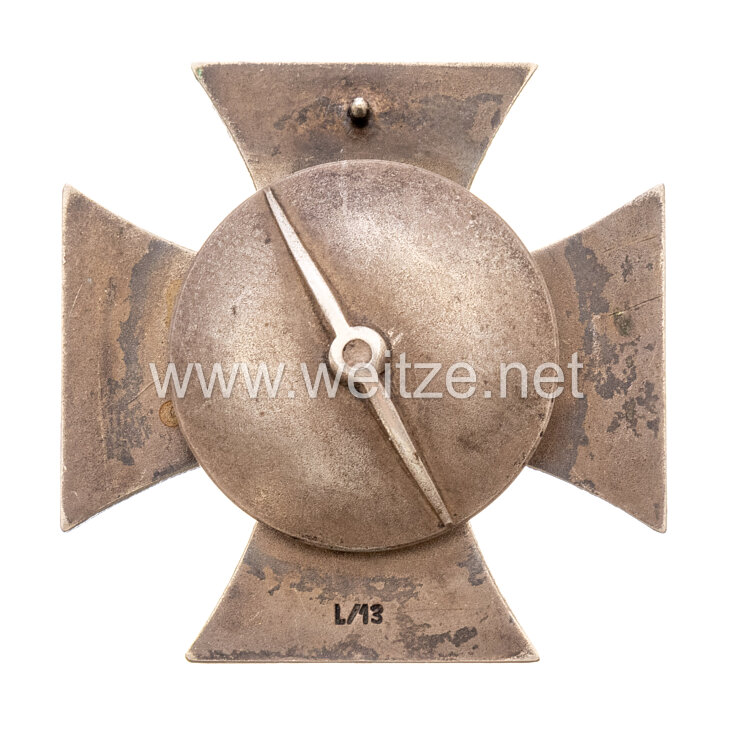
The Iron Cross 1st Class 1939 bearing the manufacturer's mark L/13 represents one of the most significant military decorations of the Third Reich during World War II. This particular variant was manufactured by the renowned Berlin firm Paul Meybauer, one of Germany's most traditional producers of orders and decorations.
The reinstitution of the Iron Cross occurred on September 1, 1939, by Adolf Hitler, coinciding with the beginning of World War II. The foundation document renewed a tradition dating back to the Wars of Liberation against Napoleon, when King Friedrich Wilhelm III of Prussia first instituted the Iron Cross on March 10, 1813. The 1939 version differed from its predecessors through the addition of the swastika in the center and the year “1939” in the lower arm of the cross.
The Iron Cross 1st Class represented the second-highest grade of this decoration and was awarded considerably more rarely than the 2nd Class. While approximately 2.3 million Iron Crosses 2nd Class were awarded, only about 300,000 to 450,000 individuals received the Iron Cross 1st Class. The award of the 1st Class generally required prior possession of the 2nd Class and demanded exceptional bravery or outstanding military achievement.
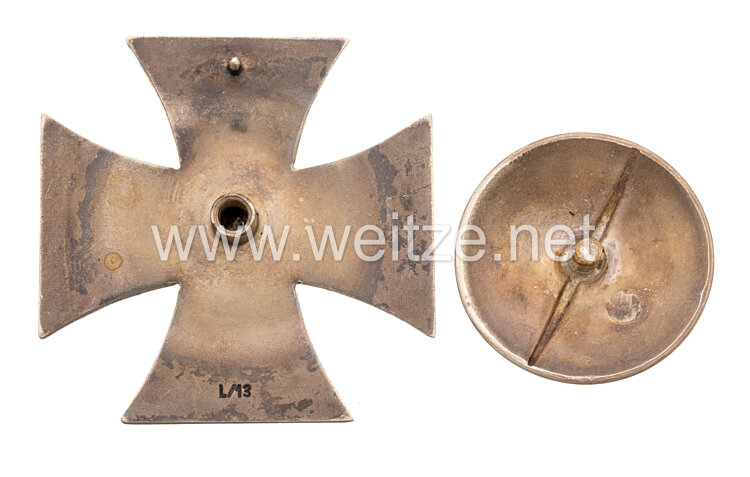
The firm Paul Meybauer in Berlin ranked among the most important manufacturers of orders during World War II. The company used the manufacturer's mark L/13, which was stamped on the reverse of the pin disc. This marking requirement was introduced by the testing office of the Reich Chancellery to ensure quality standards and control production. Meybauer was known for the high quality of its products and employed traditional manufacturing methods.
The present piece displays the characteristic construction of the Iron Cross 1st Class: a blackened iron core set within a silver frame. The pin disc with screw mechanism enabled wearing the decoration directly on the uniform, typically on the left breast. Unlike the 2nd Class, which was worn on a ribbon, the 1st Class was designed as a pin-back badge.
The condition 2-3 and distinct signs of wear on this example give it particular historical authenticity. Such traces of use indicate that the decoration was actually worn by its bearer over an extended period, as opposed to post-war collector pieces or unused stock. The patina and wear testify to the military reality and personal fate of the original owner.
The award criteria for the Iron Cross 1st Class were strictly defined. Beyond repeated acts of bravery, outstanding leadership achievements, successful tactical operations, or special merit in combat could lead to the award. The decoration was granted to all ranks, from common soldiers to generals, underscoring its character as a pure gallantry award.
In the hierarchy of German war decorations, the Iron Cross 1st Class stood between the 2nd Class and the Knight's Cross of the Iron Cross. The latter represented the highest regular grade and was awarded for the most exceptional merit. Bearers of the Iron Cross 1st Class enjoyed high esteem and were regarded as proven soldiers.
The manufacture of such decorations followed precise technical specifications. The iron core had to be blackened, while the frame consisted of silver or silver-plated material. The dimensions were standardized, with the cross measuring approximately 44 mm diagonally. Manufacturing quality varied depending on the maker and year of production, with later war years often showing simplified production methods and material substitutions.
The construction method employed a screw disc attachment system, which distinguished it from pin-back systems. This consisted of a flat disc soldered to the reverse of the cross, with a threaded post that passed through the uniform fabric and was secured with a threaded plate or nut on the interior. This system provided a secure attachment and even weight distribution, preventing the heavy decoration from sagging or becoming loose during active service.
The blackening of the iron core was achieved through various oxidation processes, creating the characteristic dark finish that contrasted with the bright silver frame. This aesthetic choice deliberately recalled the original 1813 design, which symbolized the difficult times of the Napoleonic Wars and Prussia's determination to overcome adversity. The blackened iron represented strength and resilience, while the silver frame added nobility and distinction.
Today, authentic Iron Crosses 1st Class with verifiable manufacturer's marks serve as important testimonies of military history. They document not only the technical development of orders and decorations but also the individual stories of the soldiers who wore them. Scientific examination of such objects contributes to understanding the social and military history of World War II.