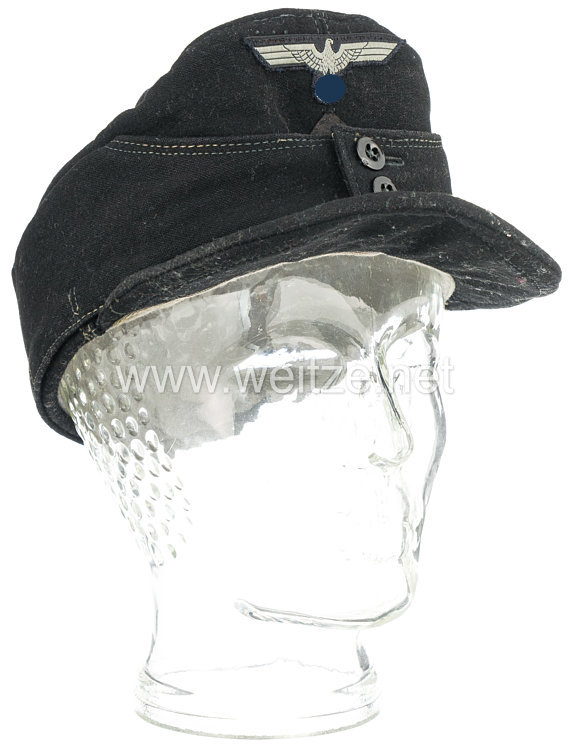
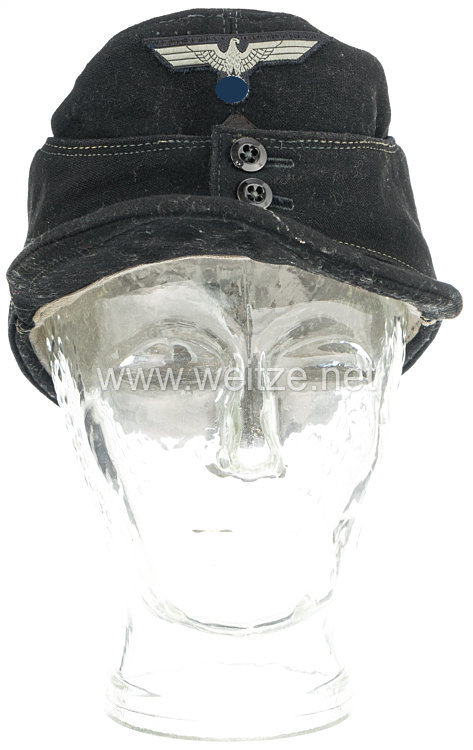
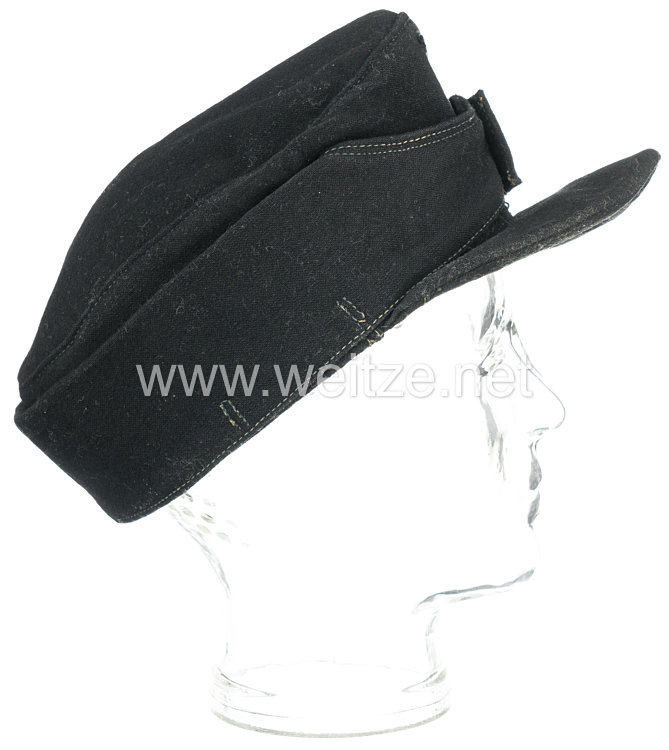
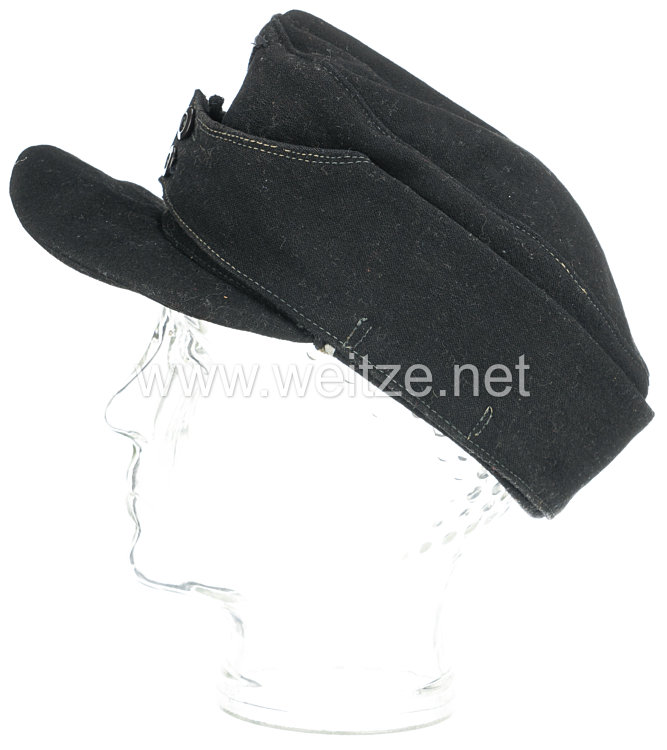
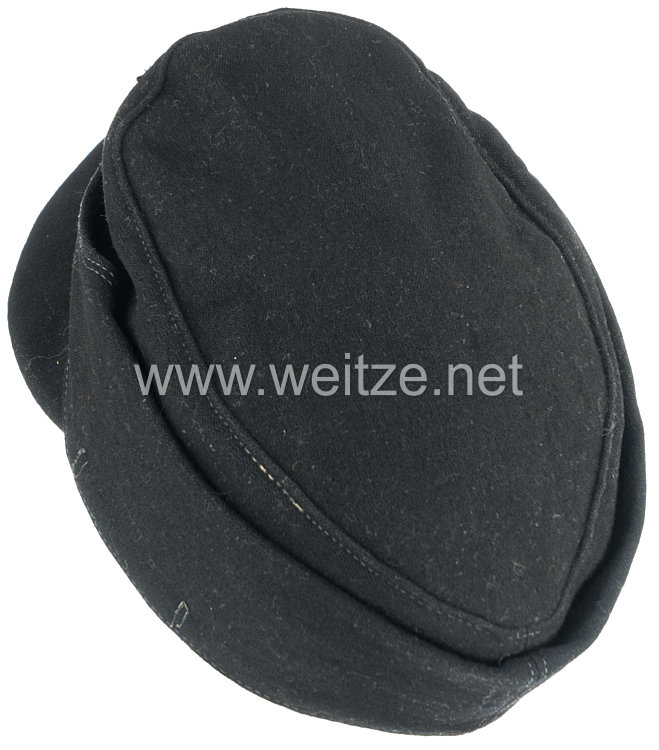
Wehrmacht Black M43 Field Cap for Enlisted Men of the Panzer Troops
The Einheitsfeldmütze M 43 (Unified Field Cap M 43) for enlisted men of the Panzertruppe (armored forces) represents a characteristic piece of equipment from the German Wehrmacht during World War II. This special headgear was introduced in 1943 as a simplified alternative to earlier cap models, intended to rationalize production and save both materials and labor time.
The Einheitsfeldmütze, often referred to as Schiffchen (little ship) due to its boat-like shape, was officially introduced by the Army administration on May 26, 1943. It replaced the previously used Feldmütze M 38 and was to be manufactured in a standardized form for all branches of service. The Panzer troops received a special variant in black cloth, which corresponded to the traditional uniform of tank crews.
The black uniform of the Panzer troops had its origins in the pre-war period. Since 1934, members of the armored forces wore a special black uniform that offered practical advantages: the dark color concealed oil stains and dirt that were inevitable when working with armored vehicles. This tradition was continued with the Einheitsfeldmütze M 43.
The construction of the M 43 was deliberately kept simple. Unlike the more elaborate M 38 with its fold-down neck protection, the M 43 consisted of a simple, elongated piece of fabric sewn together into a boat-like shape – hence the popular designation “Schiffchen” (little ship). At the front were typically two buttons made of Bakelite, an early plastic that increasingly replaced metal during the war to conserve strategically important materials.
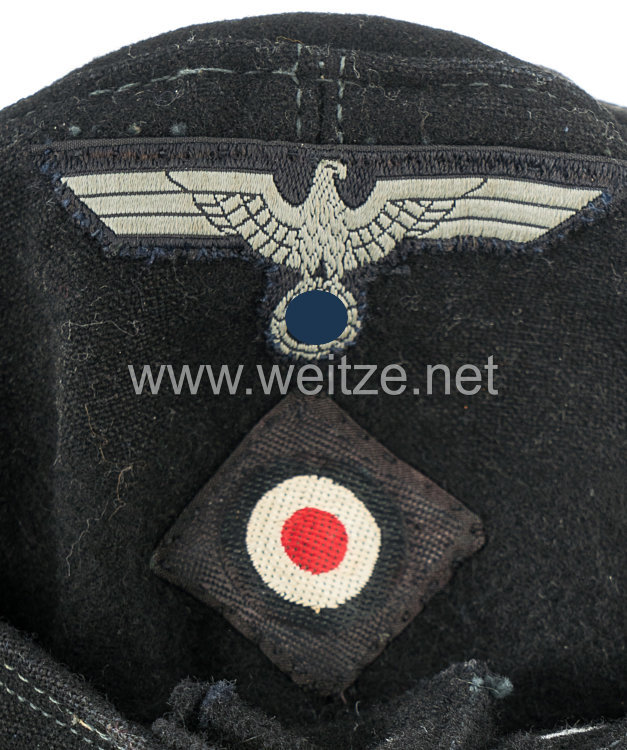
An essential identifying feature was the Bevo-woven eagle above the cockade. The company Bevo (Bandfabrik Ewald Vorsteher) from Wuppertal-Barmen had specialized in the machine production of insignia. The woven national eagles were significantly cheaper and faster to produce than embroidered examples and were therefore increasingly used, especially from 1943 onwards, when the war economy increasingly focused on rationalization.
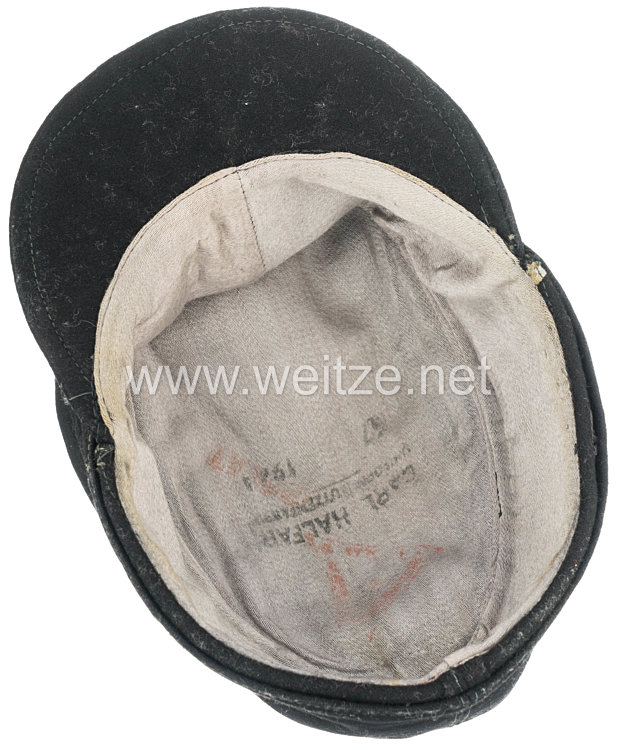
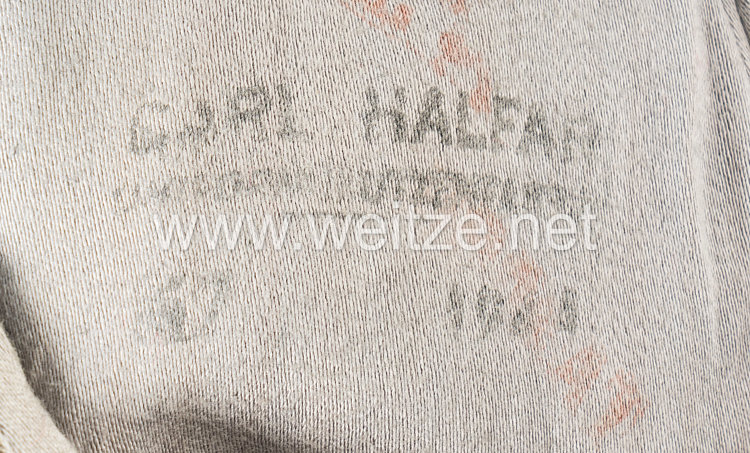
The manufacturer Carl Halfar was an established uniform and cap factory that produced various headgear for the Wehrmacht. In addition to the unified field caps, the company also manufactured the characteristic black Panzer protective caps, those padded headpieces with communication equipment worn by tank crews in combat. The year 1944 on the manufacturer's stamp indicates the late war phase, when production continued despite increasing Allied bombardments and material shortages.
The stone-gray cloth lining inside the cap was typical for this production period. The coloring varied depending on material availability and manufacturing time. Early models often had higher quality lining fabrics, while later productions increasingly had to resort to simpler materials.
The indicated size 57 corresponds to a head circumference of 57 centimeters and was a common standard size. The Wehrmacht used a precise sizing system to ensure proper fit, which was essential for wearing comfort and functionality.
The Einheitsfeldmütze M 43 was worn on all theaters of war, from the deserts of North Africa to the Eastern Front. It was practical, easy to stow, and fulfilled its purpose as headgear outside of combat. Inside the tank itself, crews wore special protective caps, while the field cap was worn when staying outside the vehicle, during roll calls, or in quarters.
The later use in a film prop collection, as indicated by the faint stamp, is not unusual. After the war, original uniform items were frequently used for historical film productions, especially in the 1950s through 1980s, when authentic equipment was still available and affordable. This also explains the heavily worn condition of many such pieces.
Today, original Einheitsfeldmütze M 43 caps of the Panzer troops are sought-after collector's items that represent important testimonies of military history. They document not only the material aspects of warfare but also the economic constraints and industrial organization of the German Reich in the final years of the war. The rationalization of uniform production, exemplified by the introduction of the M 43, reflects the increasing scarcity of resources and the attempt to maintain the equipment of troops despite the deteriorating military situation.