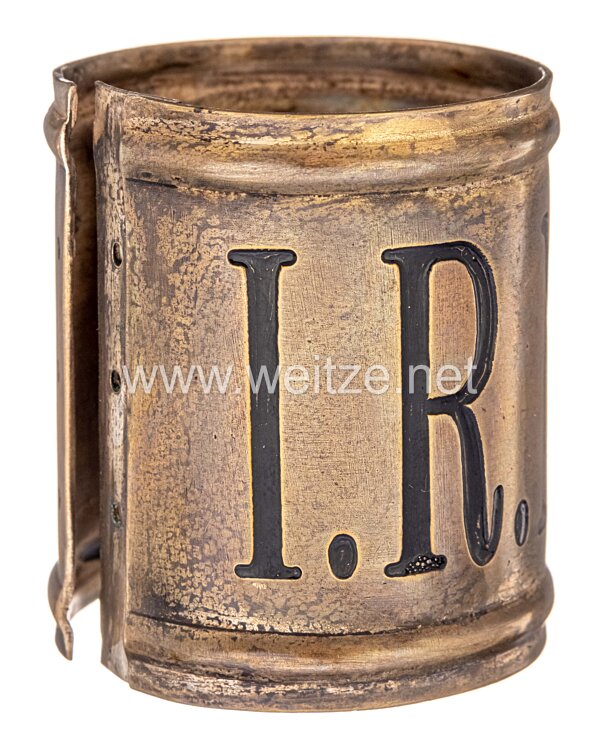
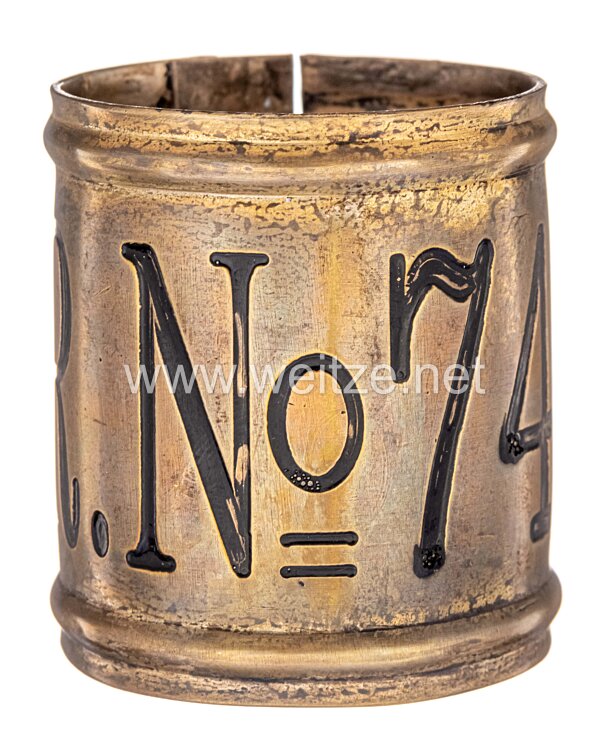
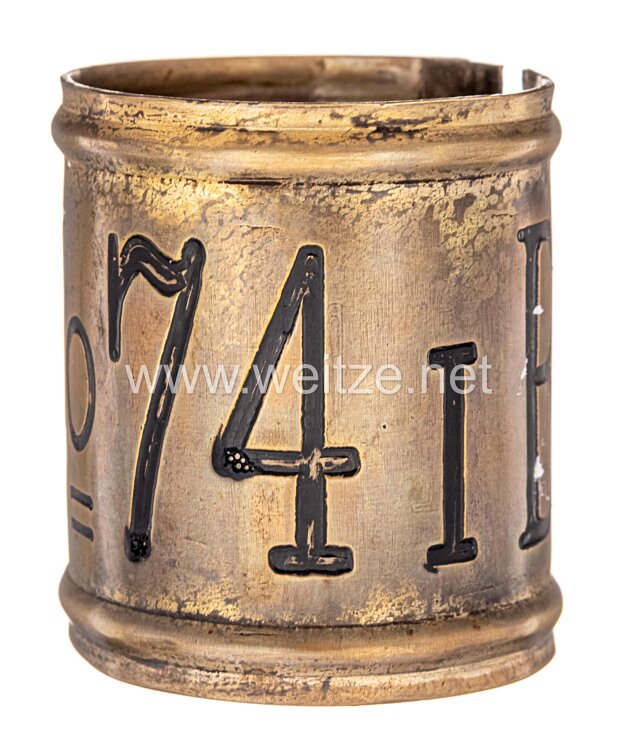
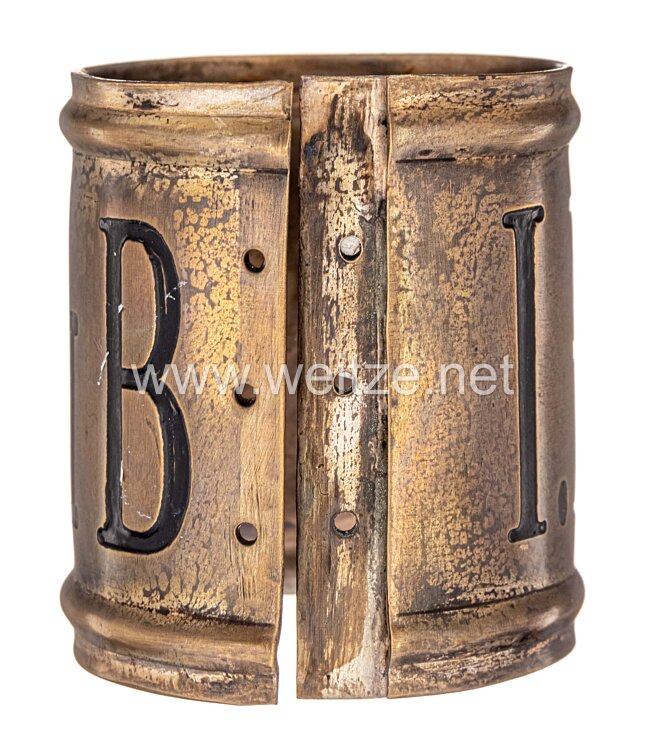
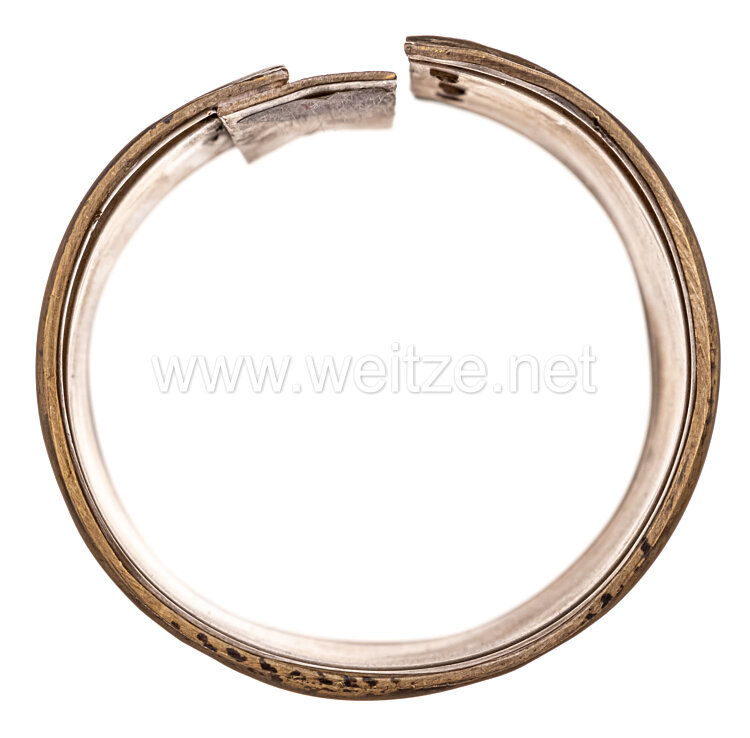
Prussia Flag Ring of the Battalion Color of the 1st Battalion of the 1st Hanoverian Infantry Regiment No. 74
This flag ring originates from the battalion flag of the 1st Battalion of the 1st Hanoverian Infantry Regiment No. 74 and represents a significant testament to Prussian military tradition around the turn of the century. This regiment, garrisoned in Hannover, embodies the complex history of integrating Hanoverian military traditions into the Prussian army after 1866.
Following the German War of 1866 and the annexation of the Kingdom of Hanover by Prussia, Hanoverian military units were gradually incorporated into the Prussian army. Infantry Regiment No. 74 was established as part of this reorganization and deliberately retained the designation “Hanoverian” in its name to preserve regional traditions and facilitate the integration of the Hanoverian population into the Prussian state. This practice was characteristic of Prussian military policy, which respected local identities while establishing a unified command structure.
The flag ring itself was an essential component of the flag equipment of Prussian infantry regiments. These rings served to attach the flag to the flagstaff and were typically made of metal. The craftsmanship and specific design of such rings varied depending on the period of manufacture and the regiment. Around 1900, the dating of this specimen, the German Empire under Kaiser Wilhelm II was in a phase of military expansion and modernization, while traditional symbols and ceremonies continued to hold high importance.
The battalion flag held outstanding symbolic and practical significance in the Prussian army. It served not only as a rallying point in battle but embodied the honor and esprit de corps of the unit. The loss of a flag was considered the greatest disgrace, while its defense was among the highest soldierly duties. According to Prussian military regulations, each battalion was equipped with its own flag, which was carried at parades, oath ceremonies, and other ceremonial occasions.
The 1st Battalion of a regiment traditionally held a special position. It carried the regimental flag and usually formed the core of the unit. The flag bearers and flag escort, typically consisting of particularly proven soldiers and non-commissioned officers, had the honorable task of protecting and carrying the flag. Appointment as flag bearer or flag guard was a special distinction and was only given to soldiers with impeccable conduct.
The technical construction of a flag ring followed standardized specifications laid down in the equipment regulations of the Prussian army. The ring had to be stable enough to bear the weight of the flag while ensuring secure attachment to the flagstaff. The typical signs of use visible on this specimen testify to its actual use in drills, parades, or other military events.
The garrison of Hannover was of great importance to the regiment. The city, once the residence of the Kingdom of Hanover, remained an important military center in the German Empire even after 1866. The Hannover garrison housed several regiments and played an important role in the military organization of northern Germany. Despite initial reservations following annexation, the local population gradually developed a relationship with “their” Prussian regiments.
Around 1900, the German Empire was in the Wilhelmine era, a period characterized by militarism, nationalism, and imperial ambitions. The army enjoyed high social prestige, and military symbols were omnipresent in public life. Flags and their components, such as the present ring, were not merely military equipment but carriers of national and dynastic symbolism.
The preservation of such objects as flag rings is of great importance for military historical research. They enable the reconstruction of the army's material culture and allow us to trace the development of military equipment. The condition 2 of this specimen with typical signs of use makes it an authentic testimony of its era, reflecting actual military practice rather than being merely an unused parade piece.
Infantry Regiment No. 74 later participated in World War I and was dissolved after the German defeat in 1918 as part of the disarmament provisions of the Treaty of Versailles. The flags of the old Prussian regiments were mostly transferred to museums or archives, while individual components such as flag rings entered various collections and today represent important documents of German military history.