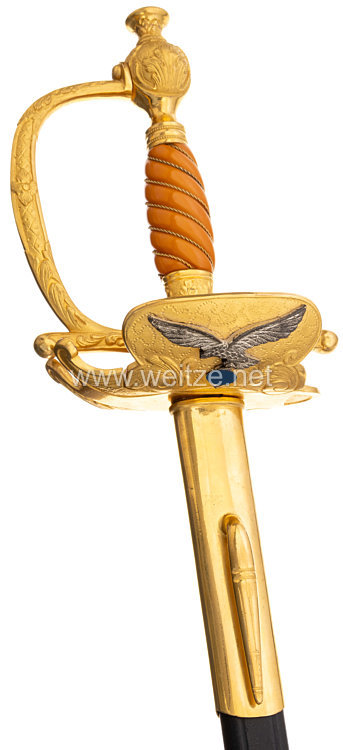
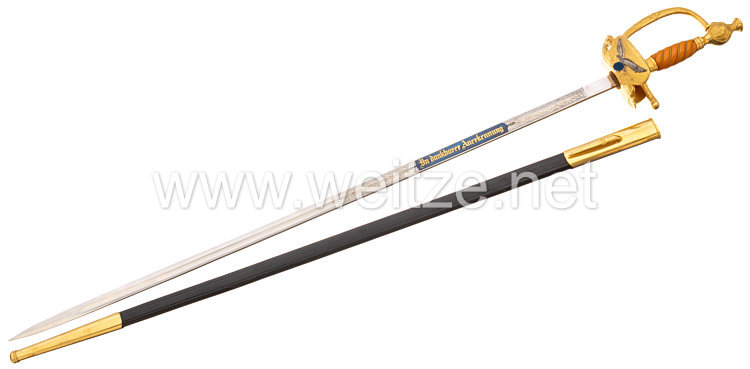
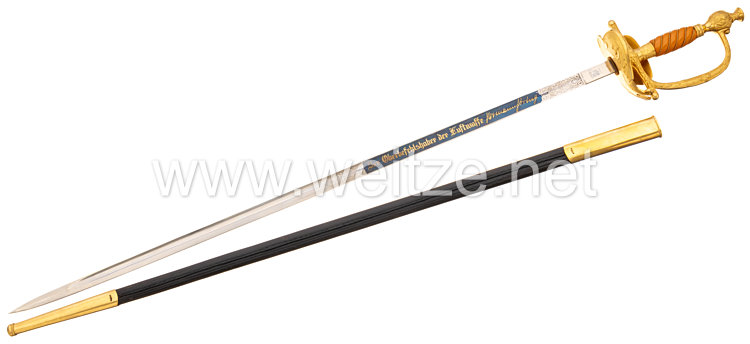
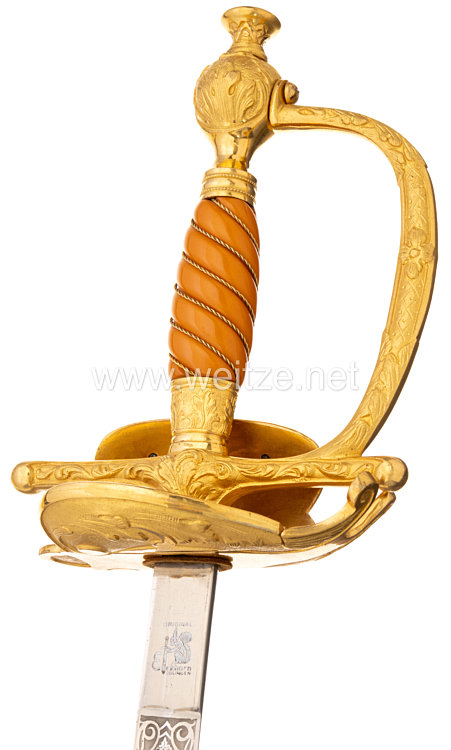
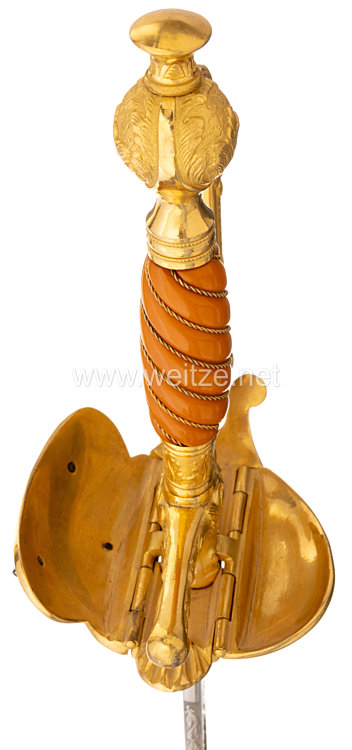
The Luftwaffe Dress Dagger for Generals Model 1938 represents one of the most prestigious ceremonial objects of the German Luftwaffe during World War II. This weapon was not intended for combat but served as a symbolic rank insignia and mark of honor for officers holding the rank of general in the air force.
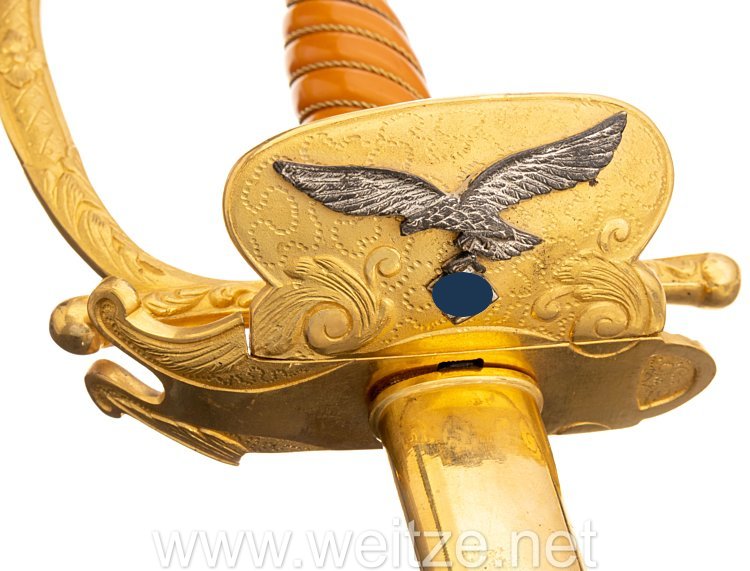
The introduction of this dagger model occurred within the framework of the Wehrmacht regulation of July 4, 1938, which reformed the uniforms and equipment of the German armed forces. The Luftwaffe, as the youngest branch of the Third Reich's military, developed its own symbolic visual language that distinguished it from the Army and Navy. The general's dagger embodied this independence through specific design elements such as the characteristic Luftwaffe eagle on the crossguard.
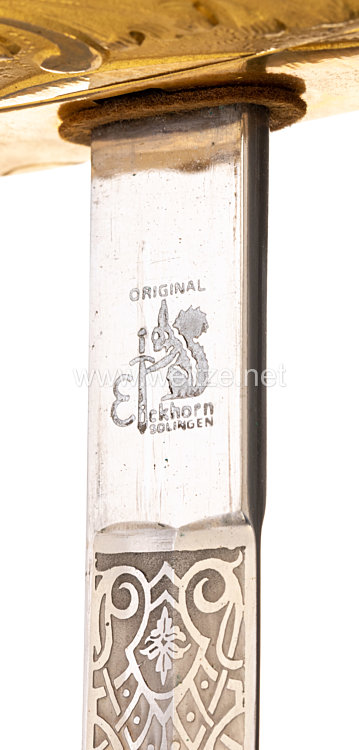
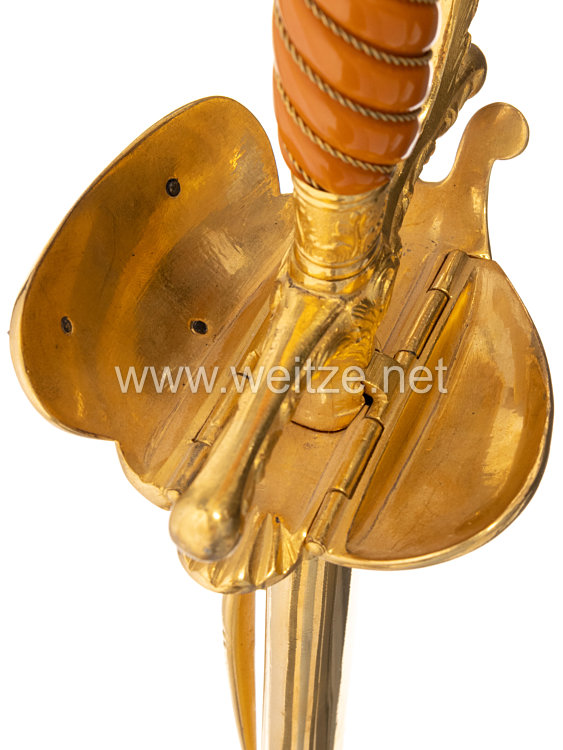
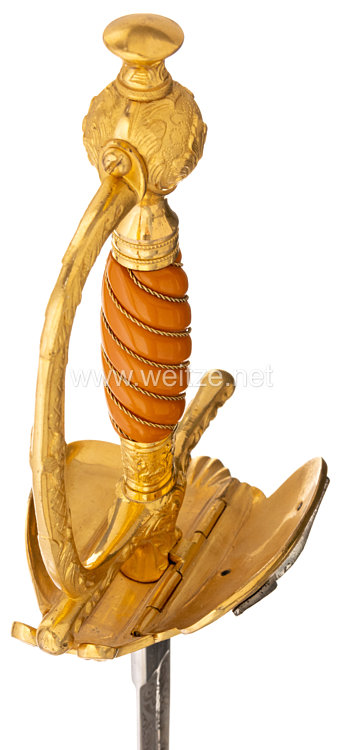
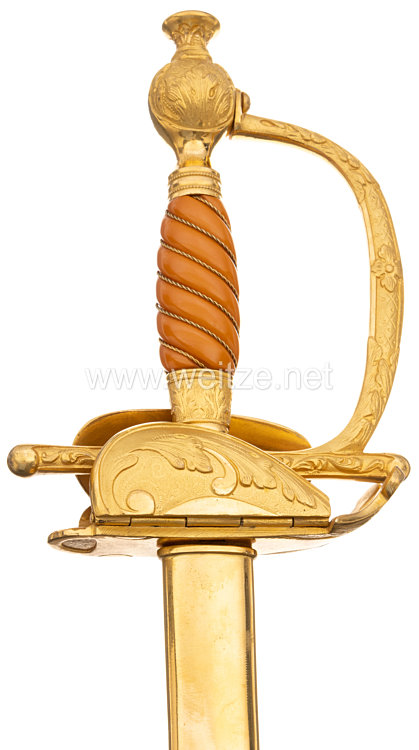
The manufacture of these high-quality edged weapons was entrusted to specialized blade manufacturers in Solingen, with the firm Carl Eickhorn Solingen ranking among the most renowned producers. The Eickhorn company, founded in 1865, had already made a name for itself during the Imperial era as a supplier of military edged weapons. The craftsmanship of this manufacturer is reflected in the elaborate workmanship: fire-gilded fittings made of brass alloy, hand-engraved decorations, and the separately riveted, silver-plated eagle demonstrate the highest level of artisanal quality.
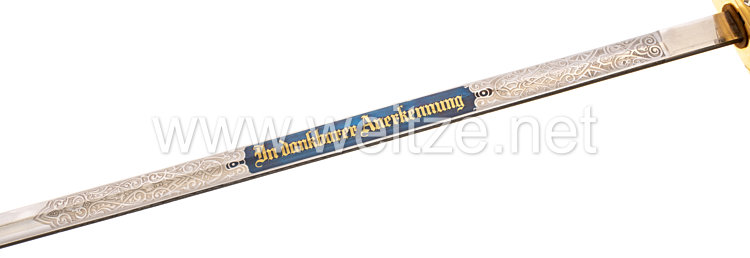
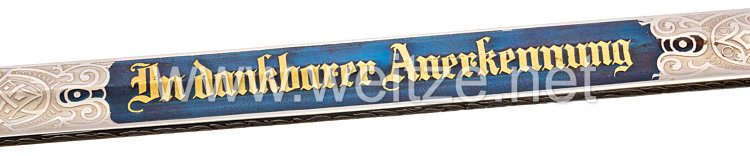
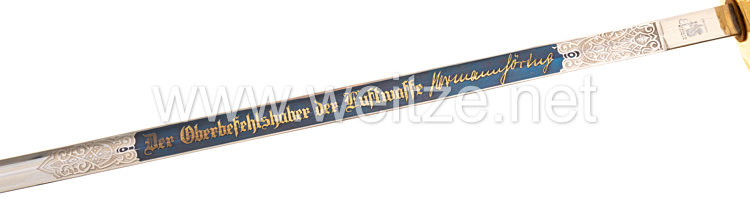
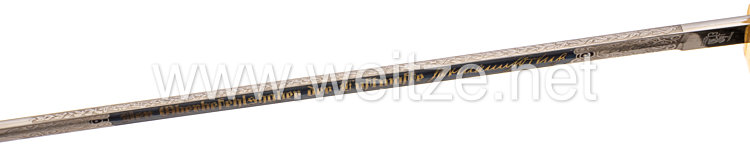
Particularly noteworthy is the dedication practice that was customary with this type of dagger. Many examples bore dedications on the etched blade reading “In grateful recognition” along with the signature “The Commander-in-Chief of the Luftwaffe - Hermann Göring”. These dedications were highlighted through gilding on a blued background, an elaborate technique that expressed special appreciation for the bearer. Hermann Göring, as Reichsmarschall and Commander-in-Chief of the Luftwaffe, used such honorary gifts to bind his generals and promote loyalty within the officer corps.
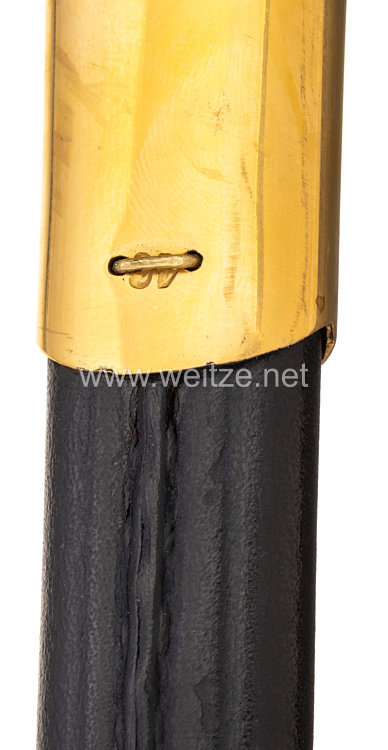
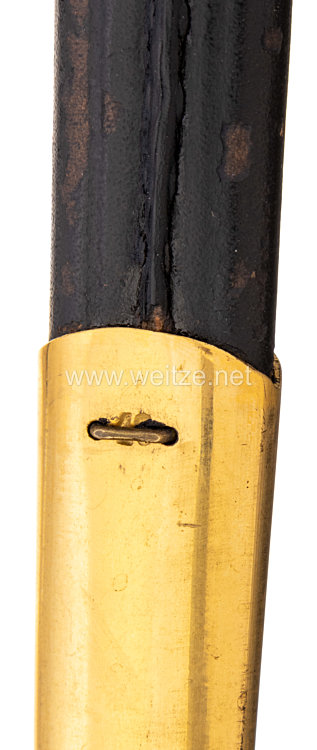
The technical specifications of the dagger followed strict guidelines: The straight, nickel-plated blade with double fullers typically measured approximately 78-82 centimeters. The amber-colored grip with gilded wire wrapping offered not only aesthetic but also practical advantages during ceremonial occasions. The black leather scabbard with gilded fittings and rear mounting clips completed the ensemble.
The present dagger is historically associated with Lieutenant General Walter Heling, whose military career was exemplary for many Luftwaffe officers of his generation. Born in 1887 in Belgrade, Heling pursued a typical officer's career. At the outbreak of war in 1939, he assumed various commands as Luftwaffe commander in Stade, Jutland, and Flensburg. These positions were of considerable importance for building and organizing Luftwaffe infrastructure in northern Germany and Denmark.
Later, Heling commanded Luftwaffe Construction Brigade VI during Operation Barbarossa, the German invasion of the Soviet Union beginning in June 1941. The Luftwaffe construction brigades were specialized units responsible for building and maintaining airfields, positions, and military infrastructure in occupied territories. This logistical task was crucial for maintaining air operations on the Eastern Front. Heling was reported missing on May 12, 1942, near Kharkov during heavy fighting for this strategically important city. His fate was shared by thousands of German soldiers who lost their lives in the encirclement battles of the Eastern Front.
The preserved condition of this dagger - with over 95 percent of the original gilding intact and a nearly mint condition blade - is remarkable and suggests that the piece was worn only at few ceremonial occasions. This is not unusual, as Wehrmacht generals wore such ceremonial weapons primarily at official receptions, parades, and state occasions.
Today, such daggers are of considerable historical and collectible interest. They document not only the material culture of the Third Reich but also the hierarchies, concepts of honor, and loyalty mechanisms within the Wehrmacht. As material witnesses to a dark period of German history, they serve historical research and education, provided they are presented in their proper historical context and not misused for glorification.
The Model 1938 general's dagger thus remains an important artifact for understanding the symbolic and ceremonial aspects of Nazi military culture, the craftsmanship of German blade manufacturers, and the individual stories of officers like Walter Heling who wore them during one of history's most devastating conflicts.