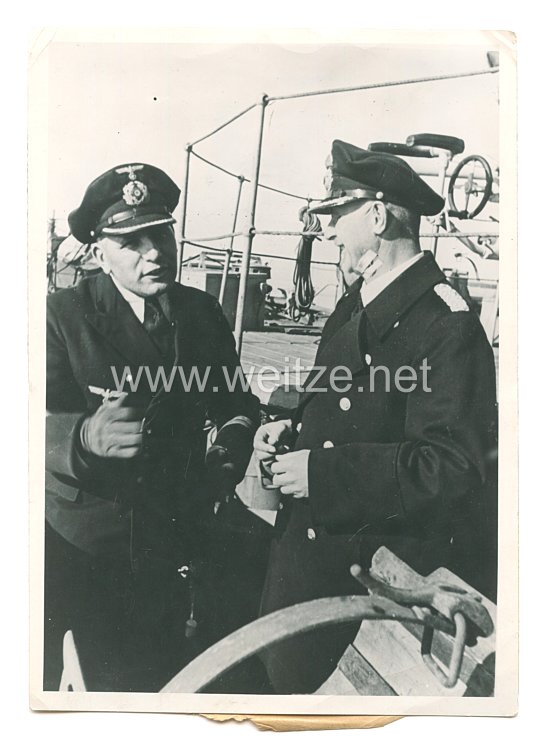
Kriegsmarine Press Photograph: A Submarine Chaser Commander Reports to His Flotilla Chief

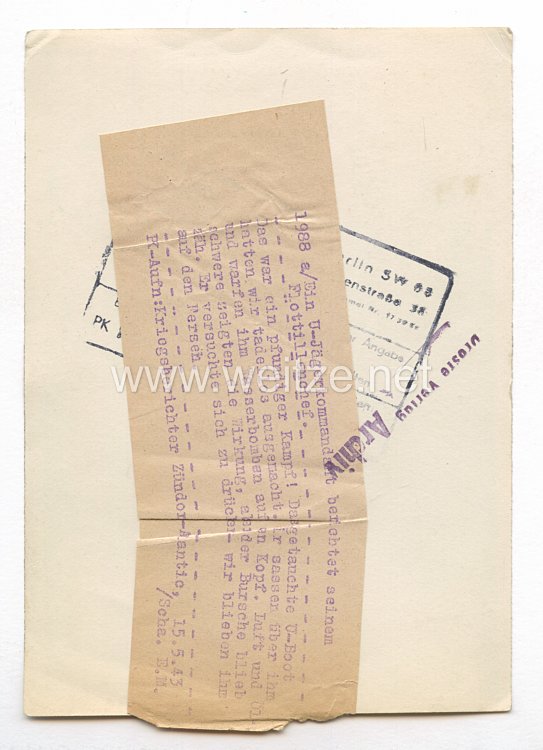
Dimensions approximately 13 x 18 cm, with inscription on reverse. Used condition.
343406
20,00

Kriegsmarine Press Photograph: A Submarine Chaser Commander Reports to His Flotilla Chief

This Kriegsmarine press photograph documents a significant moment from the daily routine of the German submarine warfare during World War II: a submarine hunter commander reporting to his flotilla chief. Such photographs were part of the extensive propaganda machinery of the German Reich while simultaneously serving military documentation purposes.

During World War II, the Kriegsmarine maintained professional propaganda companies (Propagandakompanien, PK) that specifically produced photographic and text material for the press. These photographs were intended to strengthen the home front while shaping the image of German naval forces both domestically and abroad. The dimensions of approximately 13 x 18 cm correspond to the standard format for press photos of that era, used for newspapers and illustrated magazines.

U-Jäger (submarine hunters) were smaller warships specifically developed and deployed to combat enemy submarines. In the context of the Kriegsmarine, these were mostly converted fishing trawlers, minesweepers, or specially constructed vessels of the UJ-class. These units were equipped with depth charges, sonar equipment, and light artillery, operating primarily in coastal waters to protect convoys and harbors.

The submarine flotillas of the Kriegsmarine were organizational units that combined several submarines or submarine hunters under a common command. The flotilla chief was an experienced officer, usually holding the rank of Korvettenkapitän (lieutenant commander) or Fregattenkapitän (commander), responsible for mission planning, training, and operational leadership of his units. Well-known submarine flotillas included the 1st U-Flotilla in Kiel, the 7th U-Flotilla in St. Nazaire, and the 9th U-Flotilla in Brest.

The scene captured in the photograph of a report following return from a mission was an essential component of military routine. After each deployment, the commander had to prepare a detailed war diary entry and provide an oral report. These reports contained information about enemy ships sighted, sinkings, technical problems, weather conditions, and special incidents. The military leadership used this information for strategic planning and tactical adjustments.

The Propaganda Department of the Kriegsmarine utilized such photographs to portray professionalism and camaraderie within the navy. The images typically showed officers in uniform, often in meeting situations, studying maps, or during situation briefings. They were meant to convey competence, determination, and military order.

The reverse inscriptions on such press photos followed standardized guidelines. They typically contained an image number, the date of the photograph, the photographer's name (often a PK member), a brief image description, and sometimes censorship notes. These inscriptions are valuable historical sources today, as they enable dating and contextualization of the photographs.

The “used condition” of the photograph indicates that it was actually utilized in a press office, editorial department, or archive. Such signs of use may include stamps, inscriptions, adhesive traces, or wear marks that testify to practical use in press work.

After the war, many of these press photographs were confiscated by the Allies and transferred to various archives, including the Bundesarchiv in Germany or the National Archives in the United States. Other copies remained in private collections or entered the antiques trade through various channels.

Today, such Kriegsmarine press photographs are important documents of military and media history. They provide insights into the visual propaganda of the Nazi regime while simultaneously documenting authentic aspects of military daily life. For historians, they are valuable sources for researching the Kriegsmarine, its organization, and operations.

r