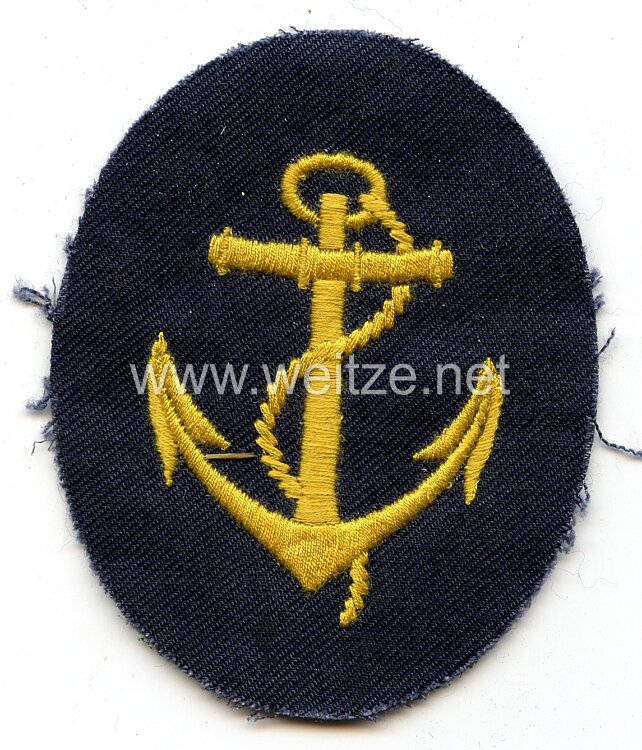
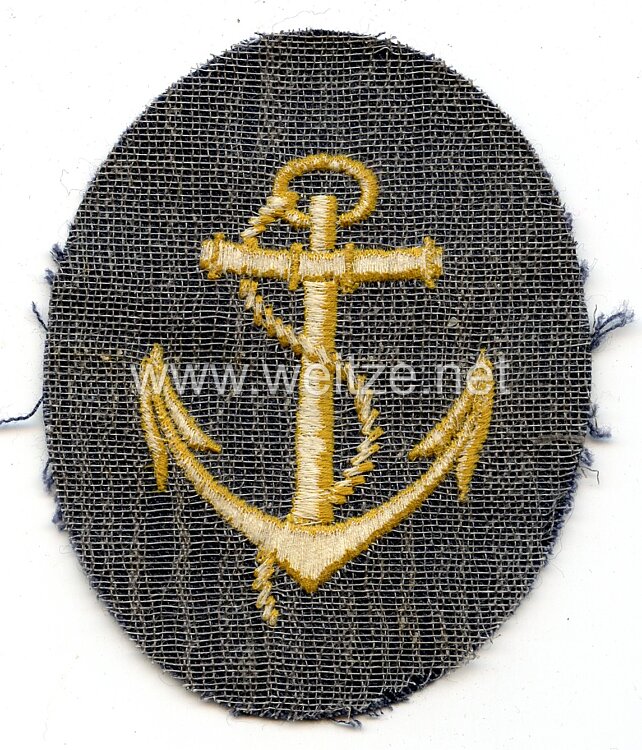
Kriegsmarine Sleeve Insignia Career Path Badge Boatswain's Mate

Machine-embroidered on linen, for the blue jumper, condition 2.


457406
15,00

Kriegsmarine Sleeve Insignia Career Path Badge Boatswain's Mate

The Kriegsmarine sleeve badge for the rank of Bootsmannsmaat represents an important testimony to the maritime uniform history of the Third Reich. This machine-embroidered career insignia on linen fabric was specifically designed for the blue service blouse of the German Kriegsmarine and embodies the complex rank structure of the German naval forces between 1935 and 1945.

The Kriegsmarine was officially established on June 1, 1935, as the successor to the Reichsmarine and constituted the naval warfare branch of the Wehrmacht. With the reintroduction of universal conscription and the gradual abandonment of the restrictions imposed by the Treaty of Versailles, the Kriegsmarine developed a comprehensive system of rank insignia and career identifications that built upon the traditions of the Imperial Navy.

The rank of Bootsmannsmaat designated a non-commissioned officer rank in the Kriegsmarine, positioned between the ordinary sailor and the higher non-commissioned officer ranks. The word “Maat” itself is a traditional term in German naval language, derived from Middle Low German “mate” (comrade, companion). A Bootsmannsmaat was thus a non-commissioned officer of the Boatswain's career path, one of the most important career groups within the Kriegsmarine.

The career insignia of the Kriegsmarine served to distinguish between various specialized fields and areas of expertise. The Boatswain's career path encompassed sailors responsible for seamanship work aboard ship, including anchor maneuvers, rigging, boat operations, and general deck work. The badge was typically worn on the right upper arm of the uniform and indicated both rank and career affiliation through its specific design.

The machine embroidery on linen fabric was the standard production method for this type of insignia throughout the Kriegsmarine period. In contrast to hand-embroidered variants used for higher officer ranks or special versions, machine production was more cost-effective and enabled standardized mass production. The linen fabric as a base material provided sufficient strength and durability for attachment to the uniform while facilitating sewing onto various uniform pieces.

The blue blouse (also known as the “blue walking-out uniform”) was an essential component of Kriegsmarine uniforming for enlisted men and non-commissioned officers. This uniform was worn both on duty and during shore leave and differed significantly from the white summer uniform and gray working suits. The dress regulations of the Kriegsmarine were detailed in various service regulations, with the Dress Regulations for the Kriegsmarine (A.O.K.) specifying the exact wearing methods and combinations of different uniform items.

The manufacture of such badges was carried out by various authorized manufacturers throughout the German Reich. These companies had to maintain certain quality standards and often received official contracts from the Supreme Command of the Kriegsmarine (OKM). The standardization of insignia was important for the uniform appearance of the force and the clear recognition of ranks and career paths.

In the context of military history, such career insignia document not only the organizational structure of an armed force but also the social hierarchy and specialization within the navy. The Bootsmannsmaat stood at the beginning of a non-commissioned officer career that could progress through Bootsmaat, Oberbootsmaat, up to the Boatswain officers. This rank structure reflected both the experience and the responsibility entrusted to a soldier.

After World War II and the end of the Kriegsmarine in May 1945, such uniform items and insignia became important military-historical collection objects. They document the uniform history of the German naval forces and serve historians, museums, and collectors as authentic sources for researching the military culture and organization of this era. The condition of such textiles, here indicated as “condition 2,” is of particular relevance for their historical and collectible significance, as fabric insignia are highly susceptible to the effects of time, moisture, and pests.