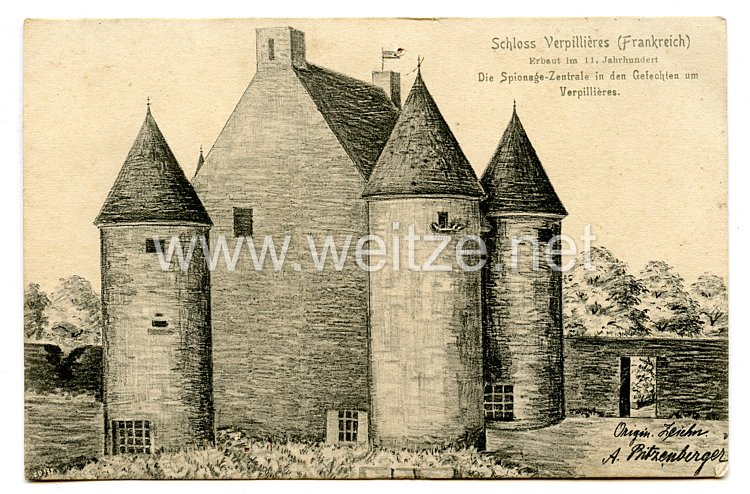
German Empire World War I Postcard "VerpillÚres Castle (France) ... The Espionage Headquarters during the Battles around VerpillÚres"

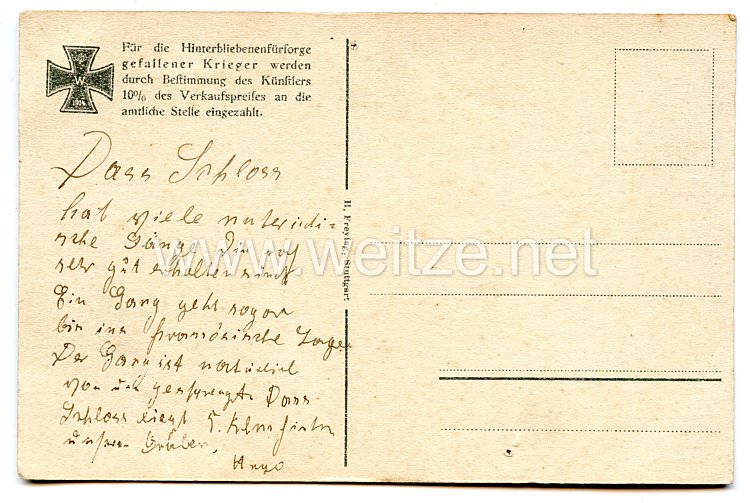
Circa 1914. Condition 2.


428004
15,00

German Empire World War I Postcard "VerpillÚres Castle (France) ... The Espionage Headquarters during the Battles around VerpillÚres"

Historical Context: German World War I Postcard - Château de Verpillières

This postcard from around 1914 documents a significant aspect of German military history during World War I and depicts Château de Verpillières in France, which was identified during battles around this location as an alleged espionage center.

The Battles around Verpillières 1914

The fighting around Verpillières occurred in the context of the German western offensive of 1914, when the German Empire advanced through Belgium and northern France according to the Schlieffen Plan. The region around Verpillières experienced intense combat during the first months of the war as German troops attempted to capture and secure strategically important positions.

Propaganda and Postcards in World War I

Military postcards represented an important propaganda and communication tool during World War I. The German Empire produced millions of such cards that served various purposes: they facilitated communication from the front, documented military successes, and influenced public opinion at home.

The designation of the château as an “espionage center” corresponds to typical propaganda rhetoric of that era. German military authorities frequently accused French civilians of espionage and franc-tireur activities (illegal combatants) to justify military actions against civilian objects. These narratives were disseminated through postcards, newspaper reports, and official announcements.

The Role of Châteaux and Manor Houses in War

French châteaux and manor houses often played strategic roles in World War I. Their elevated positions, solid construction, and size made them valuable military objects - as observation posts, command centers, field hospitals, and officers' quarters. German troops systematically requisitioned such buildings during their advance through France.

Espionage Accusations and War Crimes

The first months of war in 1914 were characterized by numerous accusations by German troops against the French and Belgian civilian population. Fear of guerrilla warfare and espionage led to drastic retaliatory measures, including the destruction of buildings and reprisals against civilians. Historical research has shown that many of these accusations were exaggerated or invented and served to justify acts of war.

Photographic Documentation and Field Post

The systematic photographic documentation of war events by German military authorities was unprecedented. Official war photographers and soldiers with private cameras created an extensive visual archive. These photographs were frequently reproduced as postcards and distributed through the field post system, which transported millions of items daily between the front and home.

Collector Value and Historical Significance

Postcards like this possess considerable historical and collectible value today. They document not only military events but also propaganda strategies, visual culture, and communication practices of the time. The indicated “condition 2” suggests a well-preserved specimen, which is remarkable for documents over a hundred years old.

Historical Classification

This postcard serves as testimony to the complex relationship between military reality, propaganda, and public perception in World War I. It illustrates how the German Empire attempted to legitimize its military actions and secure support from the home front. Simultaneously, it documents the material culture of war and the significance of visual media for warfare in the 20th century.

For military historians and collectors, such an object represents direct access to the mentality and everyday culture of World War I, far removed from official military files and strategic documents.

r