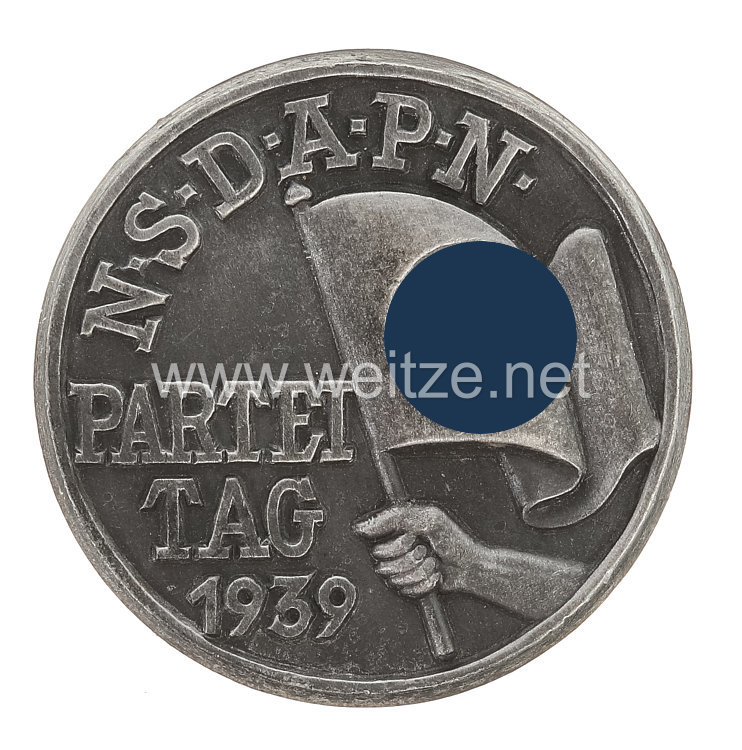
German National Socialists in Denmark N.S.D.A.P.N. - (Nationalsozialistische Deutsche Arbeiterpartei Nordschleswigs) - Party Rally 1939

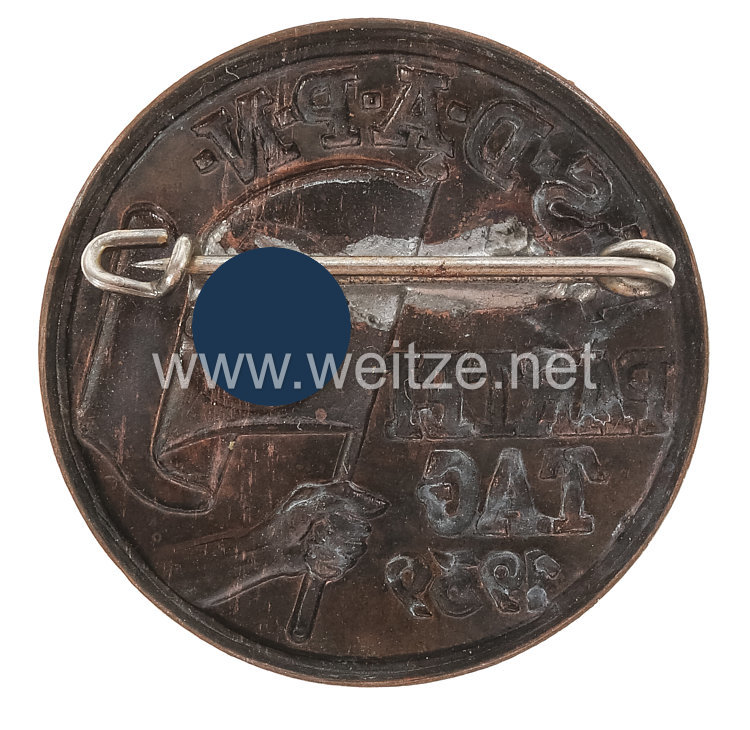
Badge for participants of the Party Rally. Toned hollow-embossed execution, reverse with horizontal pin. Lightly worn, condition 2+. Very rare.
367604
650,00

German National Socialists in Denmark N.S.D.A.P.N. - (Nationalsozialistische Deutsche Arbeiterpartei Nordschleswigs) - Party Rally 1939

The 1939 Party Day Badge of the NSDAPN (Nationalsozialistische Deutsche Arbeiterpartei Nordschleswigs - National Socialist German Workers' Party of North Schleswig) represents a rare testament to the political organization of the German minority in Denmark during the interwar period. This hollow-embossed, toned execution with a horizontal pin on the reverse was awarded to participants of the 1939 party congress and documents the activities of the National Socialist movement in Danish North Schleswig.

Following World War I and the plebiscite of 1920, North Schleswig was ceded to Denmark according to the provisions of the Treaty of Versailles. Approximately 30,000 to 40,000 ethnic Germans remained in this territory, forming a significant minority. During the 1920s, these Germans organized themselves into various cultural and political associations to preserve their identity and interests.

The NSDAPN was founded in the early 1930s and aligned itself ideologically with the NSDAP in the German Reich. The party gained particular significance within the German minority in North Schleswig after 1933, with Adolf Hitler's seizure of power. It competed with other ethnic German organizations, including more moderate groups, for political leadership of the minority.

The 1939 Party Congress, for which this badge was issued, took place during a time of increasing international tensions. In September 1939, World War II began with the German invasion of Poland. At this time, the NSDAPN represented the radical elements within the German minority, while the Danish government sought to maintain good relations with Germany while preserving its neutrality.

The production of such party day badges followed the usual practices of National Socialist organizations. They served as markers of participation, as collectibles, and as means of identification and group formation. The hollow-embossing technique was cost-effective to produce while still allowing for attractive design. The toning gave the badge additional optical depth.

After the German occupation of Denmark in April 1940, the situation of the German minority changed fundamentally. The NSDAPN lost significance as German occupation authorities negotiated directly with the Danish government. Many members of the German minority were later conscripted into the Wehrmacht or Waffen-SS.

The rarity of this badge can be explained by several factors: the NSDAPN was a numerically small organization, the 1939 party congress took place shortly before the outbreak of war, and many such objects were destroyed after 1945. Surviving examples are today important historical documents for researching German minorities in Europe and the spread of National Socialist ideology beyond the Reich's borders.

The badge is in lightly worn condition (condition 2+), suggesting it was actually worn at the event. Such authentic traces of use increase its historical value as a primary source for researching this era.

r