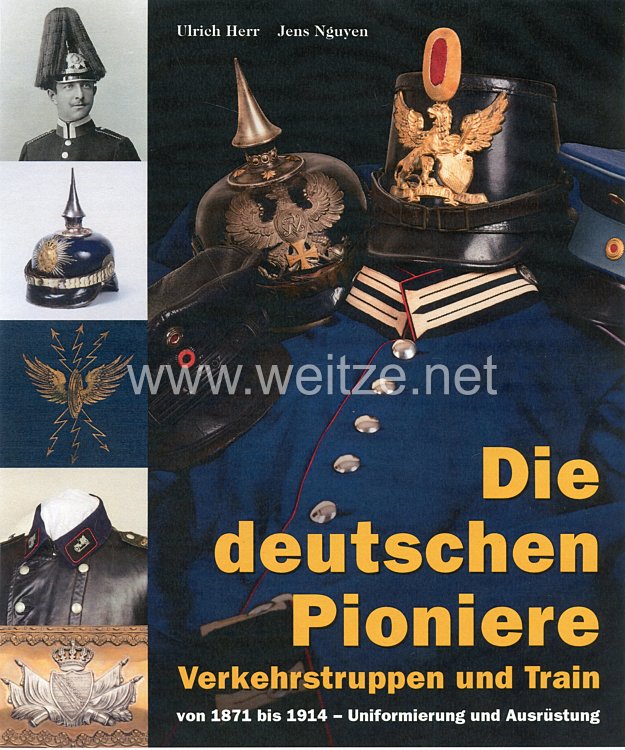
Ulrich Herr, Jens Nguyen: Die deutschen Pioniere, Verkehrstruppen und Train von 1871 bis 1914 – Uniformierung und Ausrüstung
Verlag Militaria. Farbbildband, 512 Seiten, mehr als 1500 Farbfotos, zeitgenössische SW-Fotos, Tabellen und Abbildungen, Leinen gebunden mit Schutzumschlag, Großformat: 29,5 x 26 cm.
Die Geschichte der Pioniertruppe reicht bis ins Altertum zurück. Noch heute besteht ihre Aufgabe darin, die anderen Waffengattungen zu unterstützen, indem sie deren Beweglichkeit und Durchhaltefähigkeit fördert, aber die Beweglichkeit der gegnerischen Truppen hemmen soll. Im Kaiserreich fand nach 1871 eine weitgehende Angleichung der bayerischen, sächsischen und württembergischen Pioniertruppe an die preußischen Normen statt. Hierbei hoben sich die sächsischen Pioniere mit ihren vollkommen abweichenden Uniformen aber weiterhin im Reichsheer optisch ab. Das Großherzogtum Baden stellte ein eigenes Pionier-Bataillon im Rahmen der preußischen Armee. Der Fortschritt in Wissenschaft und Technik führte im Militär ab dem ausgehenden 19. Jahrhundert zur Formierung neuer Truppengattungen, die im deutschen Kaiserreich unter dem Begriff Verkehrstruppen zusammengefasst wurden. Hierzu zählte neben der Eisenbahntruppe die Telegraphen-, Kraftfahr- und Luftschiffertruppe sowie als jüngste Truppengattung die Fliegertruppe. Der Train zeichnete in erster Linie für die Nachführung von Gefechtsmitteln und Spezialgerät sowie des Proviants für die Truppen verantwortlich. Berücksichtigung finden – wie in den vorangegangenen Bänden – neben den preußischen Truppen auch die entsprechenden Kontingente der Königreiche Bayern, Sachsen und Württemberg sowie der Großherzogtümer Baden und Hessen. Das vorliegende Buch gibt zunächst jeweils eine formationsgeschichtliche Übersicht der Entwicklung der deutschen Pioniere, Verkehrstruppen und des Trains im Zeitraum von 1871 und 1914. Danach werden jeweils die Besonderheiten der Kopfbedeckungen, Uniformen und der Ausrüstung dargestellt. In der Reihe über die Bekleidung und Ausrüstung des deutschen Heeres von 1871 bis 1914 schließt dieses Buch an die bereits erschienenen Bände über die Generale, Kriegsministerien sowie Generalstäbe, die Infanterie, Kavallerie und Artillerie an. Durch zeitgenössische Fotos sowie eine Vielzahl an originalen Bekleidungs- und Ausrüstungsstücken veranschaulicht, stehen die Pioniere, die Verkehrstruppen sowie der Train im Mittelpunkt. Die etwa 450 Objekte stammen aus verschiedenen privaten und öffentlichen Sammlungen, darunter das Bayerische Armeemuseum in Ingolstadt, das Militärhistorische Museum der Bundeswehr in Dresden oder das Wehrgeschichtliche Museum in Rastatt.
For deliveries to non-European countries, increased shipping costs may apply. We ask for a consultation. Pour les livraisons dans des pays non européens, des frais d'expédition plus élevés peuvent s'appliquer. Nous demandons une consultation.
Die Geschichte der Pioniertruppe reicht bis ins Altertum zurück. Noch heute besteht ihre Aufgabe darin, die anderen Waffengattungen zu unterstützen, indem sie deren Beweglichkeit und Durchhaltefähigkeit fördert, aber die Beweglichkeit der gegnerischen Truppen hemmen soll. Im Kaiserreich fand nach 1871 eine weitgehende Angleichung der bayerischen, sächsischen und württembergischen Pioniertruppe an die preußischen Normen statt. Hierbei hoben sich die sächsischen Pioniere mit ihren vollkommen abweichenden Uniformen aber weiterhin im Reichsheer optisch ab. Das Großherzogtum Baden stellte ein eigenes Pionier-Bataillon im Rahmen der preußischen Armee. Der Fortschritt in Wissenschaft und Technik führte im Militär ab dem ausgehenden 19. Jahrhundert zur Formierung neuer Truppengattungen, die im deutschen Kaiserreich unter dem Begriff Verkehrstruppen zusammengefasst wurden. Hierzu zählte neben der Eisenbahntruppe die Telegraphen-, Kraftfahr- und Luftschiffertruppe sowie als jüngste Truppengattung die Fliegertruppe. Der Train zeichnete in erster Linie für die Nachführung von Gefechtsmitteln und Spezialgerät sowie des Proviants für die Truppen verantwortlich. Berücksichtigung finden – wie in den vorangegangenen Bänden – neben den preußischen Truppen auch die entsprechenden Kontingente der Königreiche Bayern, Sachsen und Württemberg sowie der Großherzogtümer Baden und Hessen. Das vorliegende Buch gibt zunächst jeweils eine formationsgeschichtliche Übersicht der Entwicklung der deutschen Pioniere, Verkehrstruppen und des Trains im Zeitraum von 1871 und 1914. Danach werden jeweils die Besonderheiten der Kopfbedeckungen, Uniformen und der Ausrüstung dargestellt. In der Reihe über die Bekleidung und Ausrüstung des deutschen Heeres von 1871 bis 1914 schließt dieses Buch an die bereits erschienenen Bände über die Generale, Kriegsministerien sowie Generalstäbe, die Infanterie, Kavallerie und Artillerie an. Durch zeitgenössische Fotos sowie eine Vielzahl an originalen Bekleidungs- und Ausrüstungsstücken veranschaulicht, stehen die Pioniere, die Verkehrstruppen sowie der Train im Mittelpunkt. Die etwa 450 Objekte stammen aus verschiedenen privaten und öffentlichen Sammlungen, darunter das Bayerische Armeemuseum in Ingolstadt, das Militärhistorische Museum der Bundeswehr in Dresden oder das Wehrgeschichtliche Museum in Rastatt.
For deliveries to non-European countries, increased shipping costs may apply. We ask for a consultation. Pour les livraisons dans des pays non européens, des frais d'expédition plus élevés peuvent s'appliquer. Nous demandons une consultation.