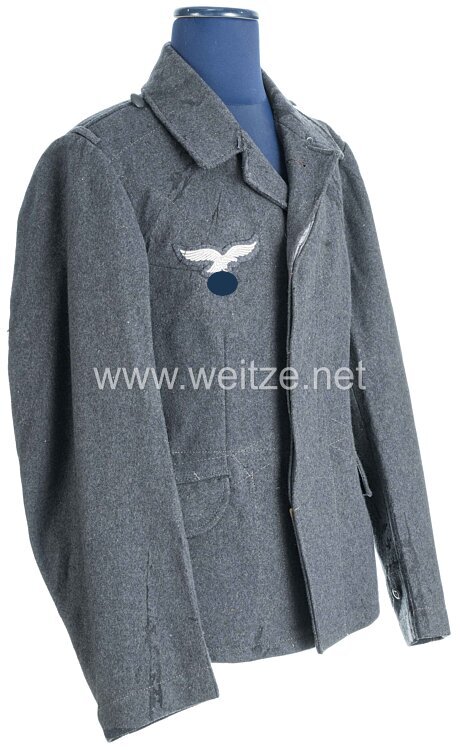
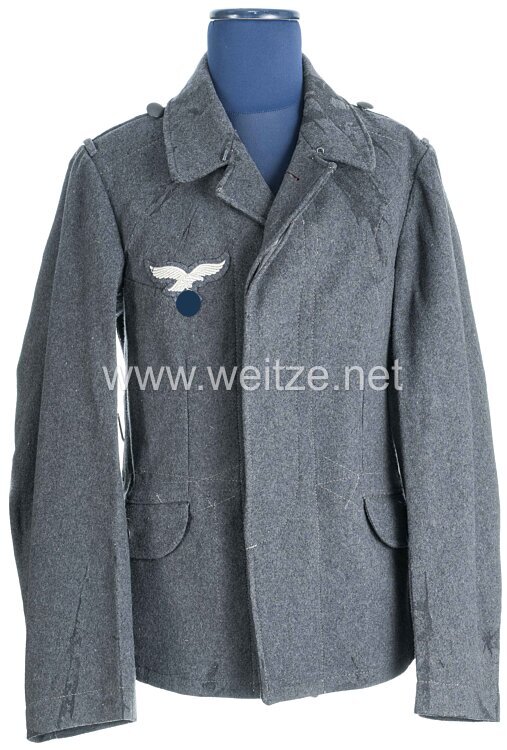
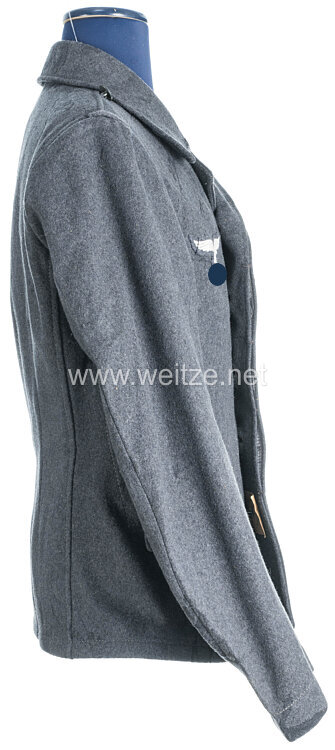
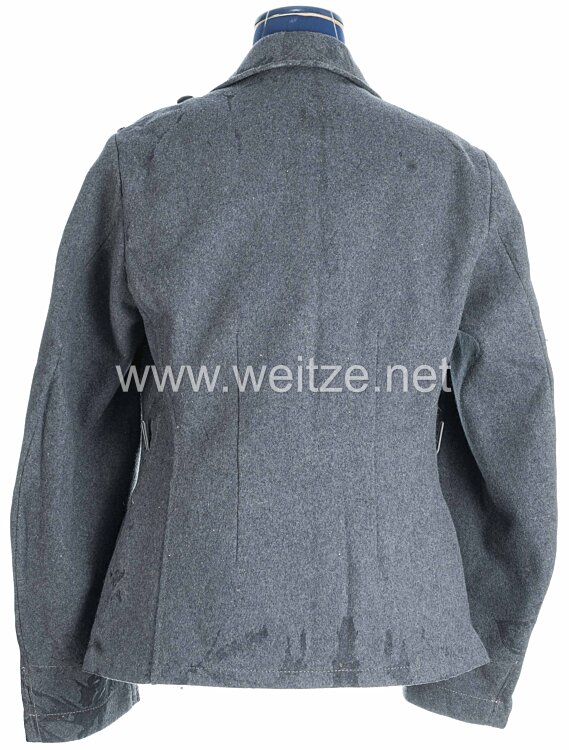
Luftwaffe Flight Blouse for Enlisted Men
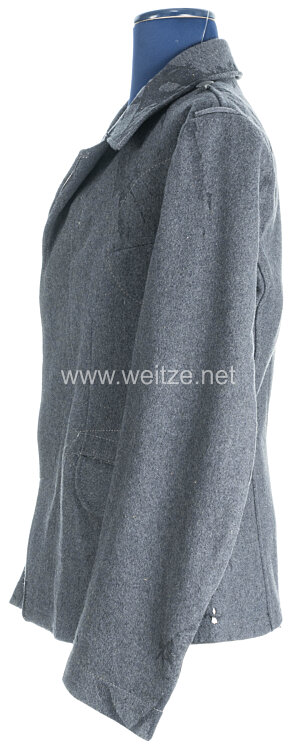
The Luftwaffe Fliegerbluse for Enlisted Men represents a significant piece of German military history from World War II. This uniform tunic was an essential component of the German Air Force's service dress and was worn by enlisted ranks.
The German Luftwaffe was officially established on February 26, 1935, after Germany renounced the restrictions of the Treaty of Versailles. Under the leadership of Hermann Göring, the Luftwaffe developed into a modern air force with its own distinctive uniform culture. The characteristic blue-gray color of Luftwaffe uniforms clearly distinguished them from the field-gray Wehrmacht and the black Panzer troops.
The Fliegerbluse (flight tunic) was regulated through various military ordinances and dress regulations. The uniform color “blue-gray” (officially designated as Fliegerblau or flight blue) was standardized in the early years of the Luftwaffe and was intended to make membership in the air force immediately recognizable. The manufacture of these uniforms was subject to strict quality controls and Wehrmacht specifications.
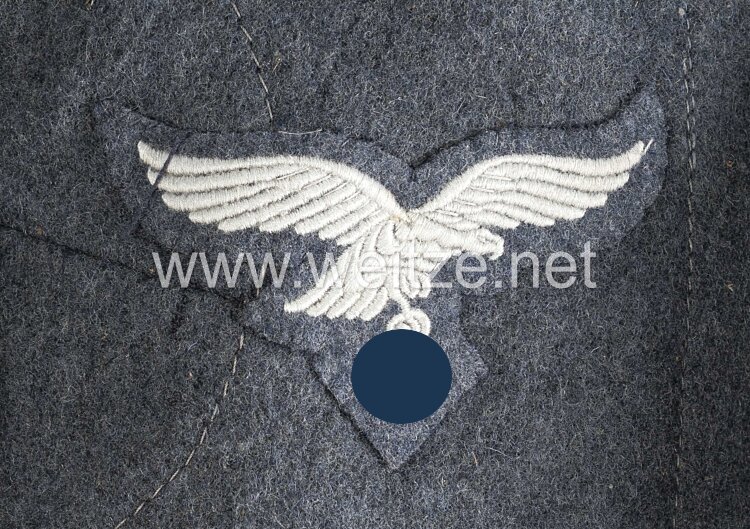
For enlisted ranks (non-commissioned officers without sword knot and enlisted men), the design of the Fliegerbluse was simpler than that for officers. The cloth was more coarsely woven, and the details were more basic. The breast eagle, the national emblem of the Luftwaffe, was typically machine-embroidered for enlisted tunics and sewn directly onto the chest. This eagle displayed the characteristic design with outstretched wings and a swastika in its talons.
The shoulder straps served to identify rank and branch of service. For enlisted men, these were generally simple in design and showed the specific assignment within the Luftwaffe through various designs and colors. The loops for attaching the shoulder straps were firmly sewn at the shoulder seam.
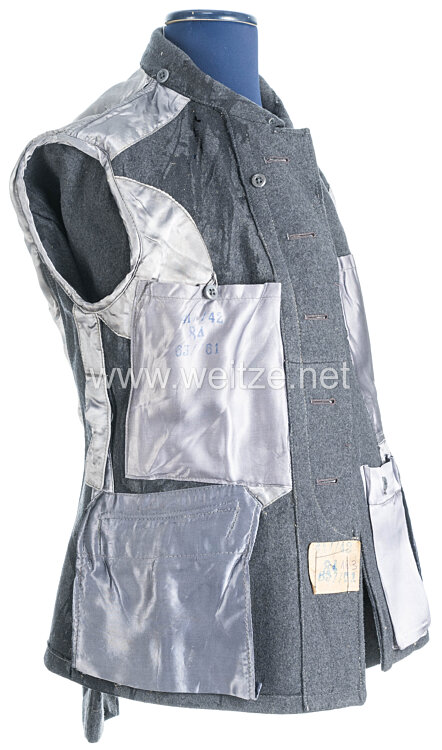
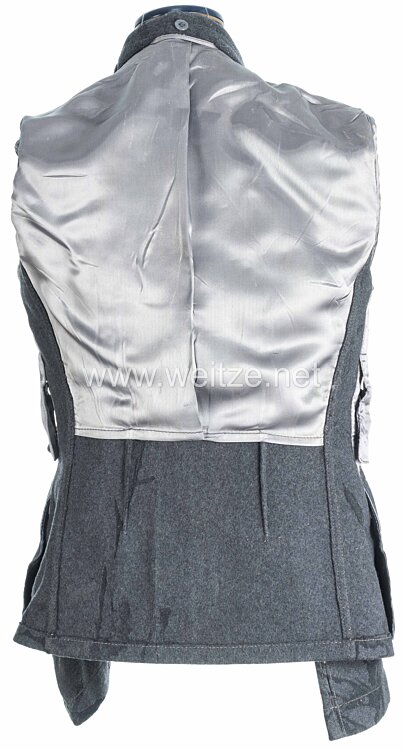
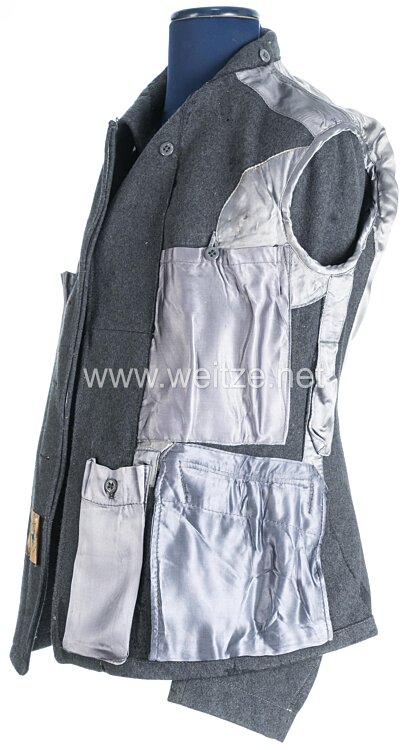
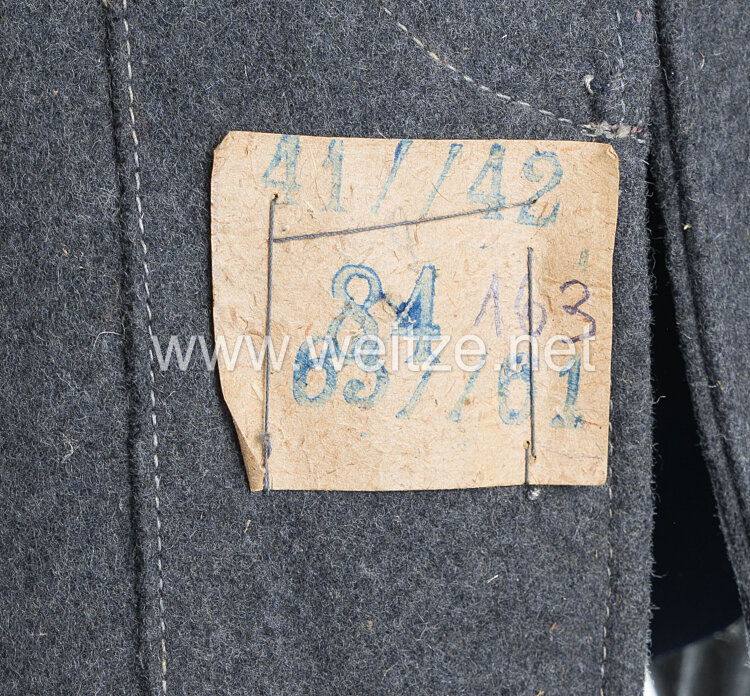
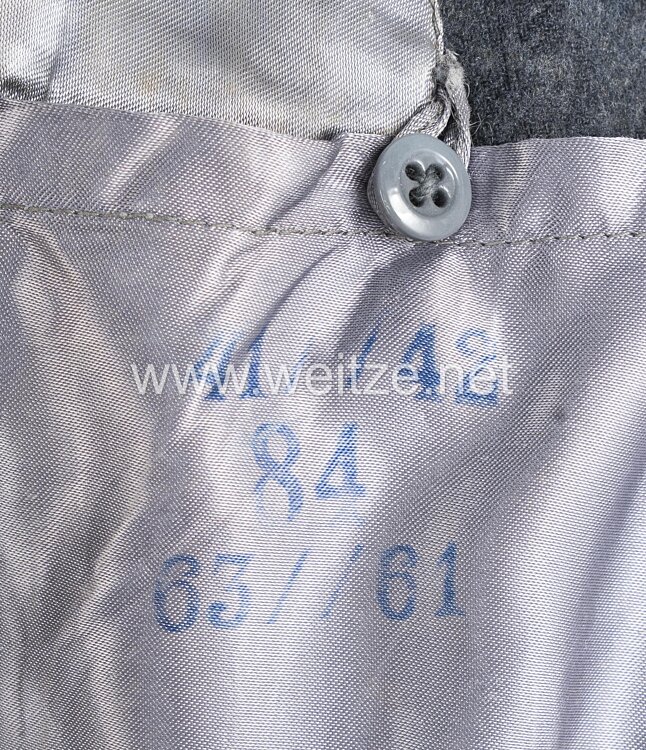
The silk lining inside the tunic was a quality feature of German uniforms of this period. It increased the wearing comfort and durability of the garment. The depot stamp (Kammerstempel) and paper label inside the tunic provide important information about manufacture and issue. These stamps typically contained information about the clothing depot, the issue date, and sometimes the manufacturer.
The measurements of this particular tunic (shoulder width approximately 38 cm, overall length approximately 61 cm) correspond to the standard sizes for Luftwaffe enlisted uniforms. The Wehrmacht used a detailed sizing system to ensure the best possible fit for all soldiers.
The term “depot find” refers to uniforms and equipment that remained in warehouses, depots, or other storage locations at the end of the war in 1945. Many of these stocks were confiscated, stored, or forgotten after the war. Such untouched finds are of particular historical interest today as they offer an authentic insight into the manufacture and quality of military clothing of that era.
The mentioned moth damage is typical for textile objects stored over decades. The clothes moth (Tineola bisselliella) preferentially attacks natural fibers such as wool, from which these tunics were made. Such damage is common in historical uniforms and, while diminishing the state of preservation, does not reduce the historical value of the object.
The condition classification follows a system established in the militaria collecting community, where condition 1 means mint and condition 5 means heavily damaged. Condition 3 indicates a used but still well-preserved state with visible signs of wear and minor damage.
Today, such uniform pieces are important witnesses to military history and are preserved by museums, collectors, and research institutions. They serve historical education and documentation and help to understand the material culture of World War II. The scientific and educational value of such objects lies in their authenticity and their ability to make history tangible.