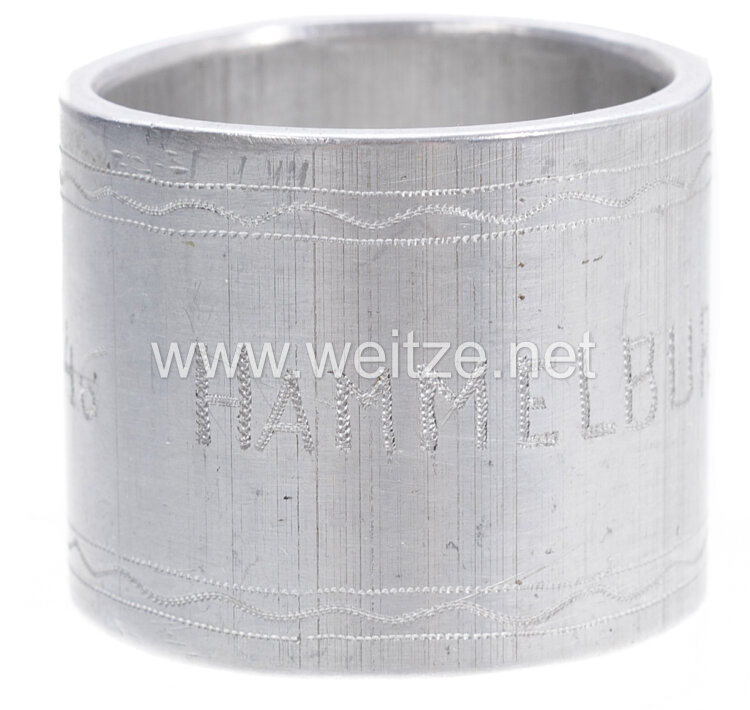
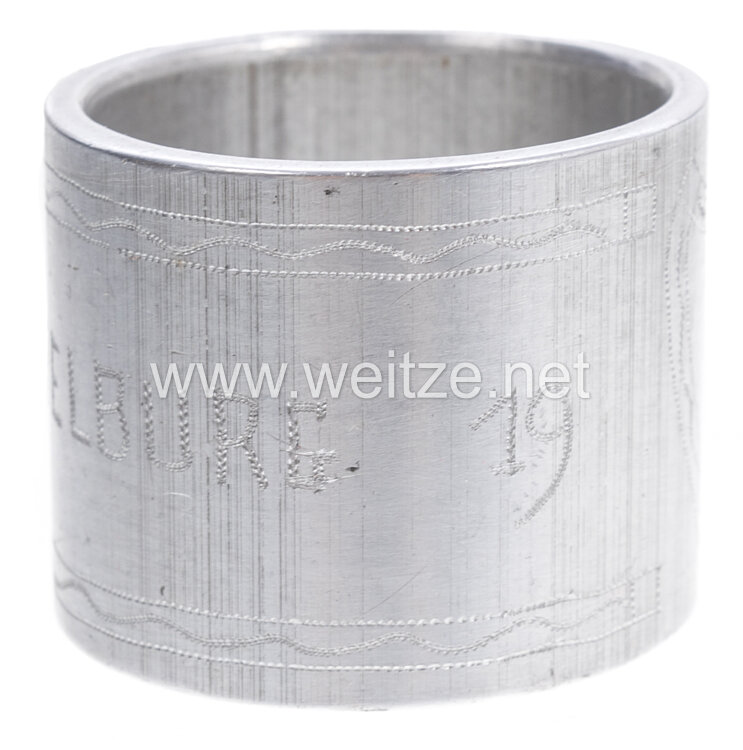
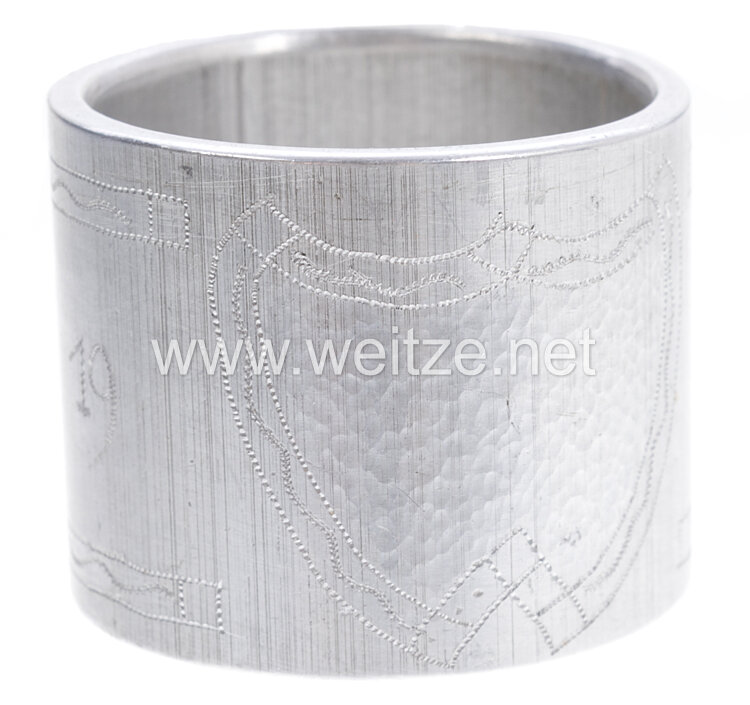
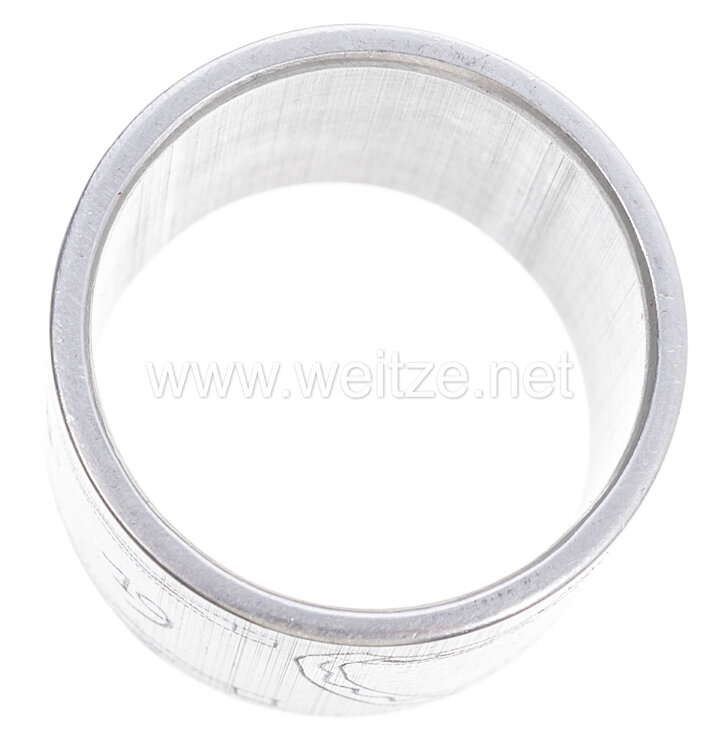
Wehrmacht Napkin Ring of a German Prisoner of War - 1946 Hammelburg
The napkin ring from Hammelburg, dated 1946, represents a remarkable testament to the experiences of German prisoners of war in the immediate post-war period. Crafted from aluminum, this simple object embodies the creativity and will to survive of men who found themselves in extraordinarily difficult circumstances.
Historical Context: Hammelburg and Prisoner of War Captivity
The town of Hammelburg in Lower Franconia, Bavaria, played a significant role in the history of prisoner of war camps during and after World War II. During the war, it housed Oflag XIII-B, an officer camp for Allied prisoners. After the German capitulation on May 8, 1945, the situation changed dramatically: American occupation forces established several internment camps in Hammelburg for German soldiers and members of the Wehrmacht.
The year 1946, when this napkin ring was created, marks a phase of intensive restructuring of prisoner camps. While many German soldiers had already been released, hundreds of thousands remained in Allied captivity. Living conditions in these camps varied considerably, depending on the respective occupying power, supply situation, and local administration.
Camp Handicrafts and Trench Art
The manufacture of objects from available materials was a widespread practice in prisoner of war camps. This tradition, often referred to as Trench Art or camp handicrafts, served several functions: it provided a pastime, helped with psychological coping with captivity, and sometimes served as a trade object or gift for relatives upon return home.
Aluminum was a particularly popular material for such work. It was relatively easy to work with, sometimes available in the form of eating utensils, cooking implements, or aircraft parts, and allowed for both simple and artistic designs. Prisoners of war used primitive tools – often self-made – to shape, engrave, or emboss the metal.
Napkin rings were a frequently chosen object. They were practical, had a civilian character, and symbolized the longing for a normal domestic life. Many of these rings were inscribed with names, dates, camp locations, or personal dedications. They served as material reminders of a time that prisoners both wanted to forget and document.
The Situation in 1946
The year 1946 was a time of uncertainty for German prisoners of war. While the Geneva Conventions theoretically regulated their treatment, reality was often more complicated. The American camps in Germany were among the better organized; nevertheless, many prisoners suffered from food shortages, cramped conditions, and uncertainty about their future.
Denazification was in full swing, and many prisoners had to fill out questionnaires and undergo screenings before they could be released. Former members of the Waffen-SS, higher-ranking officers, or persons with Nazi Party membership were screened particularly thoroughly and often held longer.
Significance as a Historical Object
This napkin ring from Hammelburg is more than just a handicraft. It is an authentic historical witness that provides direct insight into the daily life of German prisoners of war. Such objects are today important components of military historical collections and help historians understand the material and psychological aspects of captivity.
The condition rating of 2 for this object indicates good preservation, which is not a given for aluminum objects from this period. The patina and any signs of use tell their own story of the object's journey through the decades.
Conclusion
The Wehrmacht napkin ring from Hammelburg, 1946, represents millions of individual fates in the post-war period. It reminds us of a generation of men who went from war into captivity and waited there for their return to an uncertain future. As a handcrafted object, it embodies human resilience and the ability to create meaning and beauty even under the most difficult conditions.