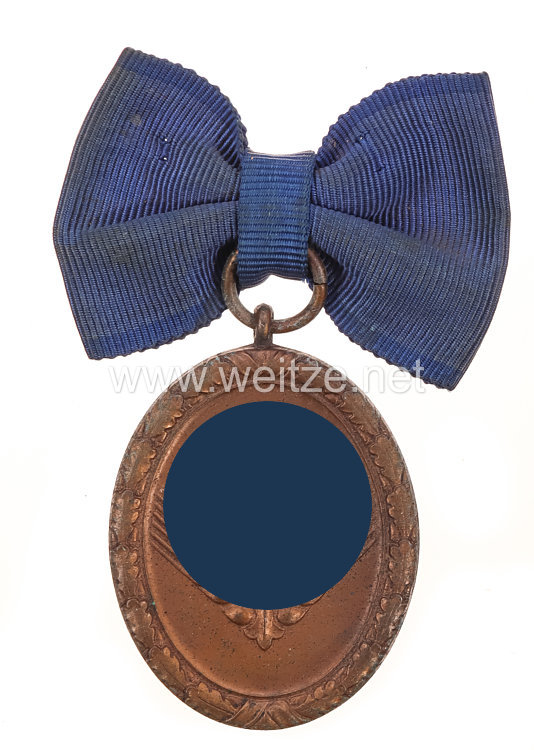
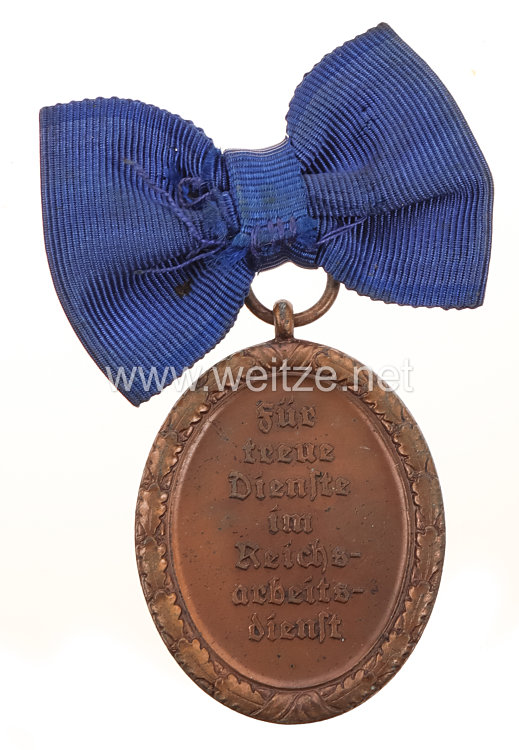
RAD Long Service Award for Female Youth 4th Class in Bronze

Bronzed aluminum, on ladies' ribbon bow with wearing pin, condition 2.
438502
350,00

RAD Long Service Award for Female Youth 4th Class in Bronze

The RAD Service Award for Female Youth 4th Class in Bronze represents a significant artifact from the National Socialist labor service organization that played a central role in mobilizing German youth during the Third Reich. This decoration was specifically created for female members of the Reich Labor Service (Reichsarbeitsdienst or RAD) and documents the systematic integration of young women into state-organized compulsory labor.

The Reich Labor Service was established in 1935 through the “Law for the Reich Labor Service” of June 26, 1935, as mandatory service for all German men and women. While compulsory service for men had existed earlier, labor service obligation for women was initially introduced gradually and significantly expanded from 1939 with the outbreak of war. The female Reich Labor Service, often designated as RAD/wJ (Reich Labor Service for Female Youth), focused primarily on agricultural assistance, household help in large families, and later on war-essential tasks.

The RAD service awards were conferred in graduated stages and marked different periods of service. The 4th Class in Bronze represented an extended period of service and was awarded for special loyalty and fulfillment of duty. The tiered system of awards typically comprised several grades, with bronze representing a middle tier. These decorations were intended to create incentives and promote the willingness to perform among those subject to service.

The present specimen consists of bronzed aluminum, which was typical for the manufacture of such awards during the National Socialist period. Due to increasing raw material shortages, particularly during the war years, many decorations and medals were produced from substitute materials. Aluminum was readily available and could be processed cost-effectively, with the bronzing achieving the desired aesthetic effect.

The manner of wearing on a ladies' bow with pin corresponded to regulations for female decorations in the Third Reich. Unlike male medal forms, which were often worn on ribbons or bars, female variants were specially adapted to women's clothing. The ribbon bow could be attached to a blouse or dress and was designed to be worn with both service uniforms and civilian clothing.

The female Reich Labor Service was subject to a strict hierarchical structure with its own female leaders and administrative units. The young women, mostly between 17 and 25 years of age, were housed in labor maiden camps, where they received ideological training in addition to their work duties. Education to become the “German woman” and mother was at the forefront of National Socialist ideology.

The conferral practice of these awards was regulated by detailed provisions. Applications were submitted by the respective service station directors, and the conferral itself was often conducted during ceremonial roll calls. The awards were intended not only to recognize individual achievements but also to strengthen the community and propagate the National Socialist work ethic.

After the end of World War II and the collapse of the Nazi regime, the Reich Labor Service was dissolved. According to the Law on Titles, Orders and Decorations of July 26, 1957, wearing decorations with National Socialist symbols is prohibited in Germany. Today, such objects possess exclusively historical and museum value as testimony to a dictatorial past.

For collectors and historians, RAD awards represent important sources for researching everyday life in National Socialism. They document the comprehensive organization and control that the regime exercised over all areas of life of the German population. The specific awards for female youth also demonstrate the gender-specific orientation of National Socialist social policy.

The condition of such historical objects varies considerably. A condition rating of 2, as indicated for this specimen, suggests good to very good preservation, in which the essential details are recognizable and the bronzing is largely intact. This makes the piece a valuable study object for researching the material culture of the Third Reich.

These artifacts serve as sobering reminders of a totalitarian system that sought to control every aspect of citizens' lives, including the mobilization of youth through compulsory labor service. The systematic creation of awards and decorations was part of a broader strategy to incentivize participation and create a sense of belonging to the National Socialist state apparatus.