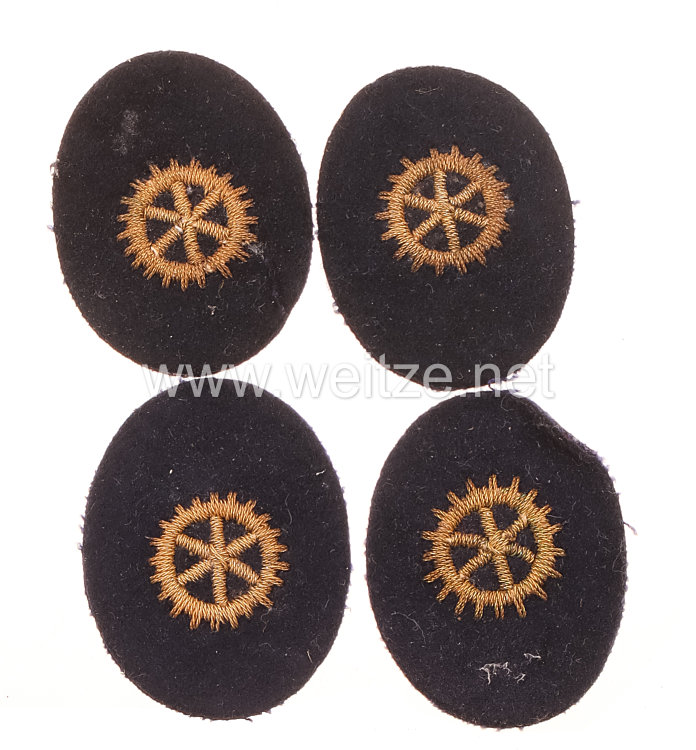
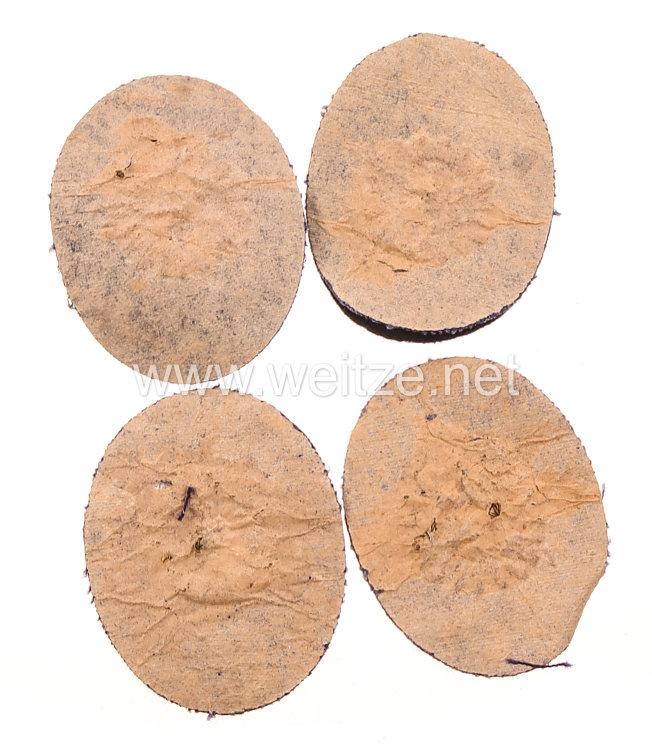
Kriegsmarine Pair of Sleeve Insignia for an Officer and Engineer

machine embroidered, seawater-resistant threads, condition 2.
Condition may vary.

Price per pair:

443501
20,00

Kriegsmarine Pair of Sleeve Insignia for an Officer and Engineer

The sleeve insignia of the Kriegsmarine for officers and engineers represent a significant element of German naval uniforms during World War II. These machine-embroidered badges with seawater-resistant threads were worn according to the uniform regulations of the Kriegsmarine and served to identify the rank and function of their wearers.

The Kriegsmarine, officially established on June 1, 1935, replaced the Reichsmarine of the Weimar Republic. This reorganization brought comprehensive changes to the uniform system, including rank insignia and grade markings. Sleeve insignia were worn on dark blue uniform jackets and consisted of gold or silver braids machine-embroidered on a dark background.

For officers of the Kriegsmarine, sleeve insignia were the primary means of displaying rank. The number and width of gold stripes on the sleeves indicated the respective rank. Leutnant zur See wore one narrow stripe, while higher ranks such as Kapitänleutnant, Korvettenkapitän, and Fregattenkapitän displayed increasingly more and wider stripes. Admiral ranks were distinguished by particularly wide braids.

A special feature were the engineering officers. These technical specialists were distinguished from seagoing officers by special markings. Their sleeve insignia showed the same number of stripes corresponding to their rank, but in a different color or combination. Engineering officers typically wore dark purple or violet spaces between the gold braids, indicating their technical specialization in mechanical engineering, electrical engineering, or other technical fields.

The use of seawater-resistant threads was not a random choice but a practical necessity. Naval uniforms were constantly exposed to harsh conditions at sea – salt water, moisture, and intense sunlight. Conventional embroidery threads would quickly lose their color or rot under these conditions. Seawater-resistant threads were specially treated to withstand these environmental influences and ensure the durability of the insignia.

The machine production of these insignia enabled standardized manufacturing and ensured that all officers received insignia of consistent quality. This was particularly important for military order and immediate recognition of ranks. Various manufacturers produced these insignia according to the exact specifications of the Kriegsmarine, with strict quality controls being conducted.

The uniform regulations of the Kriegsmarine were detailed in various service instructions and the Kriegsmarine dress regulations. These regulations specified exactly how sleeve insignia were to be attached, what distances were to be maintained, and in which situations which uniform variants were to be worn. Officers had to possess multiple sets of uniforms, including dress uniforms, service uniforms, and working dress, each with the appropriate sleeve insignia.

After the end of World War II in May 1945, the Kriegsmarine was dissolved. Its uniforms and insignia became historical artifacts that are now preserved by collectors and museums. These objects serve as important sources for military history research and help understand the organization, hierarchy, and daily life of the German Navy during this period.

For collectors, such pairs of sleeve insignia are of particular interest as they represent authentic examples of uniform equipment. The state of preservation can vary depending on storage and use over the decades. Well-preserved specimens still show the original brilliance of the embroidery and the quality of the materials used. Authentication of such pieces requires expert knowledge of manufacturing techniques, materials used, and the specific characteristics of different production sites and time periods.