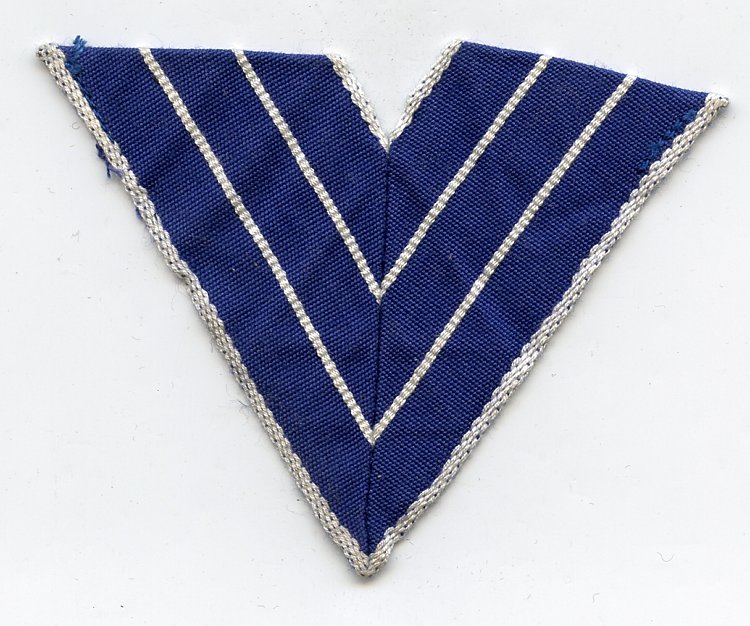
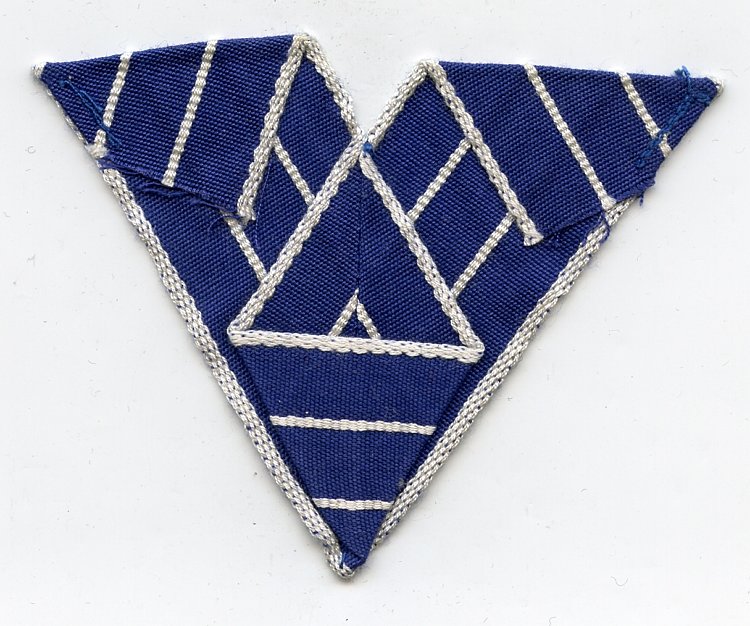
Kriegsmarine Sleeve Insignia Leading Seaman

for the white blouse, without backing, unissued.
145101
15,00

Kriegsmarine Sleeve Insignia Leading Seaman

The Kriegsmarine sleeve insignia for Hauptgefreiter (Senior Lance Corporal) represents a fascinating testament to the complex rank structure of the German Navy during World War II. This particular insignia was worn on the white summer blouse and denoted the rank of Hauptgefreiter, an important intermediate grade in the enlisted career path of the Kriegsmarine.

The Kriegsmarine, officially established in 1935, replaced the Reichsmarine of the Weimar Republic. With rearmament under the National Socialist regime, a comprehensive system of rank insignia and uniform regulations developed, detailed in various uniform orders. Sleeve insignia played a central role in the visual identification of rank and service position.

The rank of Hauptgefreiter was positioned in the hierarchy between the simple Gefreiter (Lance Corporal) and Obergefreiter (Corporal). This rank was introduced to distinguish experienced enlisted personnel who possessed special skills or length of service but had not yet been promoted to non-commissioned officer ranks. The sleeve insignia served as an external sign of this position and was worn on the left upper arm.

The Kriegsmarine strictly distinguished between different uniform types. The white blouse, for which this insignia was intended, belonged to the summer uniform and was worn primarily in warmer climates or during summer months. This uniform was particularly common among units in the Mediterranean or tropical waters. White uniforms served not only practical purposes but were also meant to underscore the representative appearance of the Navy.

The production of such sleeve insignia followed precise regulations. They were typically manufactured from dark blue cloth and displayed specific embroidery or braids that identified the respective rank. For the Hauptgefreiter, the insignia consisted of a particular configuration of chevrons or stripes. The insignia were either sewn directly onto the uniform or, as in this case, manufactured without backing, meaning they were intended for direct sewing onto the uniform fabric.

The unworn condition of this specimen is of particular historical interest. Many uniform pieces and insignia from this period were heavily used in service or were lost. Unworn pieces either remained as warehouse stock or were never issued, possibly because the war ended before they could be deployed, or because production surpluses existed.

The uniform regulations of the Kriegsmarine were documented in various publications, including the “Dress Regulations for the Kriegsmarine” and special implementing provisions. These regulations specified exactly when which uniform was to be worn, how insignia were to be attached, and which combinations were permissible. Strict adherence to these regulations was part of military discipline.

Within the organizational context of the Kriegsmarine, Hauptgefreite frequently served as experienced specialists in technical areas or as group leaders of smaller units. They formed the backbone of the enlisted ranks and were often responsible for training younger sailors. Their experience was particularly valuable on U-boats and smaller warships, where every crew member had to master multiple tasks.

After the war ended in 1945, the Kriegsmarine was dissolved, and all its symbols, uniforms, and insignia lost their official significance. Many of these objects were destroyed, lost, or ended up in private hands as souvenirs. Today, they are important historical artifacts that provide insight into the military organization and everyday culture of that era.

For collectors and historians, such sleeve insignia are valuable objects of study. They enable the reconstruction of uniforming practices, demonstrate craft manufacturing techniques, and document the visual culture of military hierarchies. The unworn condition makes this specimen particularly valuable for historical research, as it shows the original state without wear.

The study of such insignia contributes to our understanding of the social structures within military organizations, the importance placed on visual hierarchy, and the material culture of the German armed forces during the Second World War. Each piece serves as a tangible link to the individuals who would have worn such insignia and the system they served.