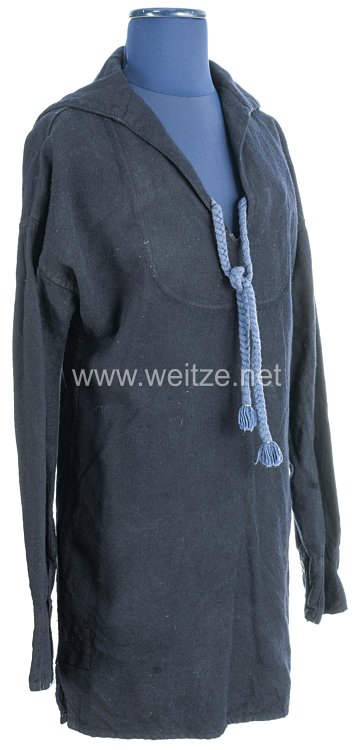
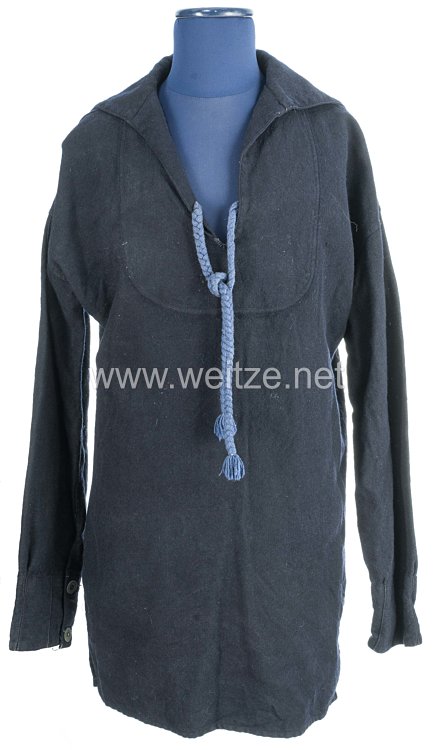
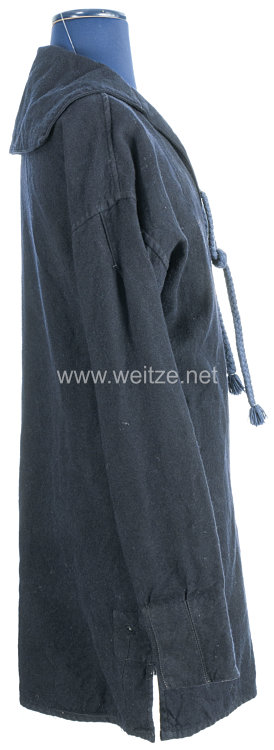
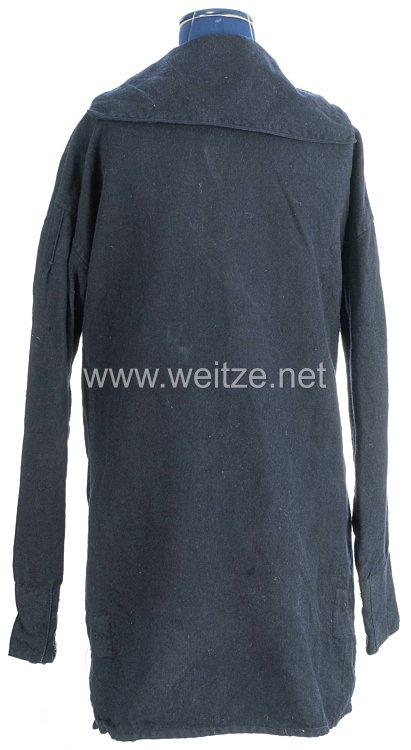
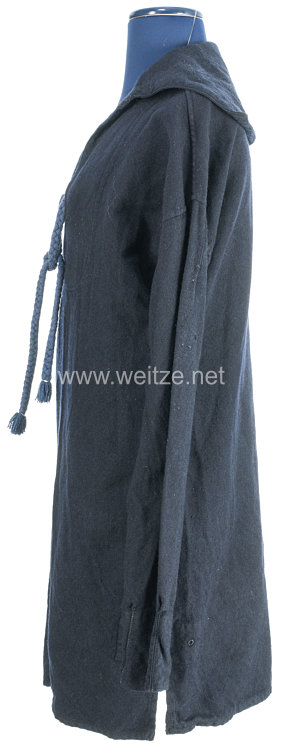
Kriegsmarine Blue Shirt for Enlisted Personnel

Blue cloth, without insignia, small repair patch on left upper arm.
Measurements: shoulder width approx. 59 cm, chest circumference 88 cm, outer sleeve length approx. 55 cm, total length approx. 80 cm. With signs of wear, lightly soiled, Condition 2-
451200
250,00

Kriegsmarine Blue Shirt for Enlisted Personnel

The blue shirt of the Kriegsmarine for enlisted ranks represents a characteristic garment of the German Navy during World War II. This uniform embodies a long maritime tradition with roots in the naval customs of the 19th century.

The Kriegsmarine, as the official designation of the German Navy from 1935 to 1945, evolved from the Reichsmarine of the Weimar Republic. With the buildup of the Wehrmacht under the Nazi regime, the navy was also considerably expanded and modernized. Uniforming followed traditional maritime standards that took similar forms in many navies internationally.

The blue work shirt or deck shirt belonged to the basic equipment of enlisted ranks and was primarily worn as work clothing aboard ship. In contrast to the representative dress uniform, this practical clothing served daily duty on ships, submarines, and in naval bases. The color blue had established itself as the standard color for work clothing in nearly all European navies, as it was practical and less conspicuous when soiled.

The dress regulations of the Kriegsmarine precisely governed which uniform items could be worn on which occasions. The described shirt without insignia corresponds to the plain version for enlisted ranks. “Effekten” (insignia) referred to rank badges, collar stripes, or other distinctions. These were deliberately omitted from work shirts, as they were not required for practical service and this made the clothing more versatile.

The measurements of the shirt, with a shoulder width of approximately 59 centimeters and a chest circumference of 88 centimeters, correspond to the standardized sizes used in the Kriegsmarine. Uniforms were procured centrally and produced according to established size ranges. Manufacturing occurred in various sizes, with soldiers receiving appropriate pieces during their outfitting.

The material quality varied considerably during the course of the war. While high-quality wool blend fabrics were still used in the early war years, quality increasingly deteriorated from 1942/43 onward due to material shortages. Substitute materials and inferior fabrics were increasingly employed. The mentioned patch on the left upper arm indicates repairs made during the wearing period - a common practice, as supplies were scarce, particularly in the later war years.

Life aboard Kriegsmarine units was characterized by hard physical labor. Sailors had to perform maintenance work, move cargo, operate guns, and serve in all weather conditions. Work clothing had to be correspondingly robust and practical. Blue shirts were often combined with work trousers and, if necessary, work jackets.

The wear marks and soiling on preserved uniform pieces tell of the harsh daily life of naval soldiers. Oil, soot, salt water, and the cramped conditions aboard left their marks on clothing. Conditions were especially extreme on submarines - crews often wore their work clothing for weeks without washing facilities.

After the war ended in 1945, the Kriegsmarine was dissolved. Uniform items were partially confiscated by the Allies, destroyed, or continued to be used by the population as clothing during postwar hardship. Many pieces disappeared or were altered. Preserved originals are therefore of military-historical interest today.

From a collector's perspective, such uniform pieces document the material culture of the Kriegsmarine. They enable insights into manufacturing techniques, material use, and the daily life of soldiers. For historical research and museums, they are important material witnesses of a dark epoch in German history.

The scholarly engagement with such objects requires critical examination of the historical context. The Kriegsmarine was part of the Wehrmacht of the Nazi regime and thus involved in the crimes of that era, even though maritime service was often perceived as less ideologically influenced than other Wehrmacht branches.

Today, such uniforms serve primarily as objects of study for understanding military history, textile production, and the material conditions of World War II. They remind us of the millions who served in the German armed forces and the catastrophic war they waged.

r